Text: Marcella van Alphen & Claire Lessiau
Photographs: Claire Lessiau
While the Bolivian food scene is mostly unknown contrary to the gastronomy of its neighboring Peru, Bolivia shares the same high Andean mountains, tropical lowlands, and wide variety of microclimates in-between. Contrary to Peru – once more – Bolivia’s agriculture and farming are often small-scale and organic, making its markets a food heaven. What better way to celebrate the wide variety of organic Bolivian ingredients than to oscillate between a traditional cooking class and some innovative Bolivian restaurants in Bolivia’s most picturesque city?
Pin it for later!

La Boca del Sapo cooking class
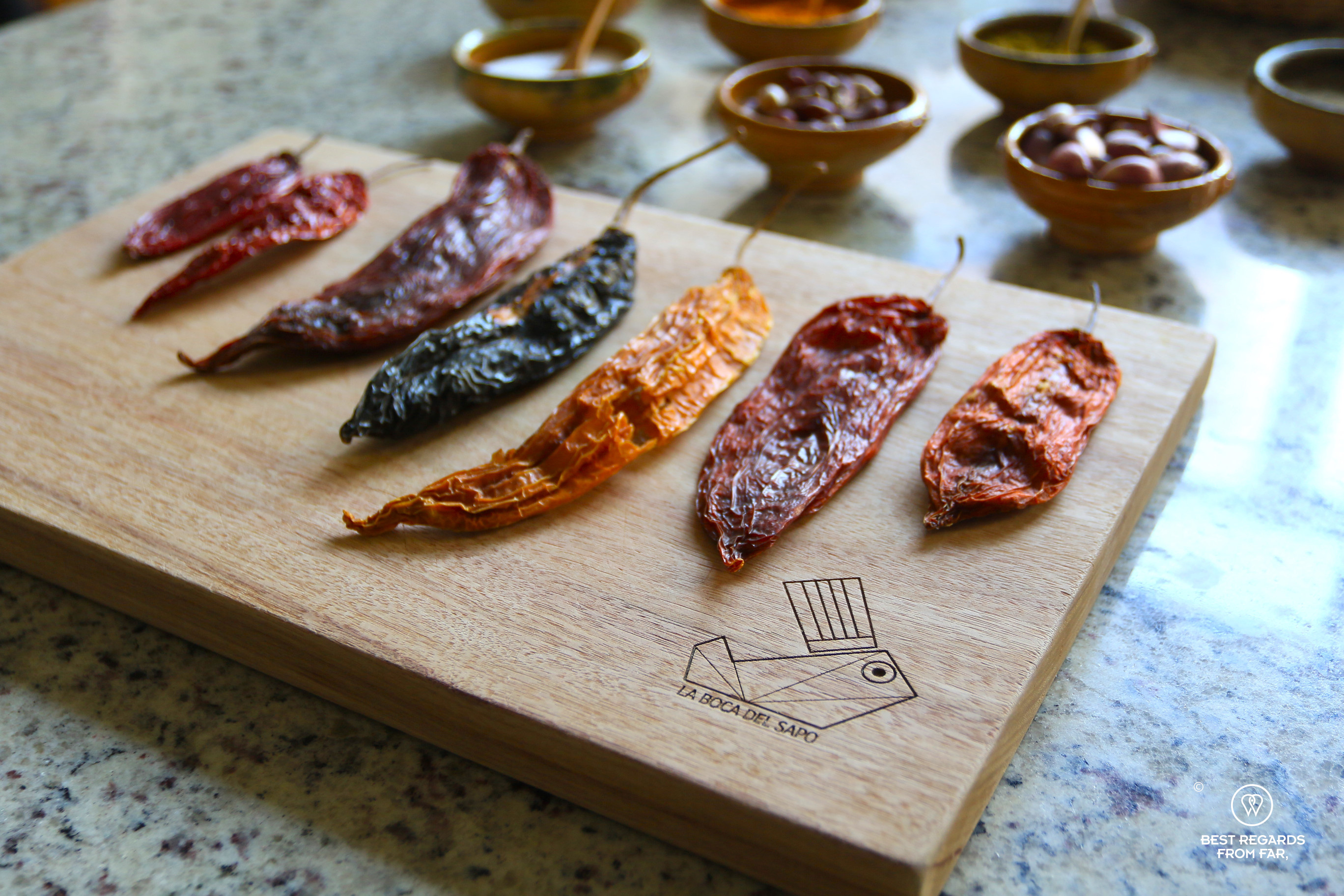
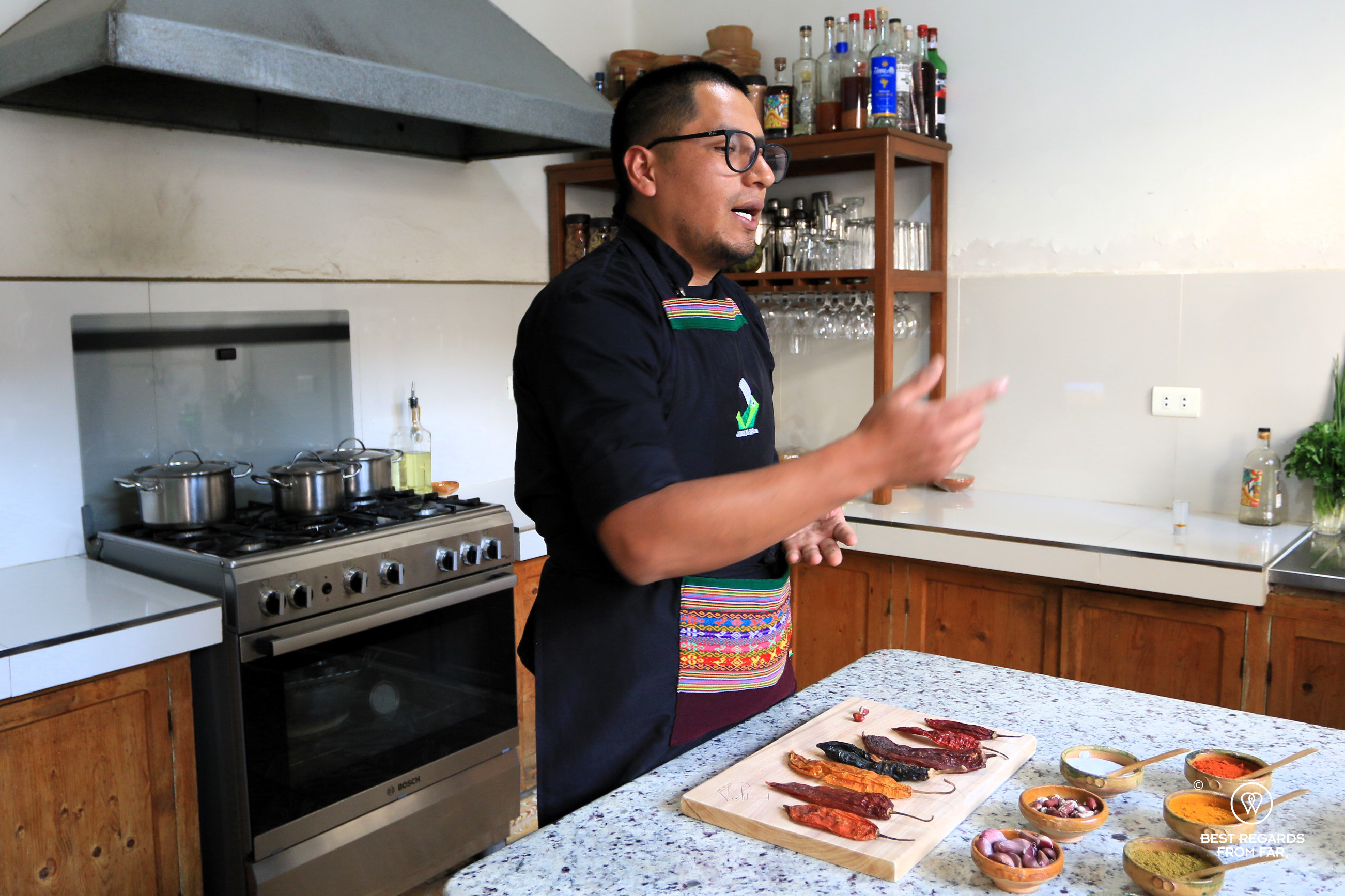
Chili peppers are paramount to any Bolivian meal, and a wide variety of them comes in different forms from fresh to dehydrated, ground to pastes. On the kitchen counter of Boca del Sapo, the aji takes the main stage with colors varying from dark green to Burgundy red, surrounded by other key-ingredients for tonight’s traditional Bolivian Picante de Pollo.
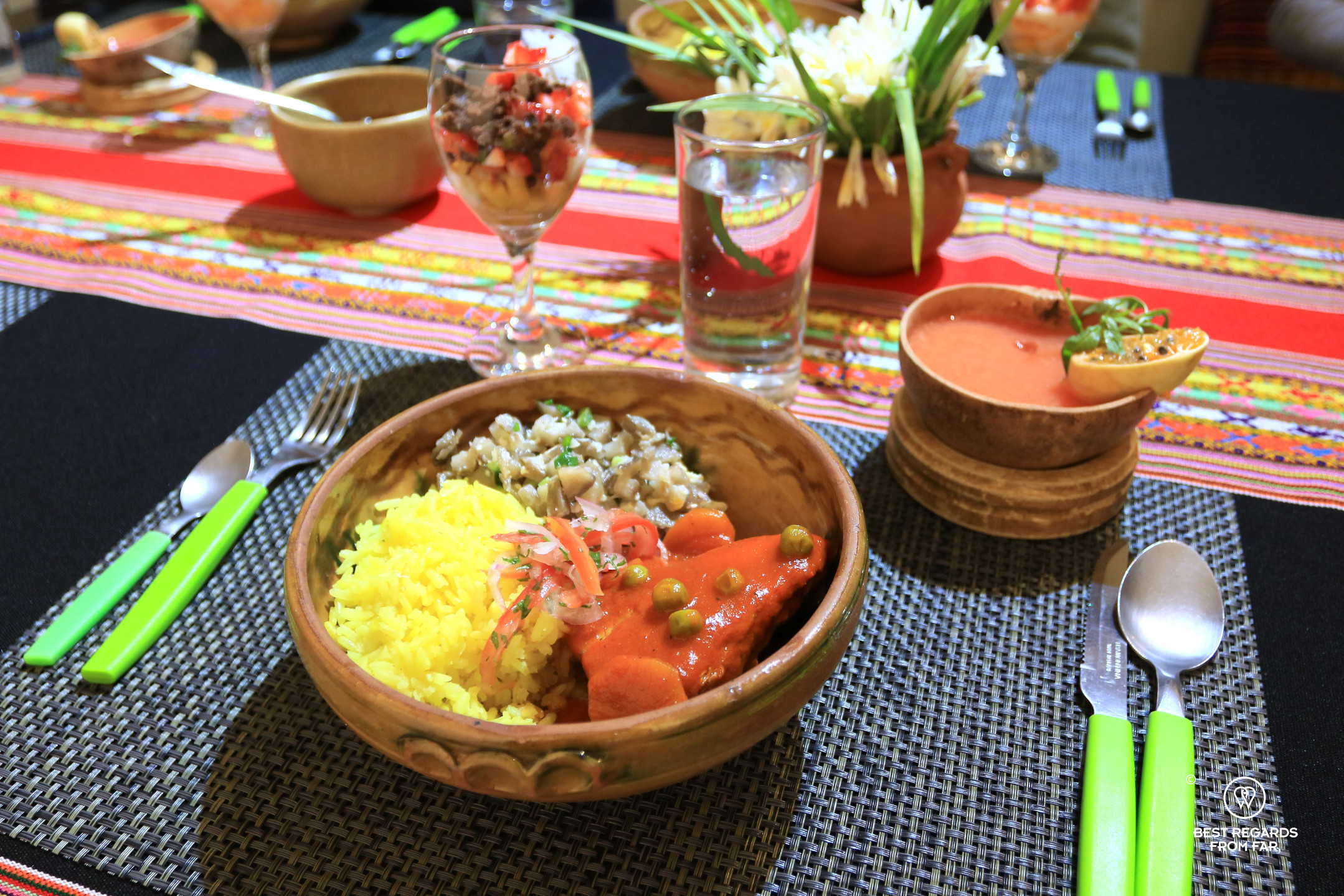
Our young chef Moises is very traditional when it comes to Bolivian food and while Sucre is the heart of some very innovative local chefs (see below), experimenting with the native ingredients and highlighting the many microclimates of the country, starting with exploring the markets and cooking a traditional recipe from a small village nearby Bolivia’s most charming city seems a good starter.
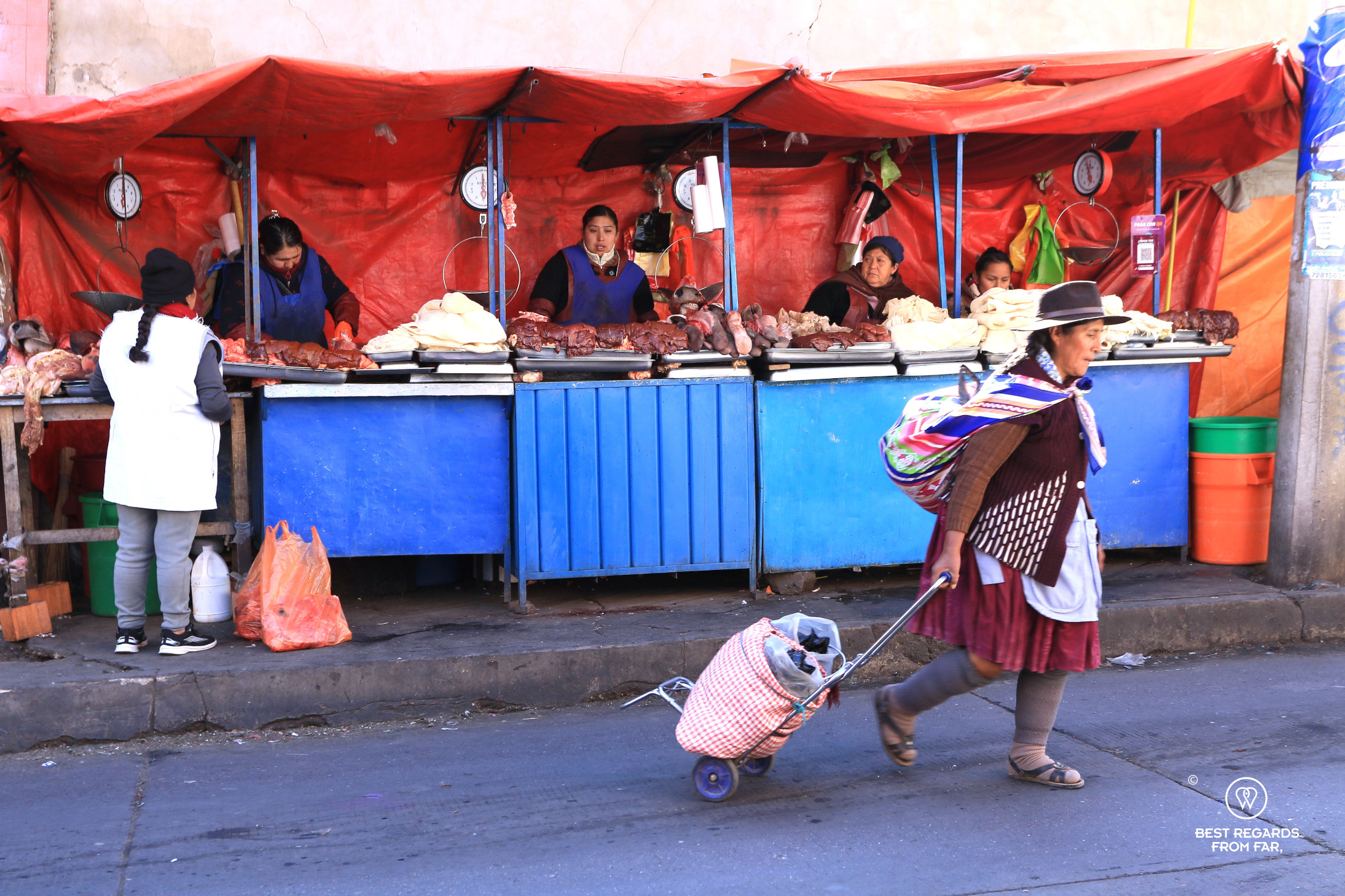
From the Central Market to the Mercado Campesino that outgrows its main hall to take over blocks and blocks of Sucre, women with long braids often wearing traditional clothes and colorful mantas to carry their goods trade all sorts of products from beans to quinoa, potatoes to chilies, corns of all colors to fruits and vegetables from all over the country, local cheeses and freshly-baked breads. Street stalls and food courts are bustling with locals enjoying a traditional breakfast of api, a thick warm drink made from purple corn spiced with cinnamon, cloves, and orange zests, or the other corn-based tojori drink flavored with anise. Some other traditional bites such as salteñas, empenadas, or chorizo sandwiches; dishes such as the fried-pork based chicharron, the fries and beef-based pique macho, or the silpancho topped by its fried egg; and the popular hearty soups, either of vegetables or peanuts, with their fair amount of carbs in the form of pastas, rice, quinoa, or potatoes are some of the other Bolivian’s favorites.
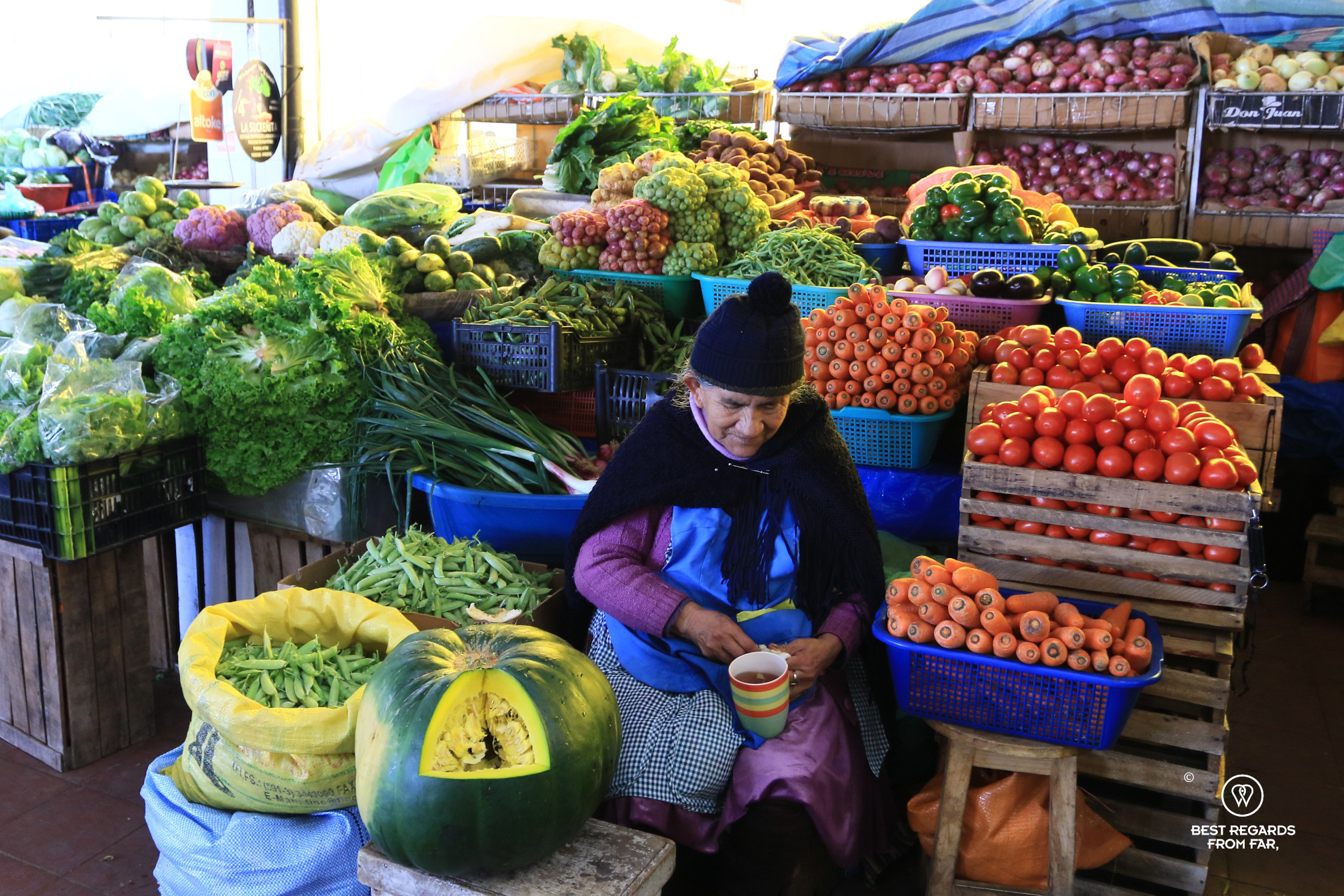

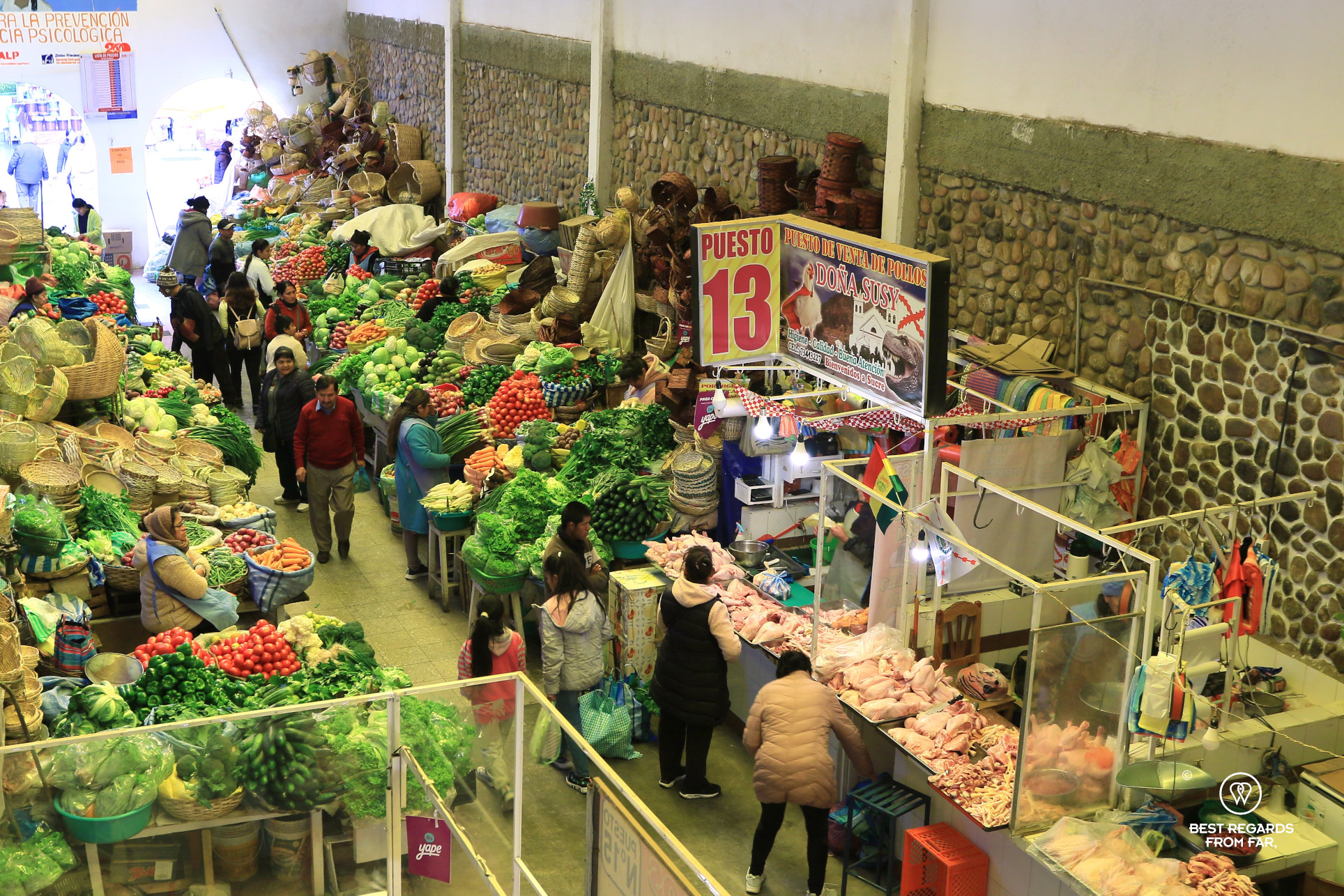

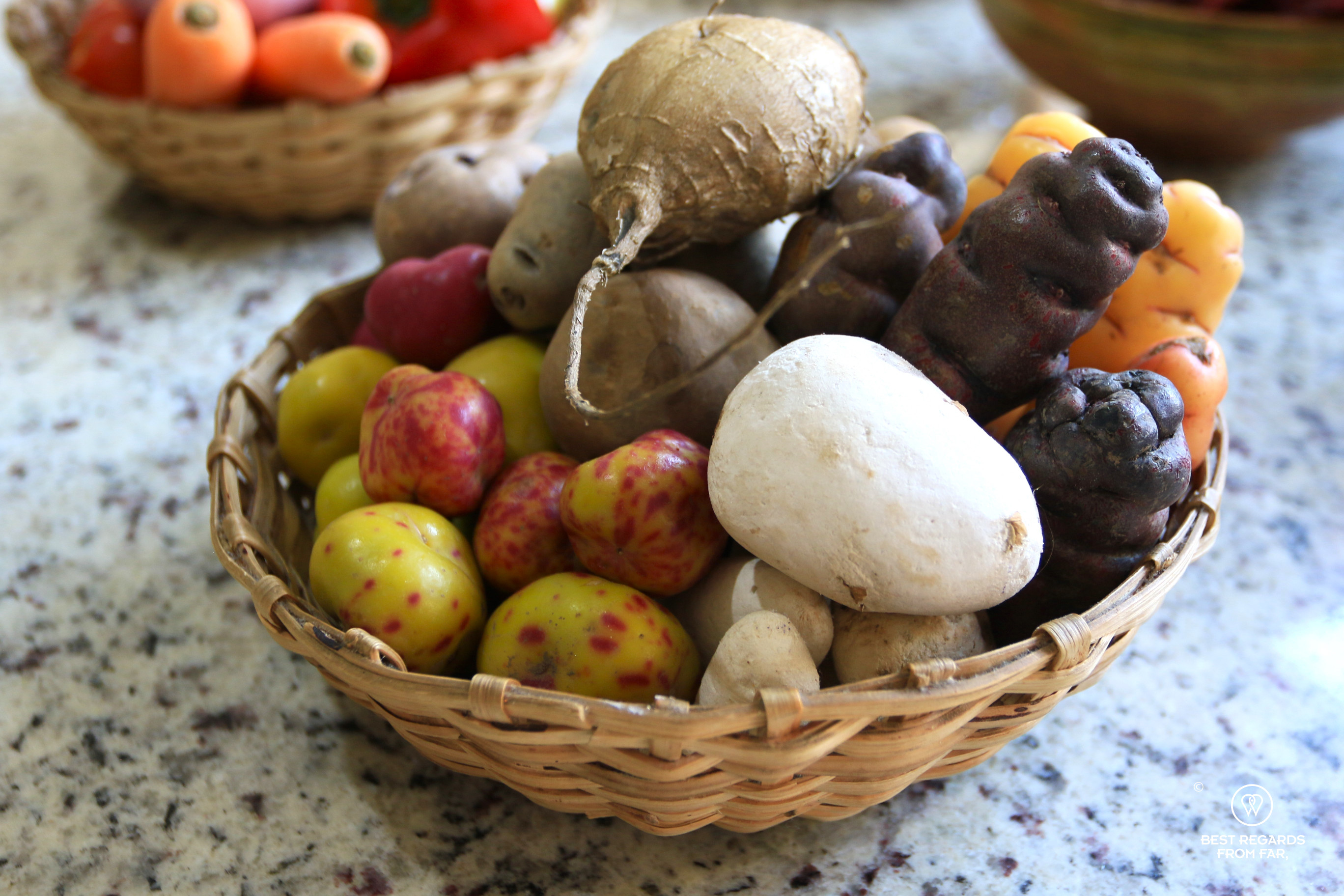
Chef Moises buys the ingredients he needs for tonight’s menu. As he stops by a stall, the variety in sizes, colors, and shapes of potatoes is dazzling. With their roots in the Andes and no less than 3,000 species of potatoes grown in the cradle of one world’s most eaten staple food, the root vegetable is an essential component of most Bolivian dishes. Beyond the regular boiling, frying and mashing, some can be eaten raw while others are medicinal like the purple isaño used against prostate problems, the ajipa which is believed to fight gastritis and to clean the kidneys, and the jacon which is used against diabetes.
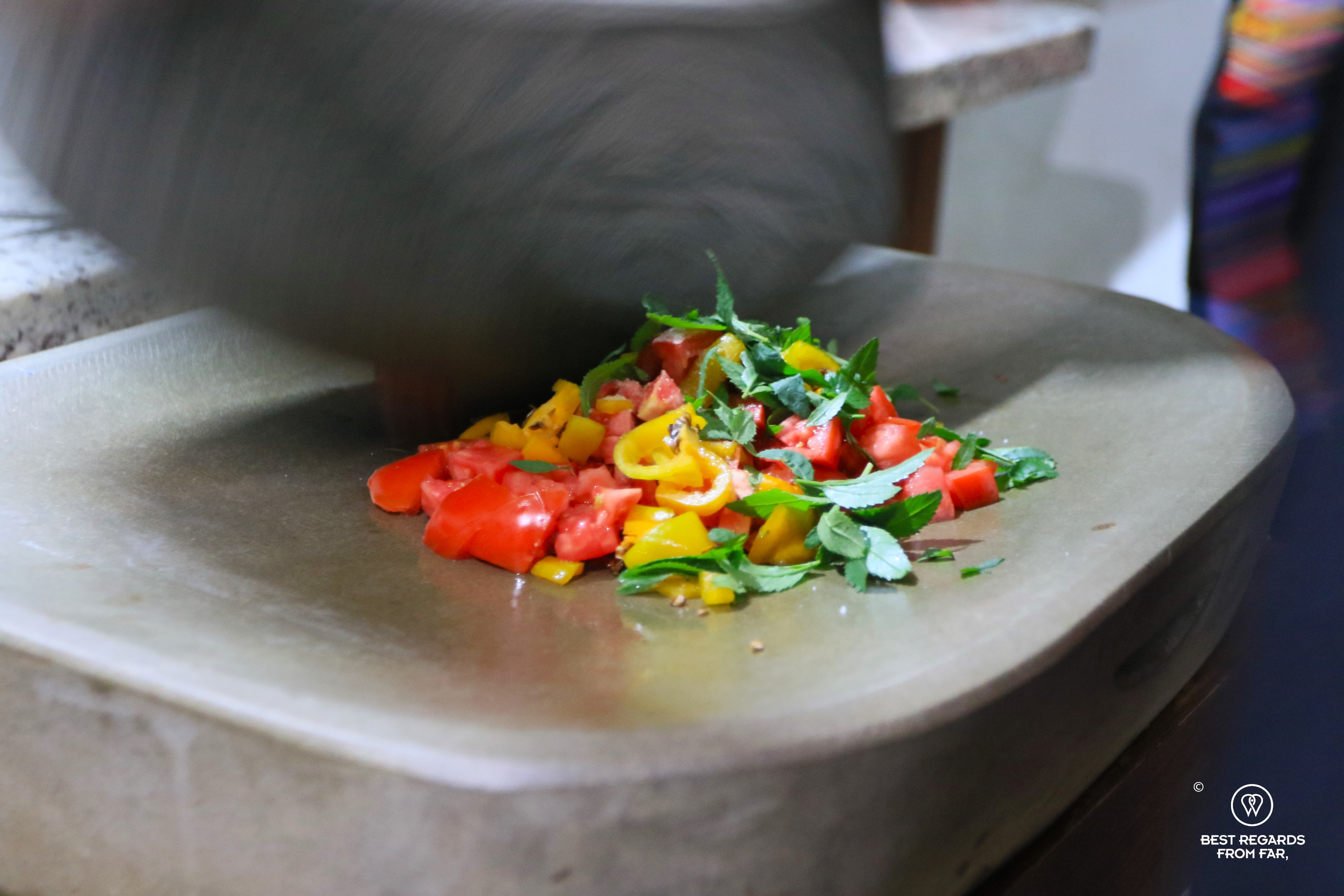
To highlight this paramount ingredient, we will be preparing huyacu papas with the unavoidable hot salsa made from scratch of hot chilies, tomatoes, onions, huacatalla herb, and a pinch of salt from the Salar de Uyuni on a grinding stone. Chef Moises has put some oka potatoes in the sun earlier that morning so that they get a bit sweeter. The tiny and bright yellow and green lisa potatoes, as well as the purple isaño are also added and boiled together before being fried in a pan. The diverse textures and tastes of the huyacu papas, for us a hearty starter, for many Bolivians a snack eaten standing, are a real discovery.

Another unavoidable staple food is the white chuño, a potato that has been freeze-dried naturally for centuries in the Andes thanks to very sunny days and ice-cold nights. This conservation technique allowed Andeans to keep the chuño for up to 20 years, a life-saving carb when the El Niño weather phenomenon has led to periods of famines over the millennia in South America. The freeze-dried potato, a key ingredient of the picante de pollo, simply needs to be soaked in cold water overnight, diced, and boiled for 40 minutes in water and salt.
A thick and red sauce made of rehydrated aji (roasted above a flame, boiled for one hour, and peeled), garlic, carrots, and onions made thinner by a homemade stock in which Chef Moises has kept adding vegetable peels to the carcass of the chicken, along with red paprika, parsley and celery will give the dish its characteristic taste.
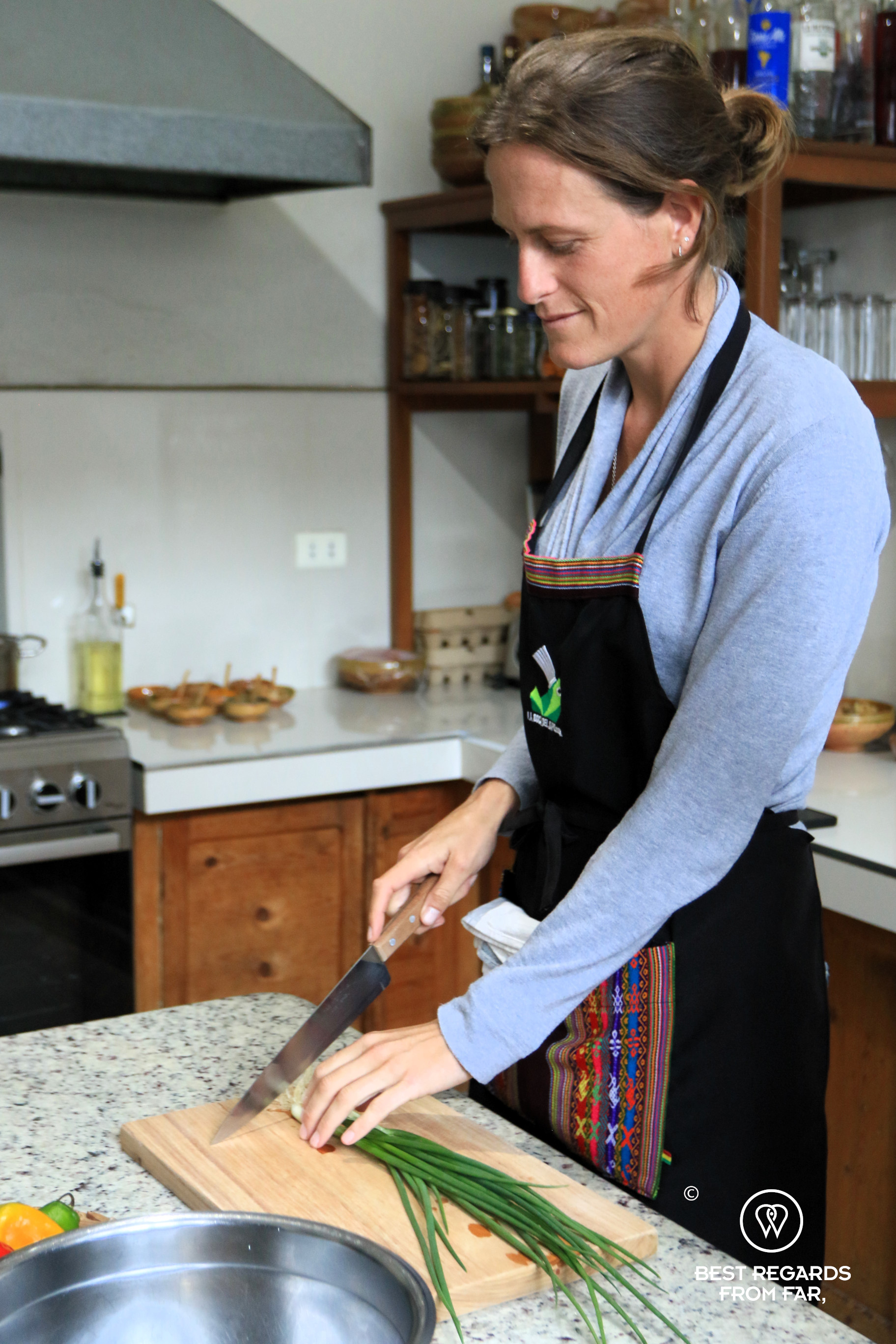
Sprinkled with spring onions, and plated with some curcuma-flavored rice, the picante de pollo recalls the red, yellow, and green Bolivian flag. In a country where proteins are not affordable for everyone, the traditional dish with its generous portion of chicken breast is reserved for special occasions.
Proyecto Nativa
Other special occasions in Sucre can be celebrated in some of the most innovative restaurants in the country. Proyecto Nativa by Chef Juan Pablo Gumiel has also been discovered by The World’s 50 Best and in its homey atmosphere that feels like a cozy living room, its 12-course tasting menu revolves around local ingredients, including copuazu powder, an endemic fruit of the same family of cacao, uchuluru or chili seeds for a little kick, llullucha, an endemic bacteria of the high Andes to name only a few of the most original ones. The pairing is a fantastic way to also get more familiar with Bolivia’s high altitude wines, local gins, and coca leaf-based spirits in creative and perfectly balanced cocktails.
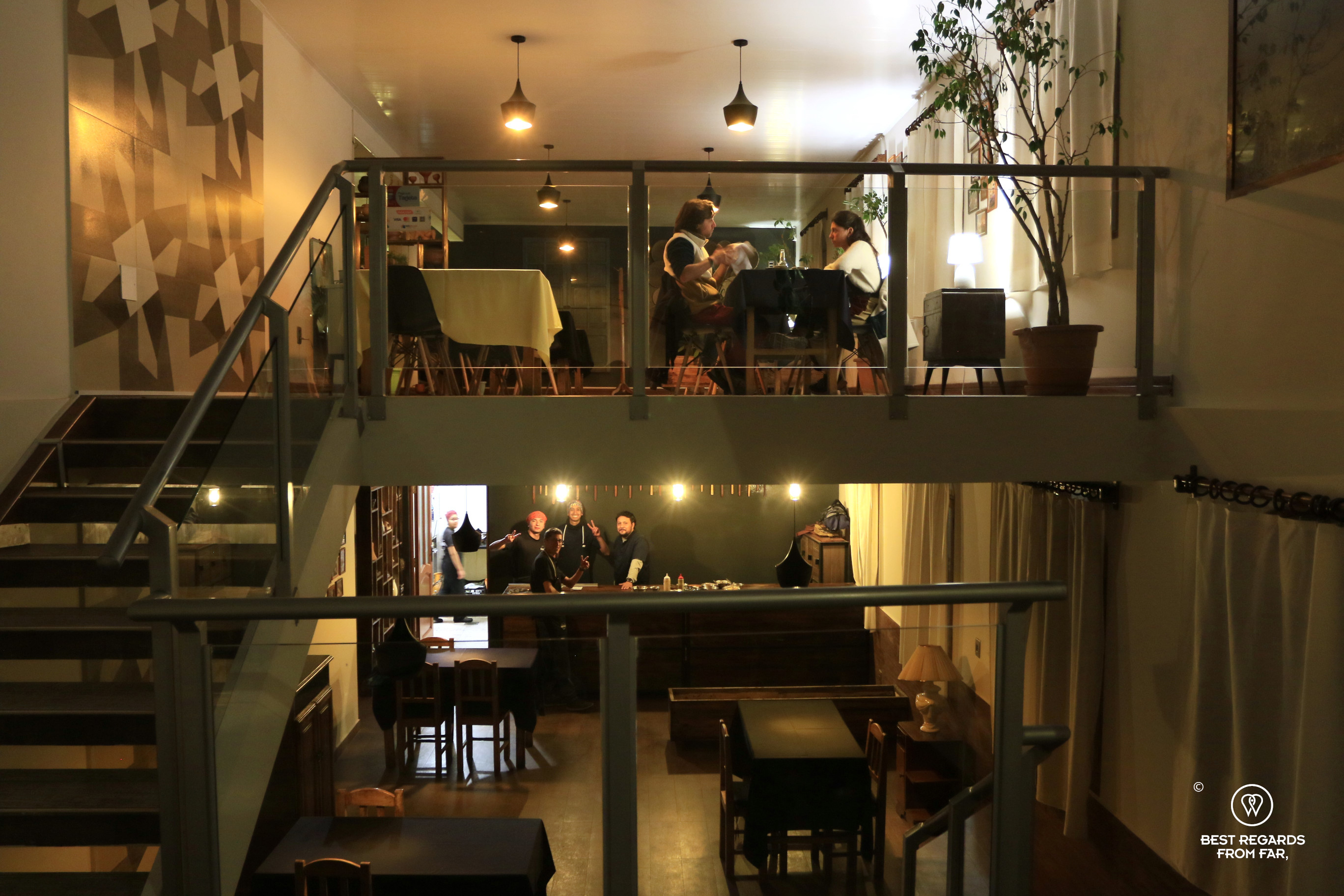
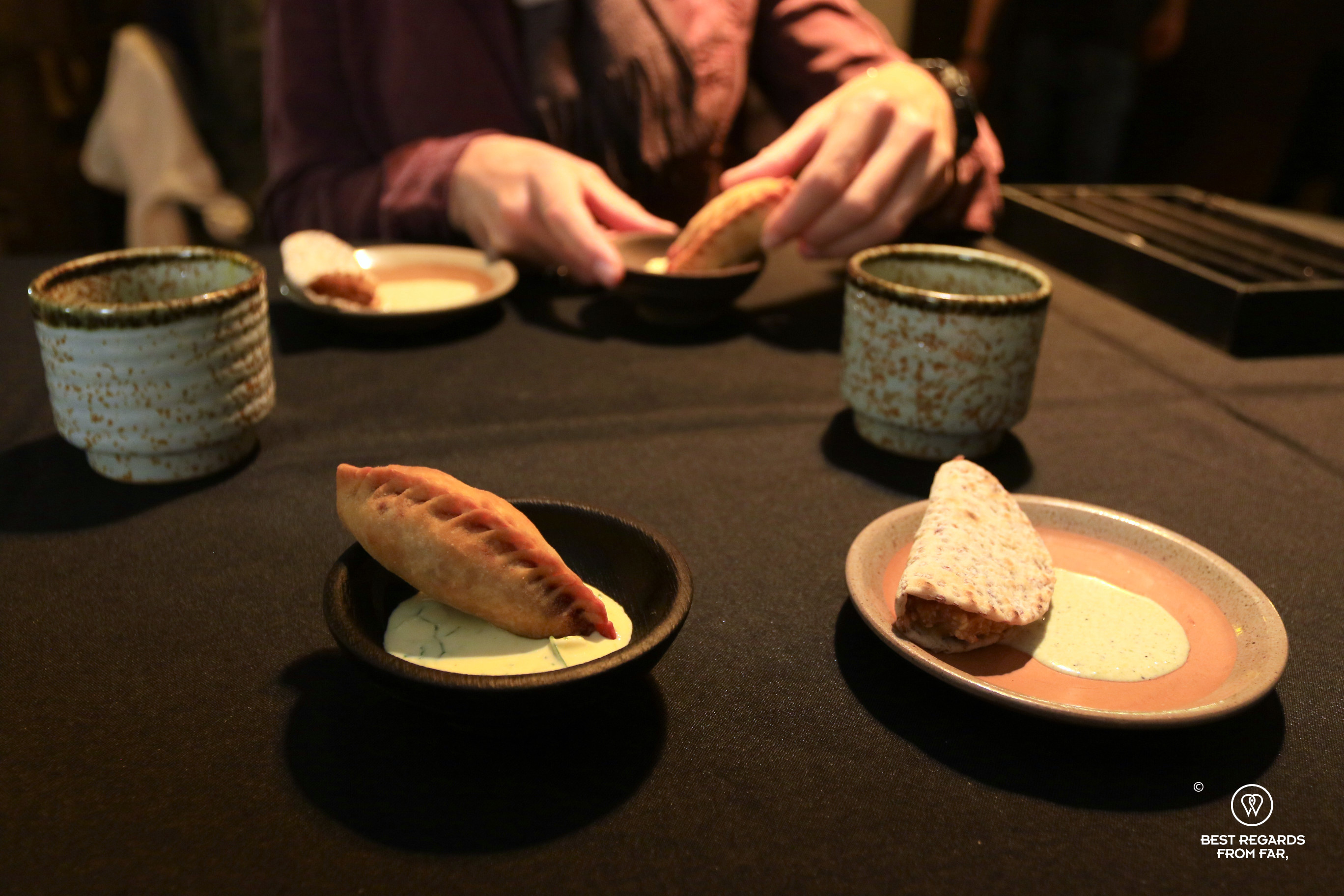
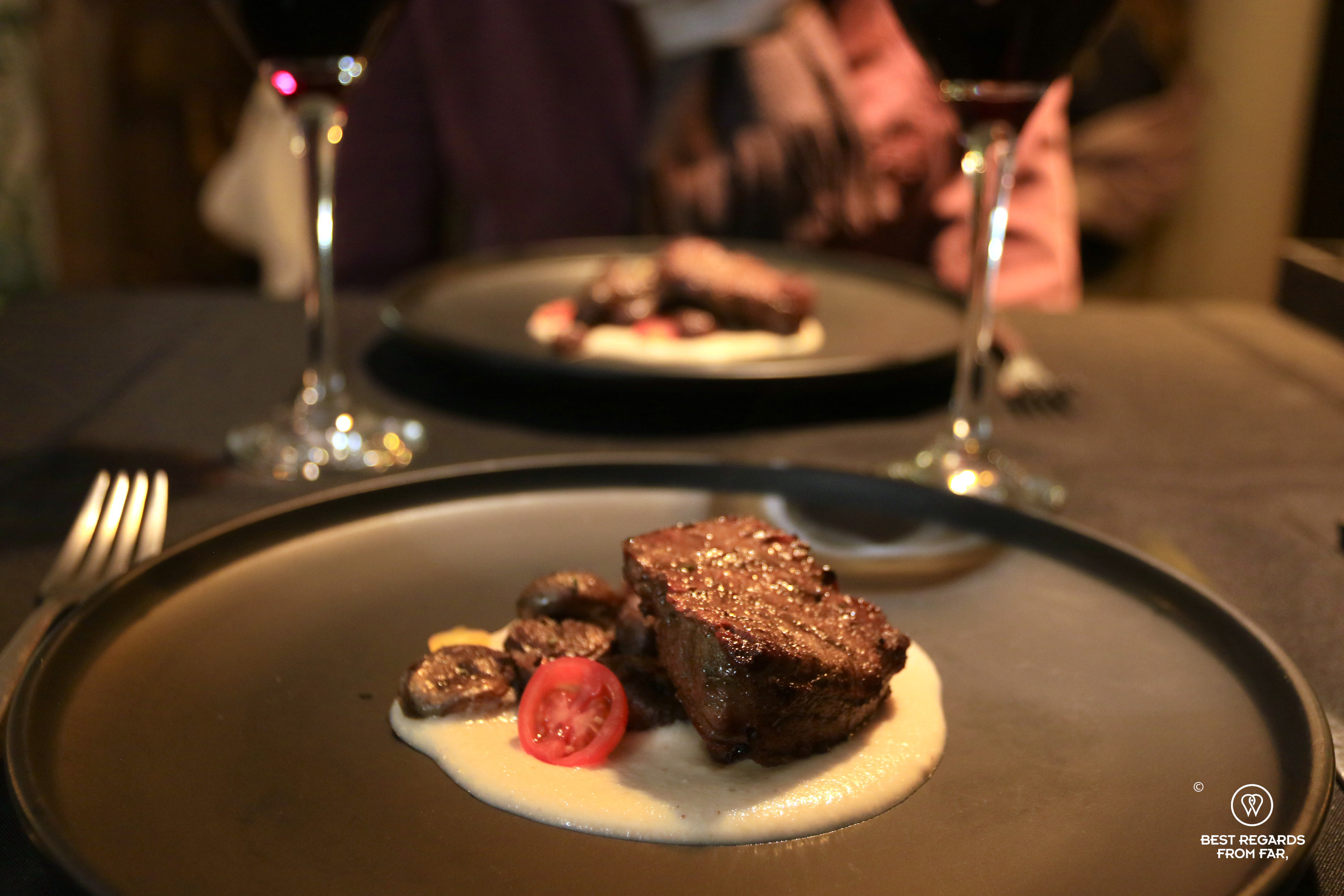
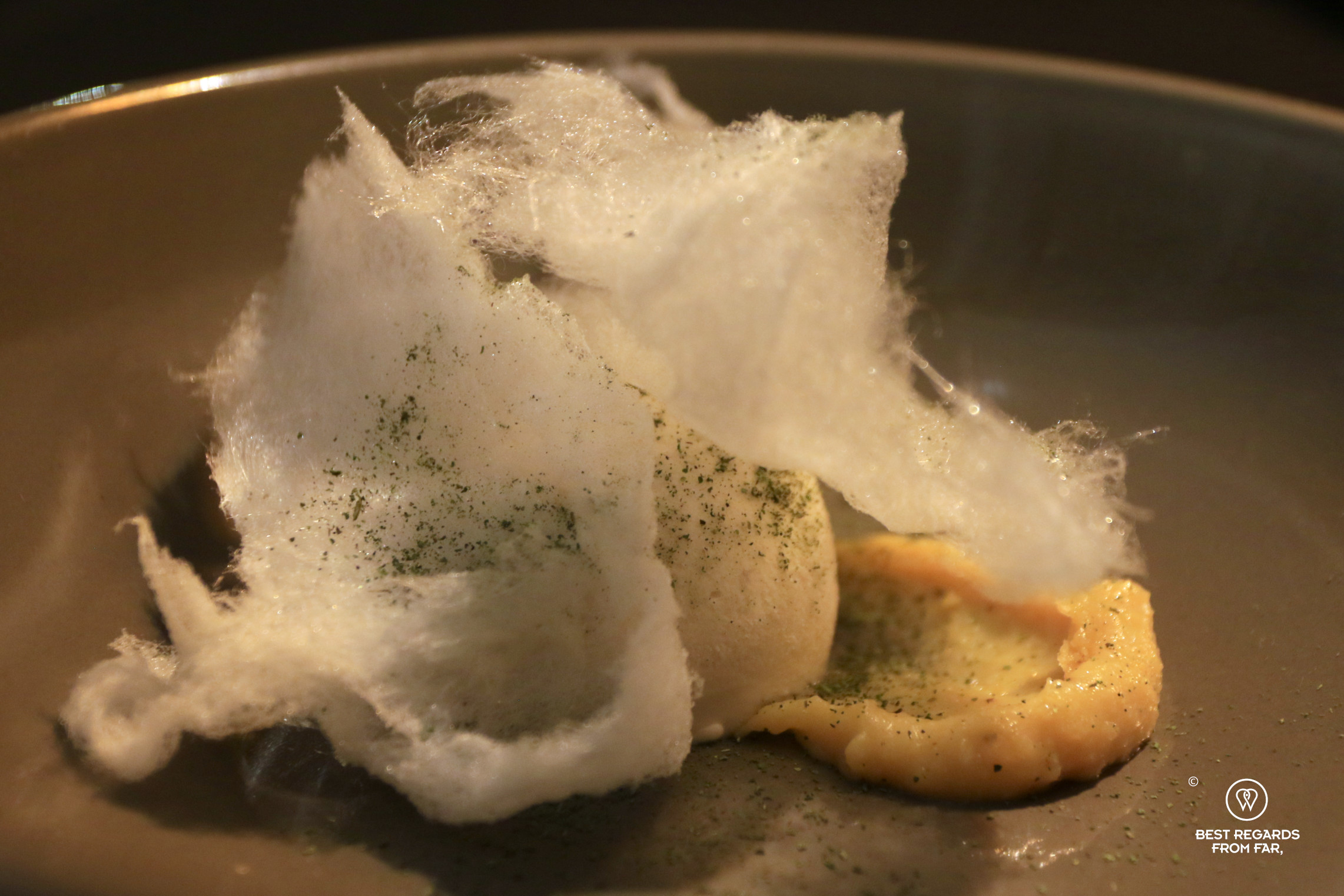
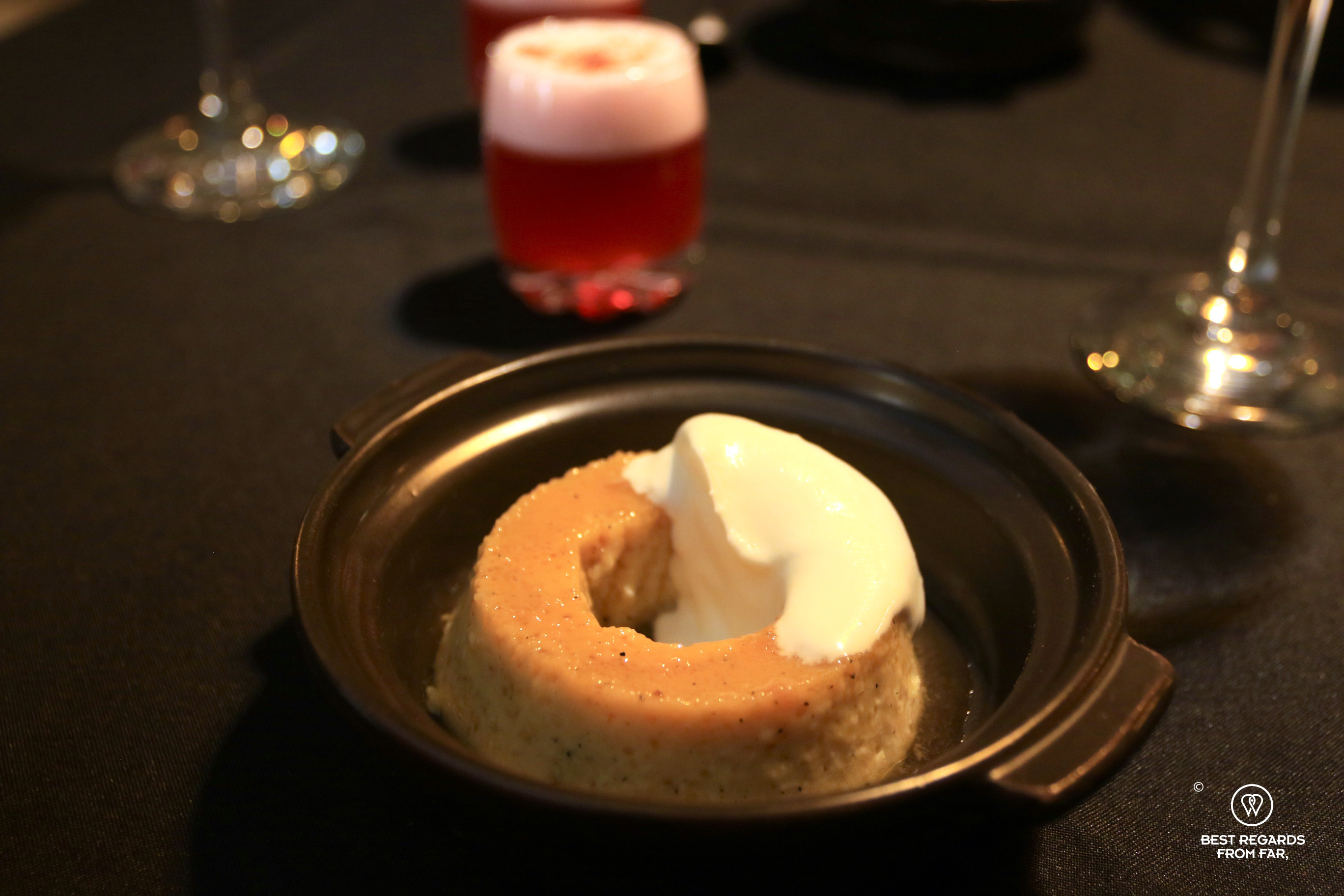
With a changing menu, tonight’s tribute to Bolivian street food takes empenadas, papas rellenas (stuffed potatoes), tacos, and tamales to the next level with an exquisite plating and original ingredients to be enjoyed as finger foods. More noble dishes take over the second movement with the paiche Amazonian fish highlighted in a Bolivian take on ceviche in its edible cup of dough, the barbecued trout, definitely a mountain’s favorite, and the perfectly grilled beef. If desserts are not really part of the Bolivian food culture, Proyecto Nativa unwraps a third part for sweet teeth with a roasted corn flan, fried bananas topped with cotton candy and served with a to-die-for chirimoya ice cream, and chocolates, a must in Sucre.
El Solar
Closer to the lovely Plaza 25 de Mayo, the main square of the white city, El Solar is a favorite amongst French travelers! That must say something. And it is clearly for delicious reasons. Here, it is antique clocks, paintings, and mirrors with jazz playing in the background that give an immediate homey feeling to the venue. On the menu, one option: a 7-course tasting menu crafted by Chef Federico Guardia Rück. Far from the traditional Bolivian fare, Chef Federico also highlights local ingredients from Amazonian algae to herbs of the Altiplano in a very innovative collection of dishes beautifully plated and in which every cooking technique is executed skillfully by his wonderful kitchen staff.

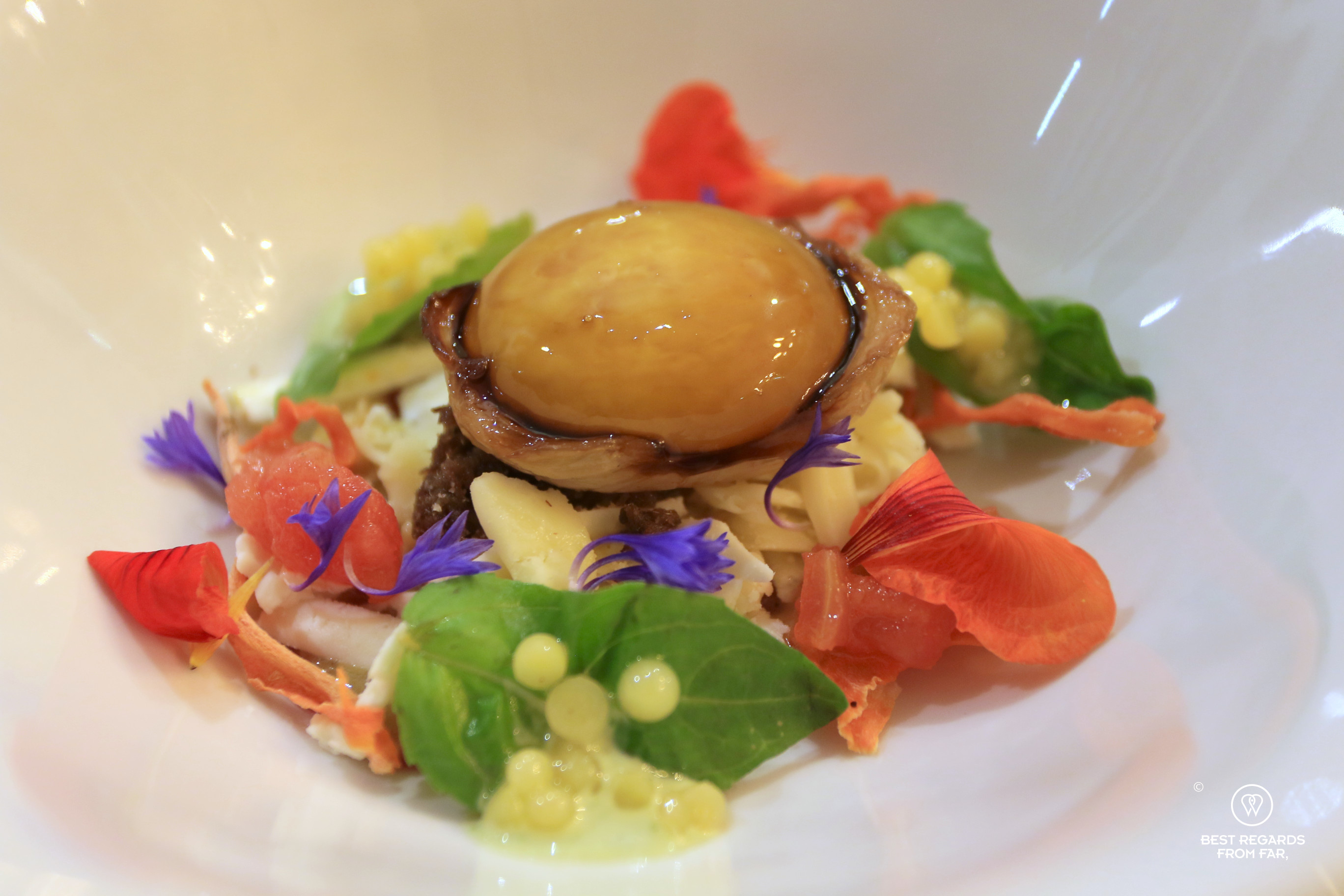
A variety of local vegetables, meats, seafood, and cheeses composes that colorful and vibrant palette from start to end, with a finishing touch of edible flowers. Textures are also worked brilliantly, with a hint of crunchiness either from homemade crisps from one of the thousands species of potatoes of Bolivia, or the perfectly cooked pork belly, chopped nuts, or simply the way the vegetables are prepared. Foams and emulsions are also part of the ballet of unique dishes.


***
Cuisine is an excellent way of digging deeper into local cultures, and our exploration of Sucre’s food scene had us uncover a wealth of ingredients, many endemic, organic, and all expressing the cultural patchwork of Bolivia. With innovative chefs, is Bolivian cuisine about to take off? Be ready to buckle up in Sucre!
Travel tips:
- To learn more about Bolivian food and cook your own in a small group or privately, book your cooking class with La Boca del Sapo in Sucre. The market tour is optional.
- Make sure to book your Proyecto Nativa experience.
- Proyecto Nativa started in La Paz: check it out too!
- Make sure to book your meal at El Solar.
- Check out our interactive map for more in the area (black pins lead to an article):
For more in Bolivia:





 Best regards from far,