Article updated on December 13, 2025
Text: Claire Lessiau
Photographs: Claire Lessiau & Marcella van Alphen
Pin it for later!
1. Brush up on your history to appreciate your visit better
Sailing for the British East India Company (EIC), Captain Francis Light landed on the mostly uninhabited Penang Island in 1786, then a hideaway for pirates. At that time, in the Strait of Malacca, only Malacca was occupied by Europeans (the Portuguese since 1511, displaced by the Dutch in 1641). In exchange for protection from the Siamese and Burmese, the owner of the island of Penang, the Sultan of Kedah, gave it to Francis Light for the EIC. However, Light did not get the support he needed from the British administration in India to honour his promise as it was afraid of the powerful Siamese. The sultan of Kedah tried to retake the island, eventually being defeated by the British. In 1791 Penang was sold to the British, and today Penang still pays a yearly tribute to the sultanate of Kedha (of about USD 100,000).
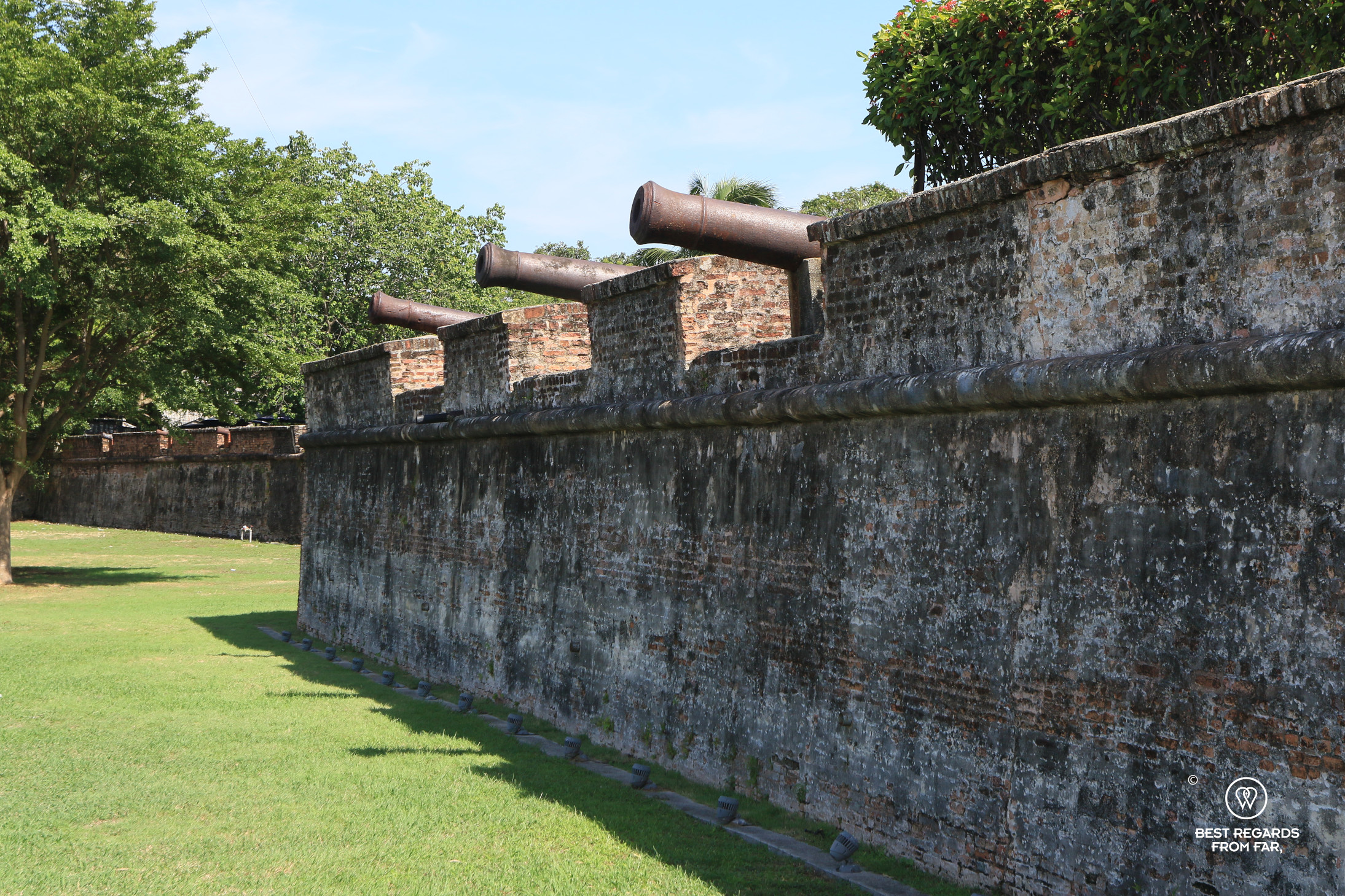
The legend says that Light fired silver dollars from the canons of his ship to motivate his men to clear the rainforest to make room for the settlement, the oldest British trading post in the Far East. To attract settlers, the port was turned into a duty free zone, and as much land that could be cleared could be claimed by the newcomers. The settlement became the city of George Town counting 10,000 souls by 1800. If European settlers gave a shot to spices such as clove and nutmeg, trading also involved tin, rubber and china. By the mid-1800s many became involved in the Chinese opium trade and Penang toughened up with brothels and gambling dens run by Chinese secret societies.


These secret societies followed the Chinese settlers, who brought their ethnic conflict from mainland China between the Hokkien – still dominating Penang that is more than 50% Chinese today – and Hakka groups (whose most prominent secret societies were respectively the Ghee Hin and the Hai San). The British who had no idea how to control the Chinese had to eventually step in to conclude a peace agreement between the factions.
To compensate for the loss of free port status in 1969 that triggered massive unemployment, the local government developed free industrial zones. Today, many foreign companies settle in the Silicon Valley of the East. Investors mostly from the USA, Germany, Japan, and more recently China, make Penang one of the most revenue-generating regions of Malaysia after Kuala Lumpur, while its historic UNESCO World Heritage centre attracts many tourists.

2. Visit a Peranakan mansion
The Peranakans are descendants of immigrants who married a Malay woman. In Penang, Peranakan Chinese are many, with ancestors coming from mainland China. This mixed culture that started in the 15th century is unique to Penang, Malacca, and Singapore. If religion and name come from the paternal side, customs, language, and dress come from the maternal side. Often wealthy traders, their lifestyle also incorporated European influences as their revenue came mainly from trading with the British: Peranakan boys were often sent to missionary schools to learn English to facilitate trade. While the goods traded mattered little, sugar, tin, rubber, pepper, tea, coffee, tobacco, and rice were often completed by opium, explaining the opulence of the Peranakan mansions and the involvement of their owners in the Chinese secret societies of Penang.


Former residence of the Hai San secret society leader, Kapitan Cina Chung Keng Kwee (1821-1901), the Pinang Peranakan Mansion was built in the late 1890s. A tin mining innovator, he became a political and social leader, and an important figure in the history of northern Malaya during the 19th century. Visiting his mansion is a fascinating peek into this unique Peranakan heritage, a whirling pool of cross-cultural energies where Italian-style stain-glassed windows representing Chinese women, European-inspired teak furniture, and wood-carved armchairs ending in dragon heads are displayed next to Scottish ironworks, Victorian balconies, and English floor tiles. The magic of the Chinese Empire embraced the glory of the British one in the Malay world!
The Feng Shui principles, well-hidden to the non-initiated dominate, letting air, water, and energy flow harmoniously. The classic symmetry of the house ensures the “heart” is located in the centre of the main courtyard, the point from which the greatest “chi” energy emanates. This central courtyard used to be open to the sky to let the positive energy flow in freely. In the card room, a play of mirrors ensures that the master of the house can have eyes on all things: the entrance, the staircase, and the side entrance to the room. Women were prevented from having direct contact with men via Chinese partitions that were also breaking evil spirits. Avoiding hard partitions and straight lines was another way of letting good energy flow into the mansion.


The rich legacy of mansions and antiques is only a facet of the Straits Chinese, as they differentiate themselves from the Chinese who arrived later. The Peranakans have deeply marked the local culture, language, and cuisine – the Nyonya cuisine (as Peranakan women are referred to while men are known as Baba), a must-try!
3. Stay at Campbell House [royal & stylish]
It is hard to believe that the stylish Campbell House used to be a budget hotel housing sailors and pilgrims on their way to Mecca, before turning into a prostitution den in the 1920’s for high-class courtesans.
The 100-plus-year old building was given a new life as a vintage heritage boutique hotel owned by the husband and wife team Roberto Dreon and Nardya Wray, the latter of the royal family of the sultanate of Kedah. Nardya did not stand a chance as the ruler of Malaysia in the only rotating monarchy in the world where 9 sultans take turns: first, as a woman she is ruled out from the throne, second, her mother married a British and only ethnic Malays can rule. Nardya’s great-grandfather was the first ambassador of Malaysia in the UK, and her great-grandmother’s handwoven songket intricately patterned with gold threads that had been worn during official functions adorns one of the 12 unique rooms of the Campbell House. Others are tastefully furnished often with some antiques from the palace of Kedah. The royal references do not stop at the furnishing as guests are treated as royals by the attentive and excellent staff!


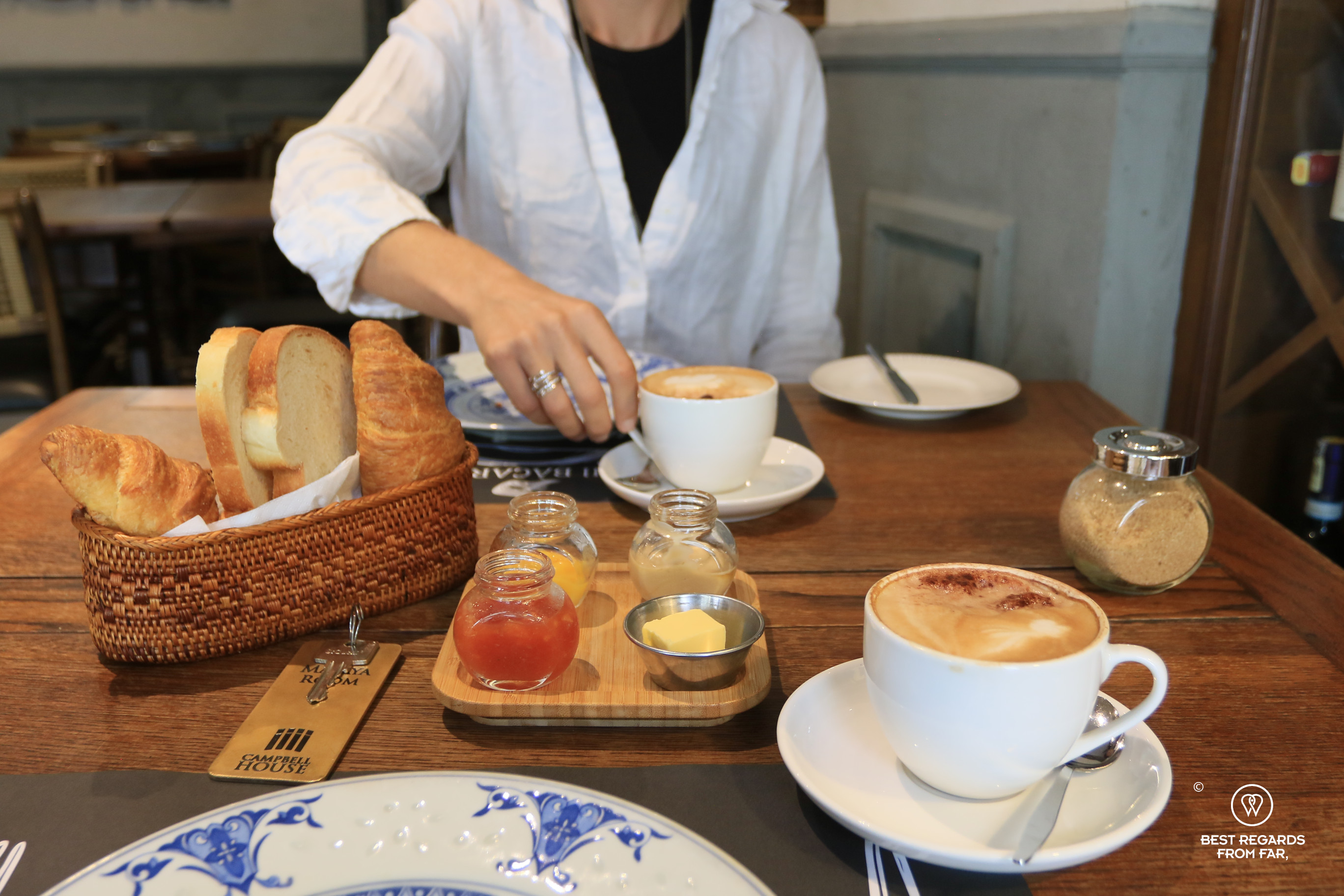
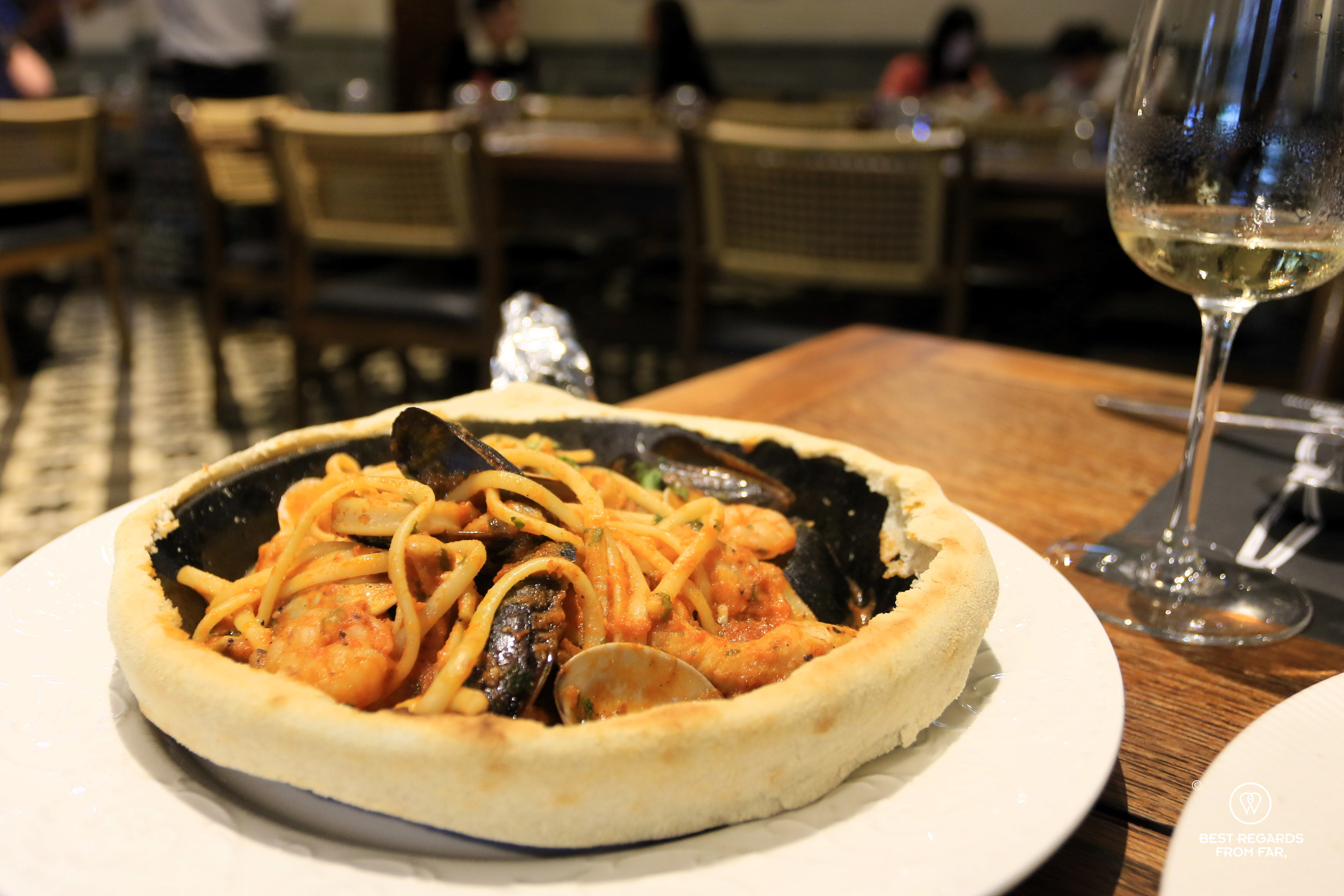
Roberto is the inspiration and mind behind the restaurant of the Campbell House, Il Bàcaro, the only Italian restaurant of Malaysia that is Michelin-selected. With local ingredients and a few critical imports from Italy (including wine!), Il Bàcaro adds a Venetian twist to the culinary melting pot that is George Town.
Located in the vibrant new part of Chinatown that used to be the heart of the red light district, the stylish boutique hotel is the ideal base to explore George Town’s rich cultural heritage, diverse food culture, and Penang’s abundant rainforest.
4. Indulge in the multicultural street food!
With a population that is more than 50% Chinese, no wonder there is a vast array of Chinese food available in town with hawker centres that seem to be found at every other street corner!
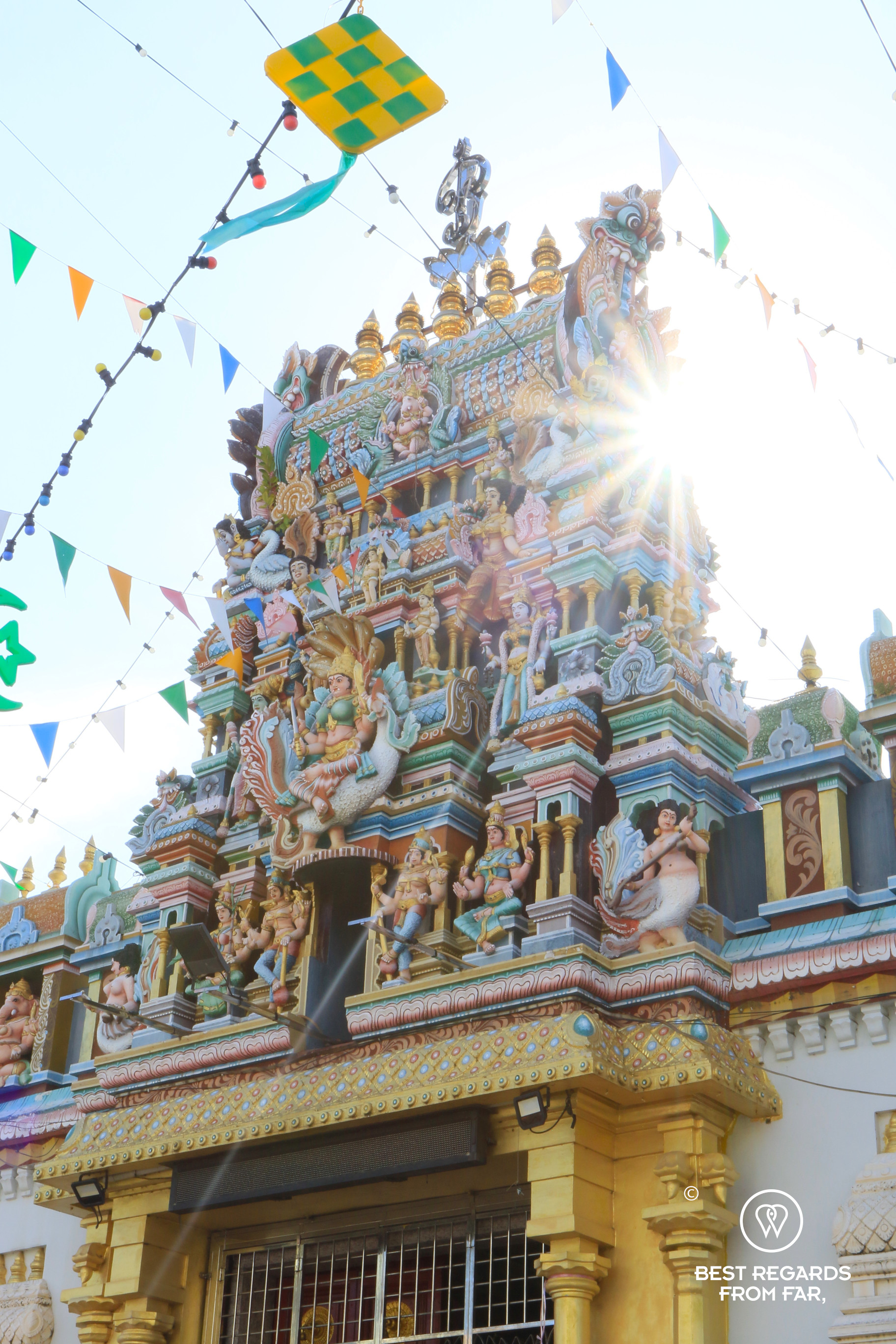
A short stroll away, Little India is the district where early Indian immigrants first settled down in Penang. Today, it is easily recognizable by the Indian music resonating in the streets, the colourful traditional saris hung in clothing stores, the richly decorated Hindu temples, and the scents of savoury cuisine and exotic spices emanating from Indian restaurants, showcasing their specialties. With Indian immigrants coming mostly from the south of the country, it is this cuisine that is the most common, from chapati sets to rotis, and meals served on banana leaves.
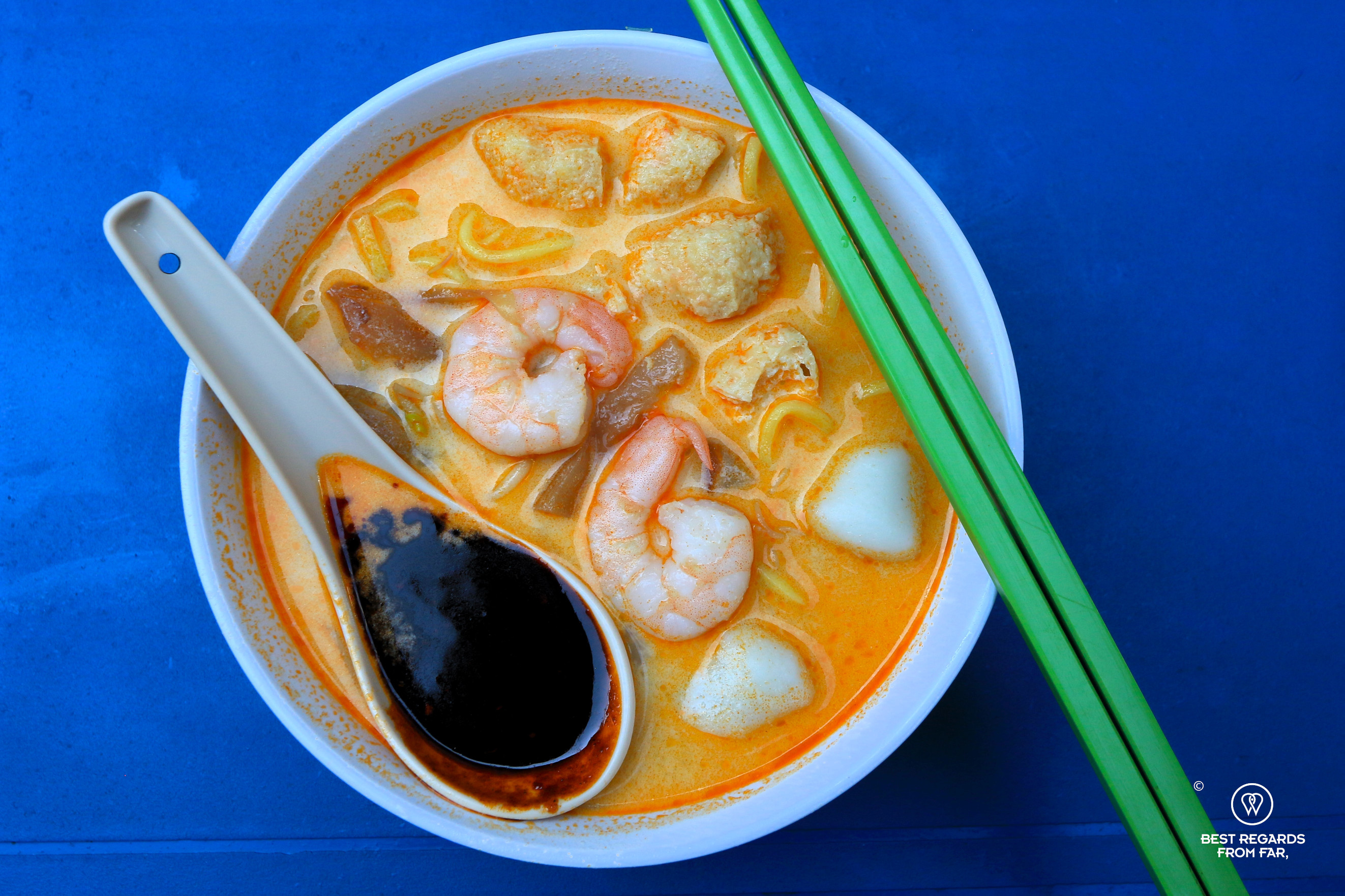

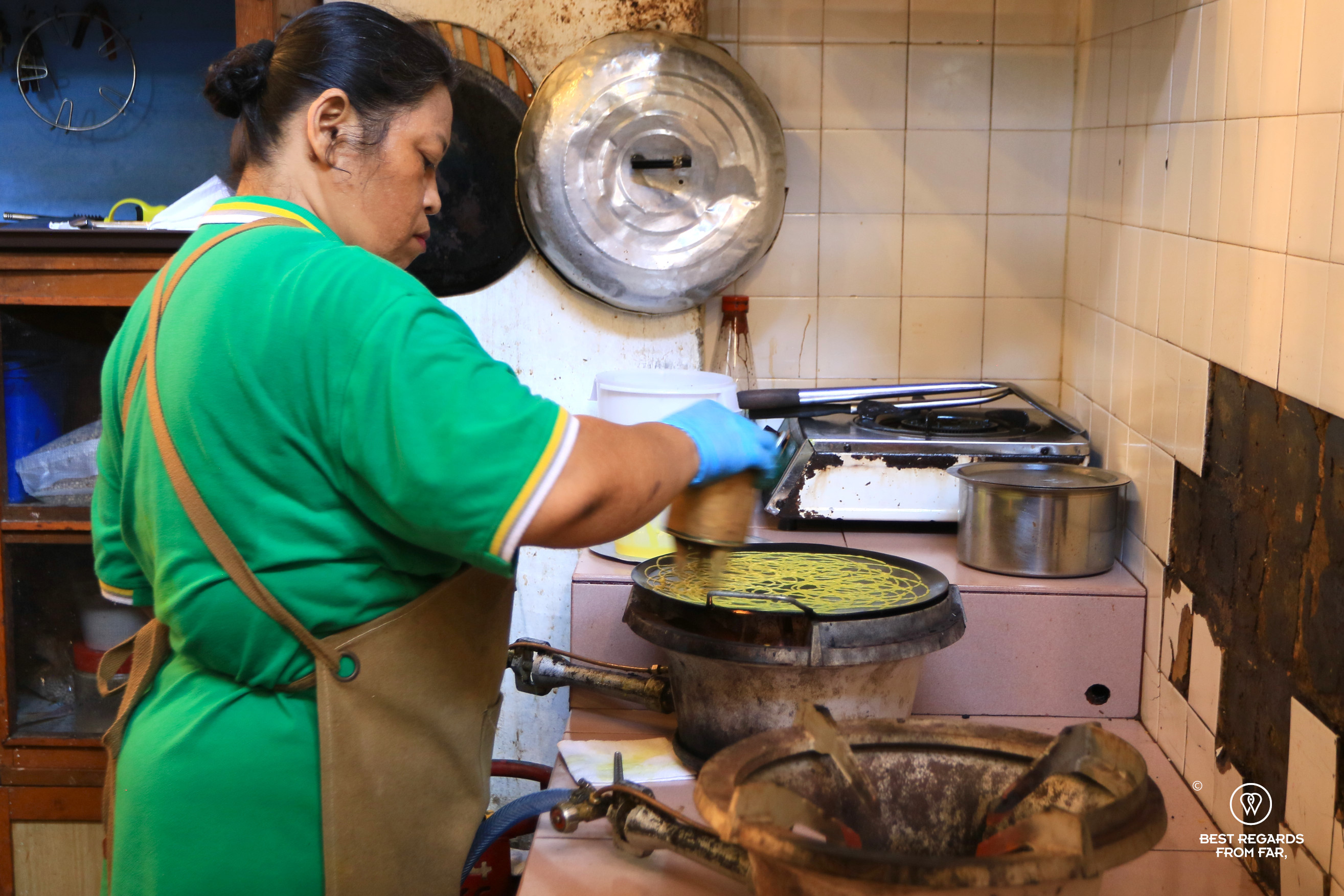
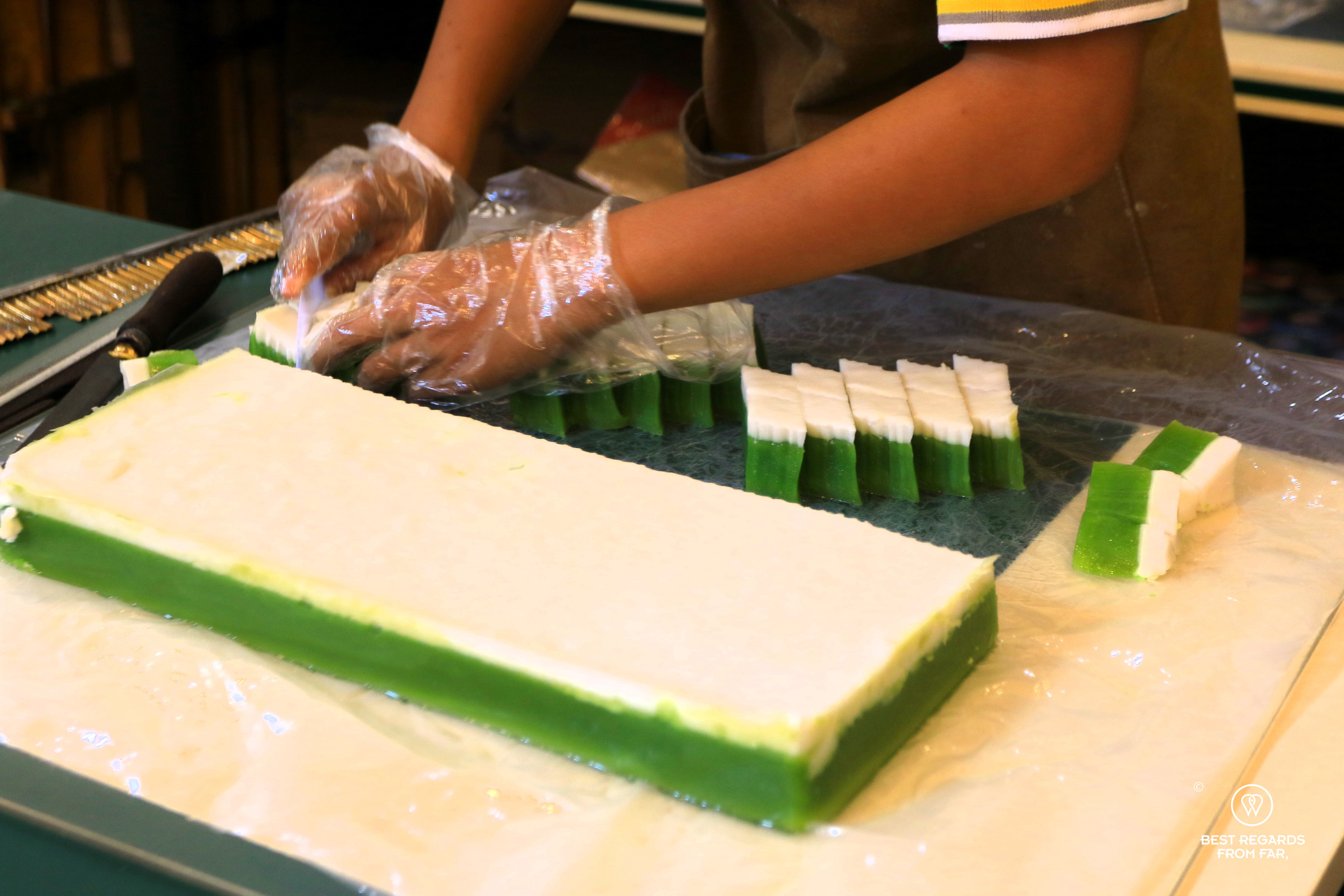


And last but not least, unique to Malaysia, the Peranakan cuisine or Nyonya cuisine, a fusion between Chinese and Malay is very popular here in Penang, especially for its delicious and vivid confectioneries.

5. Discover the Chinese clan jetty
From its establishment in 1786, the status of Georges Town as a free port considerably boosted its boat traffic, from cargo to passengers making it one the major ports in British Malaya. Even if it decreased a bit with Singapore taking over in 1832 after its establishment for the EIC by Raffles, the local tin boom ensured enough maritime traffic for Penang to thrive.
Immigrants from all over Asia flocked in, and many came from mainland China such as the ancestors of the Peranakans.
In the 19th century, some of these Chinese immigrants, attracted by the plentiful work in George Town settled along jetties. Dock workers, boat operators ferrying people and cargo, and sometimes fishermen, living on the jetties was not only practical but also affordable as these immigrants could not afford housing elsewhere. Living in houses on stilts above the water, and not on land also meant that these Chinese clans did not have to pay taxes to the British administration. In turn, they were only given Temporary Occupation Licenses by the British authorities following the independence of Malaya which have to be renewed annually, jeopardizing the permanence of the clan jetties.


To this day, the jetties are still named after the surname of the clan residing there. Of the 11 original clan jetties, only six have survived: many were lost to fires as the original roofs used to be thatched. If modernity has improved living conditions, with electricity, running water, and air conditioning (when it comes to waste water, modernity has not hit yet), the Clan Jetties retain traditional Chinese culture and customs with their Taoist temple, hawker food, and doors of houses often open.
The wooden stilts require constant maintenance, having to be replaced every five years, and more and more get replaced by concrete foundations. If the clan jetties are a peak in the ancient George Town and a specific tradition, the rather basic living conditions deter many of the younger generations who not only do not live from the harbour anymore but also aspire to a comfortable apartment in town.
6. Marvel at the finest clan house: Leong San Tong Khoo Kongsi
With groups of 6 or more forbidden to chat in the streets under British rule, the Chinese structured themselves around kongsi or clan houses, partly a temple, partly a meeting hall for the family members.
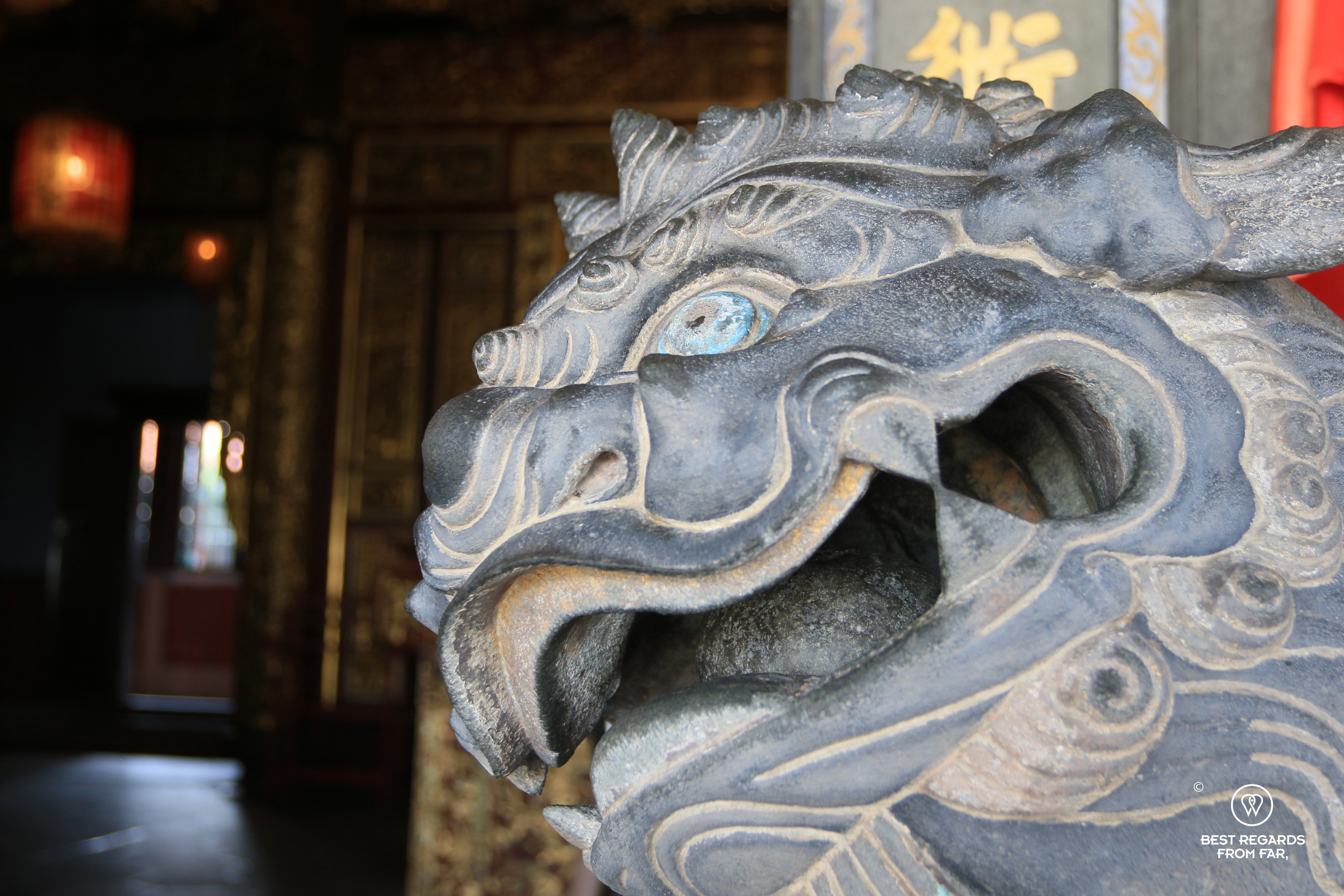
The Khoo clan hails from the Hokkien province of China and became one of the ruling clans in Penang (and also spread all over China, Taiwan, the Philippines, Indonesia, Myanmar, Thailand, Singapore, America and some European countries with a genealogy spreading over 1,000 years!). While they saw Captain Light land in Penang, it is only in the 19th century that they had the Khoo kongsi built. To this day, it remains the finest kongsi of Penang, and it is still maintained by the Khoo family while it remains one of the wealthiest Chinese clan associations in northern Malaysia. Stepping in the kongsi reveals a feast of arts that is truly admirable: gold-plated wood carving, ridge decorations, fine stone carvings, painted wooden beams, murals of all sorts, delicate Chinese lanterns…



7. Peer into the Chinese secret societies…
The role of the Chinese secret societies of Penang went further than providing mutual support to Chinese immigrants. Prostitution, human trafficking, gambling, extortion, mercenary, bribery, and conspiracy were some of their lines of business.
As the British did not manage to exert any control over these secret societies, they relied on the head of the kongsi to keep things in order, turning a blind eye to the internal ways of the triads.
However, things got completely out of control, putting a stop to the profitable tin mining when the Hai San and Ghee Hin secret societies fought openly by the mines in a struggle for supremacy between Chinese secret societies. Over more than a decade, any pretext was valid to start an open war that turned into civil war when the local Malay leaders decided to take sides. In 1874, British intervention put an end to the Larut Wars, legitimizing British control over the Malay rulers.
Today, many secret passageways remain from these times: escape routes for triad members were built in the kongsi or temples to allow them to escape the authorities.


8. Enjoy an open-air street art interactive museum
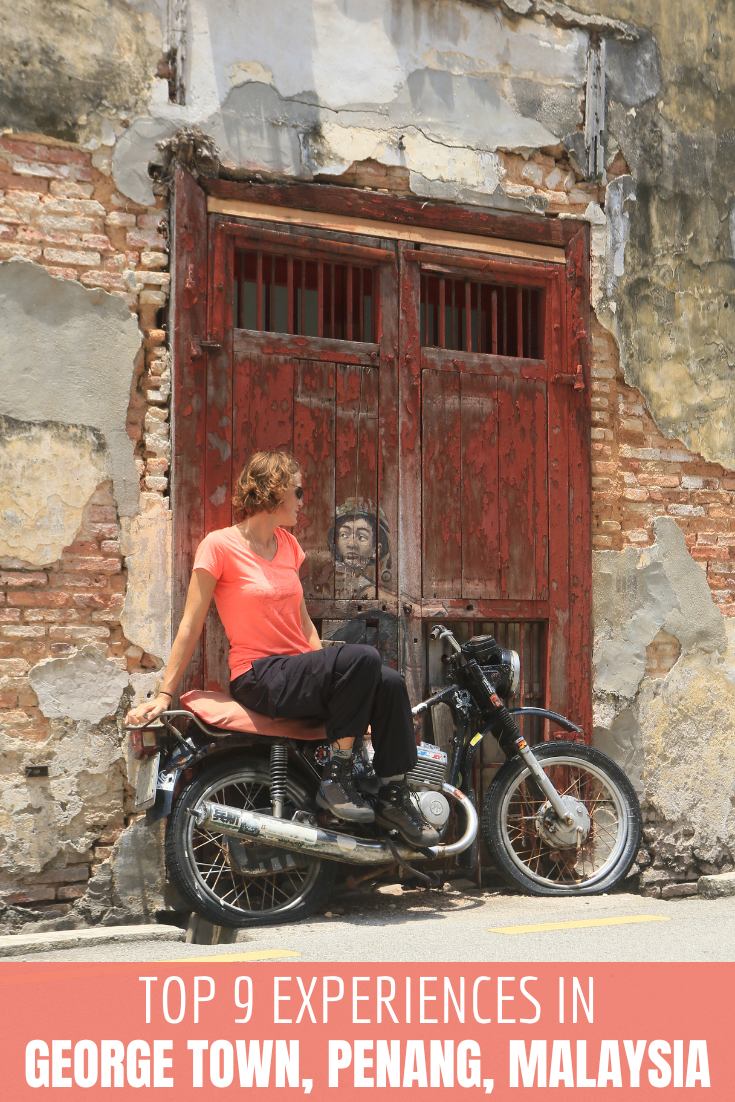
Walking the streets of George Town, one is bound to stumble upon one of the many murals or one of the 52 steel-rod sculptures by some of Malaysia’s most acclaimed cartoonists such as Lefty, Reggie Lee, Baba Chuah, under the direction of local artist Tang Amun Kian. Some tell humorous stories about the specific areas of George Town. Others are evocative of a past era like some of the water-based murals by street artist Ernest Zacharevic slowly fading away. Often inviting passers-by to interact through the use of up-cycled objects, the kids in the bike or the boy on the motorcycle are some of the most popular ones. The acrylic-based mural by the local Penang artist Lou Gan imitates the style with brother and sister on a swing, another of the most popular street art of George Town.


9. Step into the rainforest at The Habitat on Penang Hill
Admittedly, the Penang Hill can be extremely busy and noisy with locals and tourists taking in the views stretching as far as the island of Langkawi and to mainland Kedah. Actually, the Penang Hill was first cleared for these very strategic views: fearing a French attack, the British needed a better lookout point than Fort Cornwallis down in George Town. In 1793, the French Revolutionaries had declared war on all monarchies of Europe, including Britain. Britain started to secure its colonies to prevent a French take over, all the more that the Netherlands had already lost against Napoleon. The British took some Dutch possessions such as Cape Town in South Africa and Malacca. To secure Penang, a better lookout point than Fort Cornwallis was needed: the Penang Hill offered views east of George Town and northwards to the Andaman Sea, where approaching ships could be spotted before they rounded the island into the Straits of Malacca. On the order of Captain Francis Light, the hill was cleared enough to build a lookout station and a semaphore system to warn the soldiers of Fort Cornwallis below.
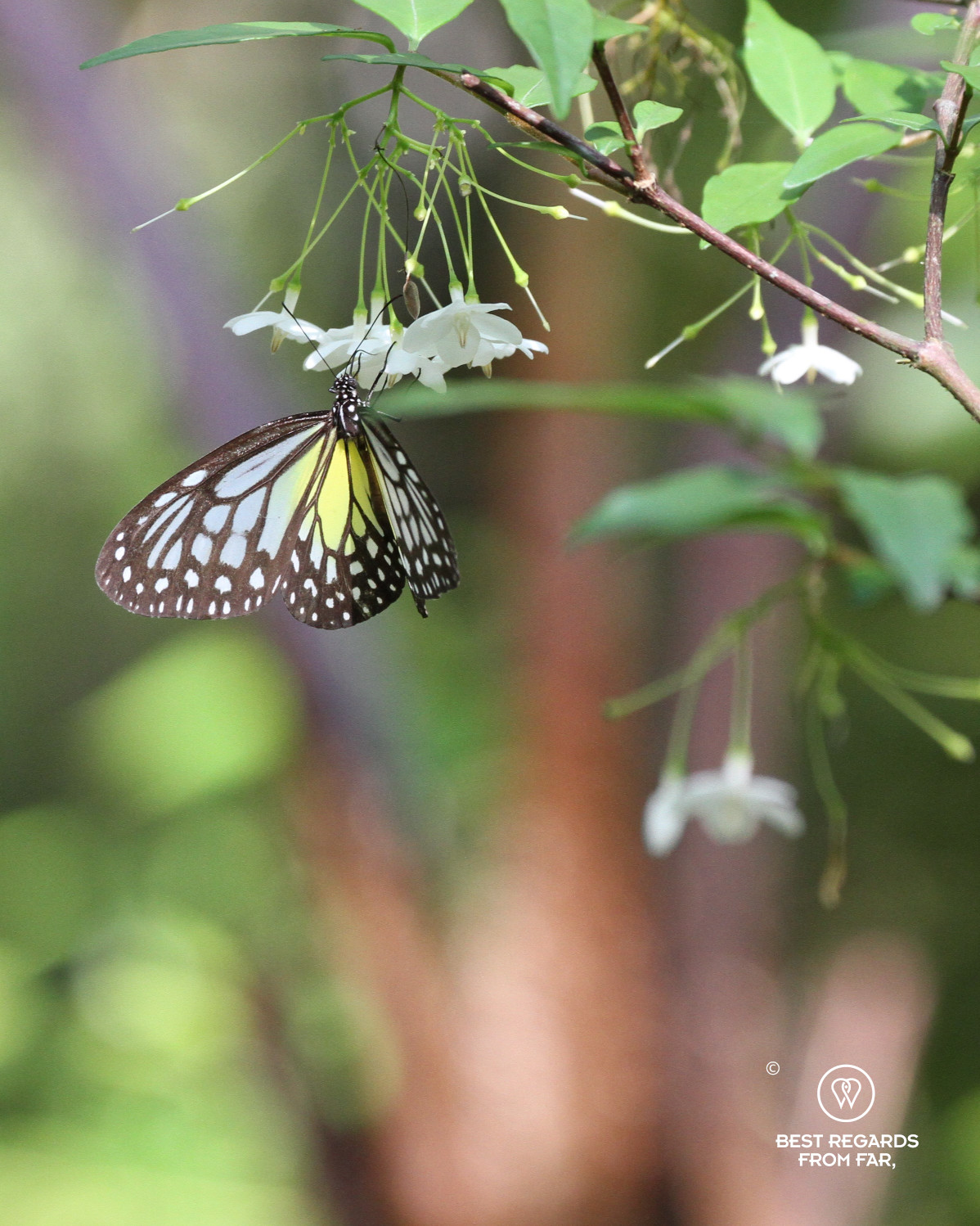


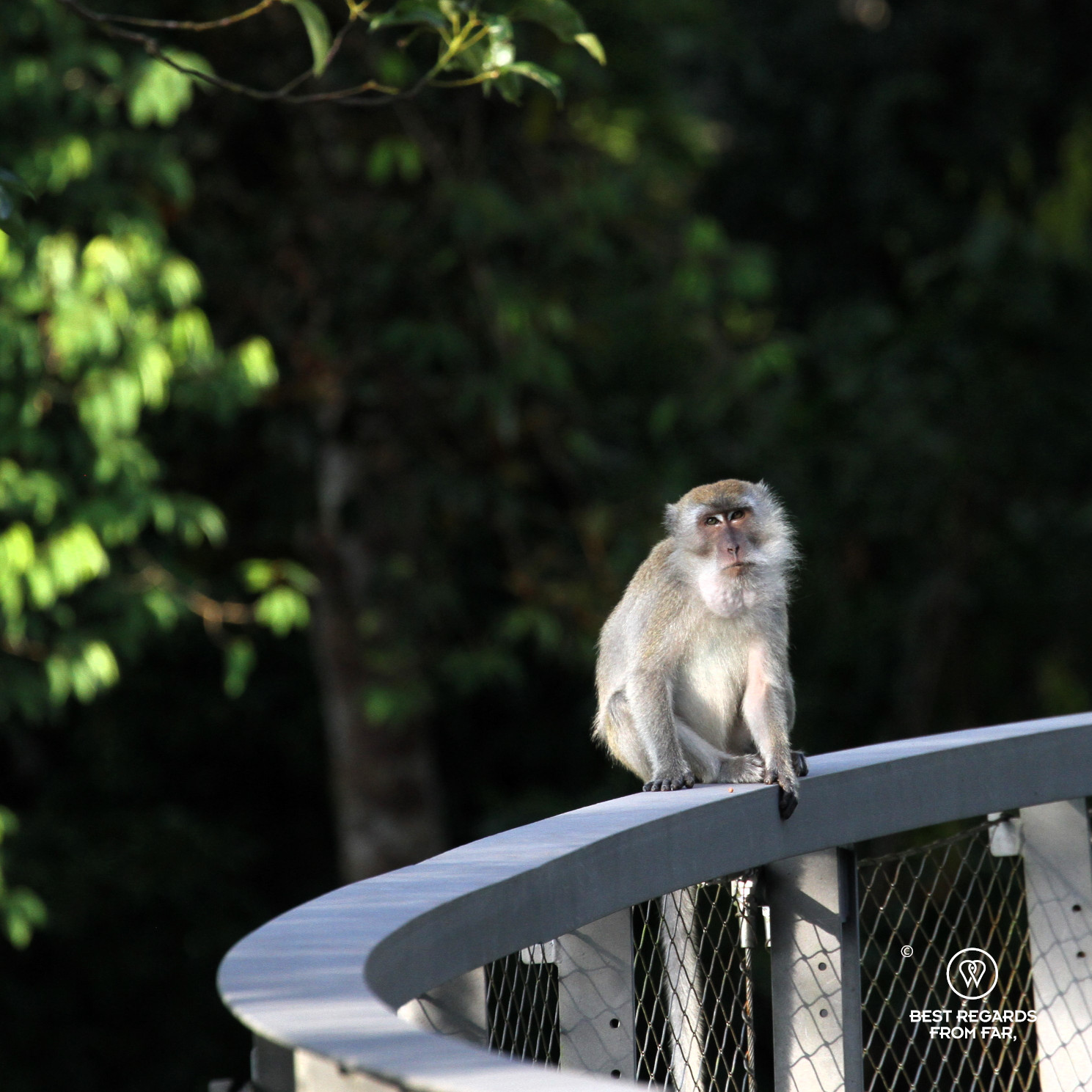
Today, the Penang Hill has become a quiet recreational area hosting The Habitat Penang Hill that allows visitors to refocus on nature on an island that has been heavily developed (critically endangering some endemic plants such as the Penang Hill ginger) and that still hosts one of the oldest rainforests in the world, going back as far as 130-million years ago!
As sunlight does not penetrate every level of the rainforest equally, the biome is divided into different layers of vegetation, at different height each with its own characteristics. From walking the 1.6km walkway through the forest at ground level, to overlooking the canopy from the Langur Way Canopy Walk or the 13-meter high Curtis Crest Tree Top Walk, the Habitat gives not only a unique view on a pristine ecosystem, but also a myriad of information on the flora and fauna.
Although tropical rainforests cover only 6% of the Earth’s land surface, they house more than 80% of the world’s documented species while scientists estimate half of all animal species inhabit this biome. It is also world’s top pharmacy with over a quarter of natural medicines have been discovered within them and research is still ongoing.


Travel tips:
- To learn more about George Town, hop on the George Town heritage tour by Malai Adventure.
- For a delicious food tour in George Town, check out Simply Enak.
- While the funicular (at the time of writing, world’s steepest) takes you up Penang Hill fast, the 1890 Heritage Trail is a shady steep path offering a great work out and beautiful views on Penang.
- This article is now featured on https://www.gpsmycity.com. To download this article for offline reading or travel directions to the attractions highlighted in this article, go to Walking Tours and Articles in (George Town) on GPSmyCity.
- Check out our interactive map for more in the area (black pins lead to an article):
For more in Malaysia, click on the images below:

 Best regards from far,