Text: Marcella van Alphen & Claire Lessiau
Photographs: Claire Lessiau
It has been merely two hours that we were so hot in the valley formed by the Santa River separating the arid Cordillera Negra from the snowy peaks of the Cordillera Blanca, the most famous mountain chain of the Peruvian Andes. Now at an altitude of 4,769 metres (15,650ft), and only 28 kilometres (17 miles) further, we are waiting for the snow storm to pass! The wind is ice-cold by the Portachuelo de Llanganuco Pass, and our official mountain guide Michel Araya walks up and down, from the oriental side of the Cordillera Blanca to its western side, looking for a break in the clouds.
Pin it for later!

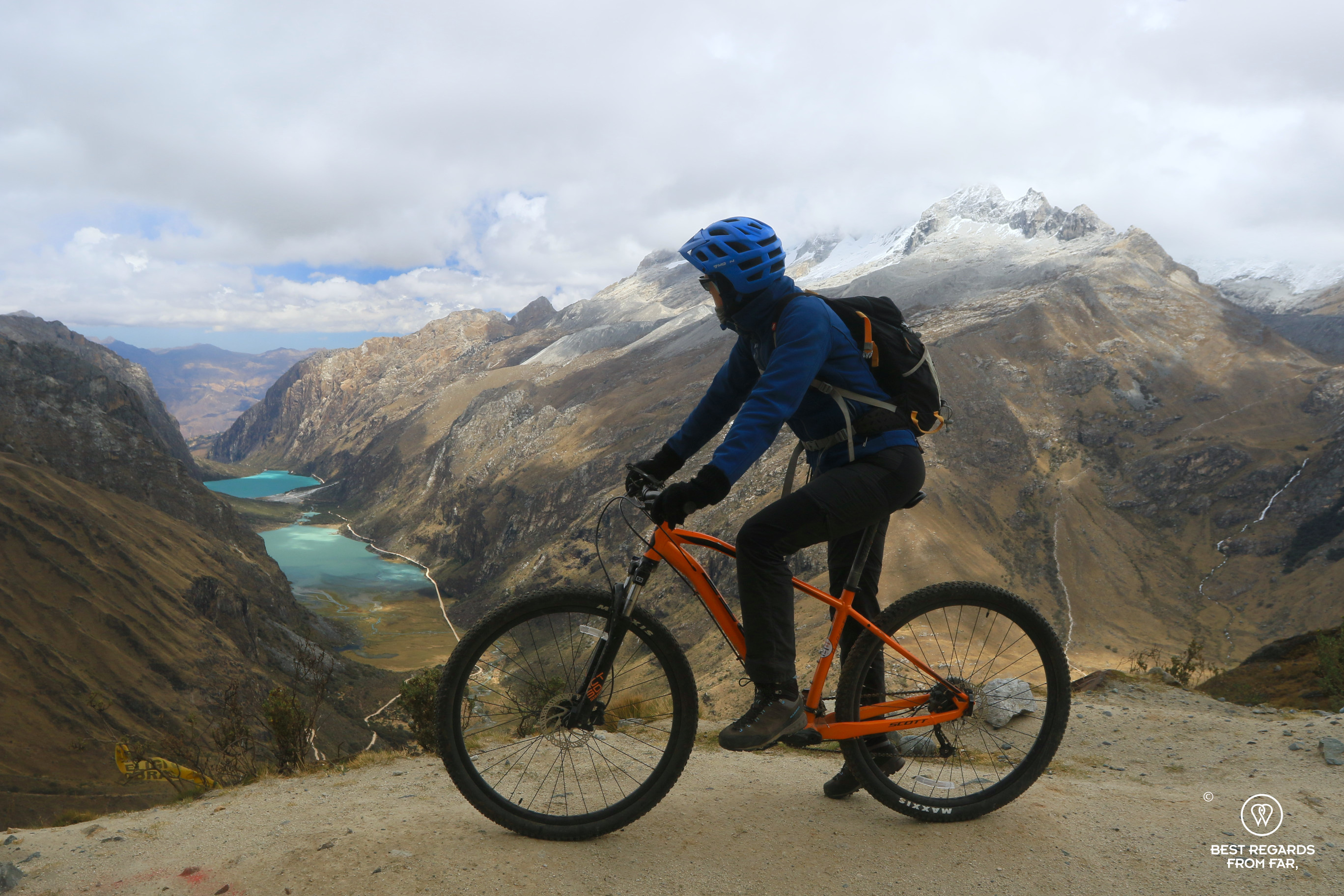
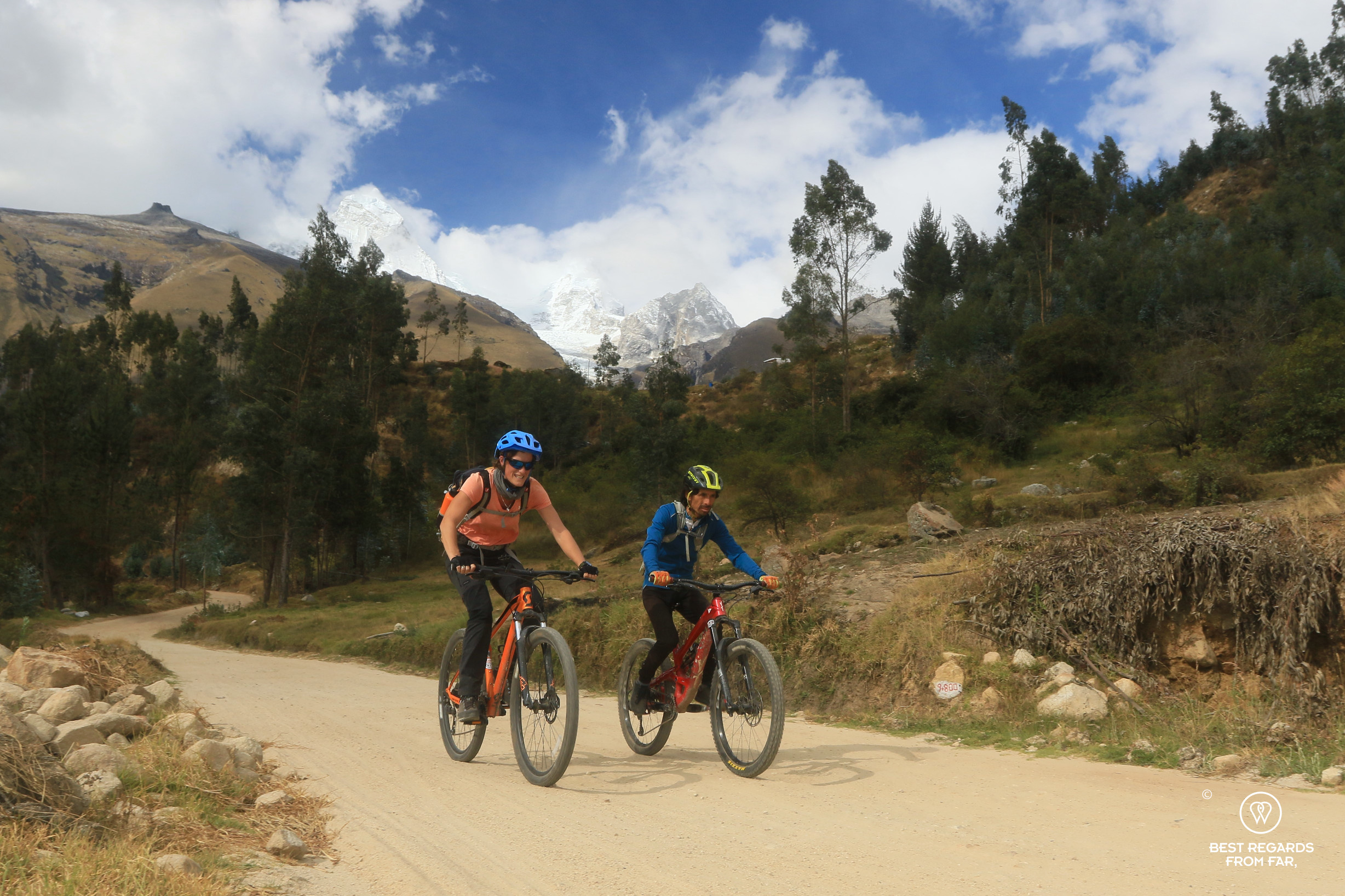
Here it is, a small patch of blue sky and few seconds later the Chopicalqui Glacier reveals itself. Michel climbs on the roof of his van and within seconds, three hard tail mountain bikes are ready to roll!
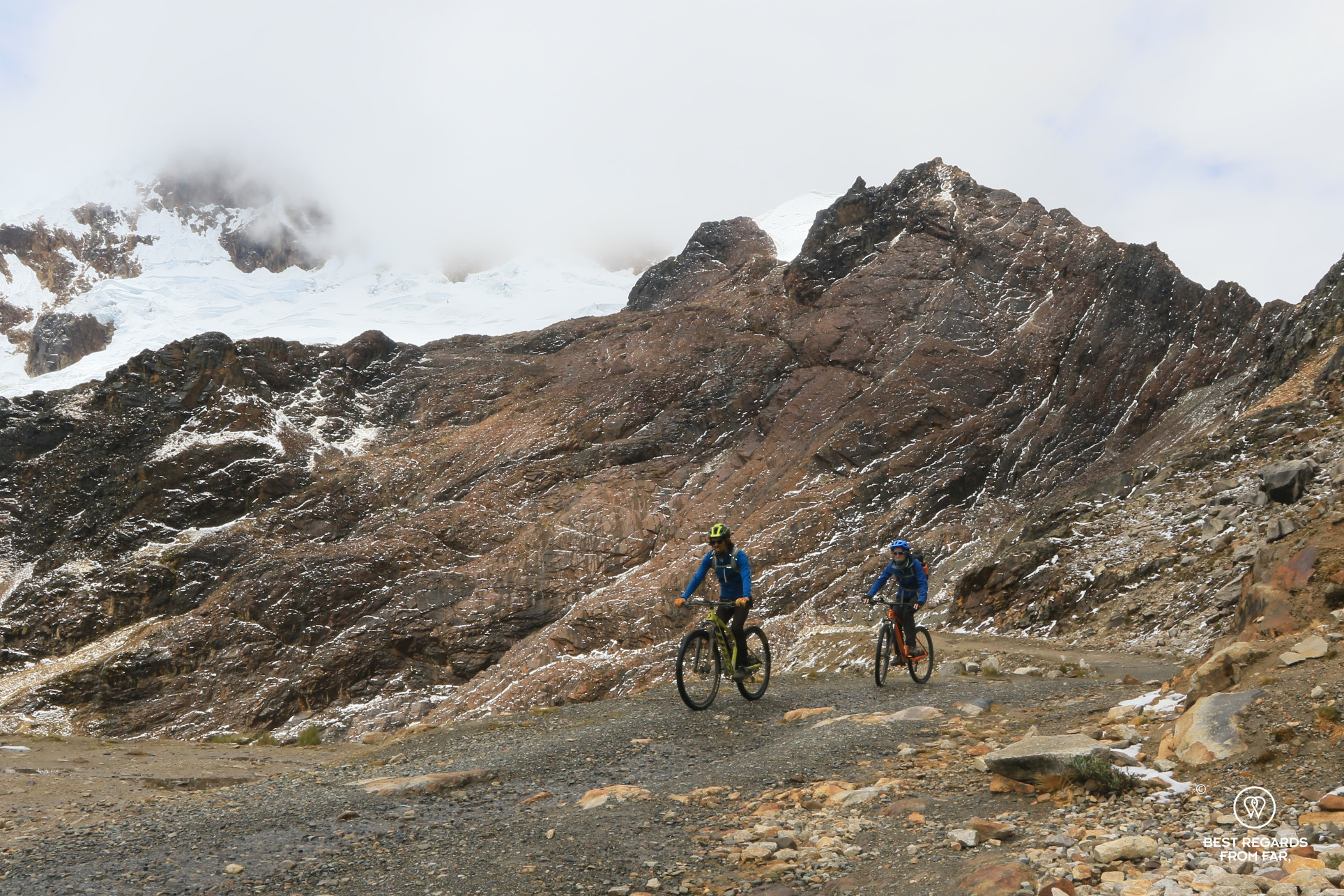
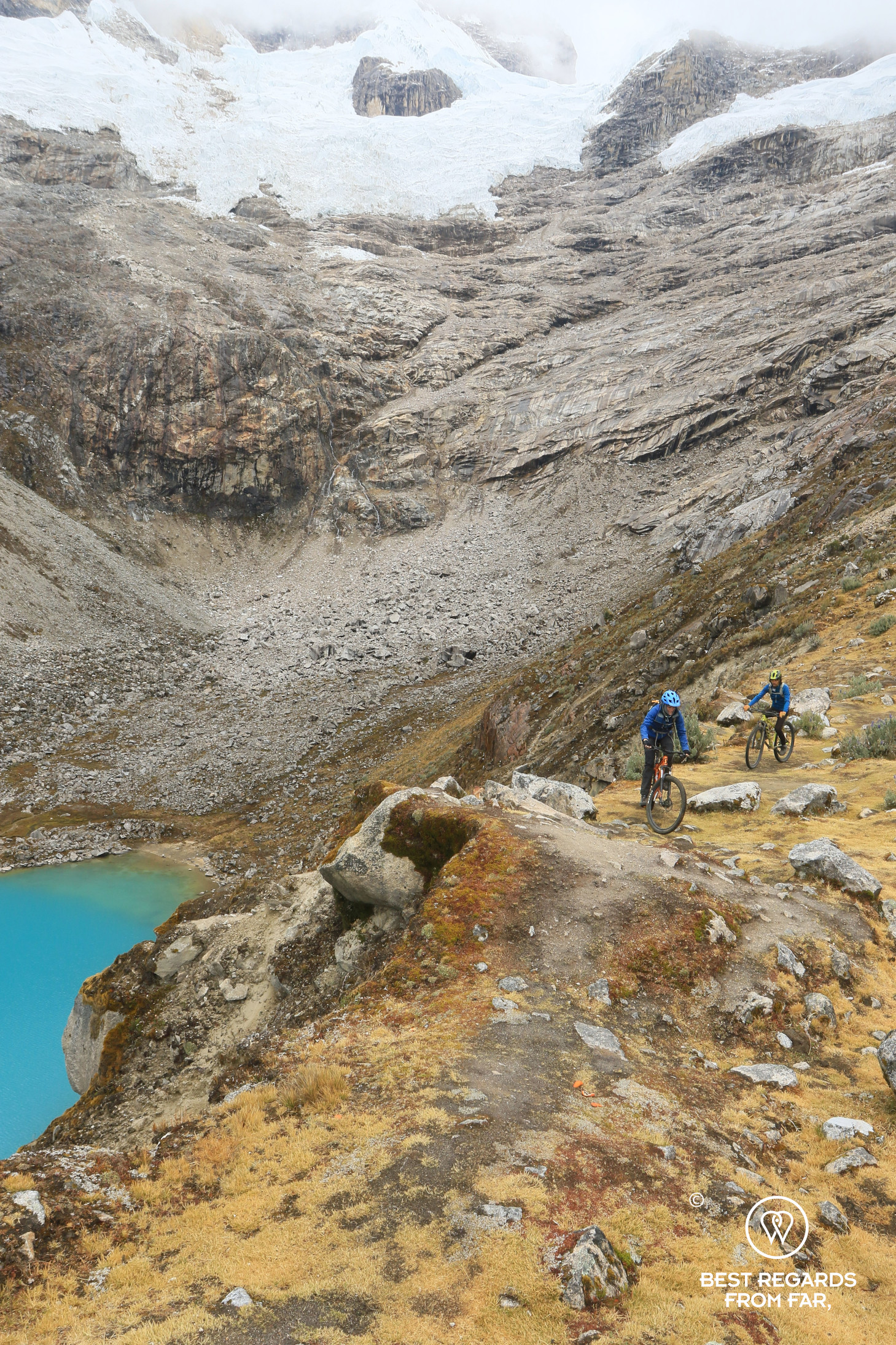
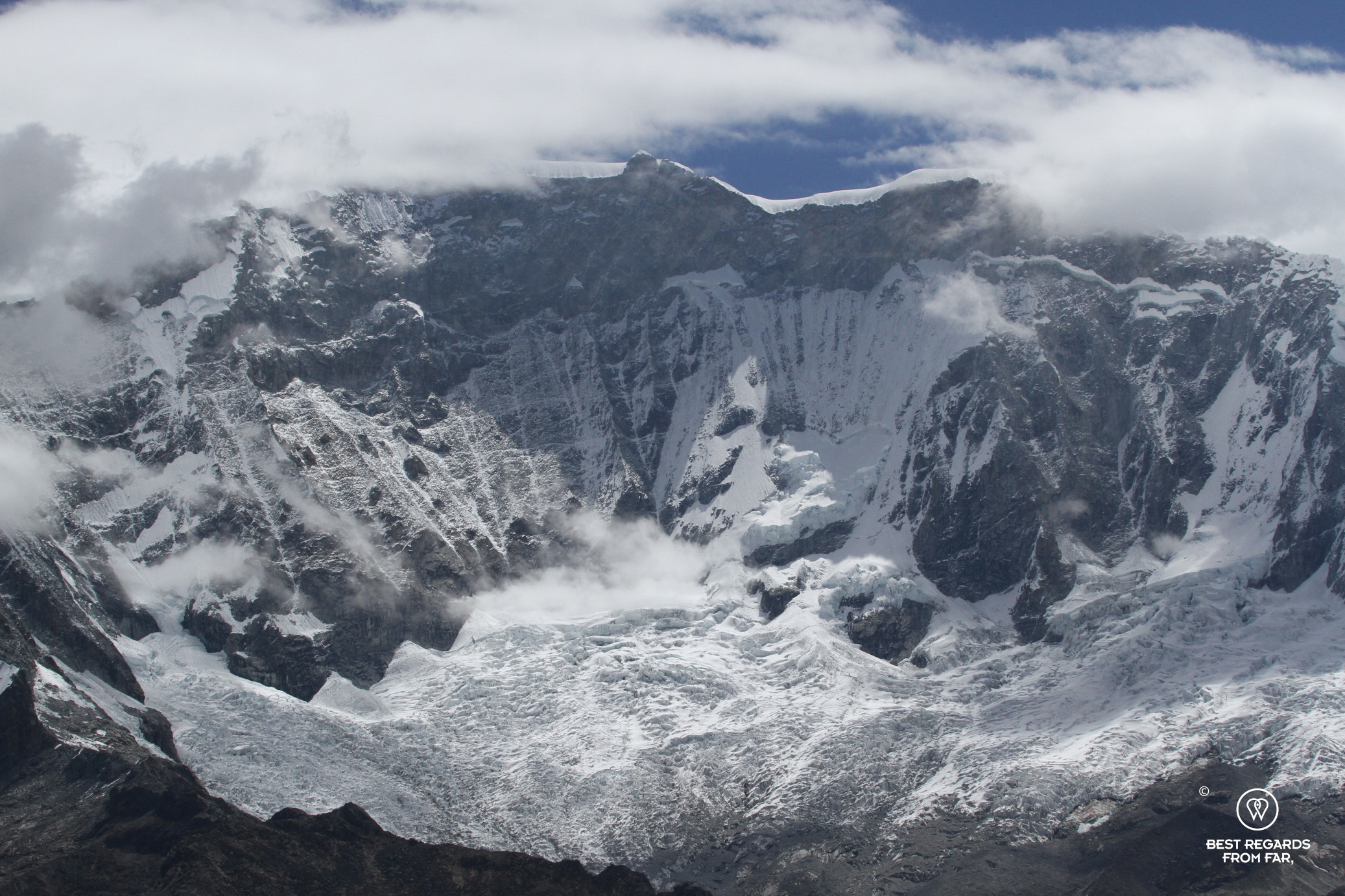
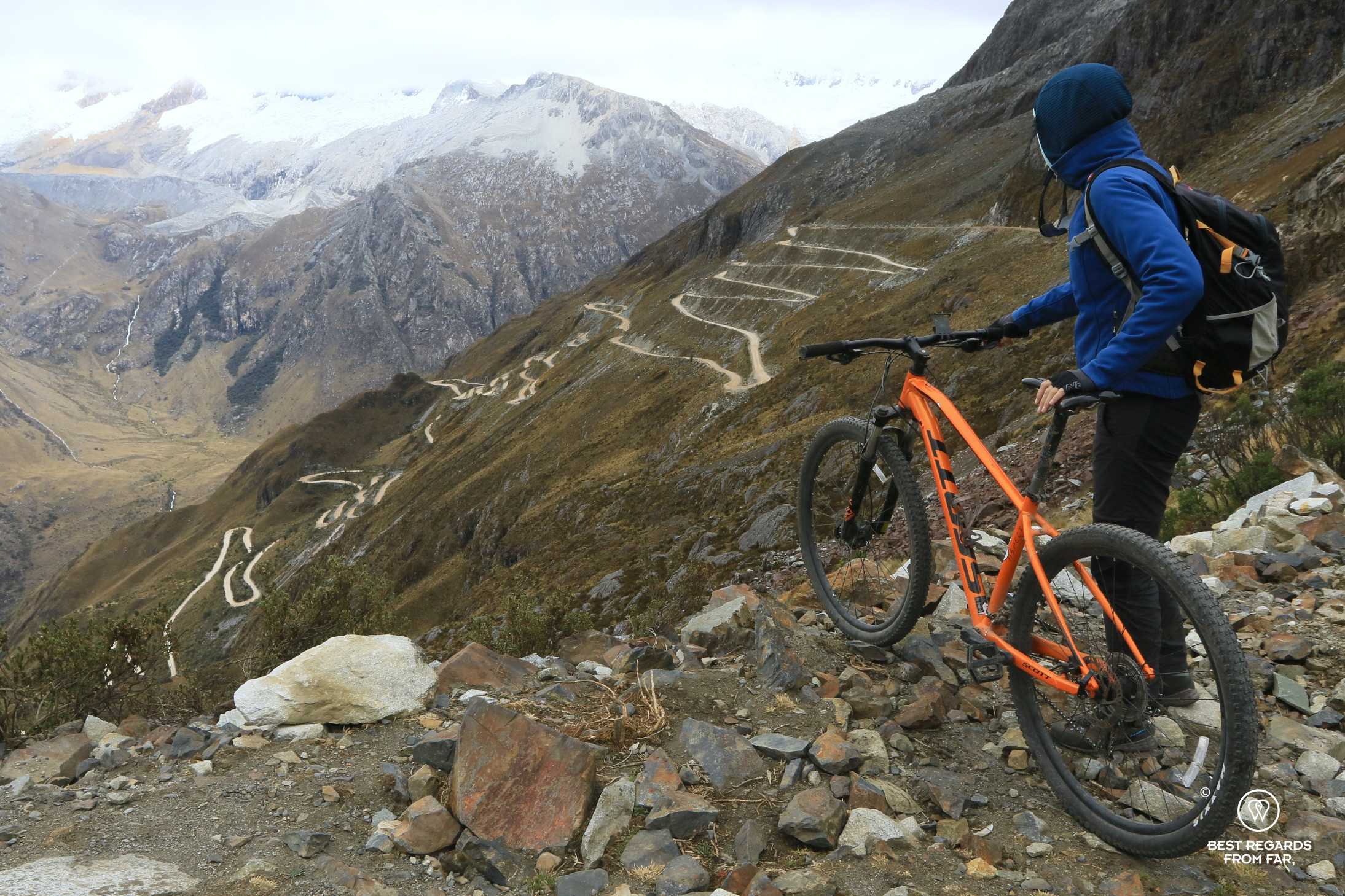


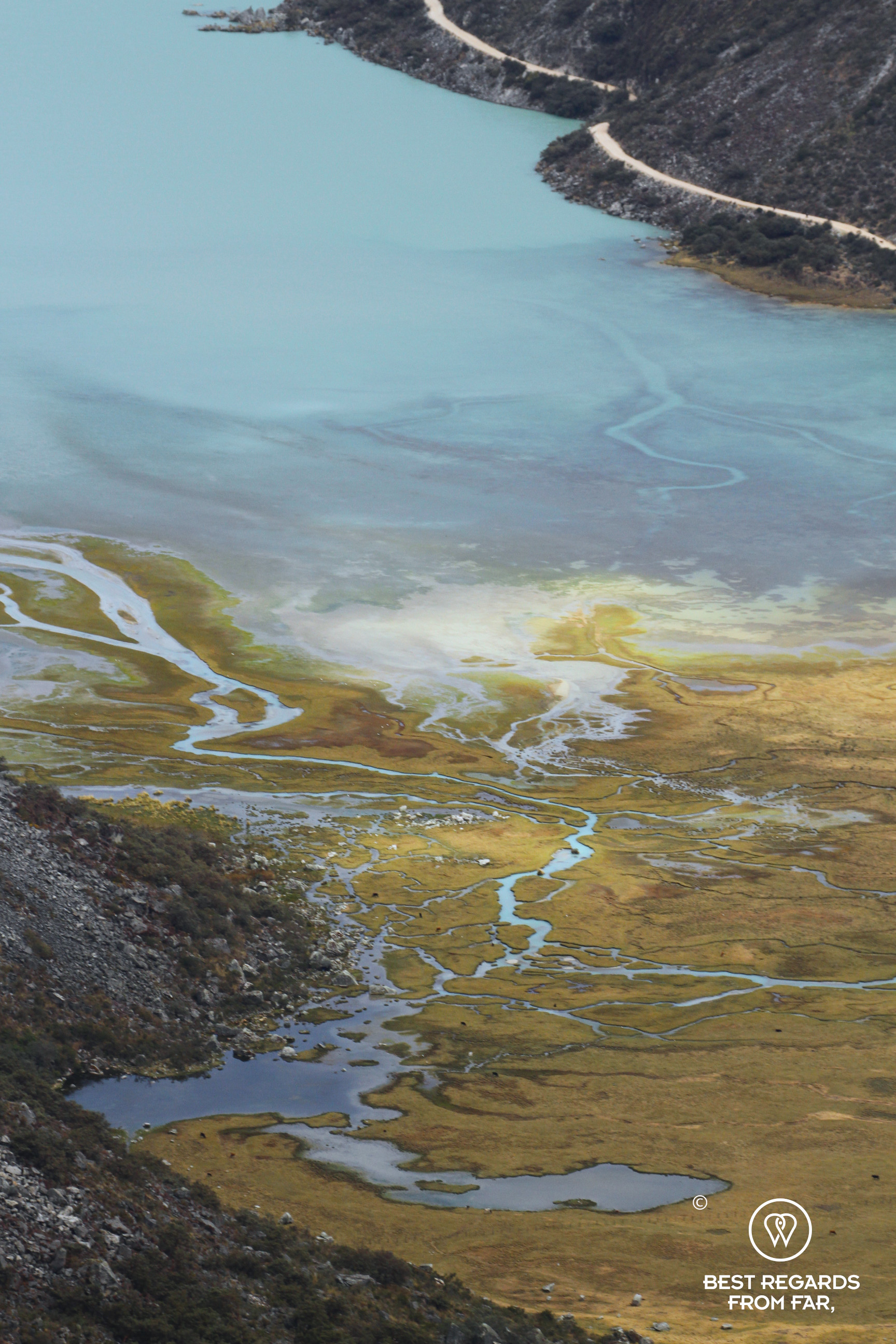
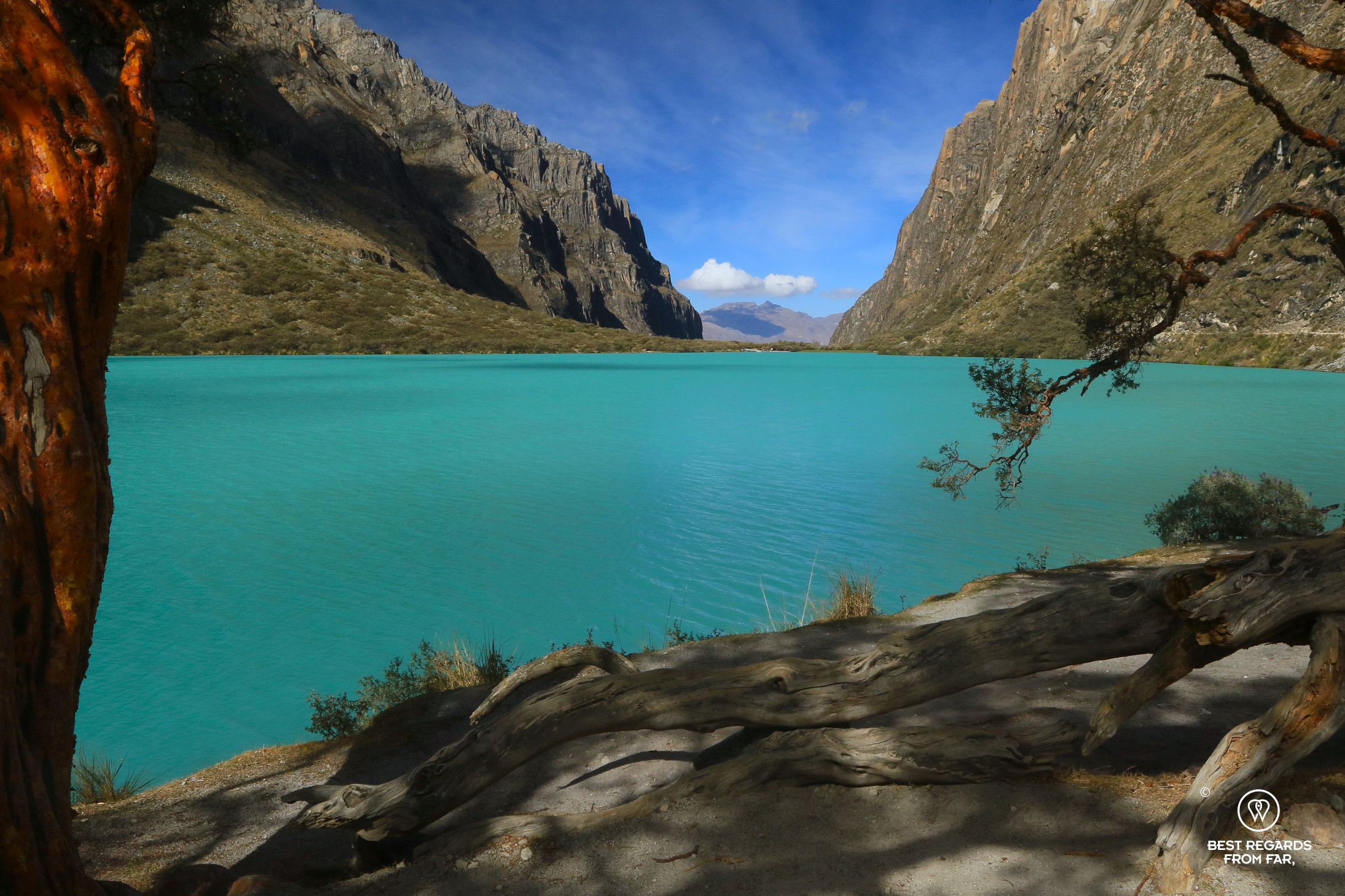
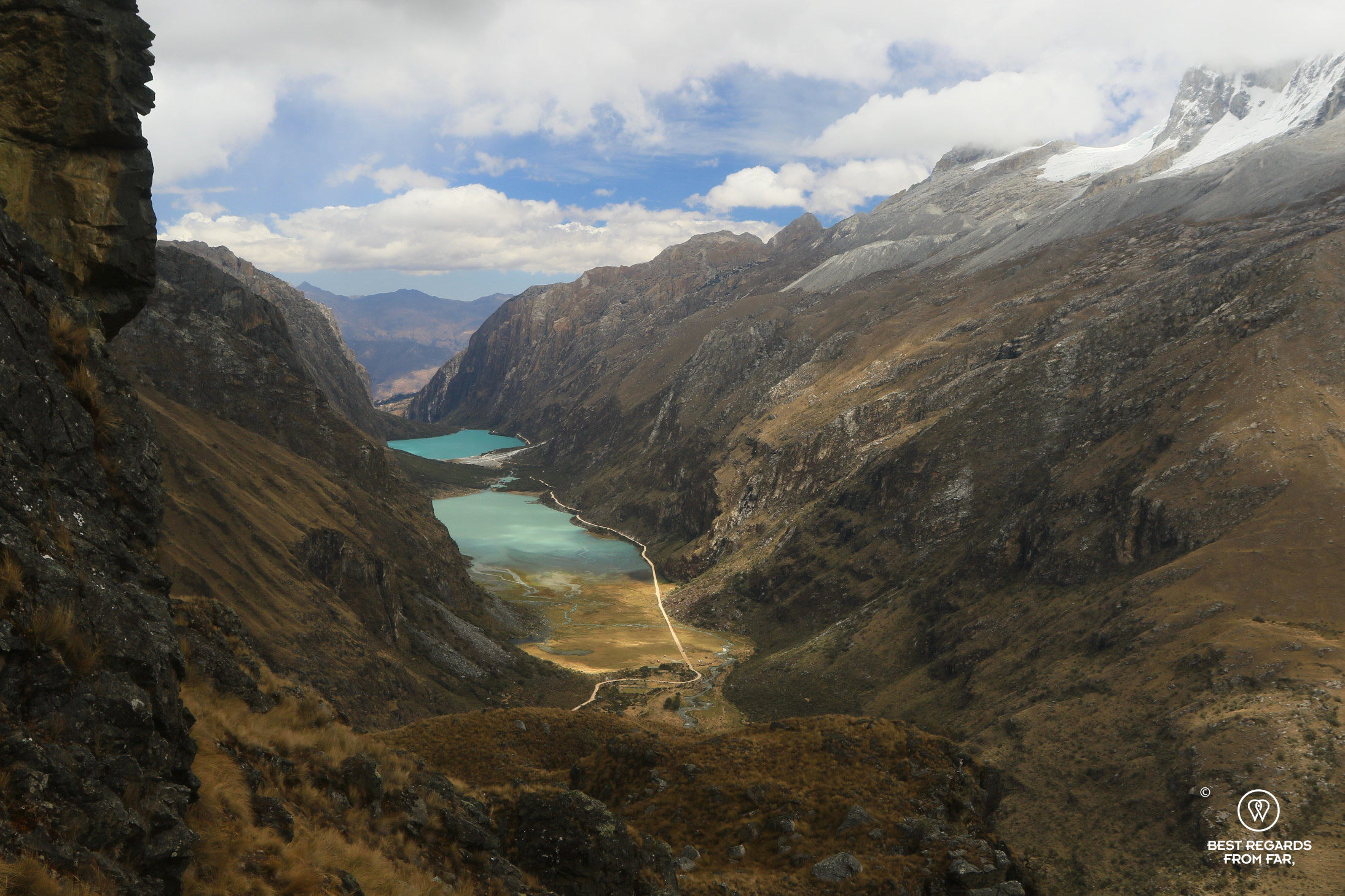
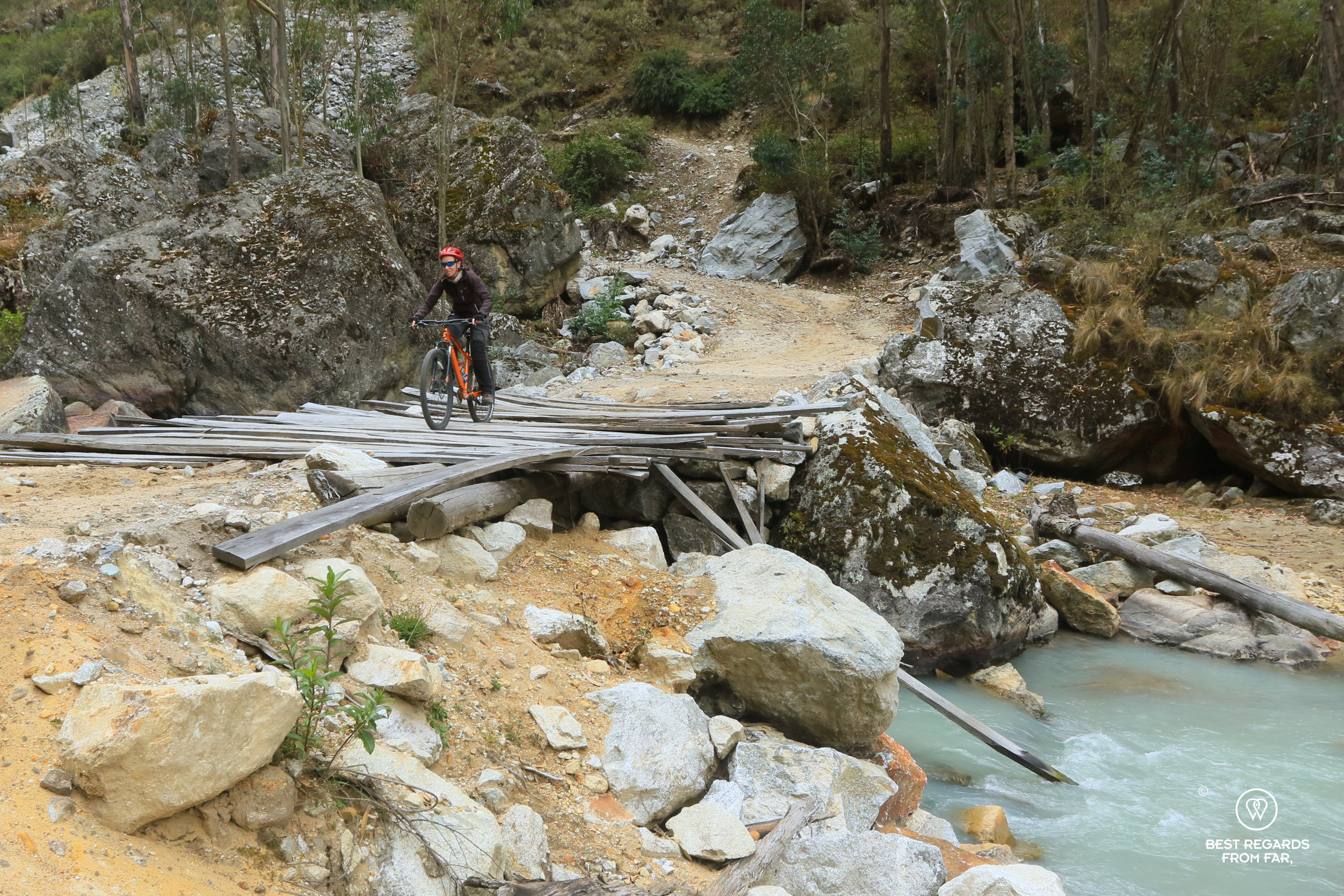
It takes us a bit of courage and a few more layers of technical clothing to get out of the warm van, but as soon as we pedal away from the pass, the wind dies down and after a couple of hairpins the sun rays warm us up. They lit up the Llanganuco Valley and its two emblematic lakes, Orkoncocha and Chinan Cocha, about 1,000 vertical metres (3,300 ft) below us. The views are absolutely stunning: on the west side, the Pisco and Huandoy Peaks and on the east side, Huascaran, Peru’s highest mountain, all covered in glaciers. It is another 31 hairpins on a dirt track to reach the Llanganuco River. If the ride is not technical, it is still demanding as the daily transports going up and down the pass to connect the neighbouring villages have indented the narrow dirt road. We lose elevation fast and shed layers as the temperature rises. Soon, the view of a couple of buses parked along the track announces the starting point of the hiking trail to the popular Laguna 69 (Lake 69). With so many remarkable turquoise blue lakes in the Cordillera Blanca, many low quality tour operators of Huaraz, the cordillera’s main city, have focused on this specific lake and busloads of tourists are brought in every day in the otherwise so quiet Huascaran National Park, a UNESCO World Heritage Site. We pass them fast, and continue to the iconic view on the turquoise Chinan Cocha Lake.


Yesterday, we were barely 12 kilometres (7.5 miles) away as the crow flies, in the parallel valley on the east side of Huascaran. There, a smooth asphalt road took us from the 4,736 metres (15,540ft) of Punta Olímpica down to the Ulta Valley in a completely different landscape!

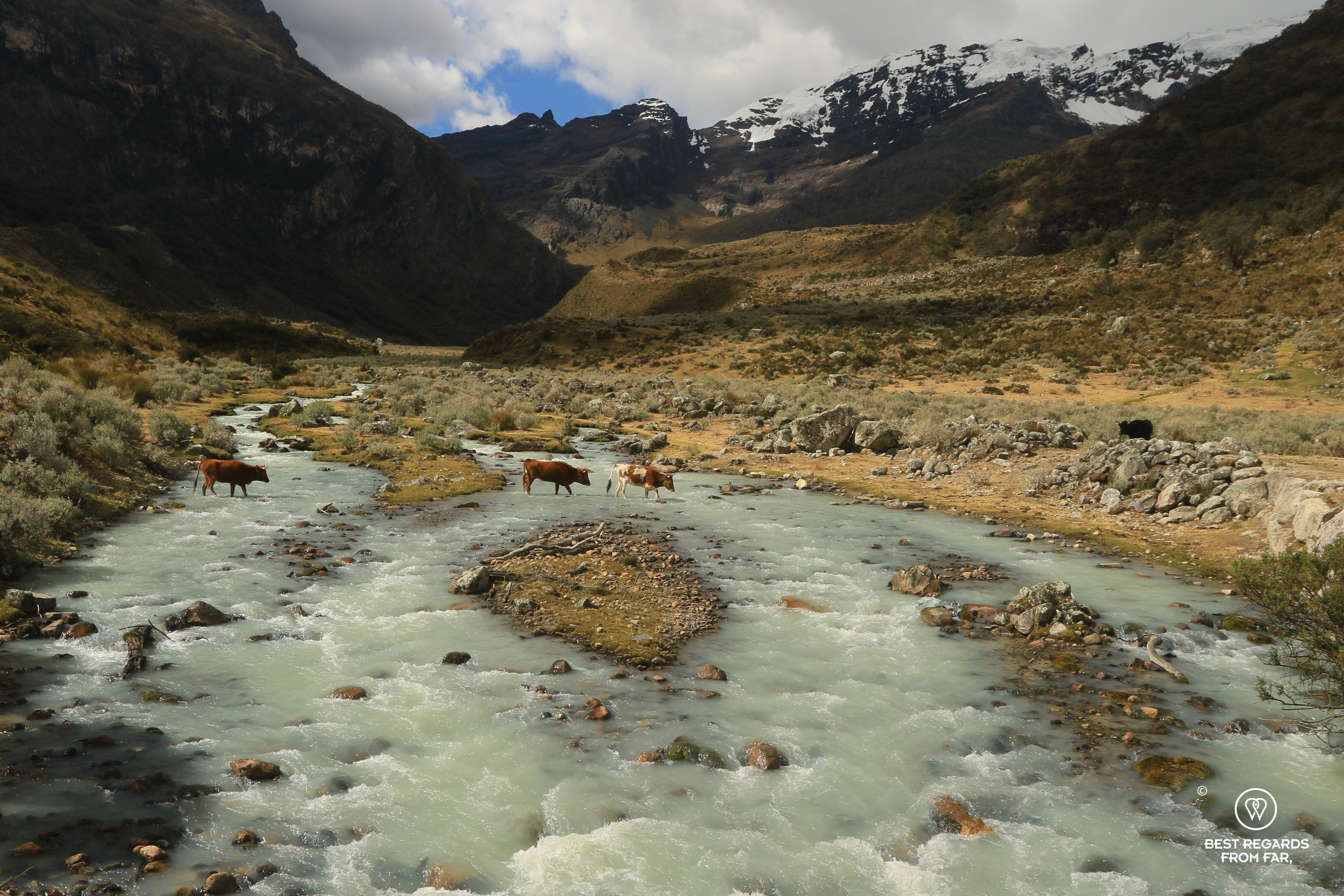


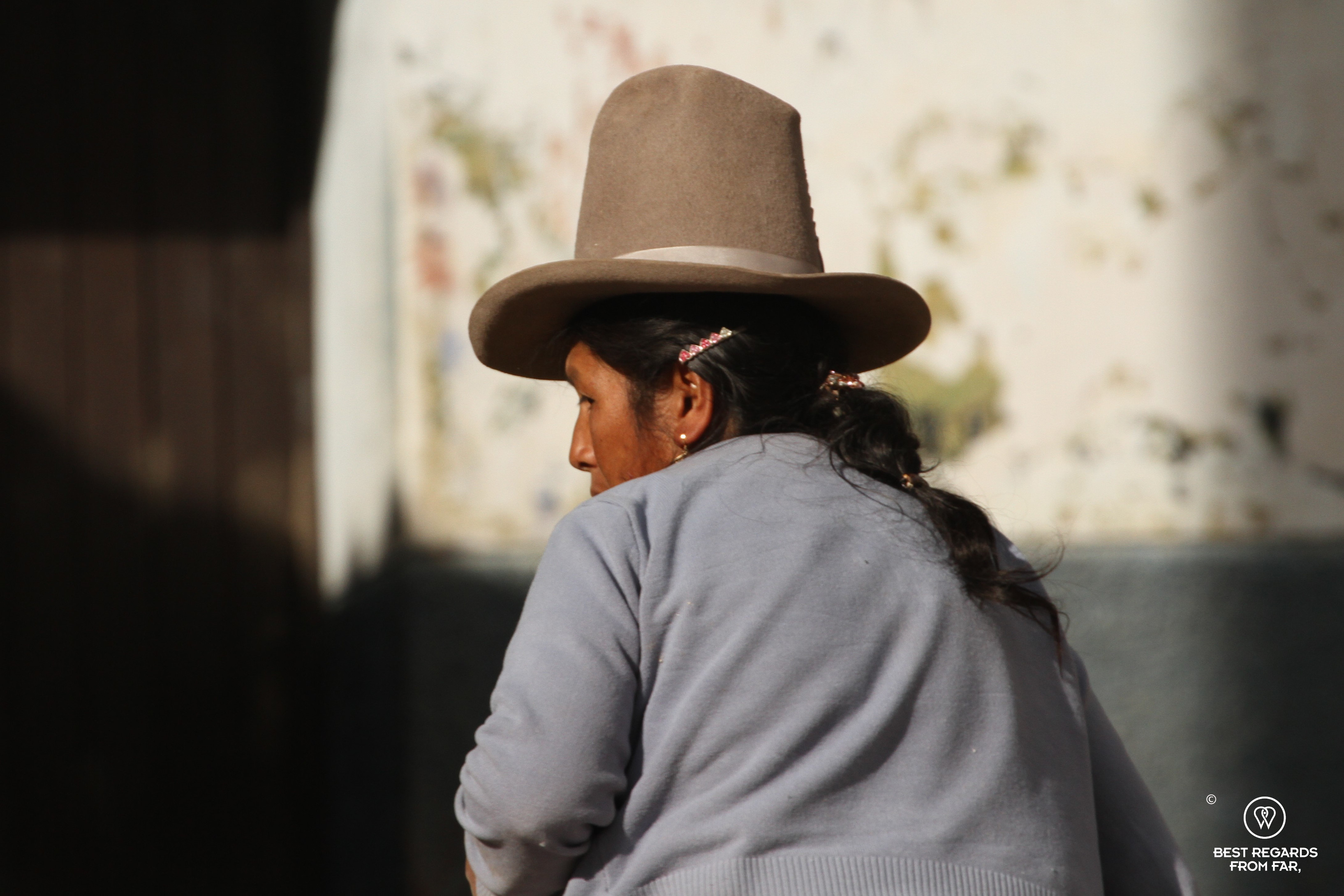
Just out of the park, in both valleys, small villages dot the slopes of these majestic mountains. The water of the glaciers has been channeled to irrigate the many crops: potatoes, corn, strawberries, blueberries and more recently roses that are a better cash crop. Venturing from the main road allows us to discover the rural life in the Cordillera Blanca: women with their hats and colourful mantas (piece of cloth that they tie around their shoulders to carry pretty much anything, from babies to plants) work the steep fields, street dogs try to catch up with the mountain bikes while donkeys are immune to their barking, chickens and pigs roam in-between adobe houses and a few kids dare a shy “buenos días” in reply to ours despite the fact that their native language is often Quechua, the old Inca language.


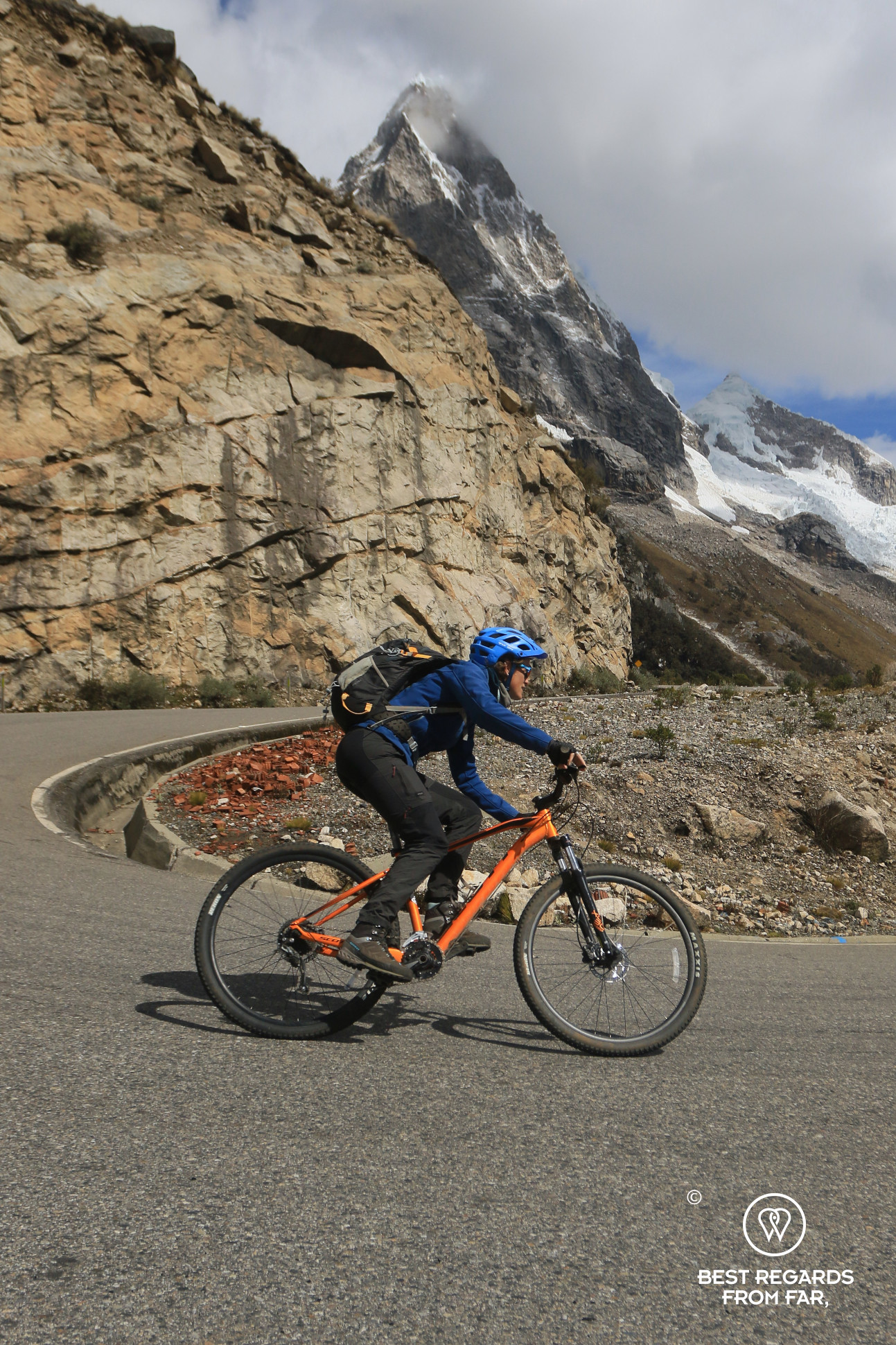
From village to village, from Plaza de Armas to Plaza de Armas, all designed with the same square plan, we ride down fast all the way to Carhuaz at an altitude of 2,650 metres (8,695ft), more than 2,000 metres (6,560ft) lower than our starting elevation.

By now, the palm trees, cactuses and bougainvillea are legion, and kids buying raspadilla, shaved ice from the glaciers on the Plaza de Armas of Carhuaz are a reminder of this morning’s snow storm and this ice world we briefly entered as we have been acclimating for some more adventures in the spectacular Cordillera Blanca…
Travel tips:
- To live these mountain biking adventures, get in touch with Andes Bikes.
- For other mountain adventures, check out the Don Bosco 6000 website, an association of high mountain guides trained by the Don Bosco Catholic initiative to provide jobs to locals of the Cordillera Blanca.
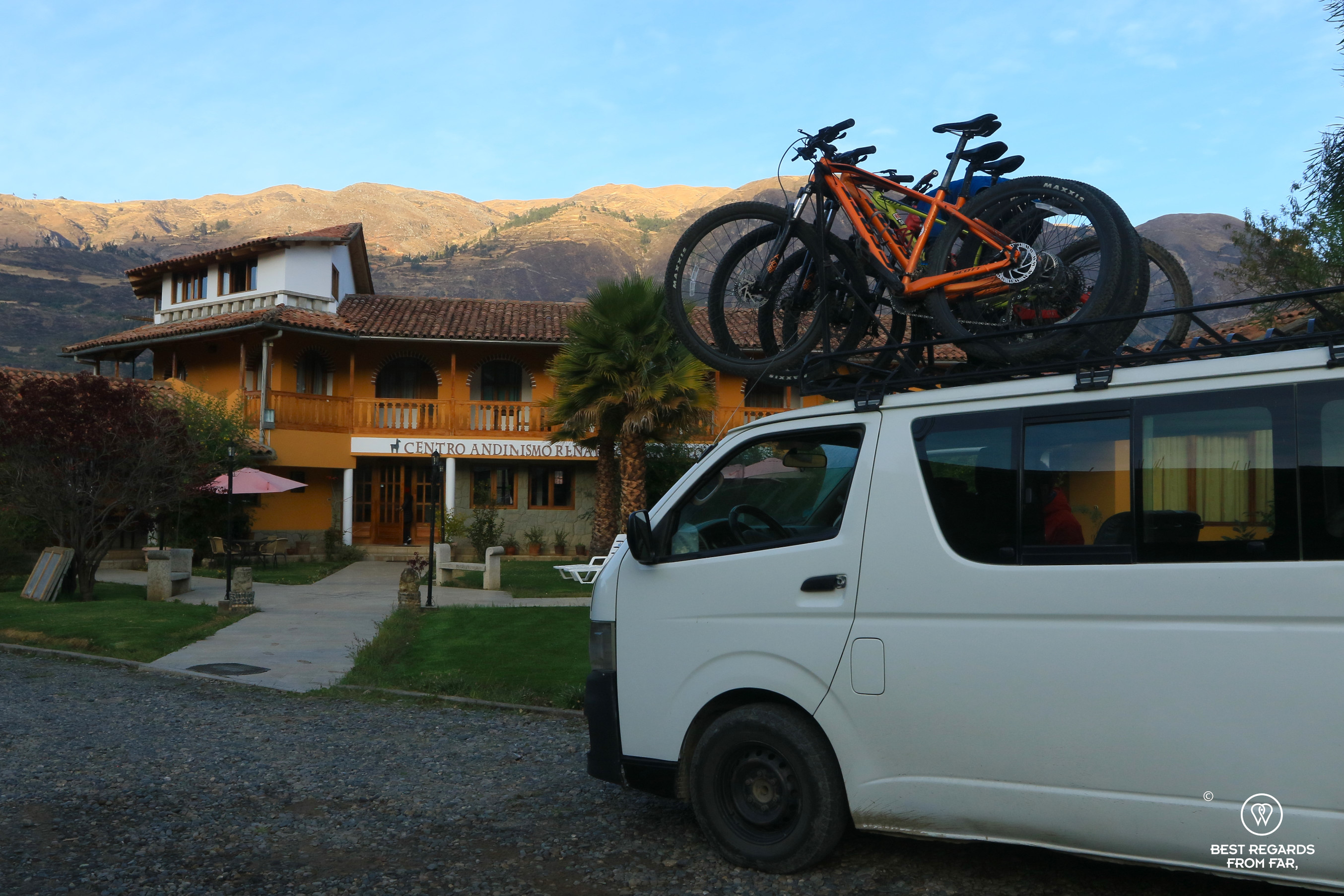
- The Don Bosco association also runs a simple hotel in Marcará, close to Carhuaz that is managed by the guides in the spirit of a mountain refuge: Centro de Andinismo Renato Casarotto.
- Another more upscale option is Wayarumi Sky Hotel in Carhuaz.

Breakfast at Wayarumi Sky Hotel, Carhuaz, Peru 
Wayarumi Sky Hotel, Carhuaz, Peru 
Wayarumi Sky Hotel, Carhuaz, Peru 
View from the Wayarumi Sky Hotel, Carhuaz, Peru 
Infusion from the garden, Wayarumi Sky Hotel, Carhuaz, Peru 
Wayarumi Sky Hotel, Carhuaz, Peru 
Breakfast at Wayarumi Sky Hotel, Carhuaz, Peru 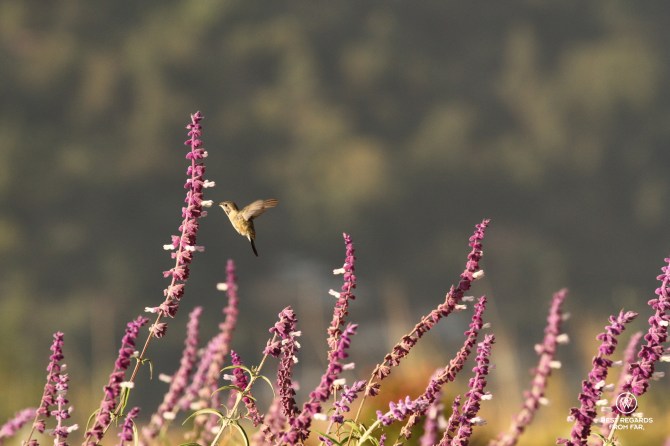
Kolibri at Wayarumi Sky Hotel, Carhuaz, Peru 
View on Huascaran, Peru’s highest peak from Wayarumi Sky Hotel, Carhuaz, Peru 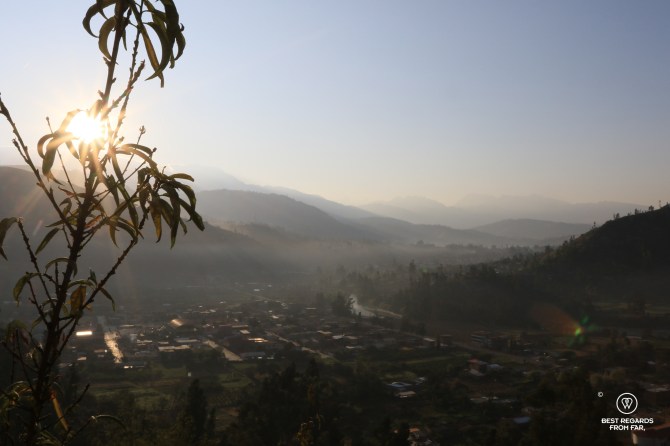
View from the Wayarumi Sky Hotel, Carhuaz, Peru
- Check out this interactive map for the specific details to help you plan your trip and more articles (zoom out) about the area!
For more in Peru, click on these images:




 Best regards from far,