Article updated on December 28, 2024
Text & photographs: Claire Lessiau & Marcella van Alphen
I stop my motorbike at the edge of a narrow, makeshift bridge, feeling a mix of relief and apprehension. The previous river crossing had been a challenge—no bridge in sight, just a murky stream where I had to launch my 125cc Honda Dream into the water and, with all my skill, wrestle it out after it became submerged up to the wheels. Now, before me, stands a wooden bridge barely 50 centimeters (20 in) wide, with no rails to prevent a fall, and a missing plank at its center, just wide enough to swallow the front wheel.
I glance at my partner in crime, already across, and feel a pang of envy. When she turns to check on me, her smile offers a glimpse of reassurance. I hatch a plan to cross the bridge without losing face—after all, we are in Asia and I am fast adopting local habits. I get off the saddle, I grab my Canon reflex camera from my backpack, cross the bridge on foot, and photograph her riding across the bridge on my bike. Internally very grateful, I hop back on my bike casually, and we continue our journey to the enigmatic Khmer ruins of Beng Mealea—one of Cambodia’s most fascinating temples, and one that we are discovering far off the usual tourist trail.

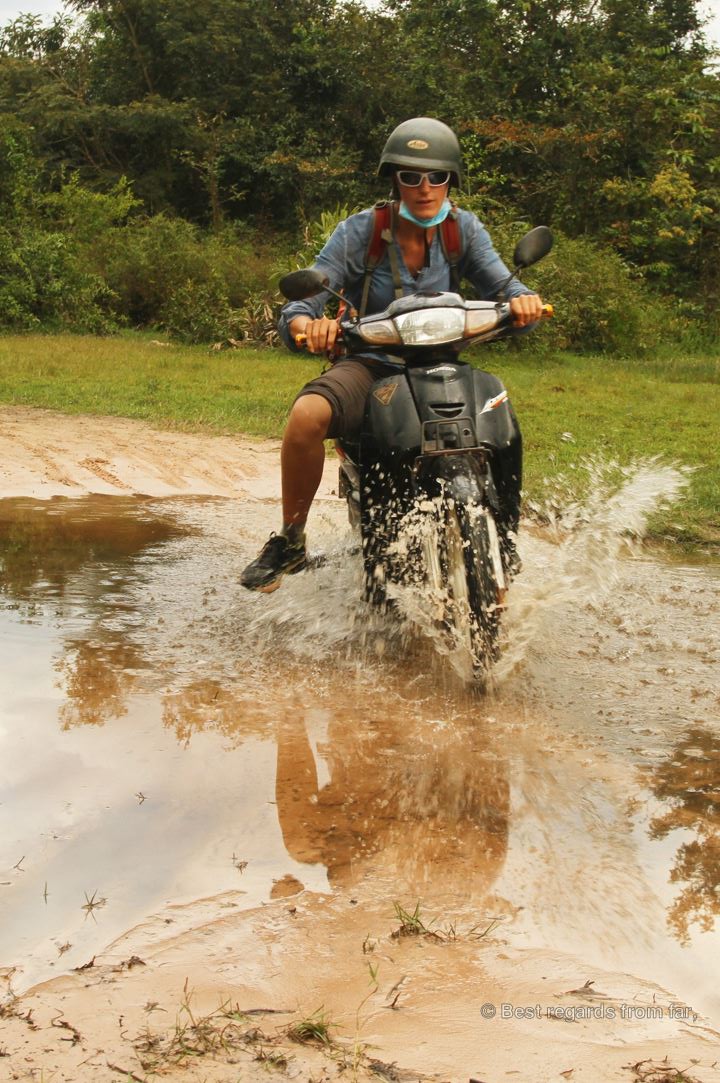

Incredibly, this scene unfolds just 40 kilometers (25 miles) from Siem Reap, Cambodia’s bustling tourism hub with its constant hum of tuk-tuks and honking horns. Within minutes only, we left the crowds of Angkor behind to find ourselves ride among rice paddies stretching out in every direction. Following our guide along dirt tracks unmarked on any map, we immerse ourselves in authentic rural Cambodian life. Bamboo houses on stilts line the roads, and tractors serve as local transport. Children in uniforms pedal oversized Dutch-style bicycles through deep potholes, while water buffaloes graze nearby. Fishermen cast nets in shallow streams, and villagers return from the market, their scooters overloaded with goods.
Our journey leads us to the bustling market of Preah Dak—also known as “noodle village” in guidebooks—where we sample delicious fried rice balls stuffed with bananas, sweet potato puddings, and an assortment of exotic fruits. It is the perfect snack before continuing to our lost temple.


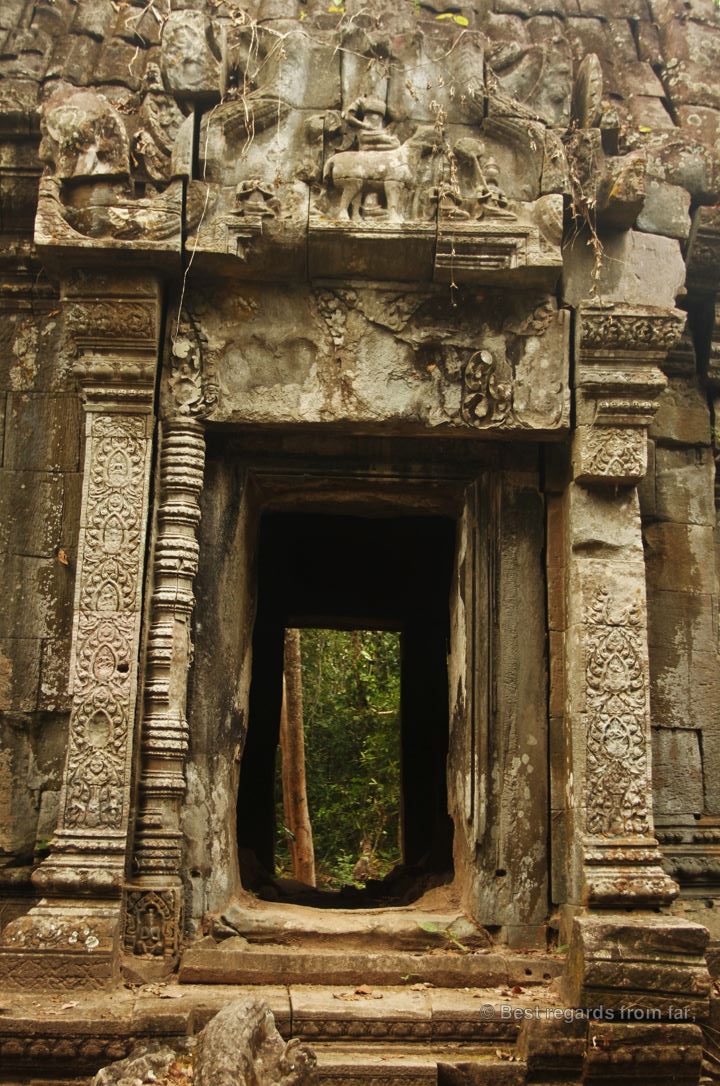


Hidden deep within the jungle, the Beng Mealea temple remains shrouded in mystery. Constructed in the 12th century and completed under the reign of Suryavarman II—the king who oversaw the building of Angkor Wat—its purpose is still unknown. Unlike other temples, no inscriptions or carvings reveal the identity of its creator. Hindu depictions of Shiva and Vishnu intermingle with Buddhist motifs, adding to the confusion of archeologists. The temple’s sandstone blocks, transported from nearby Phnom Kulen mountain quarries along artificial water canals, now lie scattered or engulfed by thick vegetation.
One of the best ways to appreciate the grandeur of Beng Mealea is to walk along one of the four causeways, flanked by Naga snake balustrades that lead into the heart of the temple. As one of the Khmer Empire’s largest temples, it once stood at the center of a bustling city, surrounded by a vast 45-meter (150ft) wide moat stretching over an area of about one square kilometer (250 acres). Today, a wooden boardwalk makes the exploration easier and helps preserve this ancient archeological site. It was built by the French filmmaker Jean-Jacques Annaud during the 2004 filming of Two Brothers, and walking among the labyrinth of fallen stones and intertwined vegetation, it is easy to understand why the temple captivated the director.
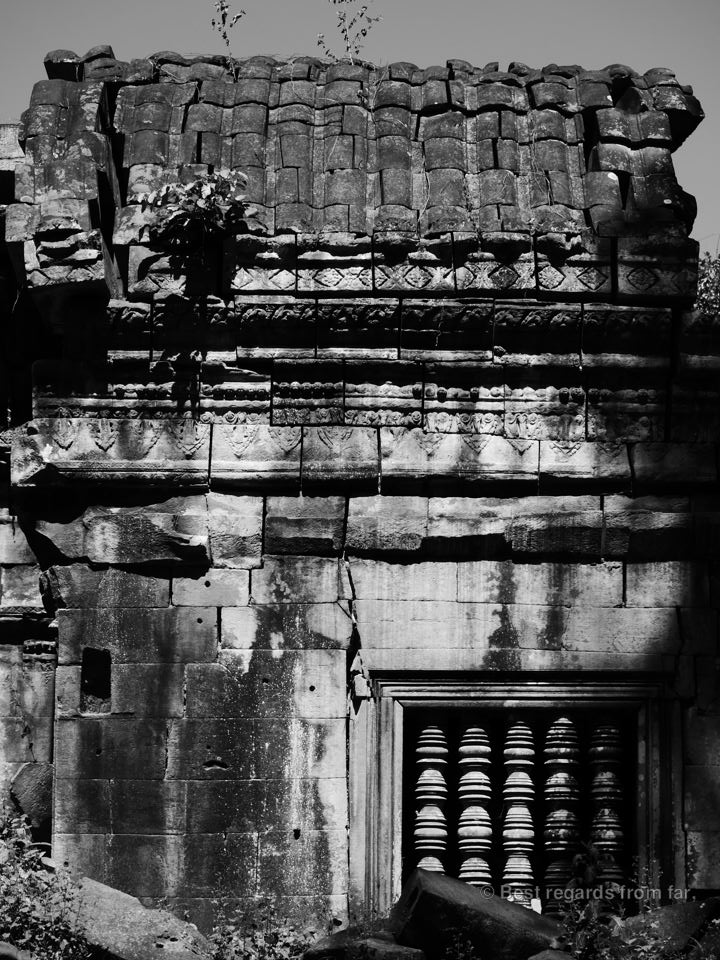


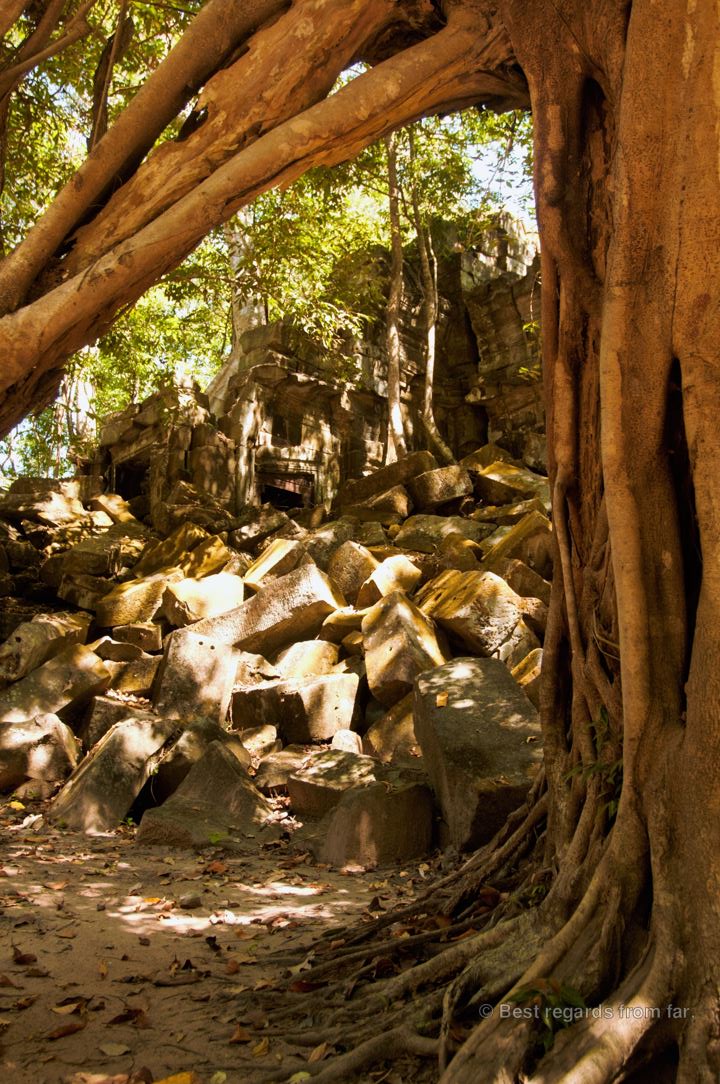


While Angkor Wat has become a massive tourist attraction, with its 2 to 2.5 million visitors annually, escaping to Beng Mealea offers an unparalleled experience. Riding to the poetic temple by motorbike allows for a deeper connection with an authentic rural life. For the truly adventurous, Beng Mealea is part of the ancient royal highway leading to Preah Khan—another remote, beautiful temple, rarely visited, deep in the heart of Cambodia’s jungle.
Travel tips:
- To live this adventure and discover Beng Mealea off the beaten path, please refer to Khmer Ways.
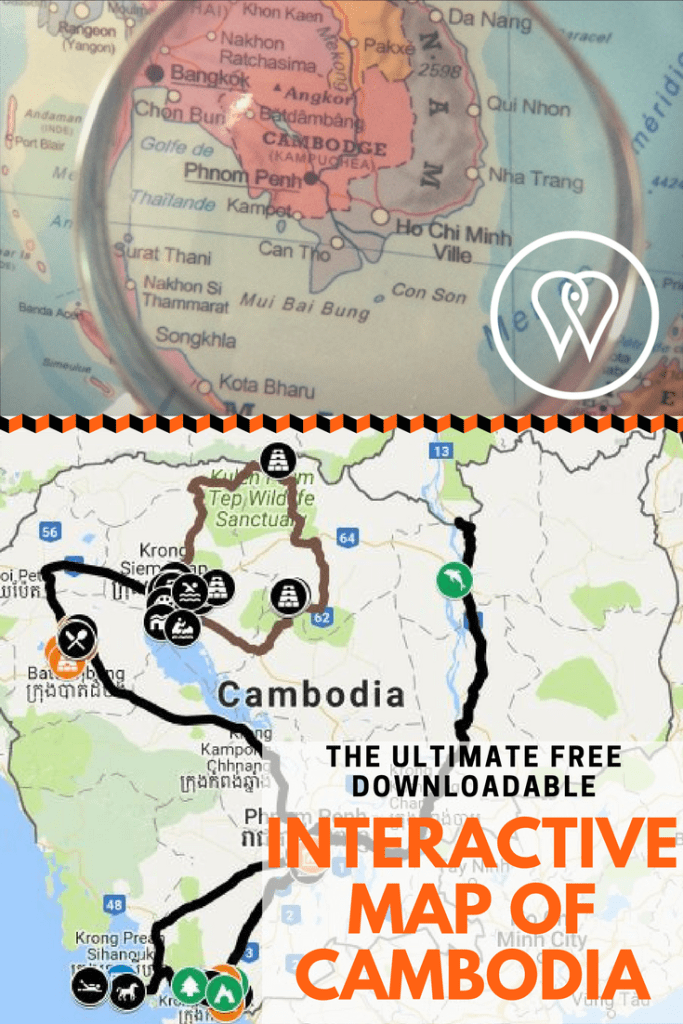
- Check out this interactive map for the specific details to help you plan your trip and more articles and photos (zoom out) about the area!
For more inspiration about Cambodia, click on these pins:





 Best regards from far,
LOL the ride across the bridge surely reminded one how important the plank test was when one took the riding test!
It is a surprise that Beng Mealea is not excavated yet. And it is probably good it is not! Coz like your mention of the millions being in Angkor, something appears to be lost when you are one of thousands pointing and shooting at the apsara and naga sculptures.
Wow, That sure does look like an amazing offbeat experience. I am sure you enjoyed the experience. Loved your style of writing and the detailed perspective of your photographs as well!
Thanks for your read and compliments 🙂 These Cambodian temples, actually all of them, are such a great playground for photographers with all their vines and astonishing details. And the more offbeat the more intruiging they become 😉
True I couldn’t agree more 😀 We are so much in love with Cambodia. We totally understand!
Really very good naration .please keep it up.please visit kedarnath ,kailas and give a blog
Thank you samanadhan. We will definitely keep that in mind when traveling to India. Thanks for the tip!