Article updated on December 27, 2024
Text: Claire Lessiau
Photographs: Claire Lessiau & Marcella van Alphen
When you think of Cambodia, chances are that cuisine is not the first theme that comes to mind. While Thai food often takes the spotlight-often with some of its popular dishes that have been borrowed from its neighboring countries-, a trip through Cambodia reveals a rich, flavorful culinary tradition that deserves more attention. And what better place to dive into this unique cuisine than Kampot, a charming town renowned for its world-famous pepper? That has earned its place in the finest kitchens of the world?
Pin it for later!

The Story of World’s Best Pepper: Kampot Pepper
Farmed since the 13th century in Cambodia, it is during the protectorate that the French realized the potential of the Kampot area, giving a subtle taste to the pepper that lingers on one’s tongue. Nestled along the Cambodian coast, the hills of Kampot benefit from the perfect balance of iodized air, rain-soaked climate, and mineral-rich soil with quartz and iron. The region’s unique terroir has earned Kampot pepper a Protected Geographical Indication (PGI) that about 350 pepper farms, producing the precious spice, can claim.
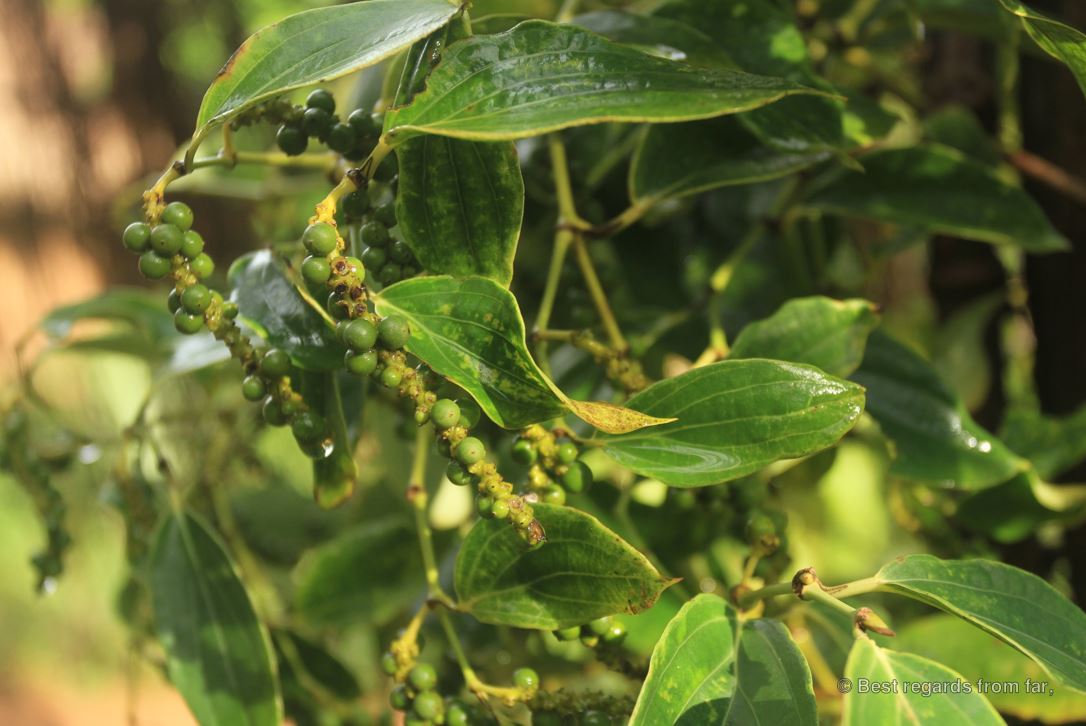

Sothy Sorn is one of them. She owns one of the region’s organic farms on the hills behind Kampot and the fishing village of Kep. And continue to maintain traditional practices. Pepper grows naturally in the jungle, and the farming process is meticulously designed to replicate this natural environment. Each pepper plant is tied to a pole that mimic lianas, while dried grass around and above the fields offers shade as the tree would, and canals maintain the flow of rainwater. Fertilization involves a blend of cow dung and bat guano, sourced from nearby caves. After three years of careful nurturing, the first harvest arrives, with each plant continuing to produce for another 14 years.
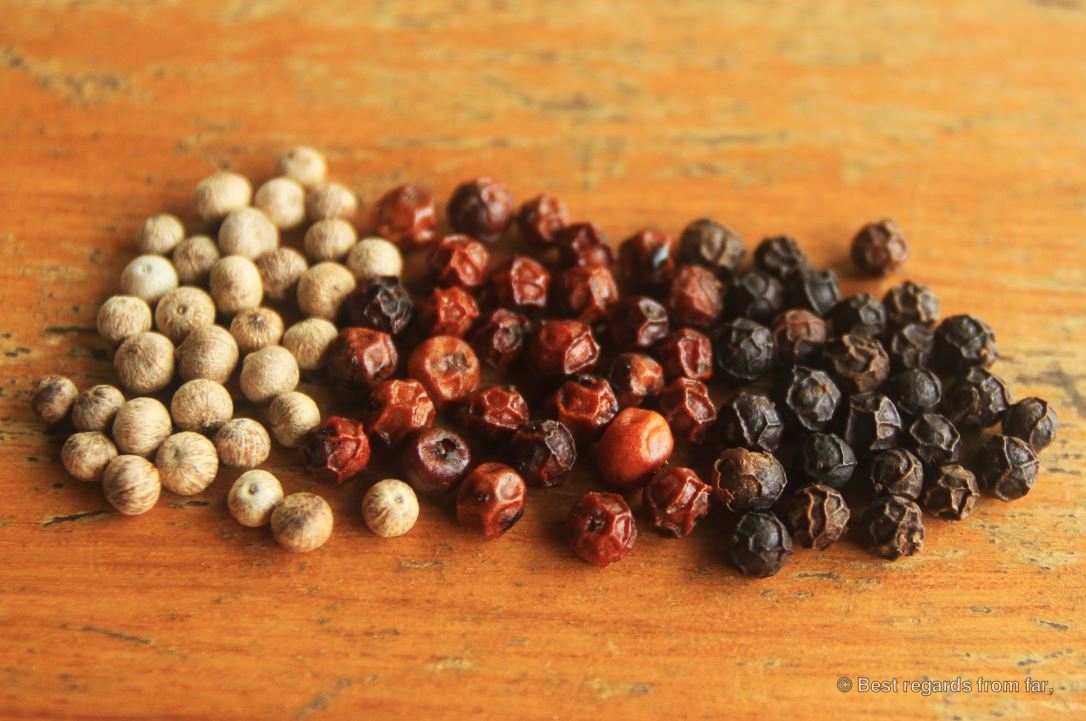
Time is of the essence. All the pepper is harvested at the very specific moment when about 20% of the pepper has turned red while the rest is still green on the cluster. The harvest, typically between March and June, produces black, red, and white pepper, each variety offering its own distinct flavor. Green pepper is the fresh and hot spice, that can be used only locally as it can be kept for just a few days. Black pepper is simply dried green pepper, while red pepper boasts a fruity, slightly sweet profile. The red pepper is either dried as is or processed into white pepper by soaking it in water for a couple of days and stripped of its outer skin, offering a less spicy taste. The drying process takes between 5 to 8 days, followed by painstaking sorting, ensuring that each grain meets the highest standards of quality- no skin at all around a grain of white pepper, while the whole skin must still be around each grain of black pepper! As Sothy highlights it, this time-consuming process allows her to provide a year-round full time job on the farm to her 12 workers.
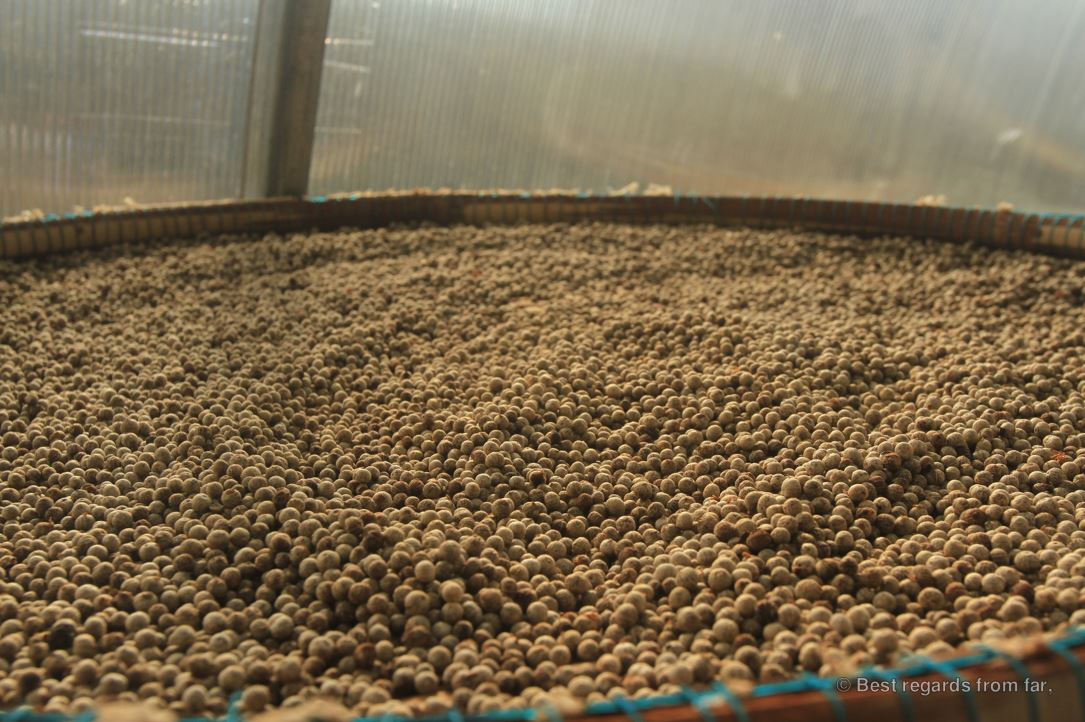
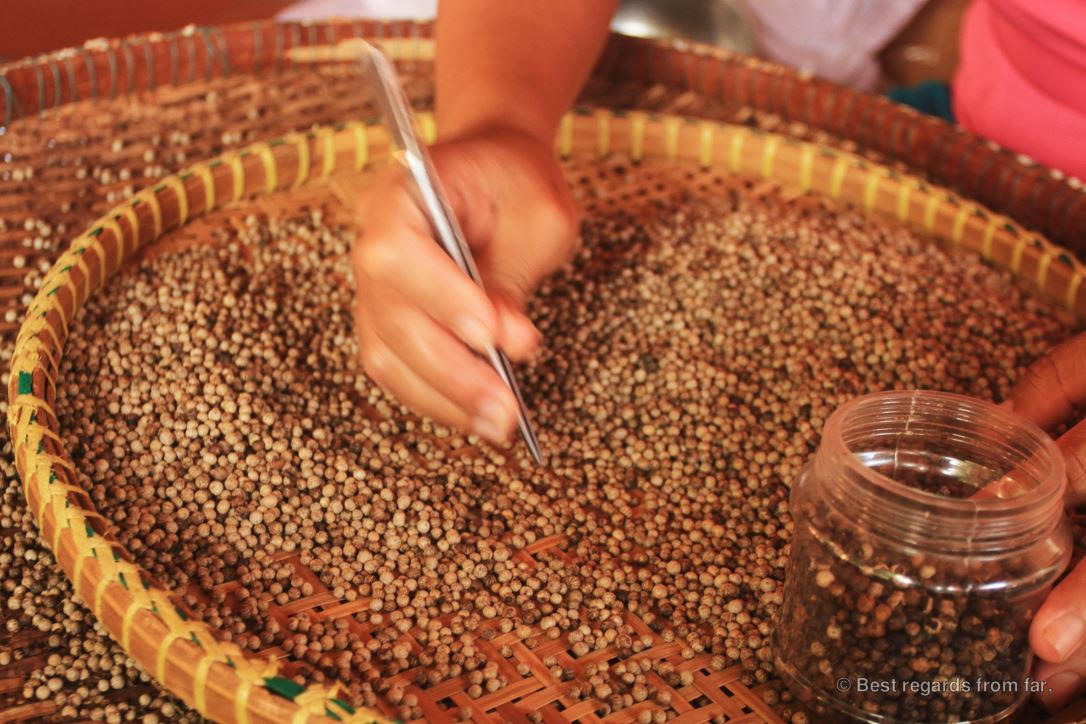
Under the French colonial times, the Kampot pepper production averaged 3,000 tons per year, about 50 times more than today. A luxury product, under the ruthless communist regime of the Khmer Rouge in the late 1970’s, all the Kampot pepper plantations got destroyed. It is only for the past few years that planters have come back to their lands to practice their ancestral know-how. “Today, we produce about 1.5kg of pepper per tree, 80 percent black, 10 percent red and 10 percent white. Non-organic farms can produce up to 7 times more”, Sothy describes. While the cherished global delicacy has found its way to the best restaurants of the world, it is also celebrated in the local cuisine.
Cambodia‘s Culinary Delights [must-taste!]
One of the most iconic dishes to sample especially in Kampot is Loc Lac, a hearty Cambodian stew that perfectly honors the pepper’s flavors. Tender beef cubes simmered in a lime and green Kampot pepper sauce bring together the zing of sourness with a peppery kick, balanced by the sweetness of palm sugar. Served with steamed rice, this dish is a true Cambodian comfort food.
Another must-try is the Amok, the signature Cambodian curry that can be made with chicken, beef, fish, or vegetables. This dish is steamed in banana leaves and infused with thick coconut milk, galangal (a root related to ginger), and turmeric, creating a custard-like texture and a flavor that is both creamy and aromatic. The coconut aroma and the soft, velvety custard texture make it a favorite among locals and visitors.

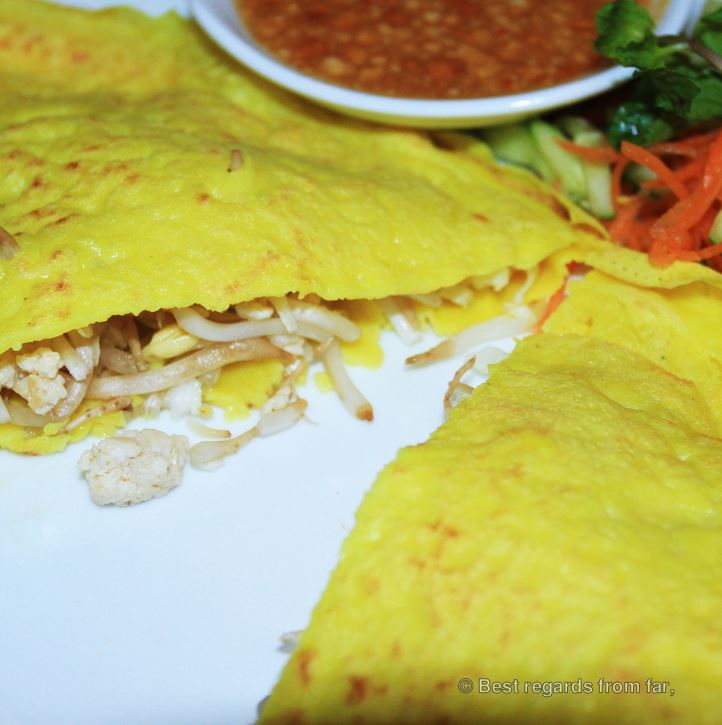

For something light and savory, Cha Trop is a grilled eggplant dish served with tender pork tenderloin chunks and spring onions, creating a dish that melts in your mouth with each bite. For something low-key, Bánh Chèv is a traditional Khmer savory pancake is filled with finely chopped chicken, sautéed with carrots, onions, and soy sauce, typically served with a flavorful fish sauce dip, extra umami.The Cha Kdav, lightly fried chicken cooked with lemongrass, chili peppers, and peanuts, offers a spicy and fresh flavor, enhanced by finely chopped lemongrass that can be eaten whole. Meanwhile, the Khor Ko stew, a caramelized goulash, combines tender pieces of beef with galangal, lemongrass, and dried chili, creating a rich, flavorful dish sweetened by the region’s palm sugar.
***
Whether savoring a plate of Loc Lac or indulging in the complex flavors of Amok, Cambodia’s culinary treasures are waiting to be discovered. For travelers seeking to dig into Cambodia’s gastronomy, do not miss the chance to spice up your travel experience in Kampot, where the flavors of the land come to life.
Travel tips:
- If you want to live this experience, visit Sothy’s pepper farm.
- Check out this awesome article about what else Kampot has to offer!
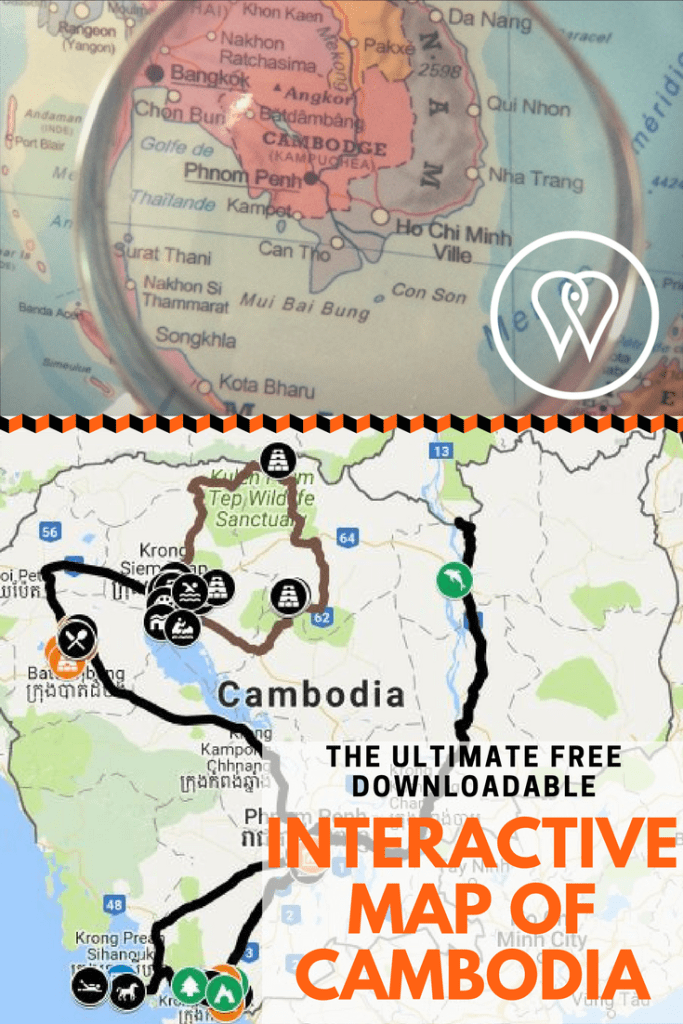
- Check out this interactive map for the specific details to help you plan your trip and more articles and photos (zoom out) about the area!
For more in Cambodia, click on the images below:





 Best regards from far,
Organic farming is better. More sustainable. True, the quantity will be lower and probably a little more pricey. But its quality over quantity right?
Can’t agree more! 🙂
altijd zo interessant wat jullie schrijven en laten tonen op jullie blog. by the way jullie zijn superfotograven hoor…nice pictures Sabine
Thanks Sabine for your compliment!! We keep bringing what we think is interesting and worth writing about. There is so much more to come 🙂
Very interesting. A pocket history and a recipe for pepper. Nice read 👍
Thanks for the read and sweet comment. 🙂