Updated on November 26, 2025
Text: Claire Lessiau & Marcella van Alphen
Photographs: Claire Lessiau & Marcella van Alphen
South Korea has not always been a land of Buddhist temples nestled in a beautiful mountainous nature. Buddhism, which was introduced from China, dramatically transformed the political, societal, and cultural landscape of Korea. However, after gaining influence, it was eventually ousted by the monarchy. The Gyeongju area, once the heart of the powerful Silla Dynasty that ruled over Korea for more than a millennium, is the best place in the country to not only visit some of the most significant temples of Korea, and experience unique temple stays, but also to explore Korea’s early Buddhist roots and the early days of a mighty empire shaped by numerous foreign influences.
Pin it for later!

Gyeongju & its UNESCO Heritage
Gyeongju: The Heart of the Silla Dynasty
Nestled in the southeastern corner of South Korea, Gyeongju is the gateway to some of the most sublime jewels of Buddhism. The capital of the powerful Silla Dynasty for over 1,000 years (57 BC- 935 CE), it shined much longer than the current capital Seoul. It is considered the most traditional Korean city, and the cultural and historical capital of South Korea, often dubbed “the museum without walls”.
Passed its high-rise habitation buildings that seem to plague every South Korean city, its charming historical center lined with traditional hanok houses is delimitated by two rivers east and west and mountains in the south. Some unnatural-looking mounds resembling small hills pop up among trees and open grass fields, the perfect setting for many young South Koreans to take selfies, especially in the fall when the foliage takes vibrant colors.

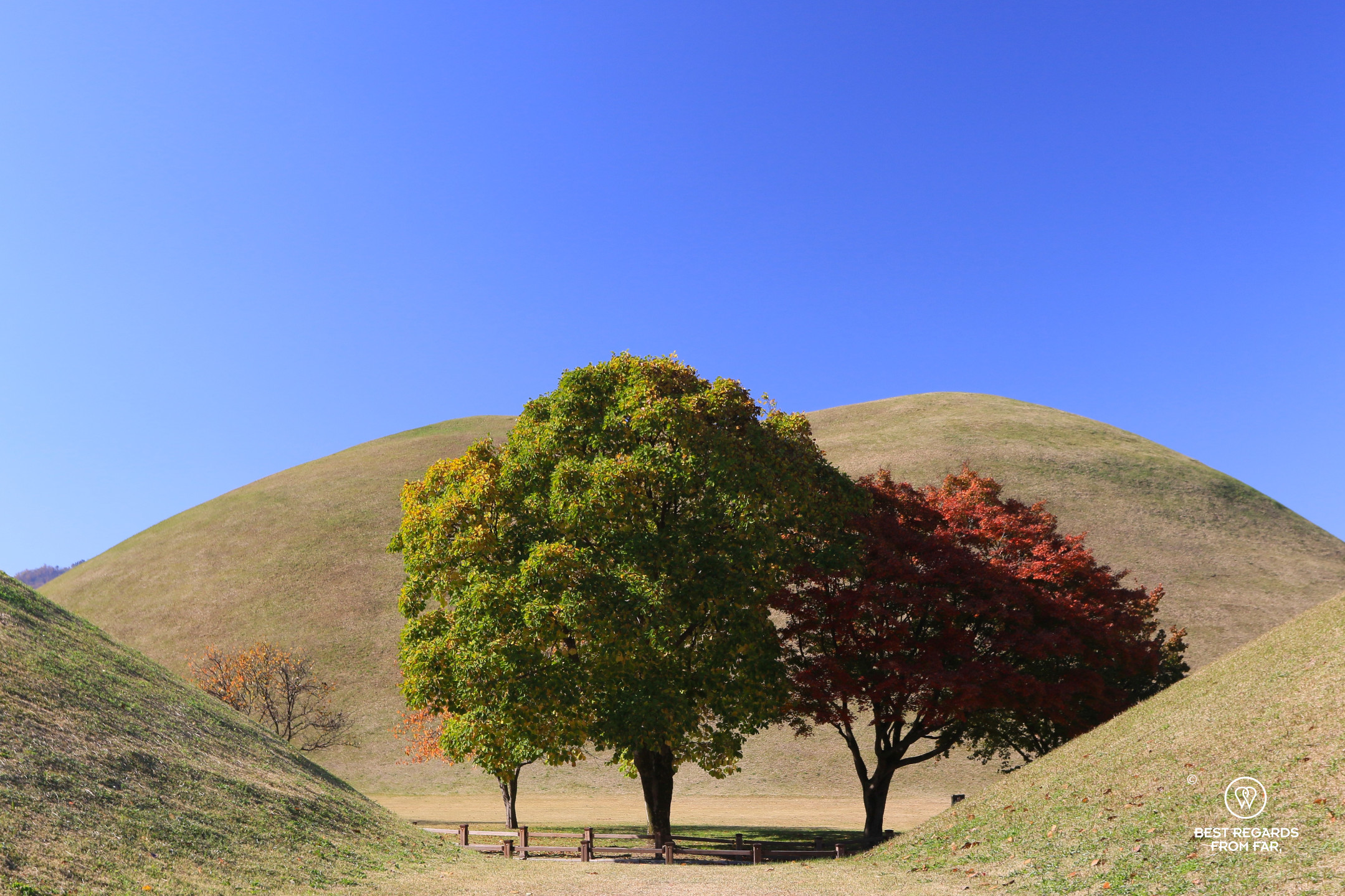

These mounds are not just scenic landmarks—they are ancient royal tombs from the early Silla Dynasty. The most iconic of these is the Hwangnamdaechong sepulture, one of the largest known Silla tombs dating back to the 5th century—measuring about 80 meters (262ft) in diameter at its base. With such a size and such wealth found within (today exhibited in the excellent nearby Gyeongju National Museum), it speaks to the immense influence of the Silla royalty: precious artefacts such as golden crowns, intricate jewelry, glass cups from the Silk Road, weapons, potteries, and farming tools… Beyond representing the tomb’s occupant wealth and status, it was not uncommon for servants to be buried alive to serve their master in the afterlife.
The arrival of Buddhism from China halted these burial practices. In a bold political move to strengthen its royal authority after conquering competing kingdoms, the Silla monarchy adopted the new religion to unify the country: Buddhist temples flourished, and some of which have survived to this day despite invasions and wars.
Bulguksa Temple: A Masterpiece of Silla Buddhism
A short ride from the historic heart of Gyeongju, Bulguksa is one of Korea’s most iconic temples and perhaps the finest example of the Silla Dynasty’s vision of Buddhist architecture. The name Bulguksa translates to “Buddha Land,” embodying the Silla’s aspiration to establish the Buddha’s Pure Land here on Earth.


Founded in 528 CE to pray for the nation’s stability and peace, it took almost 250 years to complete this masterpiece of the golden age of Buddhism. A base of the volunteer militia, the entire temple was burnt down by the Japanese invaders in 1593 during the 7-year invasion, or Imjin War. Only the stone structures from the Silla Period remain balanced by the reconstructed wood elements of the rebuilt temple.
Bulguksa’s stone pavilions, bridges, pagodas, and wooden buildings blend together in a harmony with the natural landscape along the slopes of Mount Tohamsan. In the fall, the trees planted on the temple ground highlight the UNESCO World Heritage Site even more.
From Bulguksa, a scenic forest trail leads to another UNESCO World Heritage Site: Seokguram Grotto.

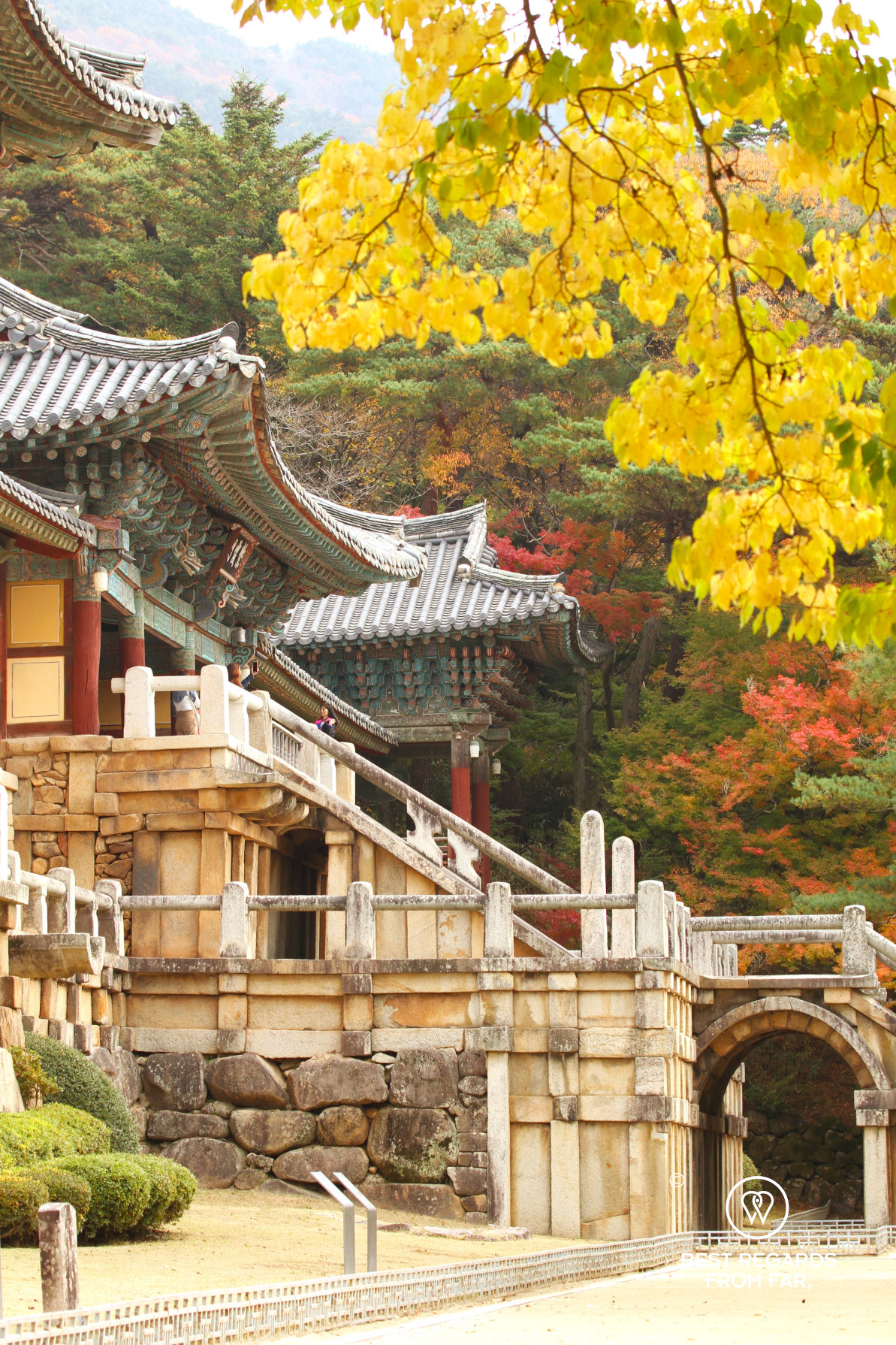


Seokguram Grotto: A Hidden Buddhist Masterpiece
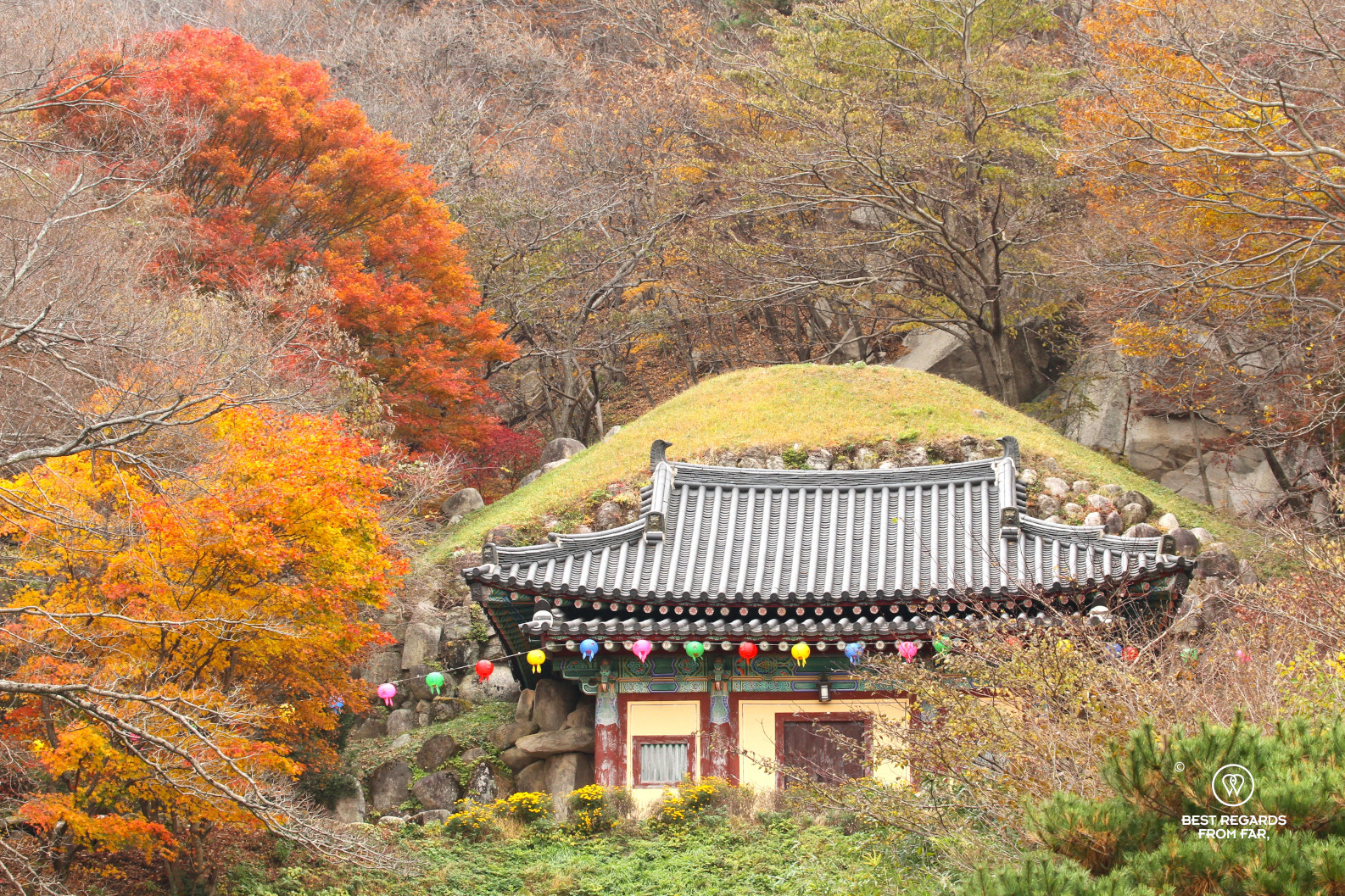
After following the 3-kilometer (2-mile) trail shaded by the forest of Mount Toham, an unassuming temple structure topped off by a grass mound appears. Beneath its modest exterior lies Seokguram Grotto, a unique temple cave and another unparalleled masterpiece of Buddhist art.
Unlike the natural limestone caves often found in Southeast Asia, Korea’s granite mountains are not prone to forming temple caves. However, in the 8th century, inspired by ancient Buddhist grotto temples from India and China, the Silla Dynasty created an artificial cave carved from solid granite. This man-made grotto with its rectangular antechamber representing the earth and its rotunda representing heaven was covered with soil. At the center of the rotunda sits a serene Sakyamuni Buddha—a Buddha at the very moment he reaches enlightenment. Surrounding him are 38 other Buddhist figures in high and low relief reminiscent of Hellenic art that transpired in the first century BC via India.
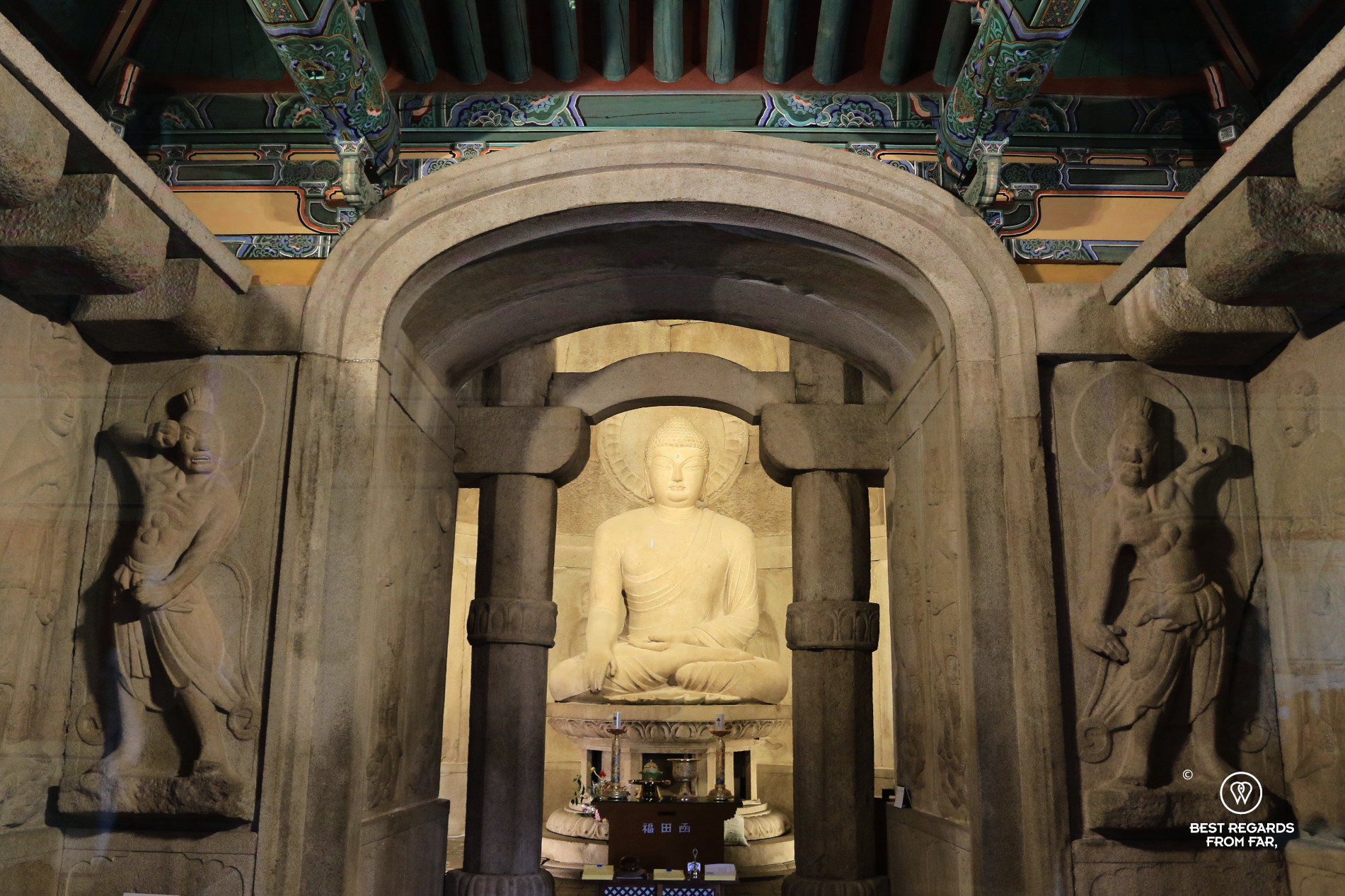
While the sculptures and reliefs impress, the visitor can hardly imagine the complexity of the granite assembly encompassing precisely cut slabs, butterfly fasteners, and keystone elements. Innovative architectural techniques and artistic talents were put to the service of their religious fervor by the people of the Silla Dynasty to build Seokguram Grotto which remains not only a national treasure in South Korea but a real gem of Buddhist art worldwide.
Golgulsa Temple Stay: Martial Arts
One valley eastward further towards the Sea of Japan, the Golgulsa Temple sits on the slope of Mount Hamwolsan. A satellite temple of the UNESCO World Heritage Bulkugsa Temple, Golgulsa offers a unique temple stay experience centered on Seonmudu, a meditative martial art that unites body and mind.
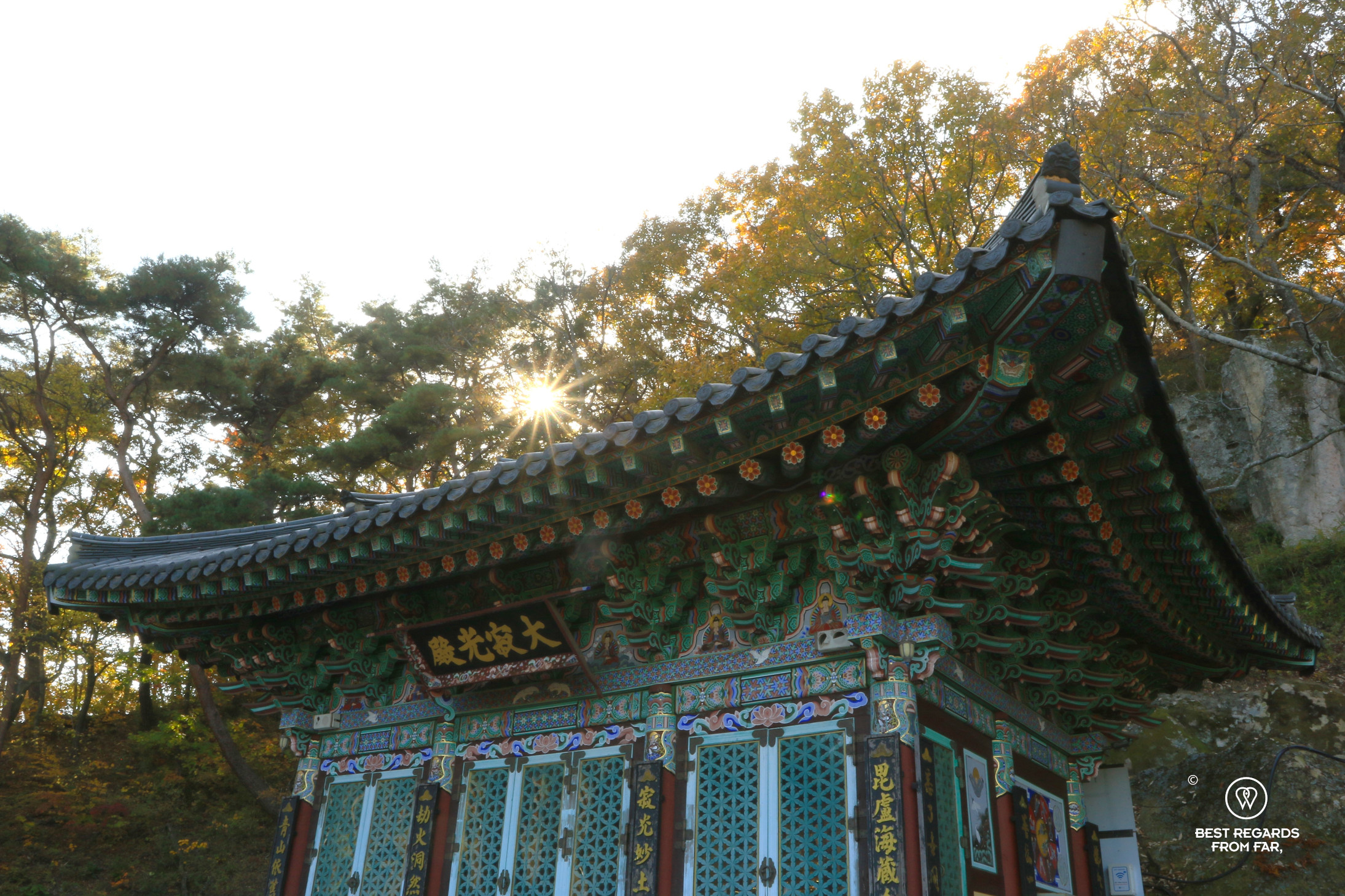
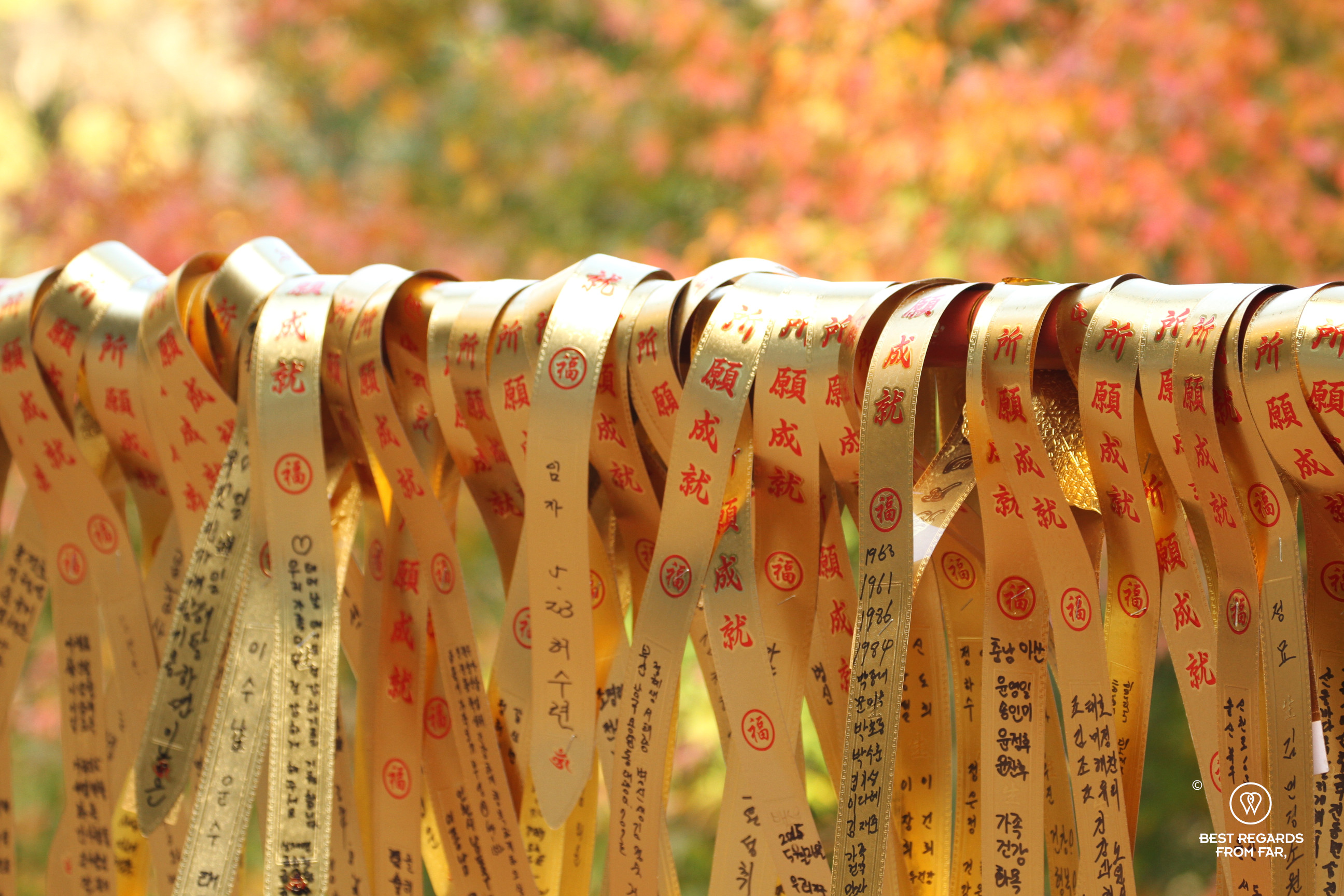
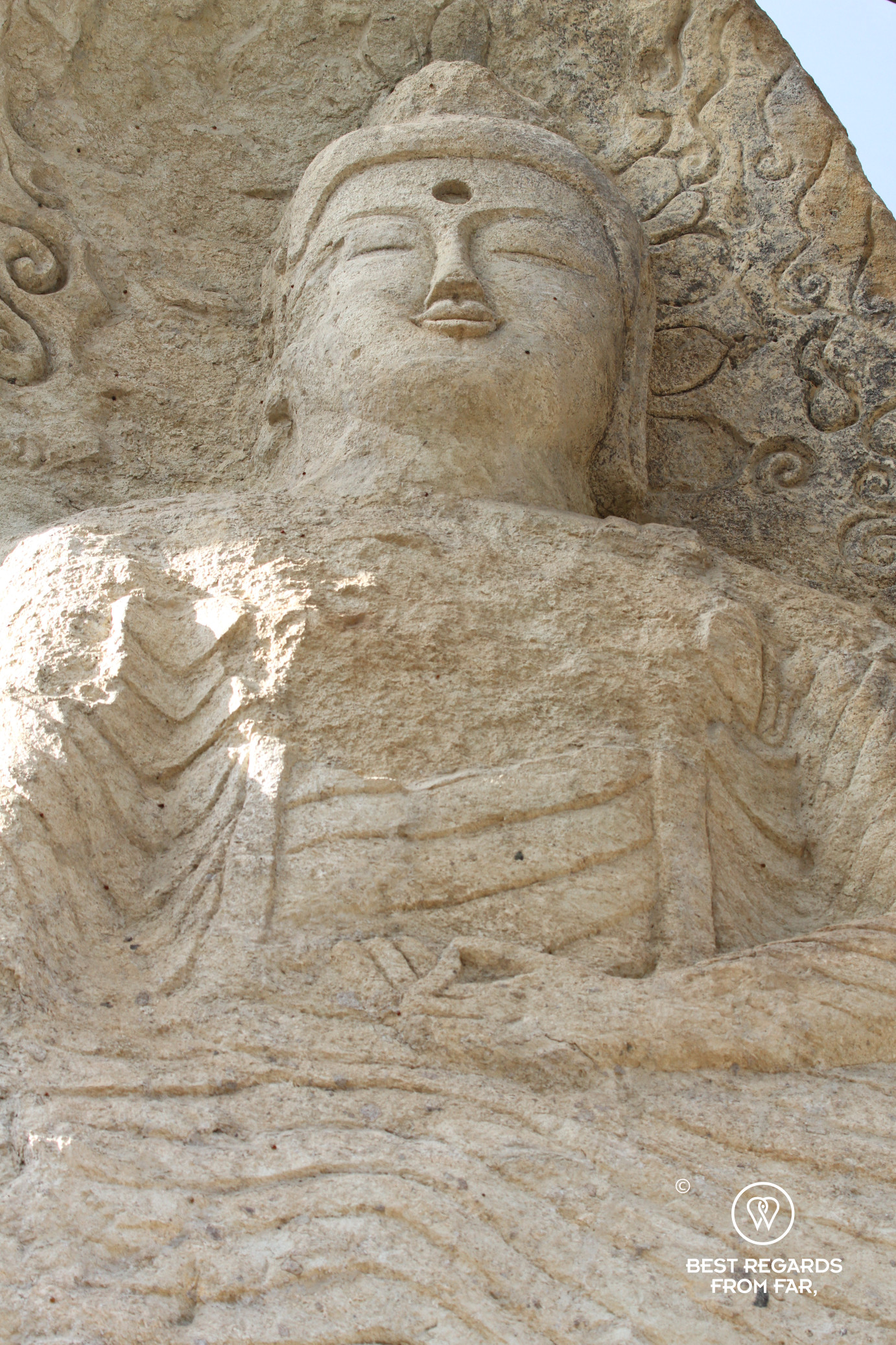
Founded over 1,500 years ago by Master Gwangyu from India, Golgulsa Temple was built into the limestone cliffs with stone grottoes inspired by Indian temple architecture. Today, the temple’s main Buddha still gazes serenely toward the Sea of Japan, behind the tree-clad mountains. Maybe at times, it glances at the wooden terrace in front of the main prayer hall that towers the valley and on which Seonmudo demonstrations take place daily.
Seonmudo is more than just a martial art; it is a form of moving meditation passed down secretly by Buddhist monks throughout the centuries. Developed during the Joseon Dynasty, it was practiced to protect the faith and the nation during times of foreign invasion when Buddhist monks often turned into soldiers. Though Buddhism was booed out from the royal court, tucked away in the mountains, far from the royal power, monks continued to serve both as spiritual guides and defenders, deeply rooted in the lives of commoners.


Only a generation ago, the abbot of Golgulsa, also a Grand Master of Seonmudo, began to teach this meditative martial art to the public. While the demonstration by the monks impresses, the Golgulsa temple stay focuses on making Seonmudo accessible to all. Breathing techniques, an essential component of Seonmudo that helps practitioners unite their body and mind, are at the heart of the practice. Combined with some stretching exercises during which temple stay guests become mindful of their inhalation and exhalation patterns, this introduction to Seonmudo takes place either in a praying hall turned dojo or on the nearby beach, where the sound of the waves enhances the meditative experience.
Perhaps the most physically demanding aspect of the temple stay is the (optional) 108 Prostrations. A deeply symbolic practice, these movements represent the mental sufferings inherent in human life. Through them, practitioners seek to lower their ego, express reverence for the Buddha, and spread his wisdom, combining body, mind, and soul.
Naksansa: Meditation and Sea Views
Beautifully located on the coastline of the East Sea, Naksansa Temple offers a temple stay focusing on meditative practices, encompassing breathing meditation, food meditation, wave meditation, tea meditation, yoga, and more. Read this article about the excellent Naksansa Temple Stay.


Haeinsa: A UNESCO World Heritage Site
Maybe the most renowned temple of South Korea, Haeinsa Temple is a UNESCO World Heritage Site where the Tripitaka Koreana—a complete collection of wooden blocks of Buddhist scriptures dating back to 1251—is kept. This sacred landmark offers a unique temple stay in a serene and beautiful nature: read this article dedicated to the Haeinsa Temple.


Hwaeomsa: A Temple of Tranquility and Tradition
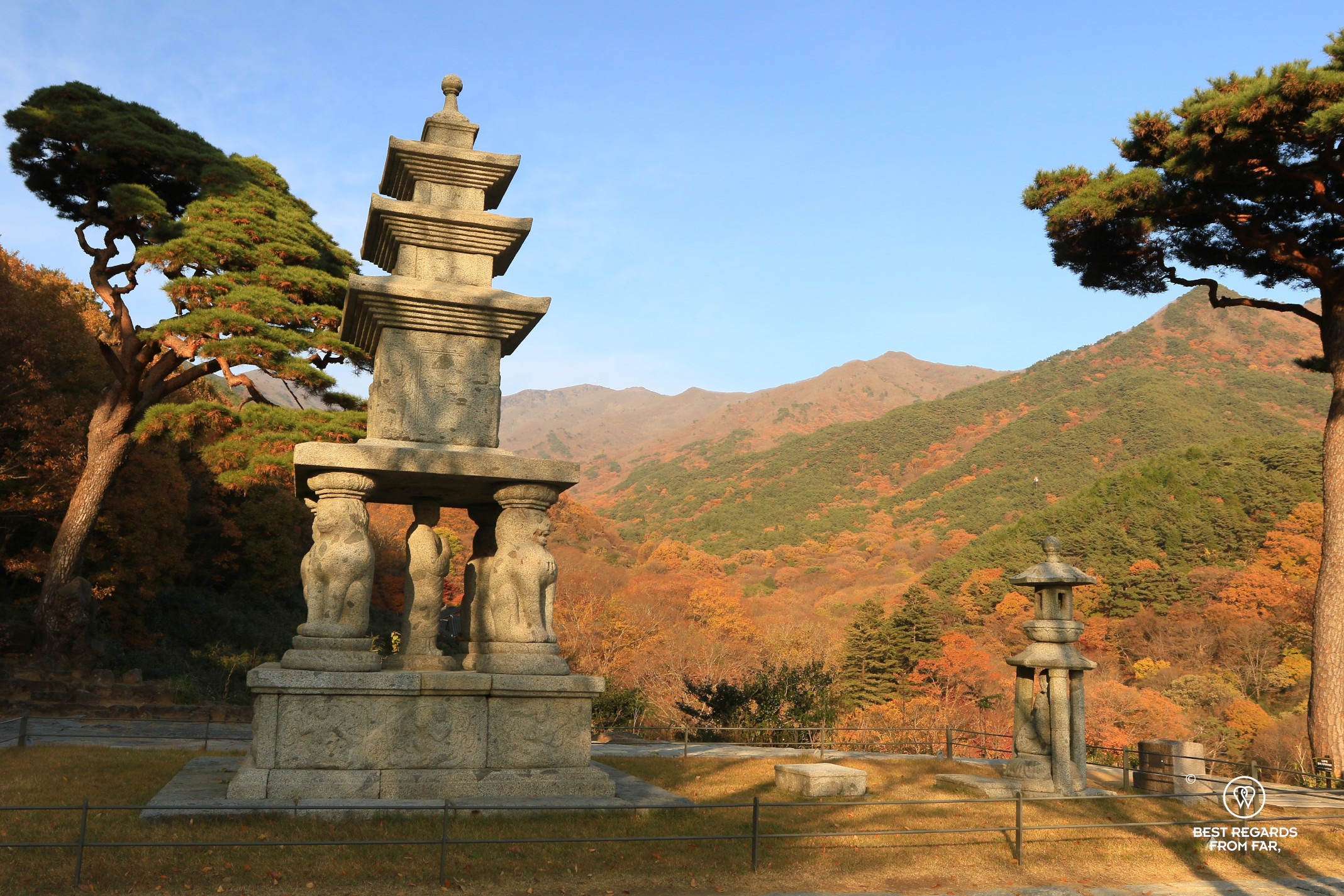
Leaving the tranquil trail along the Seomjingang River, we cross a bridge over the stream that symbolizes the transition from the ocean of suffering to the bliss of enlightenment—the Paradise Bridge. As we approach the temple, we pass beneath the One Pillar Gate that separates temple life from secular life. Its name does not come from its structure but from the shape of its pillars: straight as a number one to align mind and body and a reminder to focus instead of wandering. Normally these gates have no doors as temple access is always open. Yet with five precious national treasures housed at Hwaeomsa Temple and many passersby on their way to the Jirisan National Park in which the temple is located, this one is an exception.

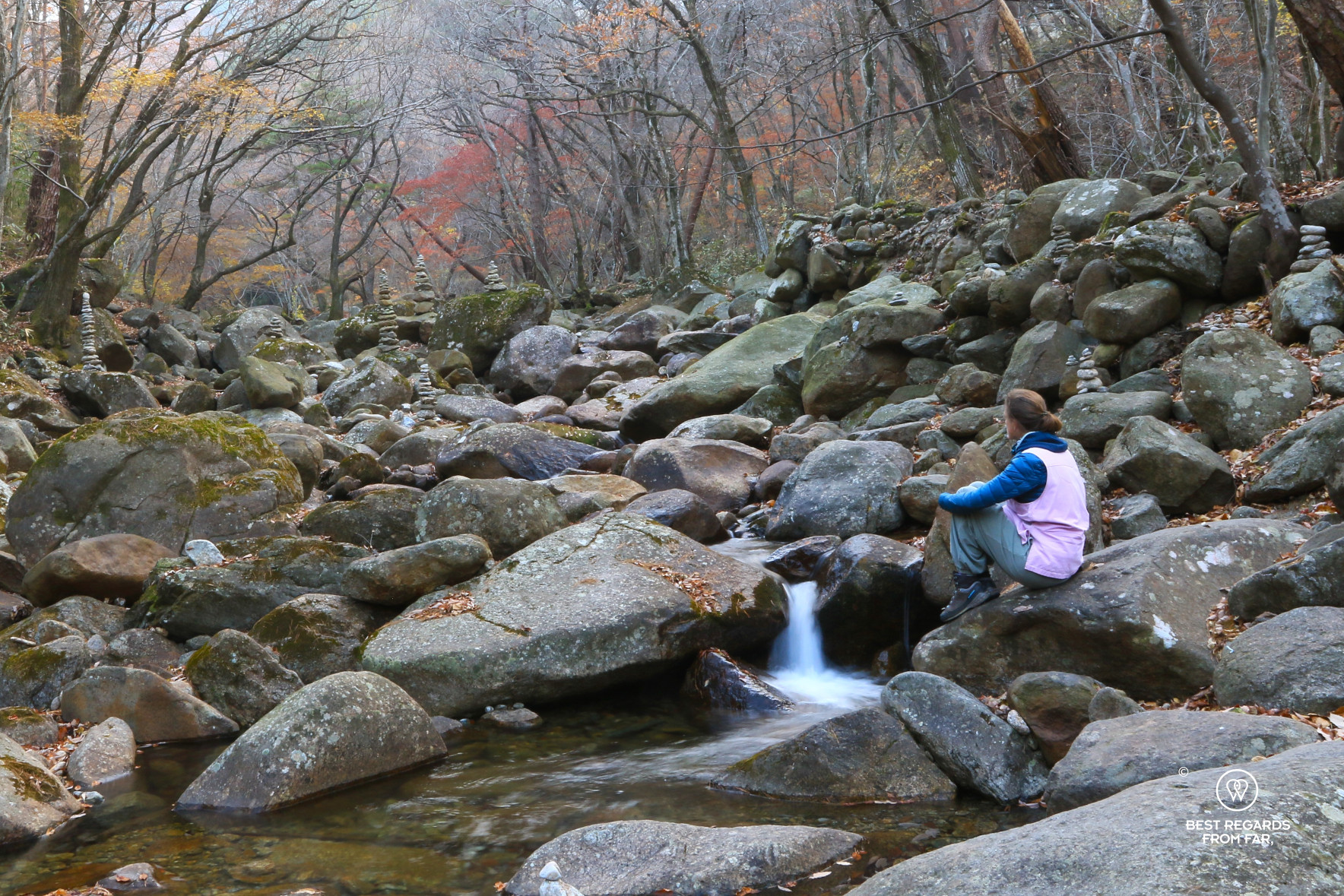

The second gate is guarded by imposing figures that evoke the temple’s Indian origins, a reminder of Monk Yeon-gi, who founded Hwaeomsa in 544 CE during the Silla Dynasty. At that time, Jirisan Mountain was already regarded as sacred, watching over the Silla Kingdom. With the introduction of Buddhism to Korea, Jirisan became one of the most revered mountains in the country, home to numerous temples and hermitages, with Hwaeomsa remaining the largest and most prominent temple within today’s national park. Beyond the second gate lies the Gate of the Four Heavenly Kings, a national treasure in itself, where the four mighty guardians watch over the Buddha and his teachings, safeguarding against evil spirits rooted in ignorance, hatred, and greed.
After passing through these monumental gates, we proceed to our temple stay accommodation, where we change into comfortable, loose temple attire in our simple and traditional Korean-style room. Accompanied by our temple stay interpreter, we then walk the temple grounds, where majestic buildings encircle the main courtyard. The most grandiose of these is the 300-year-old Gakhwangjeon Hall, the largest wooden Buddha Hall in Korea. According to legend, a poor woman who dreamed of building a Buddha hall sacrificed her life in hopes of being reborn into a royal family. Reborn as a princess, her father, the king, fulfilled her wish by funding the construction of Gakhwangjeon Hall.
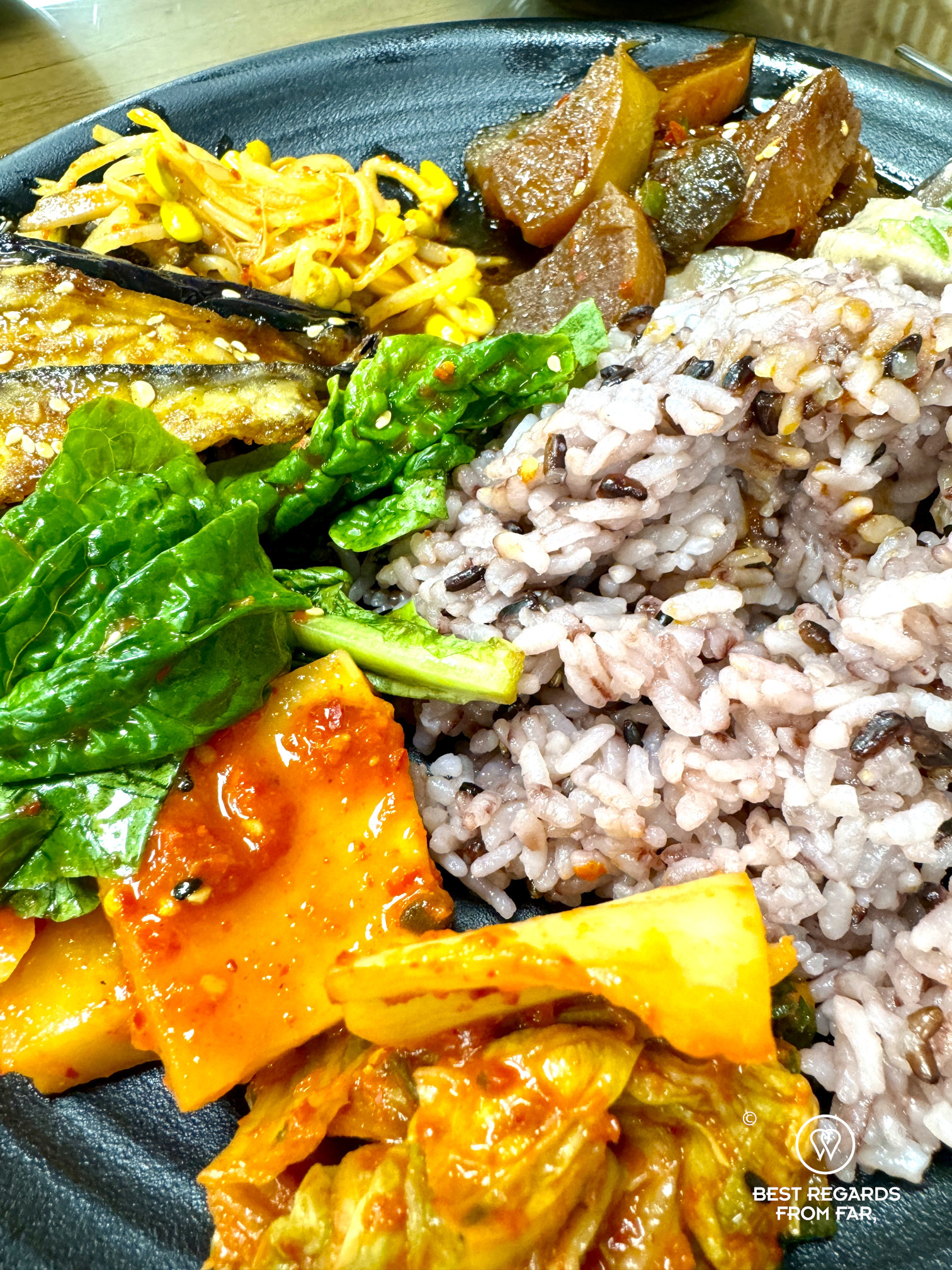
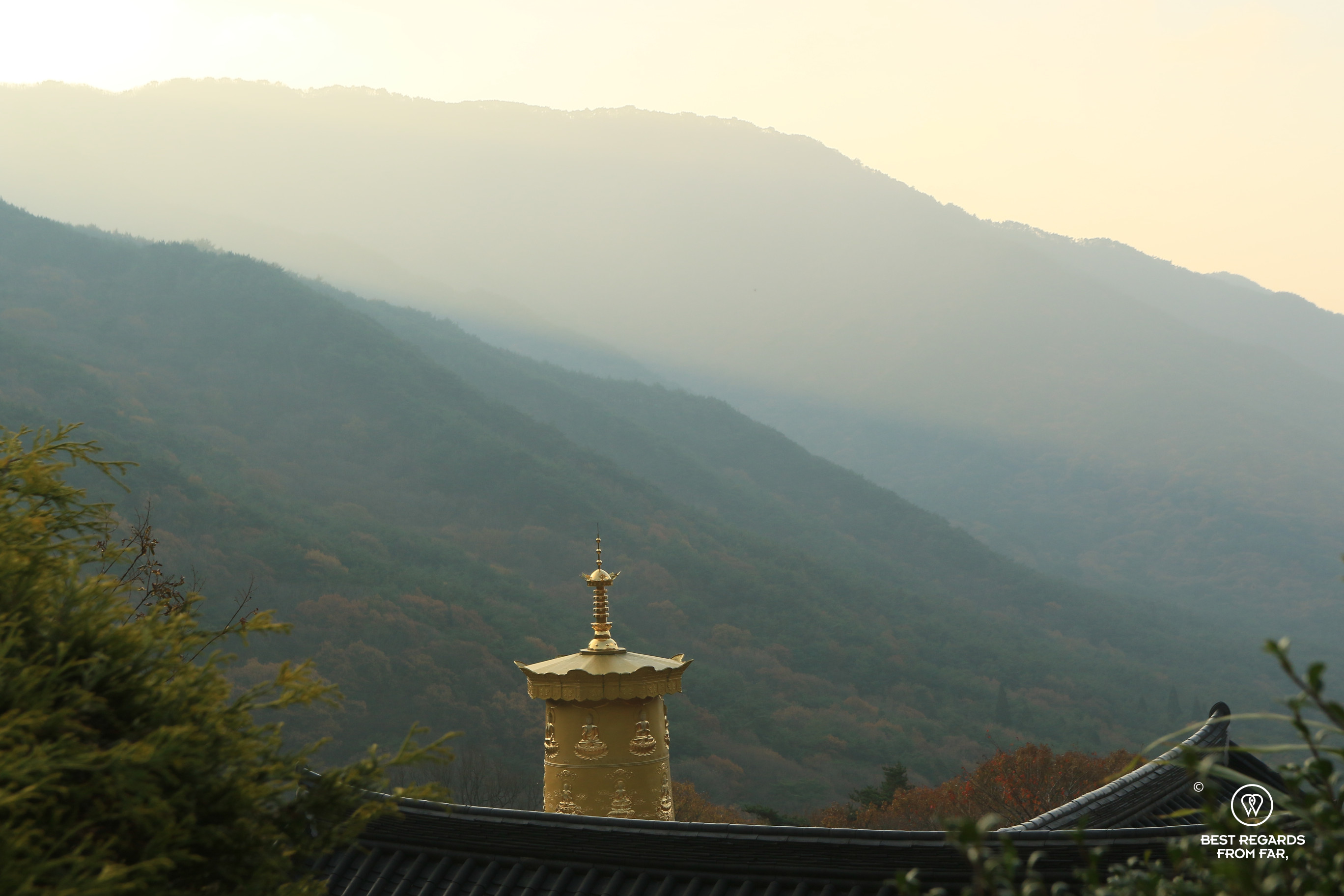
As the sun sets behind the mountains and the temperature begins to drop, we gather near the dining hall, where the monks will soon enter for the evening meal. Punctuality is paramount in the temple, especially for baru gongyang, the monastic meal. Some recipes have been passed down for over 1,700 years. Using only fresh, organic ingredients, this healthy, vegan cuisine excludes meat, animal products, and pungent vegetables like garlic, scallions, and chives. One of the highlights of Hwaeomsa is undoubtedly its delicious, nourishing food.
Way before sunrise, we join the monks of Hwaeomsa for the morning chanting service, held in front of three large Buddha statues, flanked by the unusual Rochana Buddha wearing a crown. The contrast between the gilded figures and the faded colors inside the tall dharma hall creates a serene atmosphere, marking the beginning of another spiritual day at Hwaeomsa that seems to repeat itself eternally.

Travel tips:
- To experience a temple stay yourself, there are about 150 temple stays available in South Korea including about two dozen in English where guests experience monastic life and learn about Buddhism including meditation.
- Check out our interactive map for more in the area (black pins lead to an article):
For more in South Korea, click on the images below:



 Best regards from far,