Updated November 21, 2025
Text: Claire Lessiau
Photographs: Claire Lessiau & Marcella van Alphen
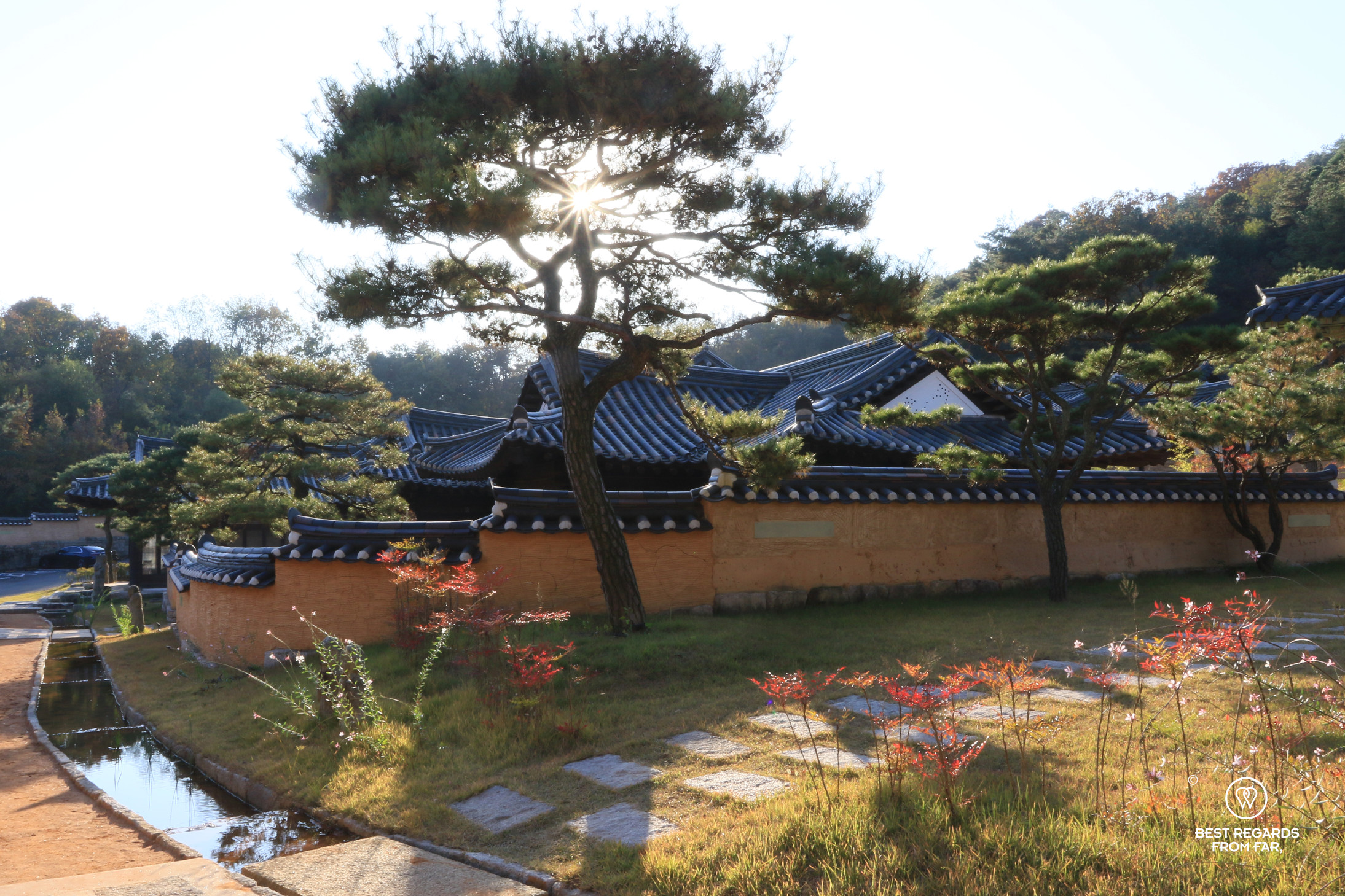
The sun is slowly rising behind the mountains, its rays filtered by the thin layer of mist wrapping the dense forest. One by one, the anthracite tiles of the traditional Korean hanok rooftops lighten up, bathed in the shy early morning luminosity. The rice paper screens dim this natural light that enters the sober space of the hanok house. A few birds chirping break the silence of this moment that seems to be out of time.
Like it? Pin it!
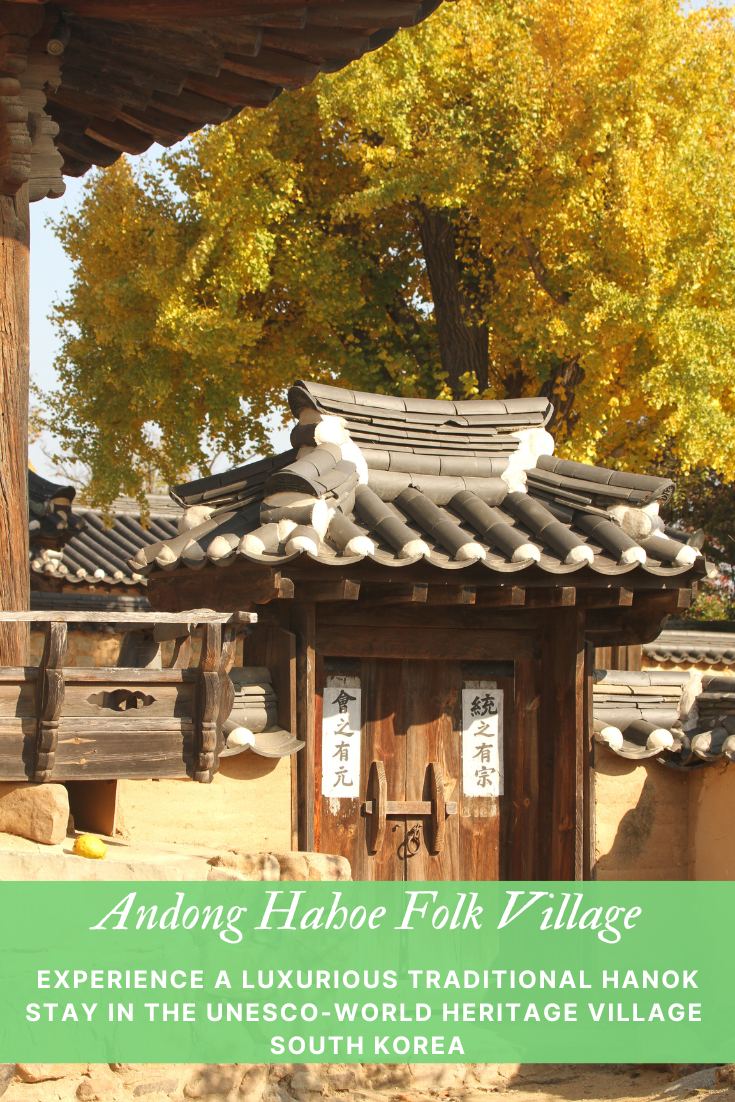
The historical Rakkojae Hahoe Hanok Hotel
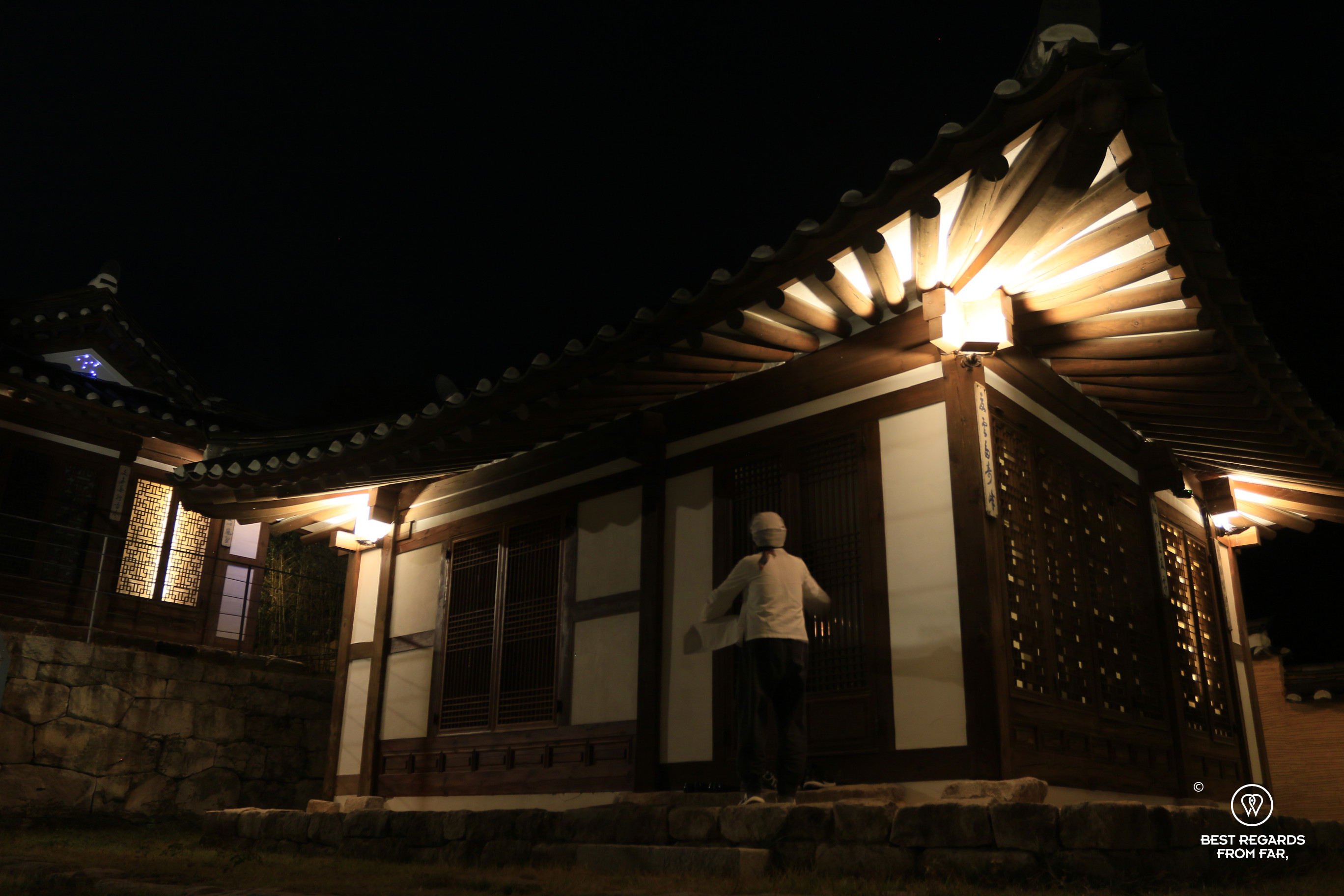
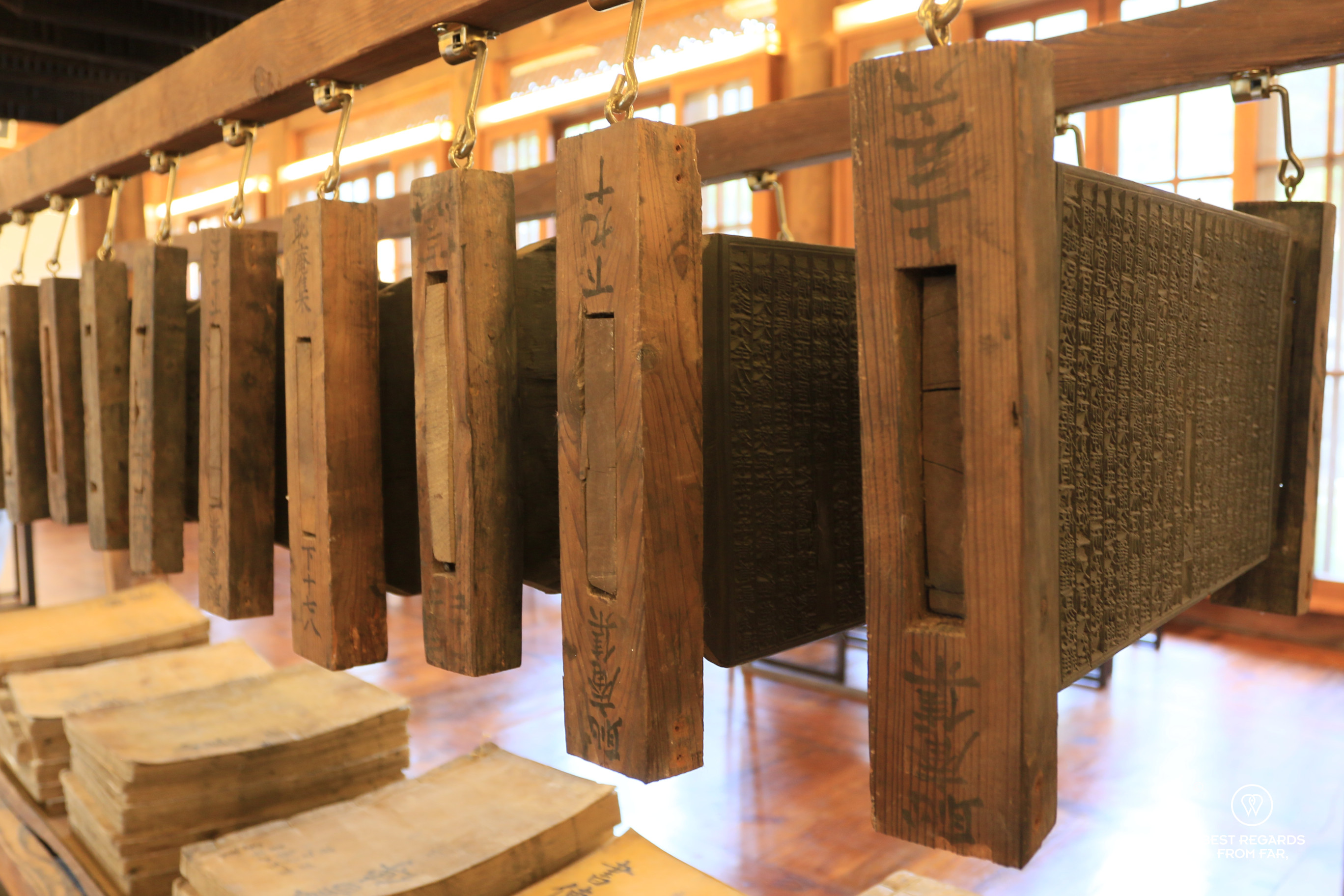
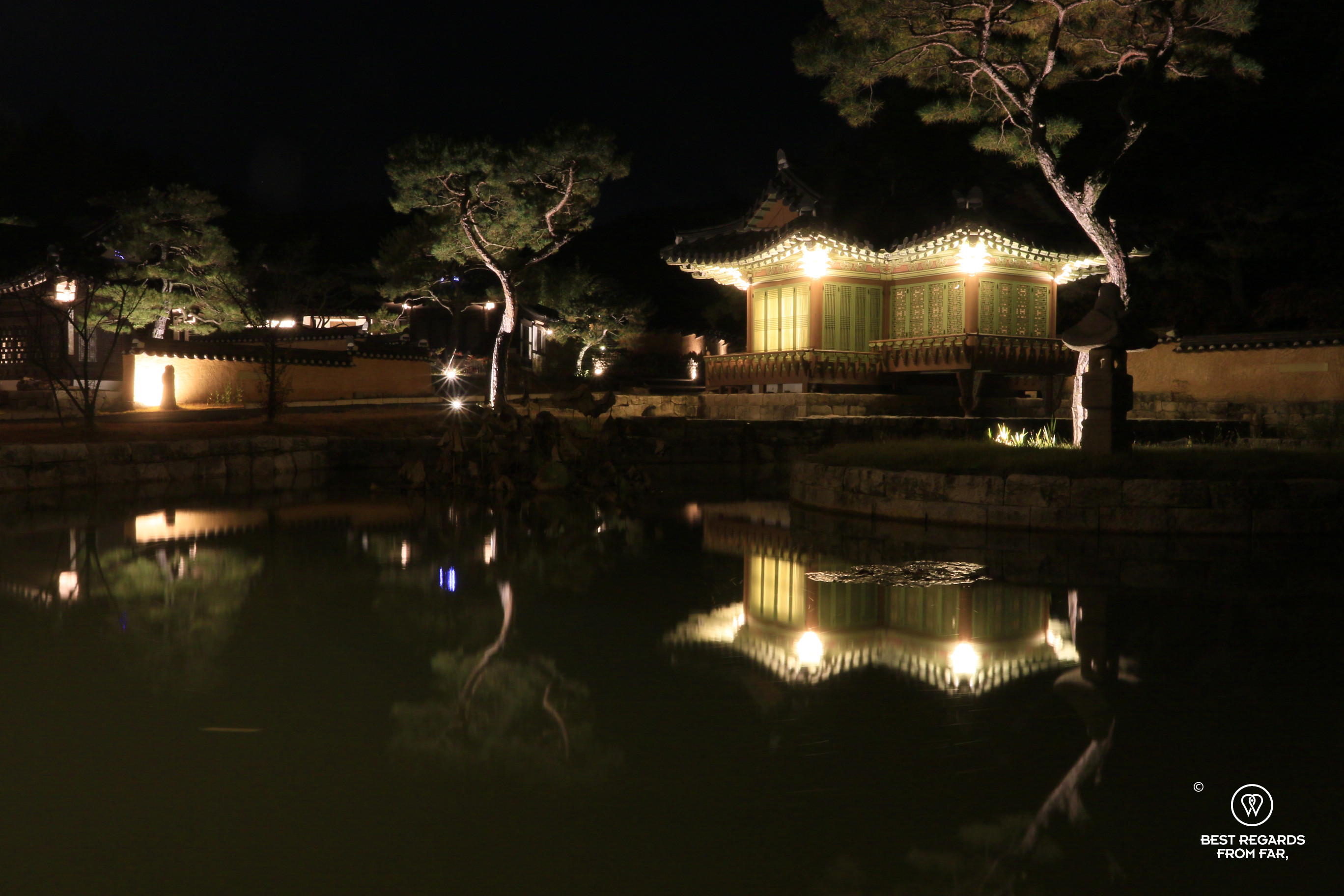
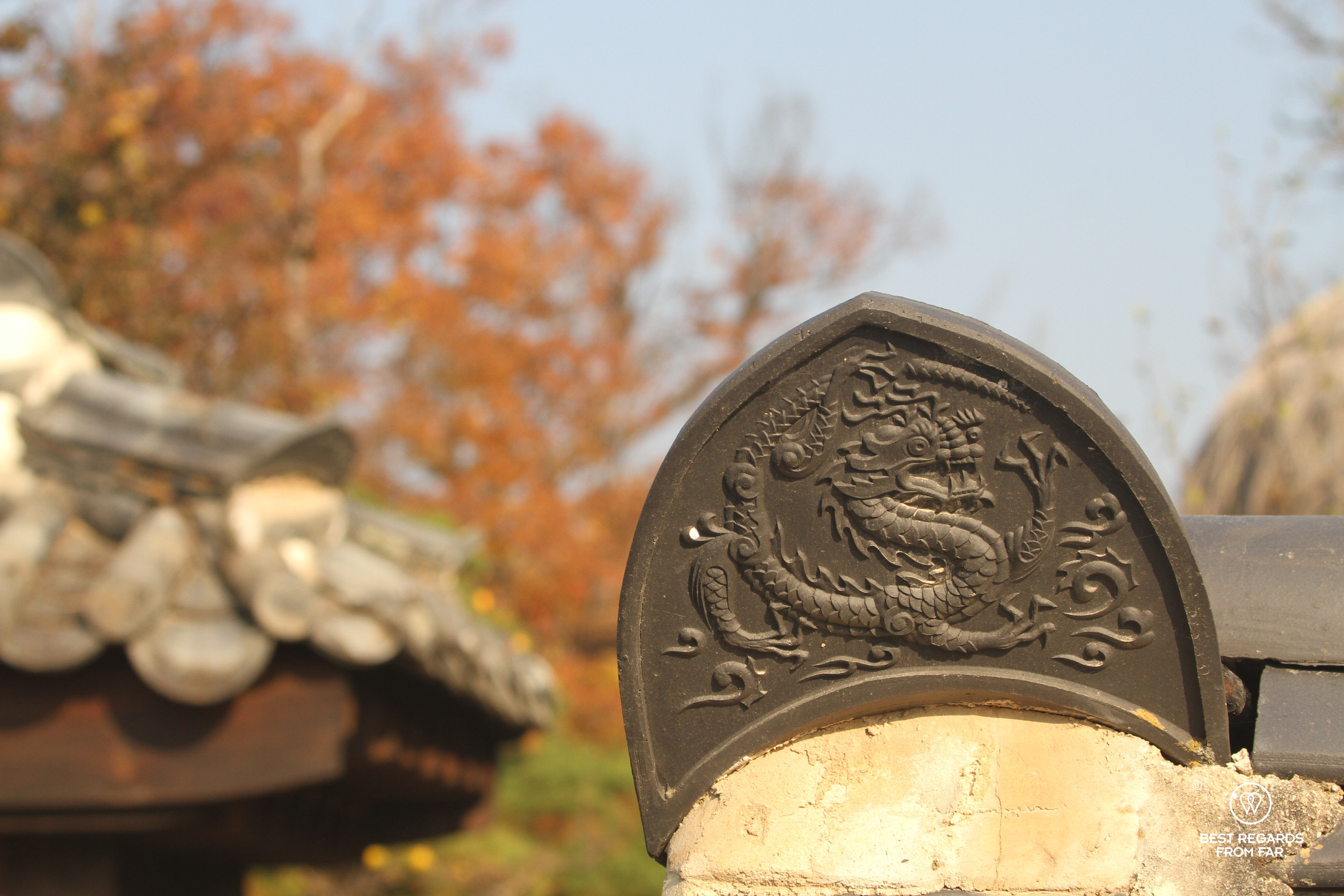
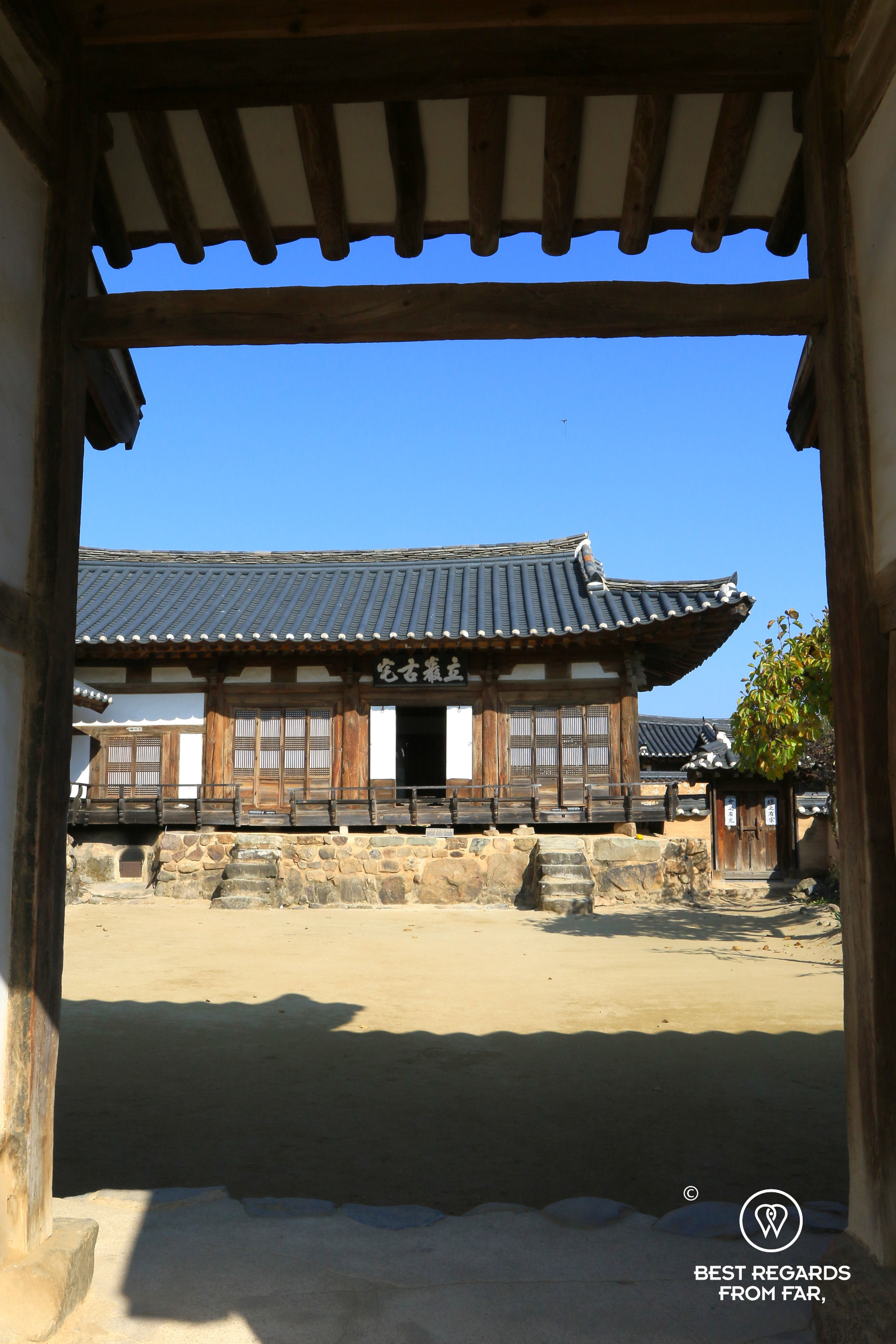
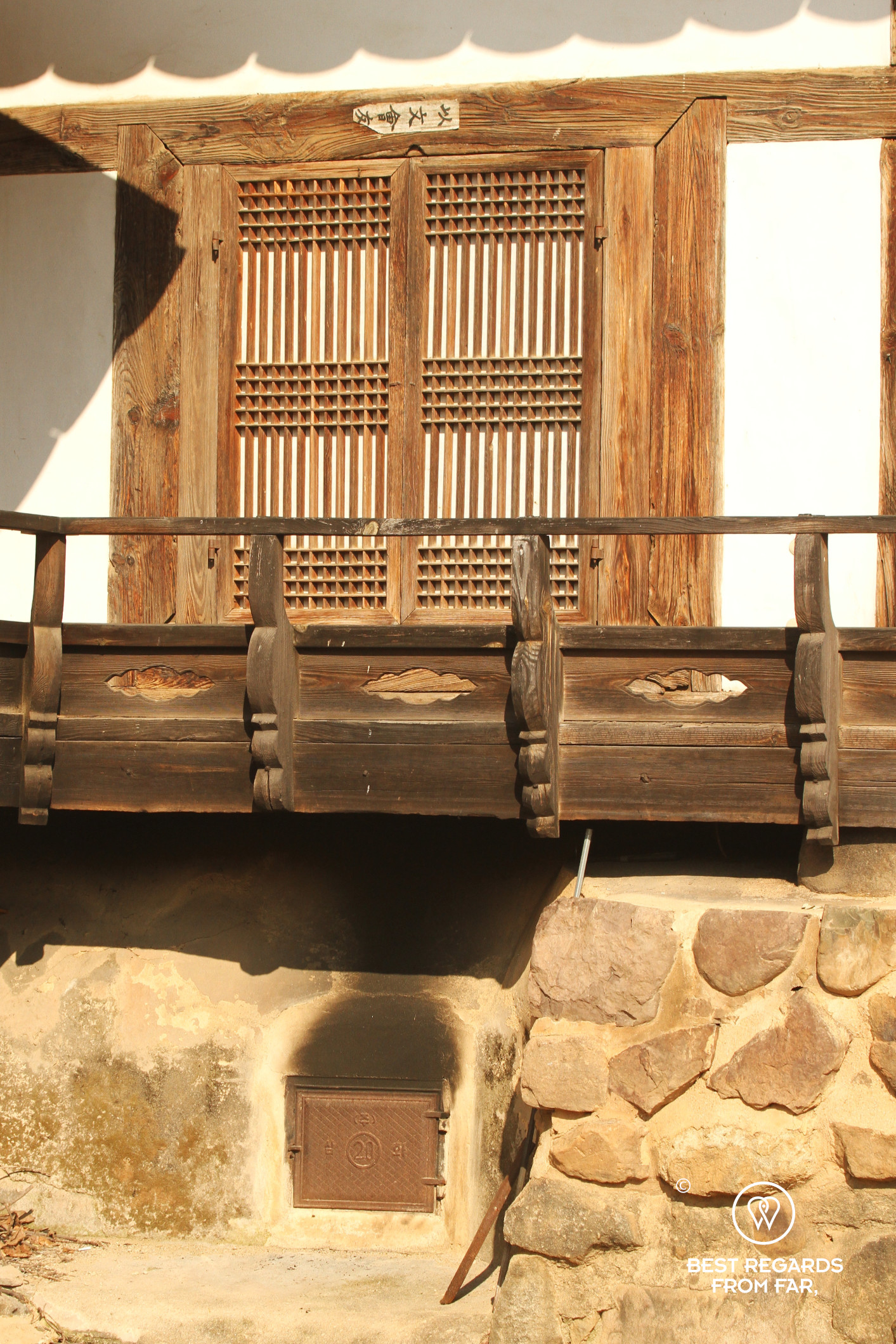
The sound of the barista coffee machine brings me back from my time travel as I wake up in the Rakkojae Hahoe Hanok Hotel, a stone’s throw away from the Hahoe UNESCO World Heritage traditional Korean folk village. The only hotel in South Korea situated within a cultural heritage area, it took more than 15 years to design and build the two dozen unique self-standing Hanok houses using traditional building techniques. A carpentry school was set up and precise replicas of royal buildings such as the Aeryeonjeong pavilion of the secret garden of Changdeokgung Palace where the king and queen would be intimate have also been meticulously recreated. With their characteristic underfloor heating and meticulous woodwork, the guest rooms have been adorned soberly with antiques from the 13th and 14th centuries.
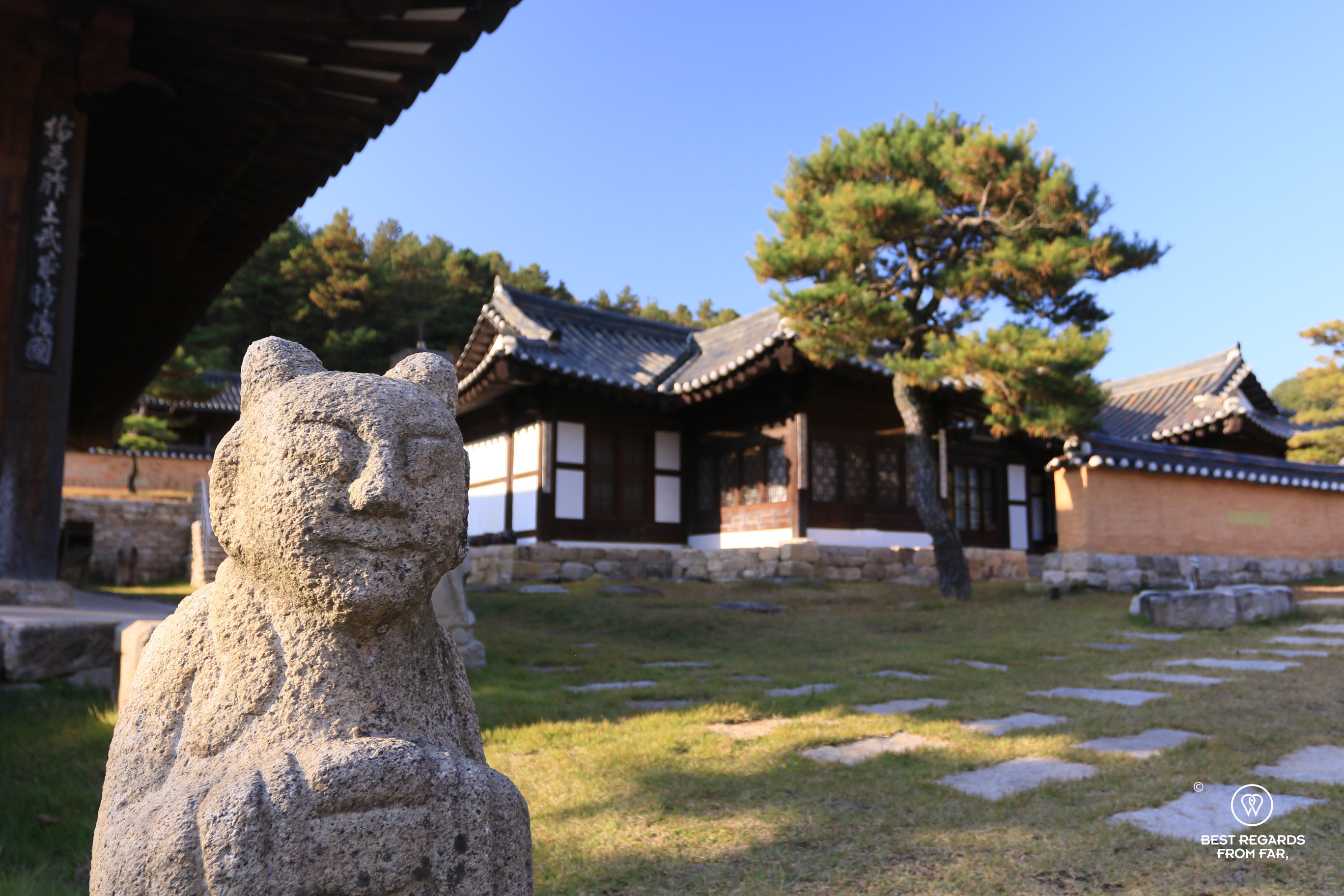
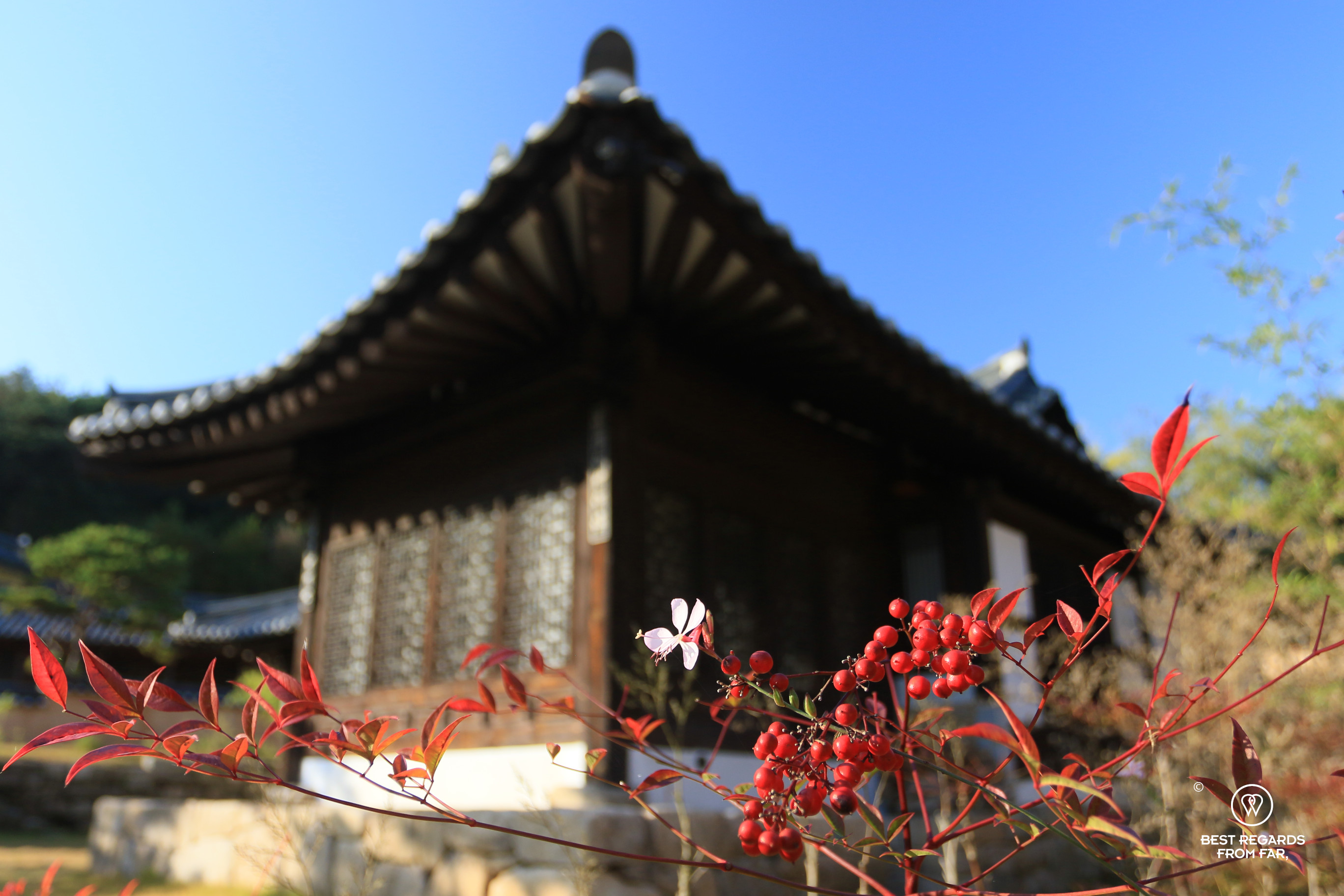
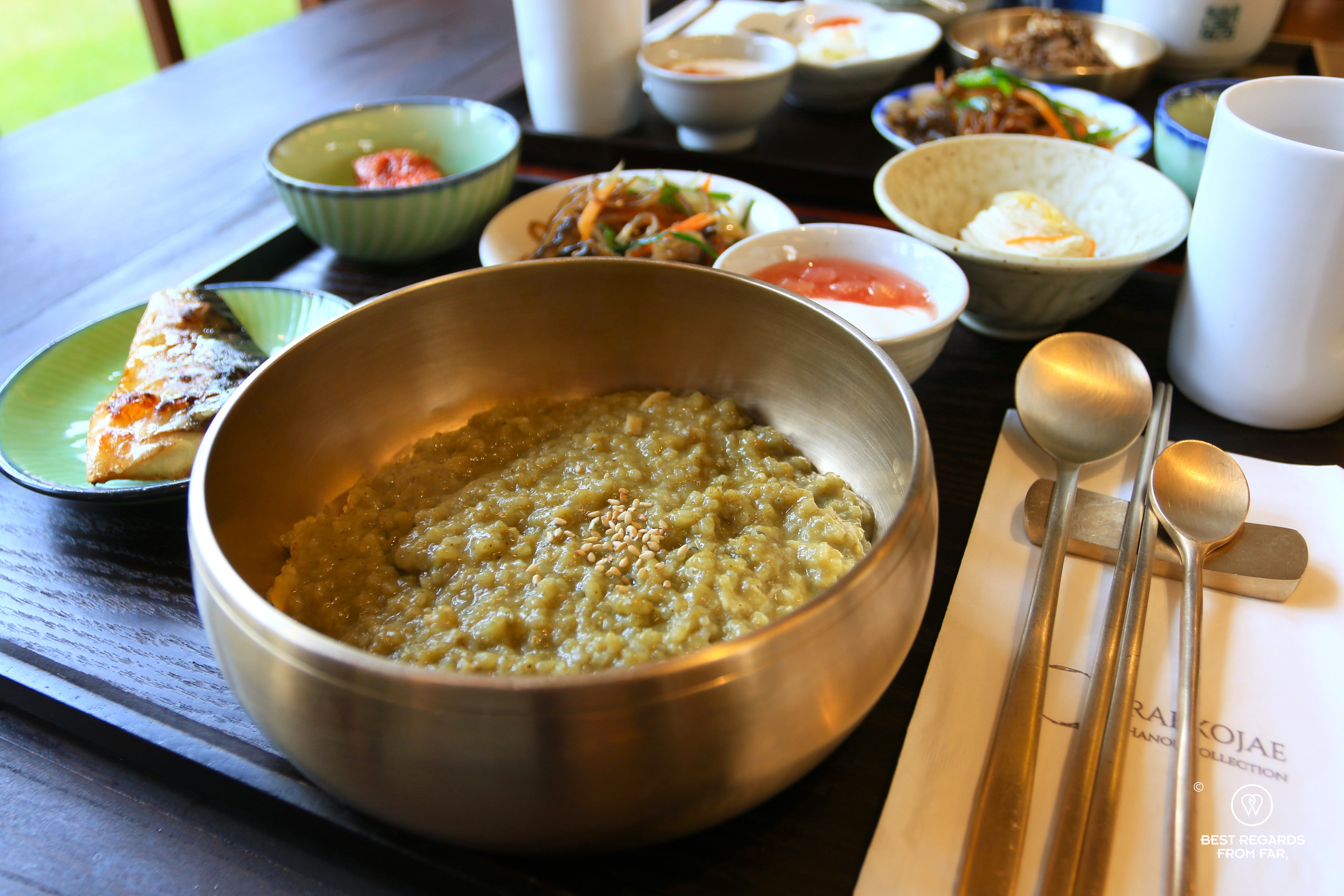
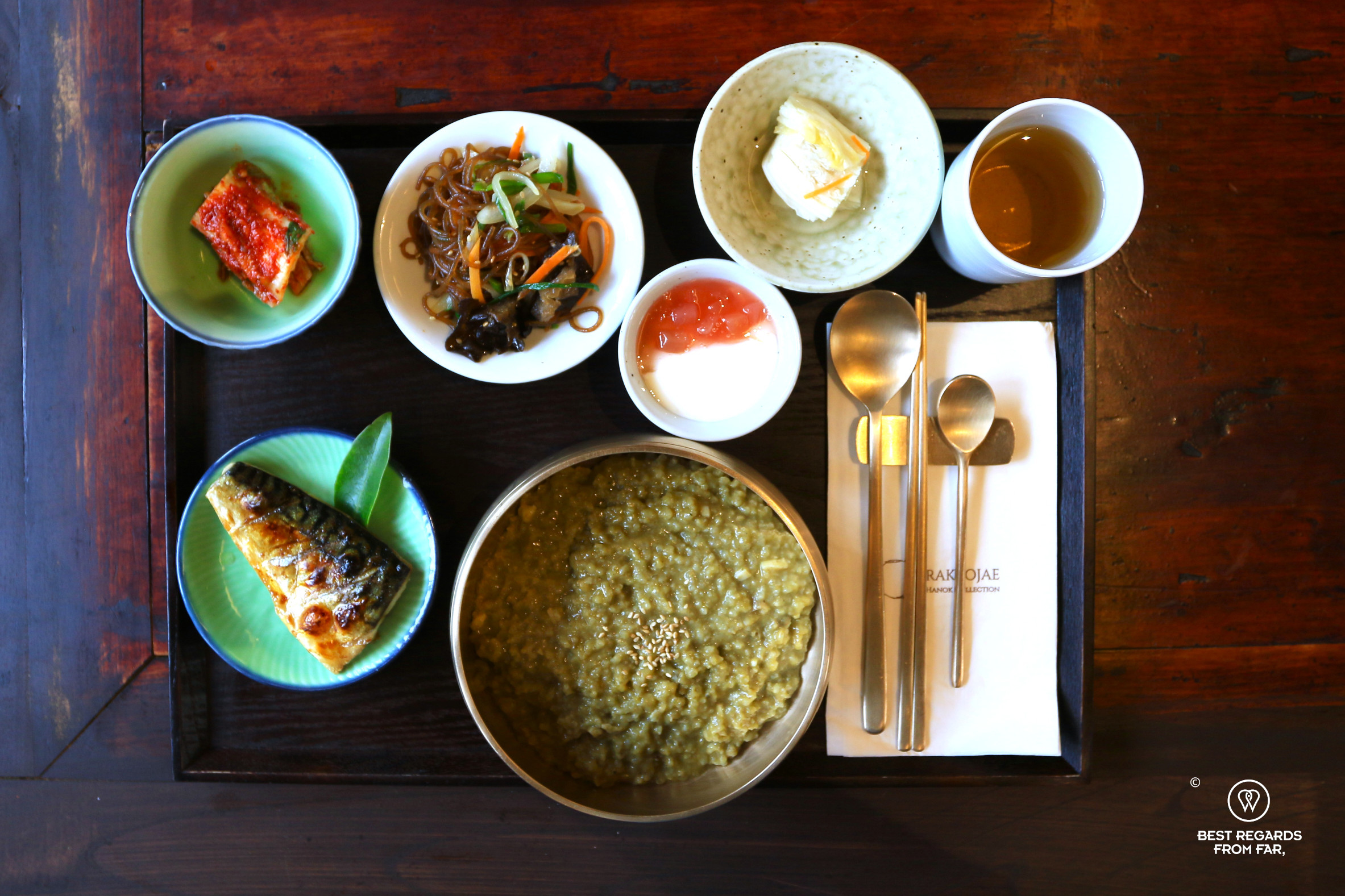
This hybrid status of new constructions in an ancient style allows modern comfort and old charm to merge perfectly for guests to travel in time and experience life reminiscent of a Joseon Dynasty noble, adding a full sensory layer from traditional meals to Korean saunas to the open air museum of Hahoe.
Hahoe: the most picturesque & authentic folk village of Korea
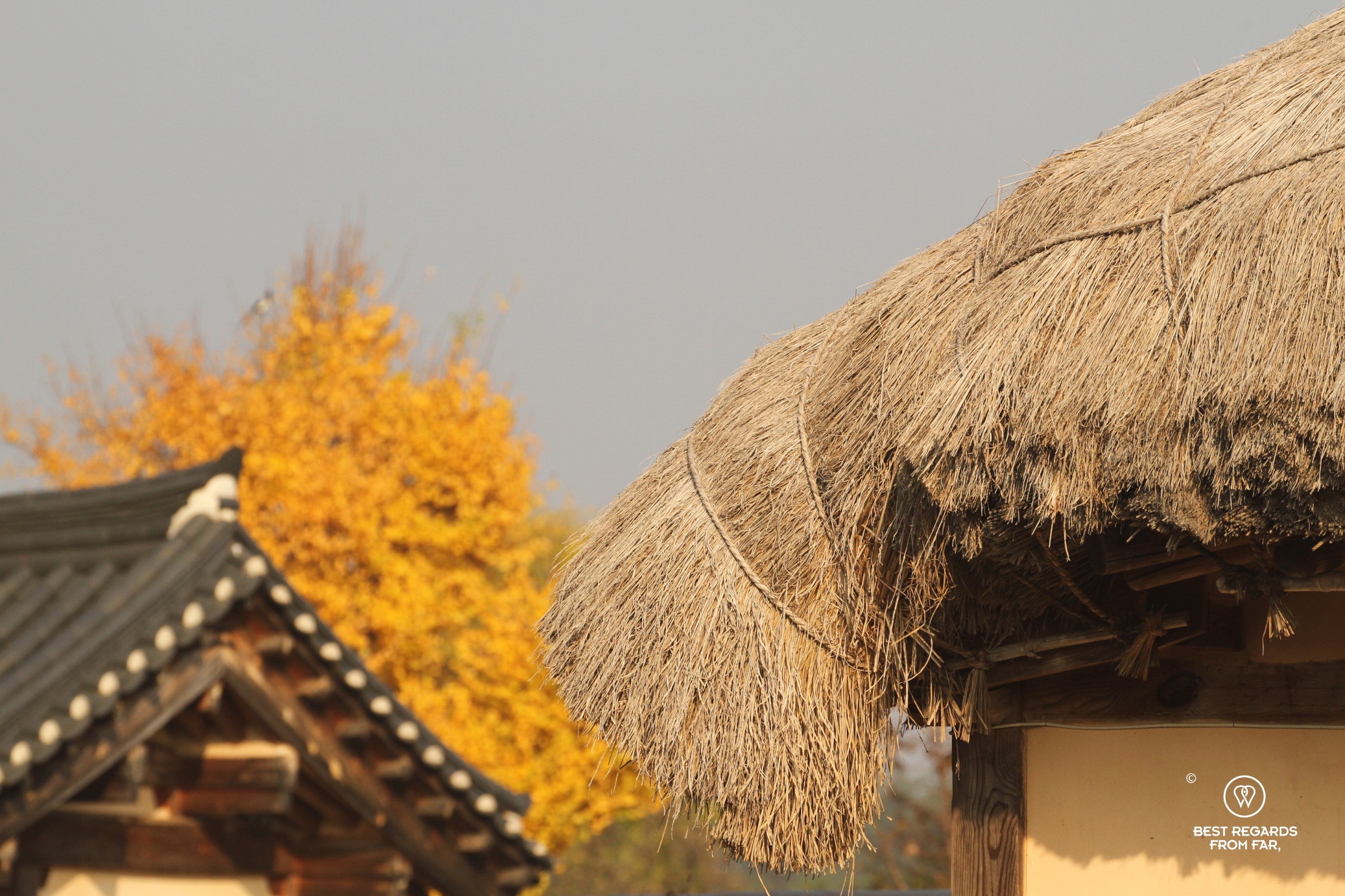
The village itself is a living rural community of about 230 inhabitants, mostly from the same ancestral family – the Pungsan Ryu clan – dating back to the 14th century and occupying slightly over a hundred historical buildings. Some are noble estates recognizable by their tiled-roofs while others are commoners’ dwellings with their thatched roofs held together by ropes. Narrow alleyways demarcated by stone walls separate the residences which unlike in other villages do not face north but instead are built towards the bend of the river which has always played a vital role in this farming community.
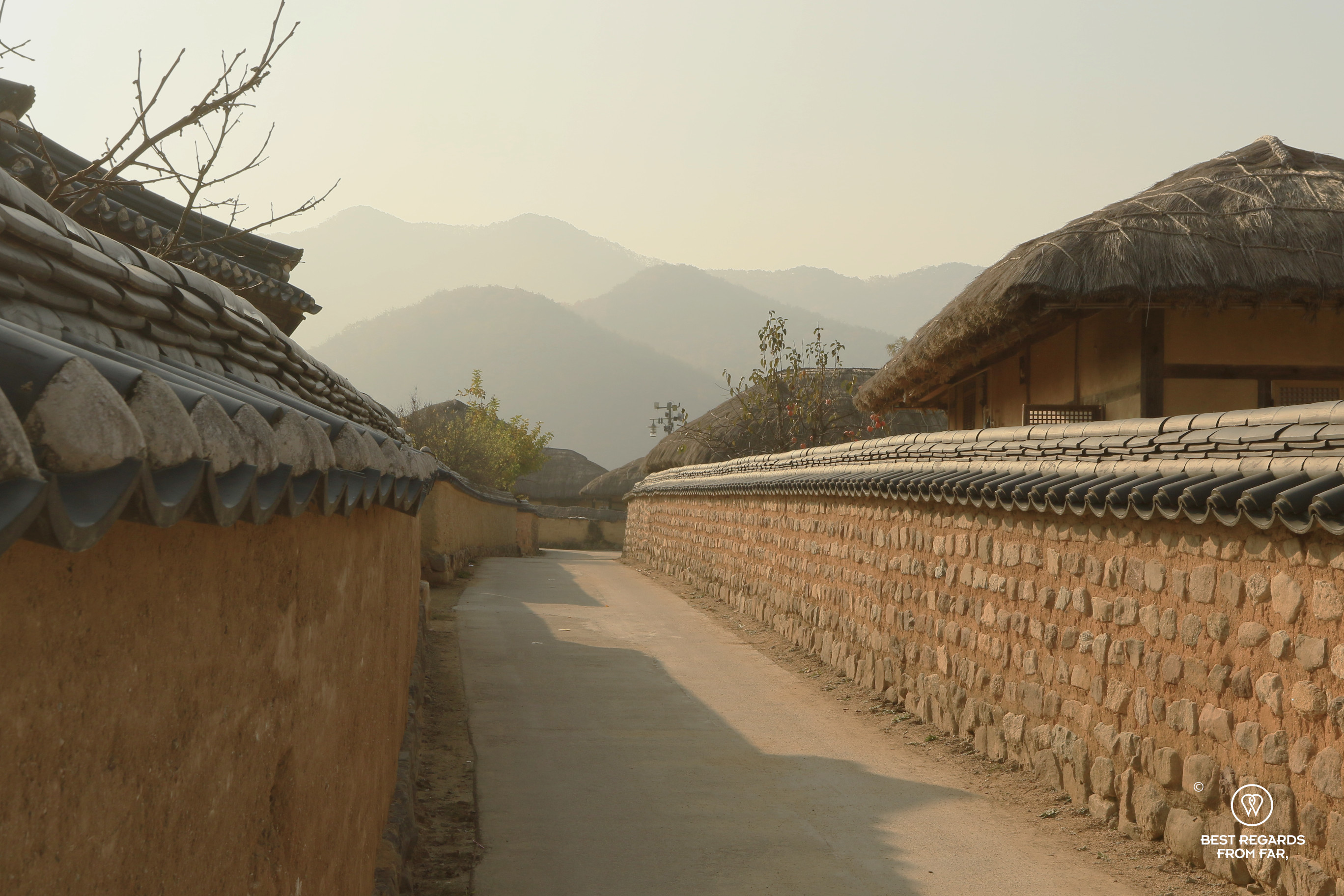
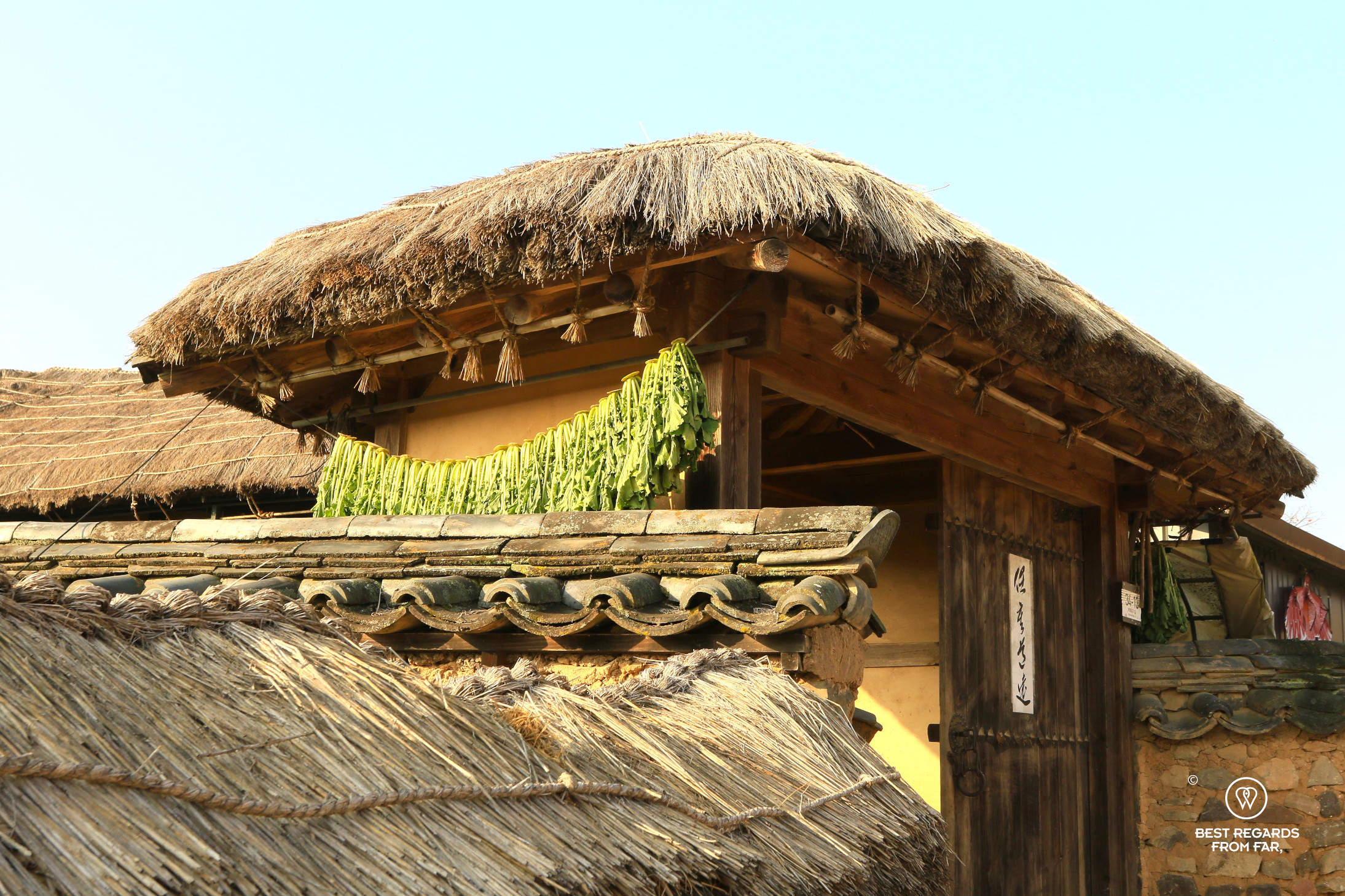
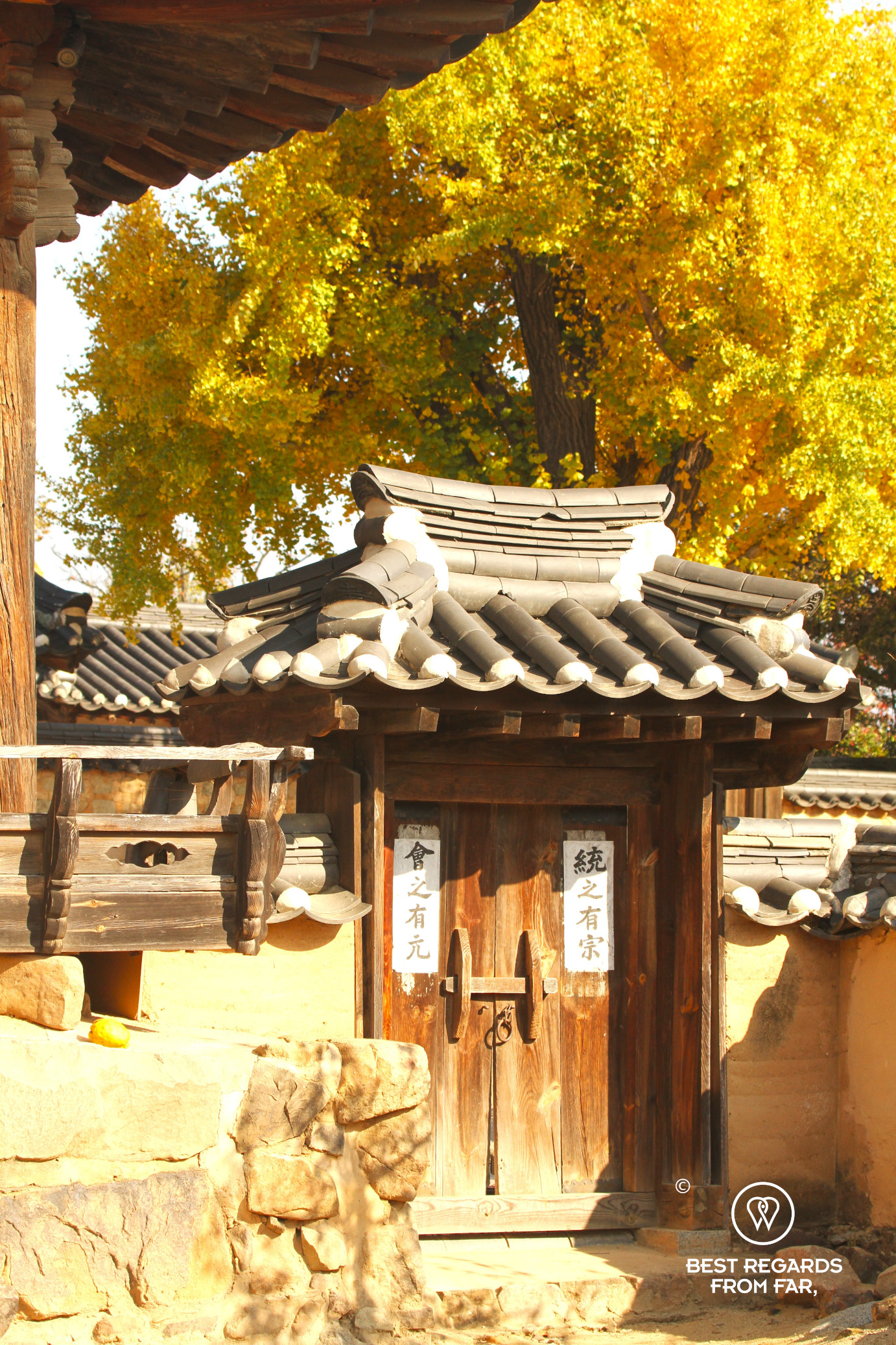
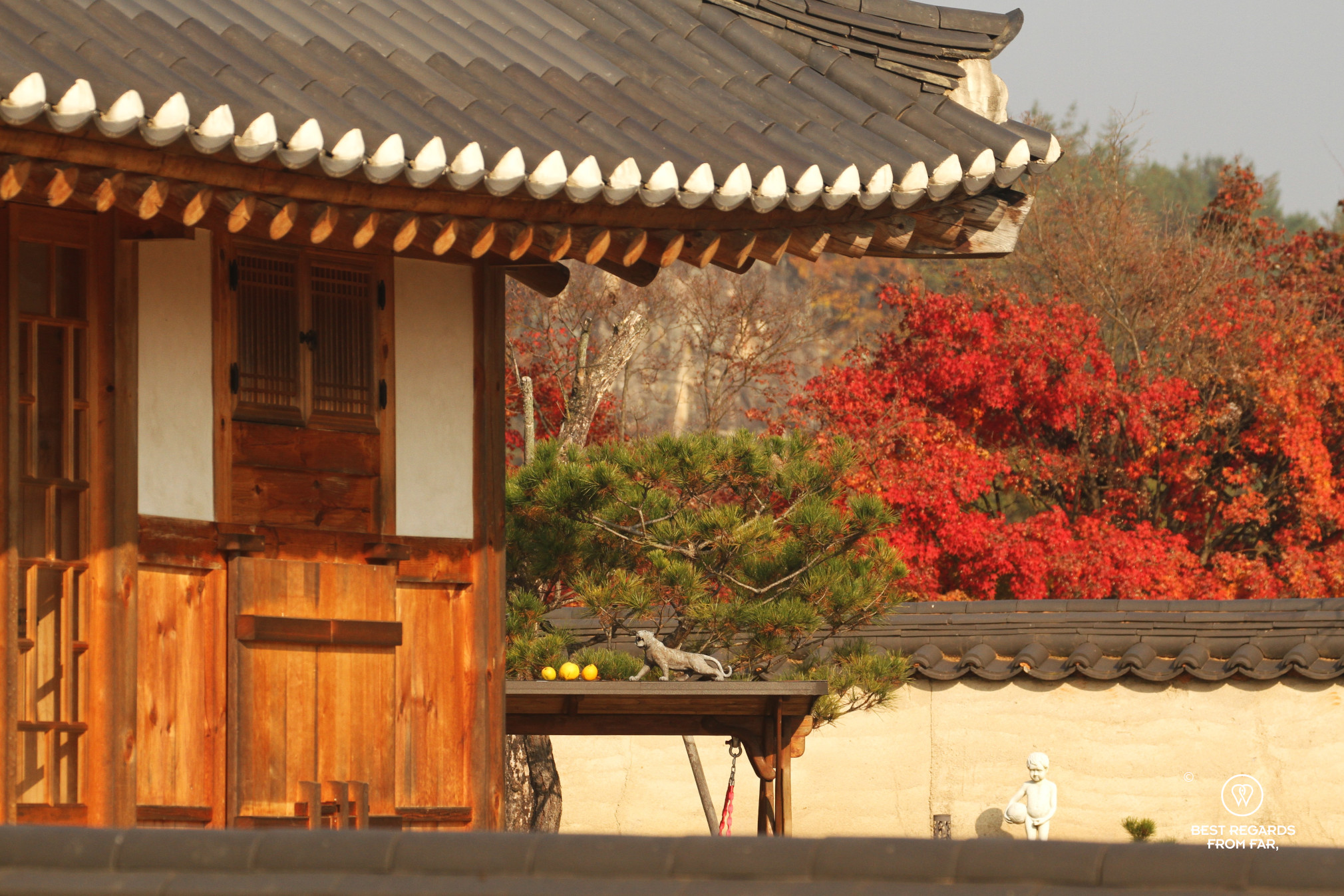
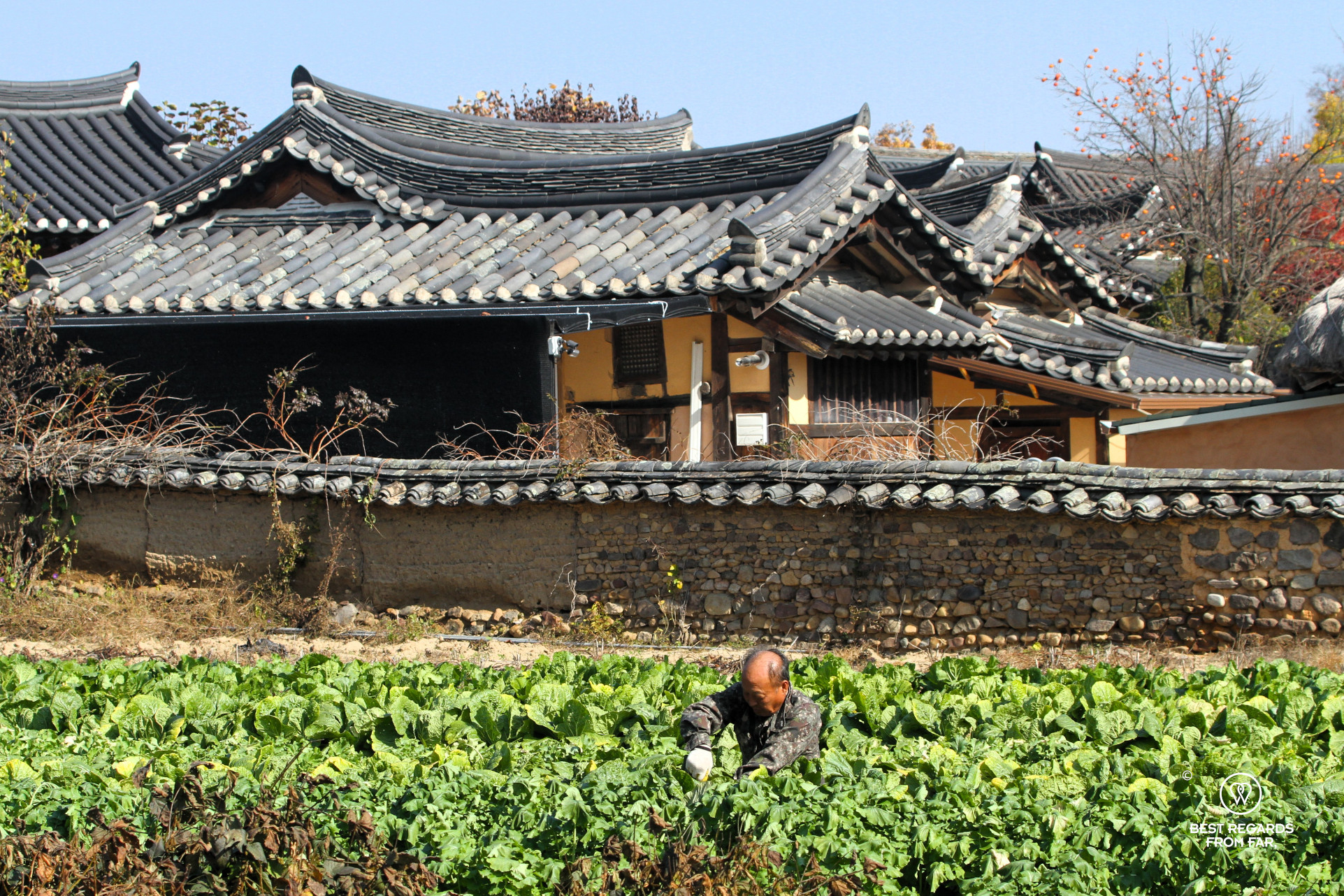
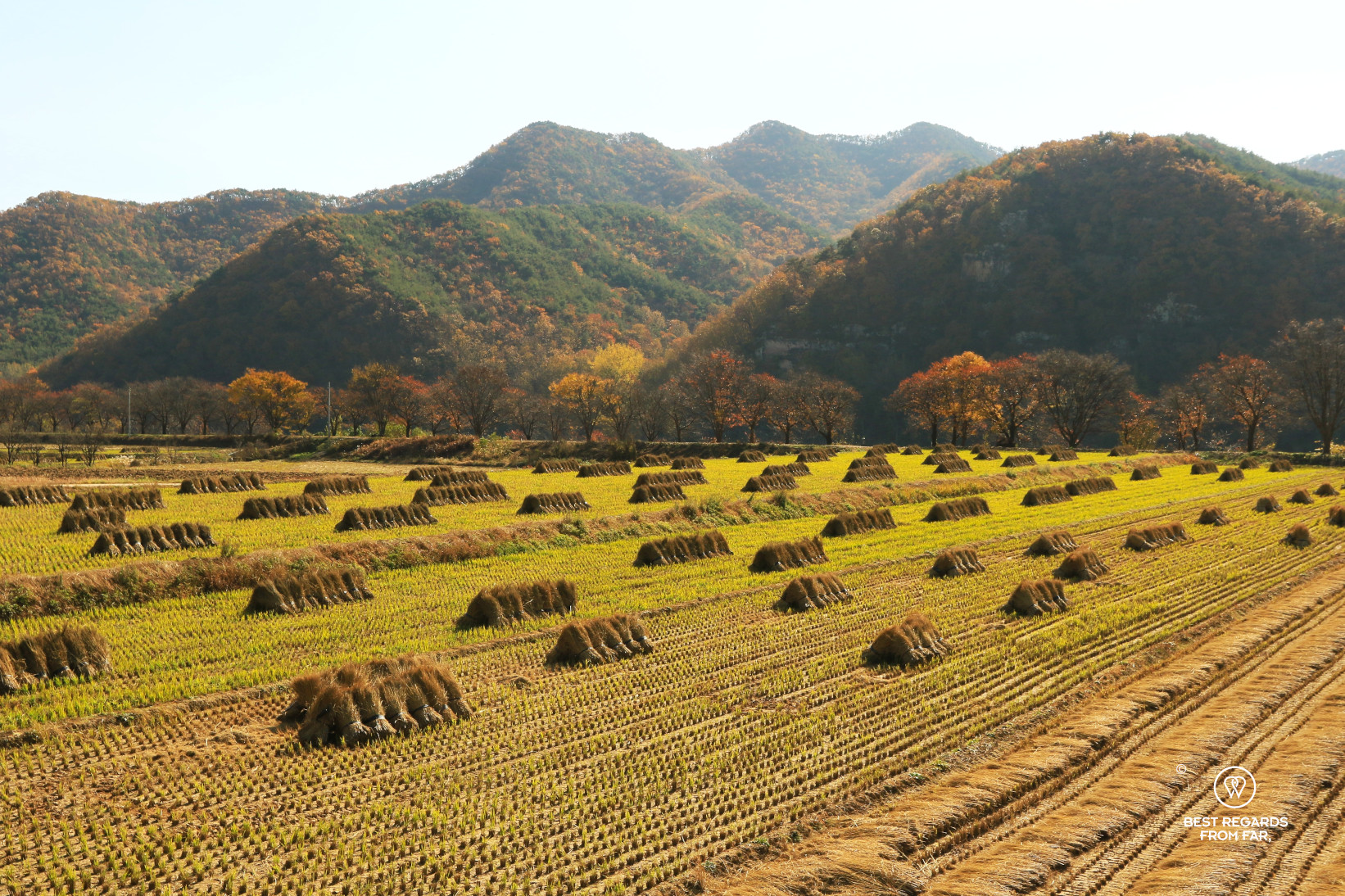
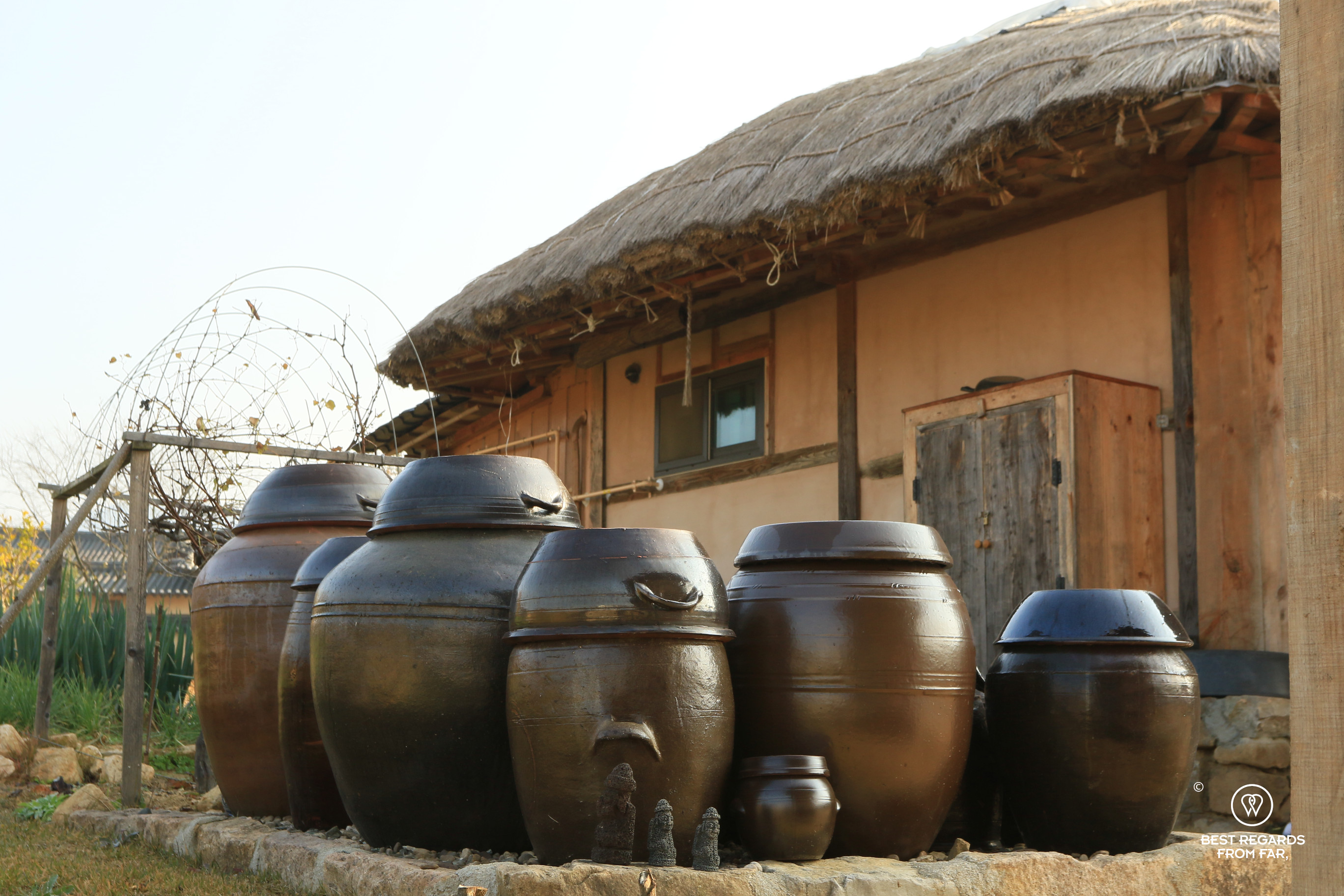
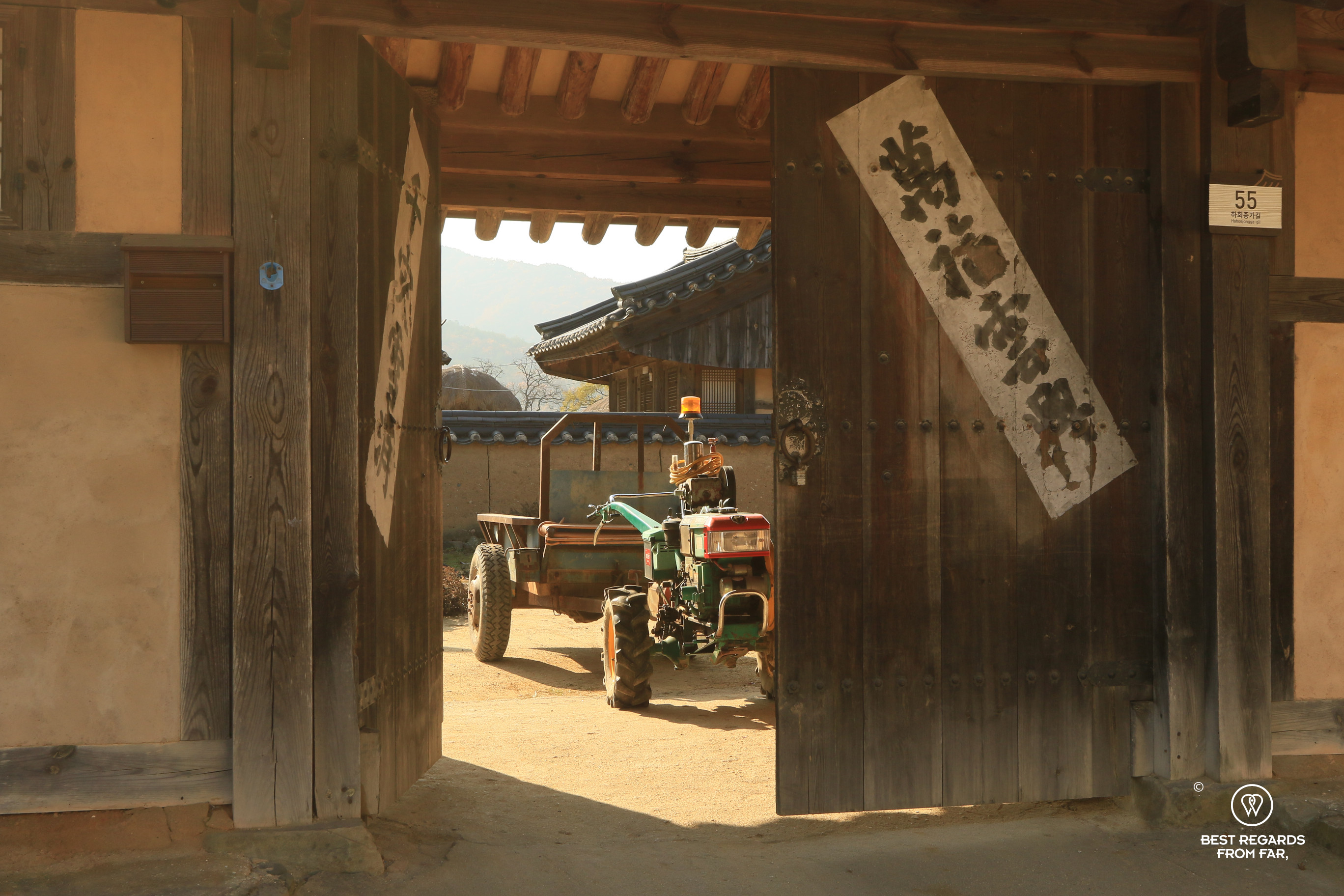
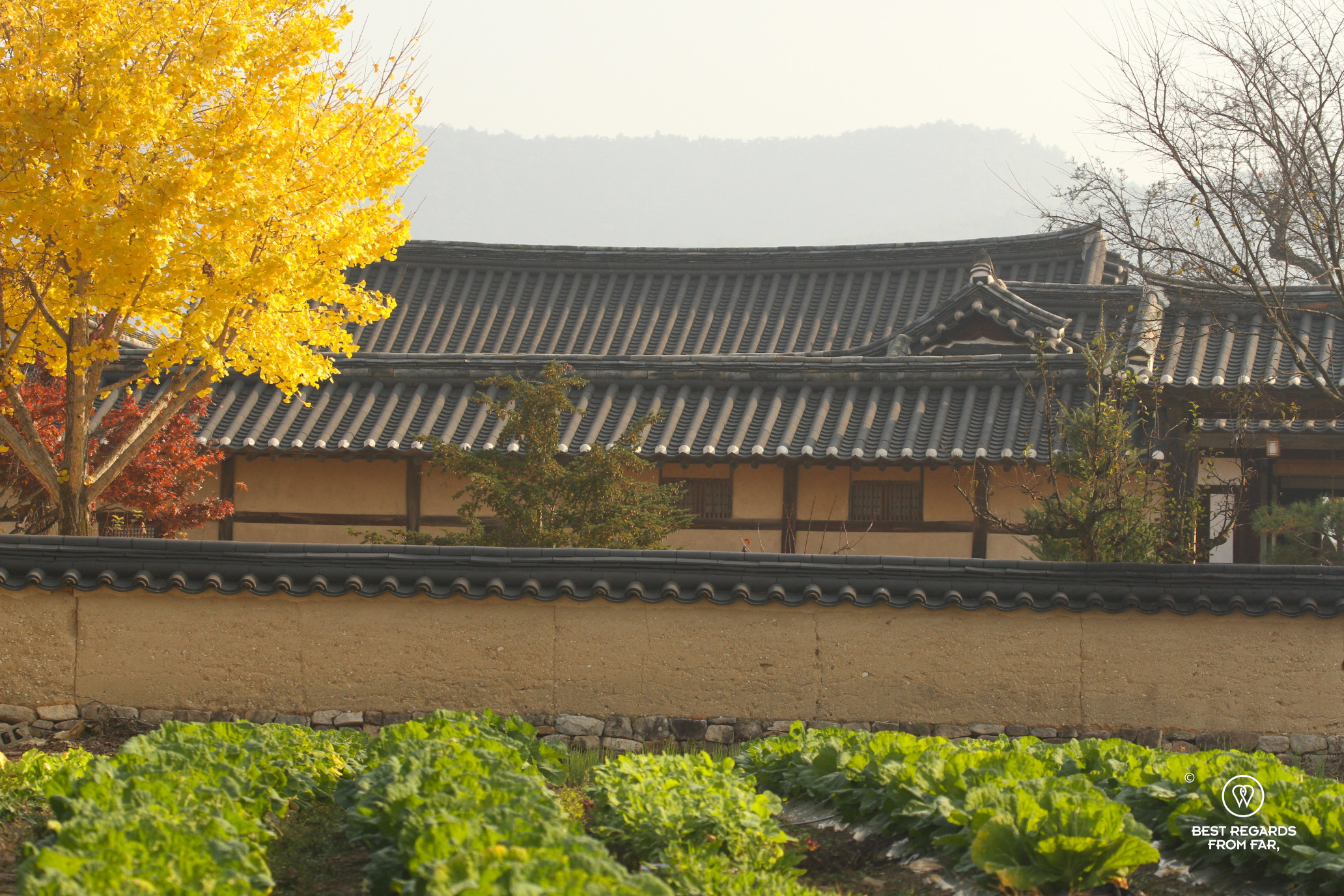
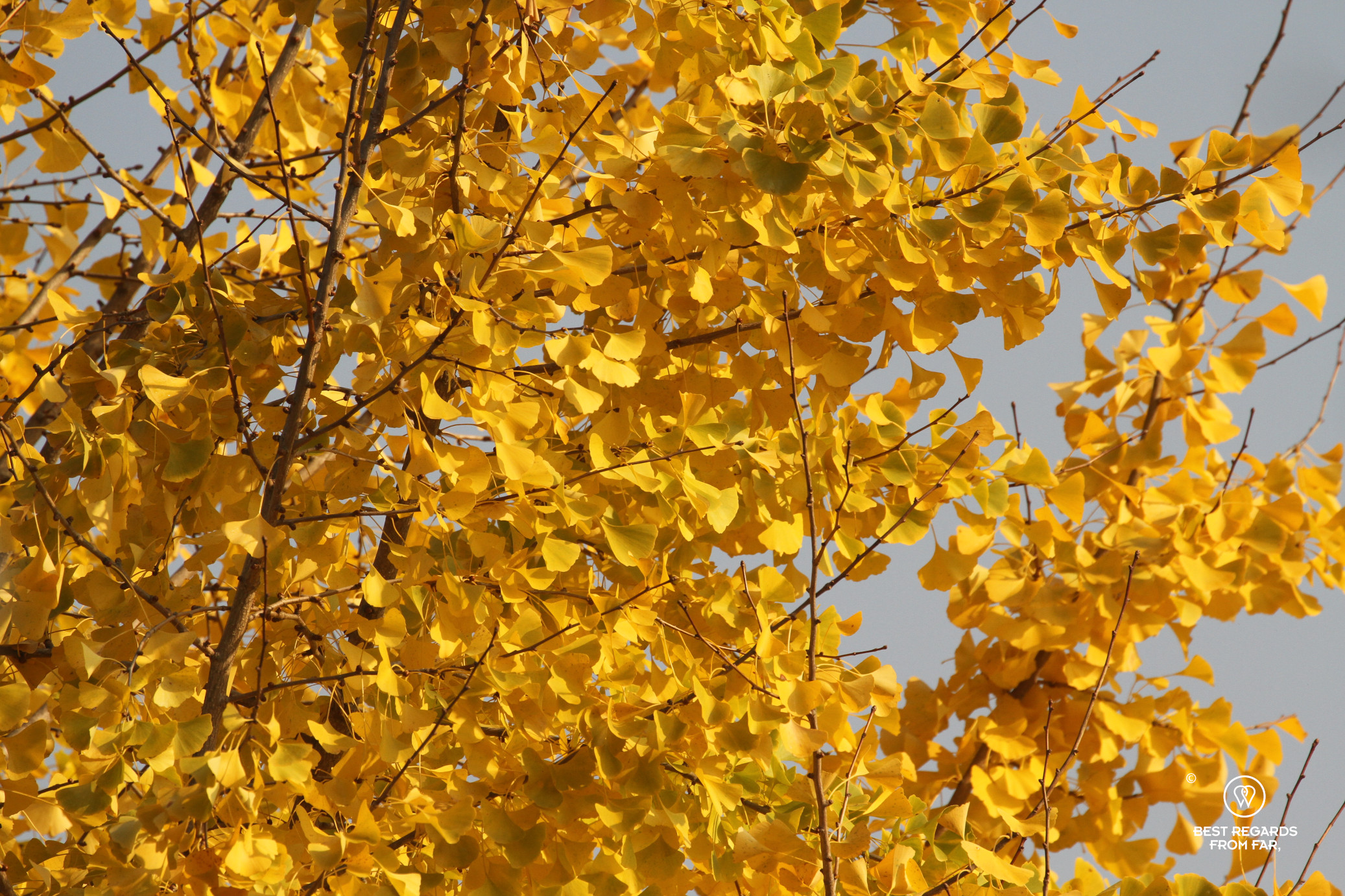
Hahoe is beautifully encircled by the Nakdonggang River (as its name translates literally) that waters the fields where cotton, rice, and sesame grow and the gardens planted with salads, pumpkin, cabbages, and chilies. On every estate, vegetables ferment in various onggi earthenware jars, slowly turning into kimchi, the staple of Korean cuisine. Persimmon fruits hang high up in their leafless trees. Ginko trees lose their yellow leaves in the wind. The mountains in the background remind the borrowed sceneries of Japanese gardens that are also characteristic of hanoks.
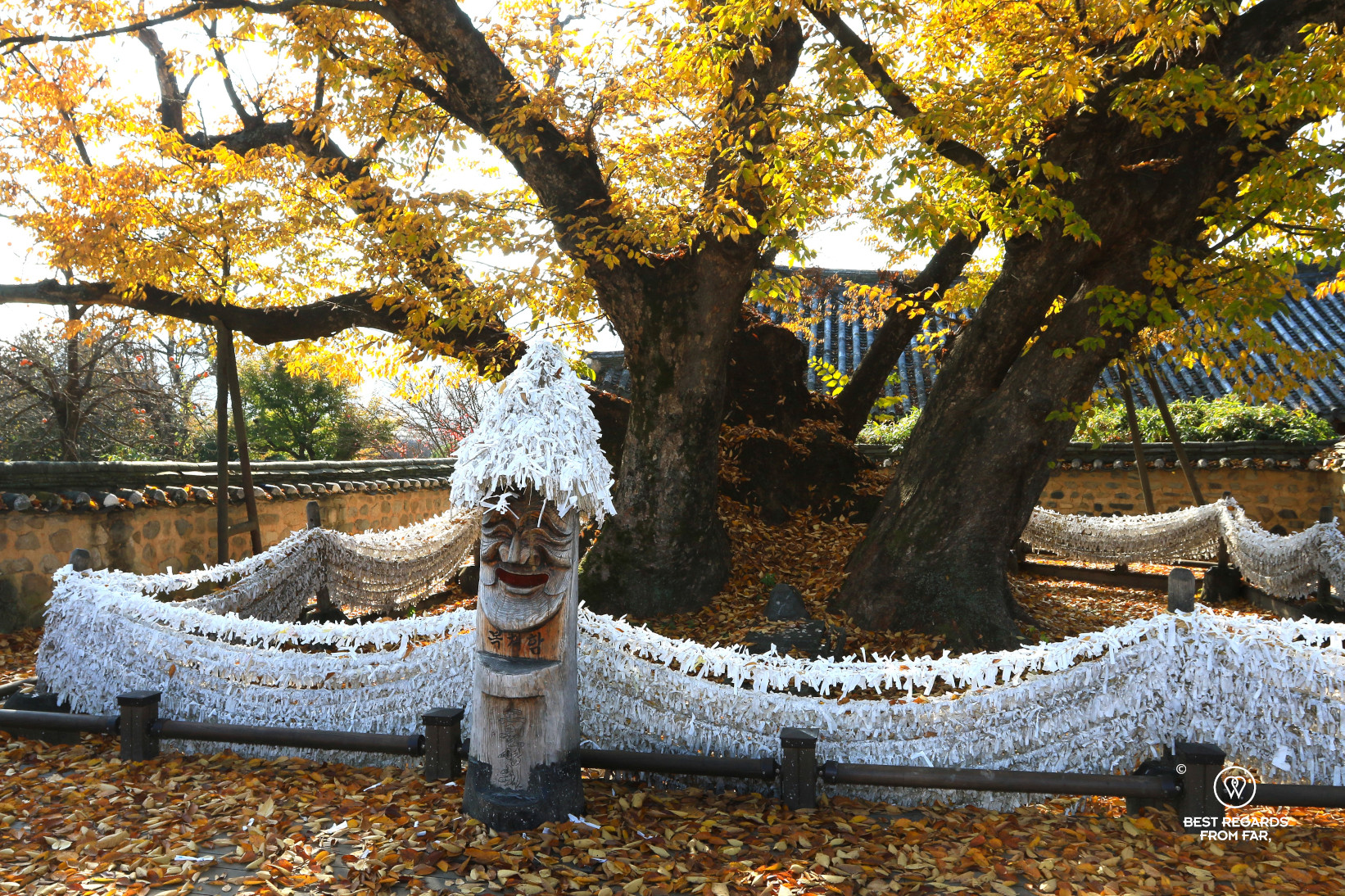
At the very center and highest point of Hahoe village, a 600-year old zelkova tree is worshiped as a village spirit. It would have been planted by Ryu Jong-hye, the founder of the Ryu clan of Hahoe. A carpet of yellow leaves surrounds the gigantic trunk, home to three goddesses. Prayers handwritten on strings of rice paper are knotted on the ropes demarcating the sacred tree guarded by a wooden totem representing a face. Scary to some, smiley to others, this face is reminiscent of the traditional Korean masks of Hahoe…
Masked dance – a UNESCO Intangible Heritage
Beyond the typical clan village that seems to have been barely touched by time, Hahoe is also a very traditional settlement where ancient rituals and customs of the Joseon period (1392-1910) are still performed by the villagers. If Hahoe itself has been designated as a UNESCO World Heritage Site, the mask dance, a musical folk play that satirizes the hypocrisies of society has been classified as a UNESCO Intangible Cultural Heritage.
According to the legend, the village of Hahoe was plagued by diseases and fires for no apparent reasons. One day, the folk god appeared in the dream of a villager, Mr. Heo. He revealed that these disasters occurred because the gods were angry. To appease them and repel bad luck, Mr. Heo was to carve masks and perform a dance. But careful! Nobody was to watch him make the masks, otherwise he would die. After waking up, Mr. Heo started carving masks secretly. The last day as he was almost finished, his wife took a peek at him, and he died suddenly. Ever since, villagers have performed the mask dance using the 14 masks, including the last incomplete mask that is missing a chin.
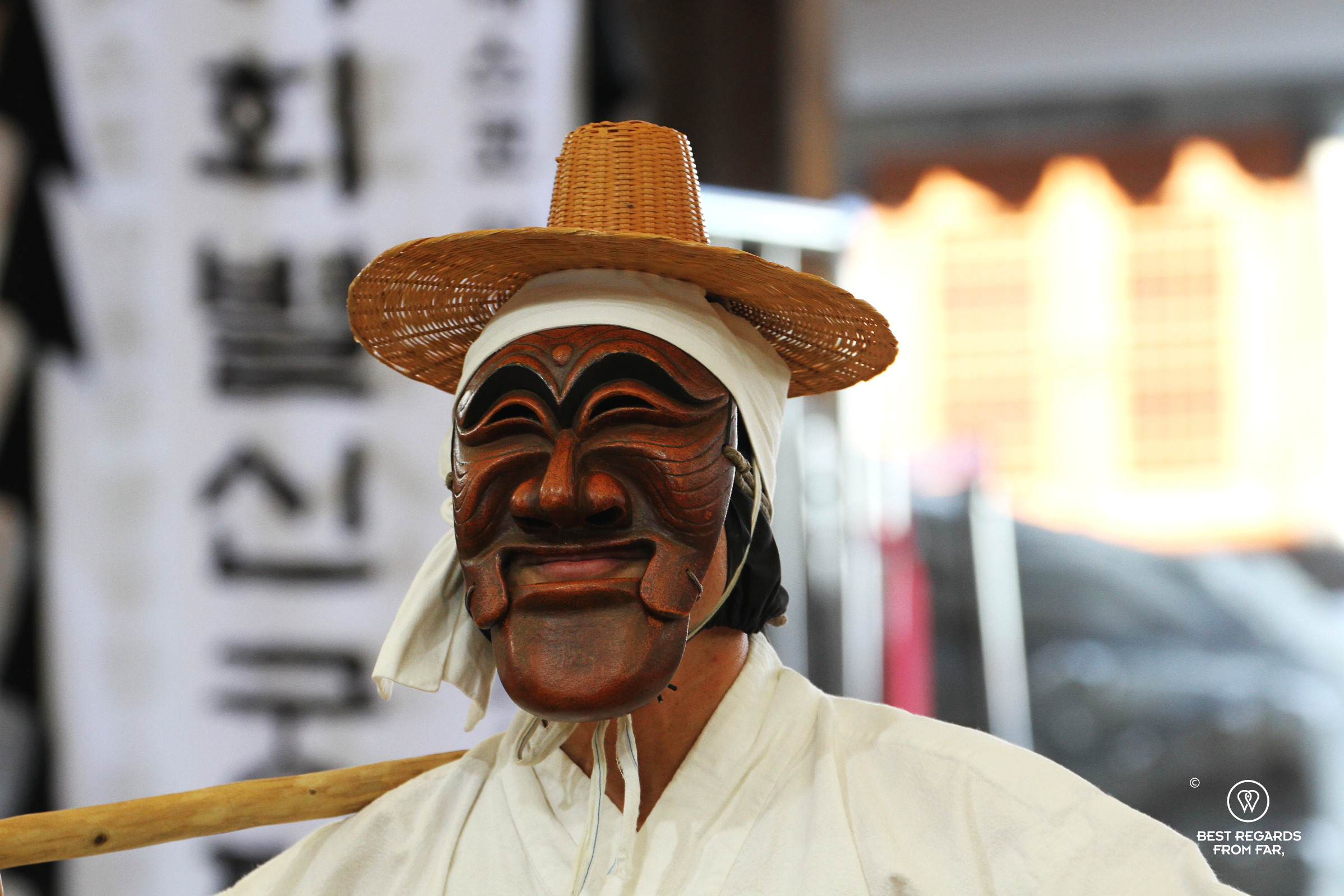
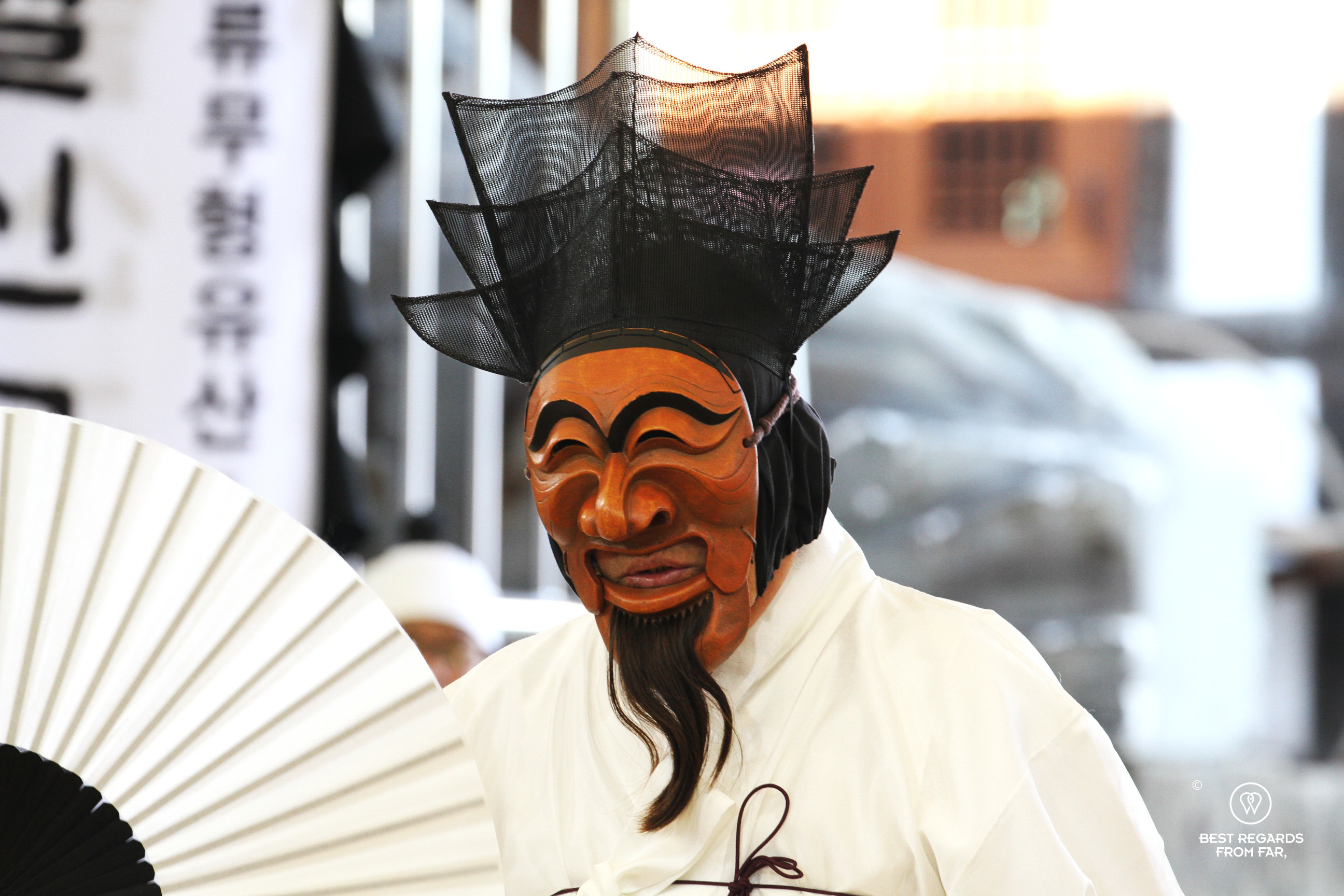
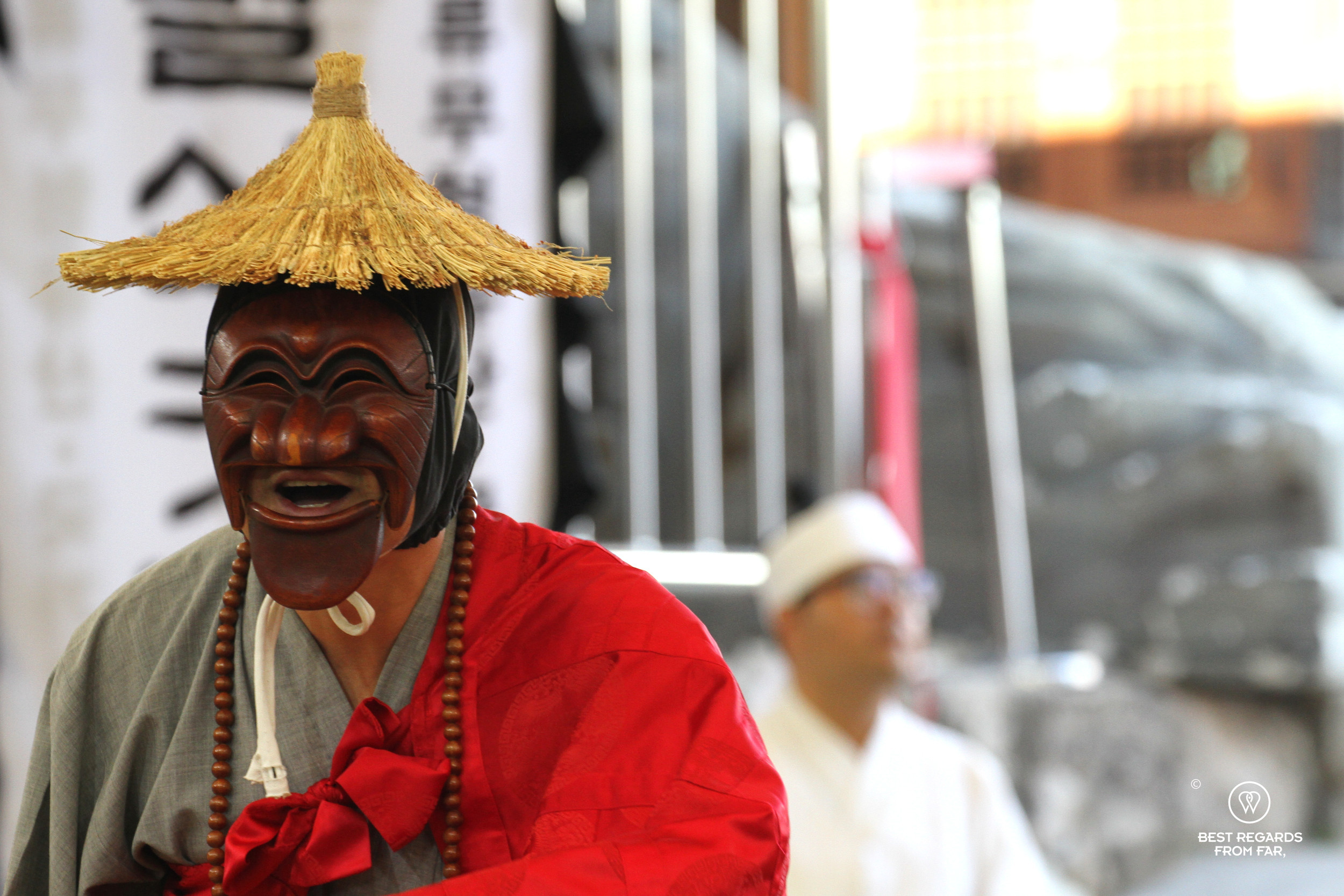
Today, the six scenes of the Hahoe mask dance are performed almost daily. The joys and sorrows of peasant life, a satyre of the patriarchal society, the hypocrisy of the Buddhist circles, and the pretension of noblemen and scholars during the Joseon Dynasty are acted out in a timeless situation comedy supported by ancient instruments played live.
***
The most emblematic clan village of South Korea is an absolute timeless jewel. If the flock of day visitors can break its Confucian harmony, once the sun has set Hahoe village becomes quiet again.
Strolling the moonlit path of the Rakkojae Hanok Hotel to the sound of water flowing is a way to transcend the visit of Hahoe folk village by actually living the experience fully.
Travel tips:
- Hahoe Village is one of Korea’s most representative clan villages and UNESCO World Heritage Site. As such it gets very busy and to fully enjoy it, make sure to spend a night onsite, and the Rakkajoe Hanok Hotel is a bucket list experience.
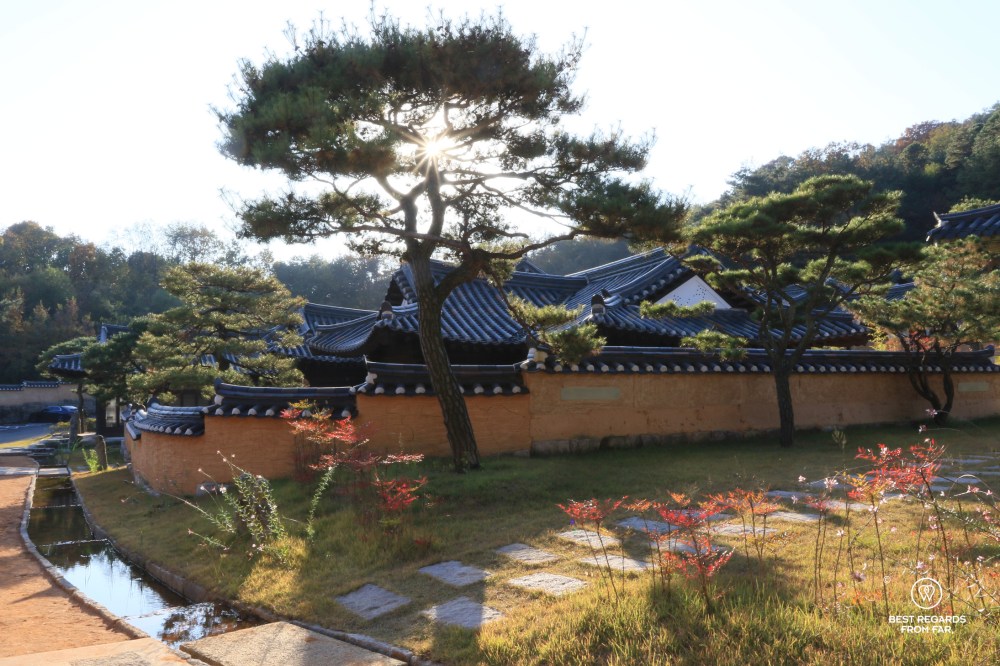
The hotel grounds of the Hahoe Rakkojae hanok hotel. 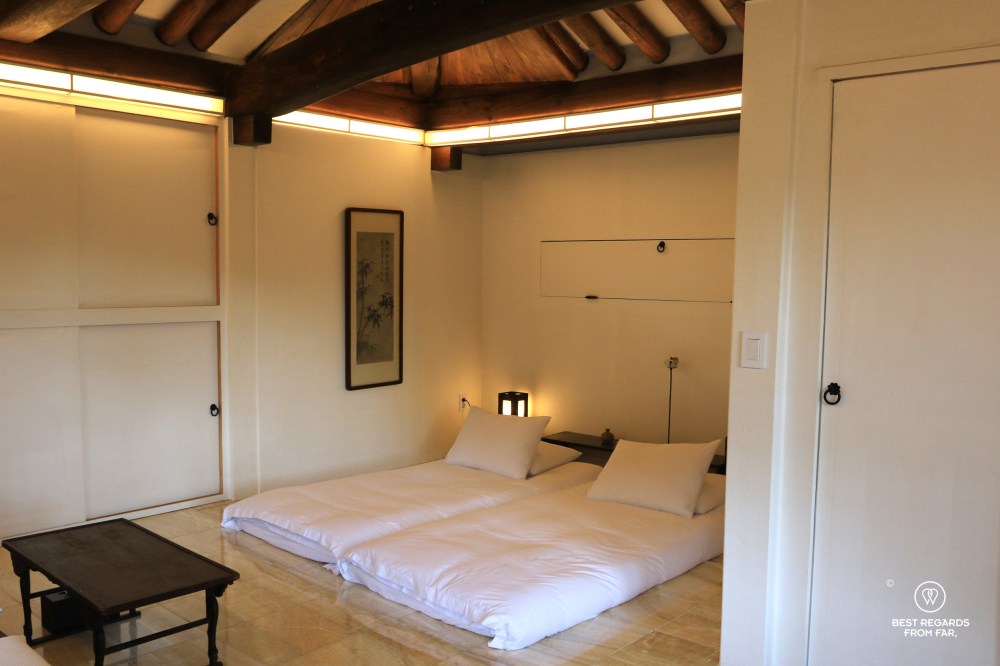
Inside a traditional hanok room of the Hahoe Rakkojae hanok hotel. 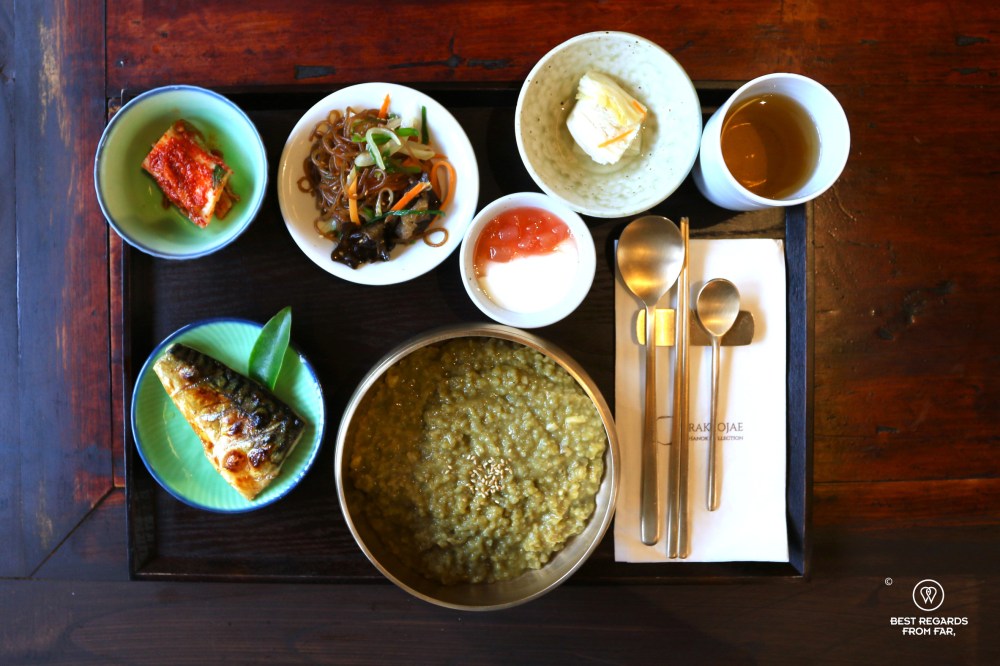
Traditional Korean breakfast at the Hahoe Rakkojae hanok hotel. 
The traditional Korean sauna at the Hahoe Rakkojae hanok hotel. 
Room service at the Hahoe Rakkojae hanok hotel. 
Reflection at night in the pond of the Hahoe Rakkojae hanok hotel.
- If you do not make it all the way to Hahoe, the Rakkojae Hanok Hotel actually started in Seoul and you can stay in a traditional hanok in the Bukchon district of the capital.
- Check out our interactive map for more in the area (black pins lead to an article):
For more in South Korea, click on the images below:



 Best regards from far,
Awesome article! I love the pictures…the history is so interesting and you make it come alive.Sent from my iPad
Thanks a lot!! I think you would really like our 2 prévois articles about the temple stays. Really special.