Updated on November 26, 2025
Text: Claire Lessiau & Marcella van Alphen
Photographs: Claire Lessiau & Marcella van Alphen
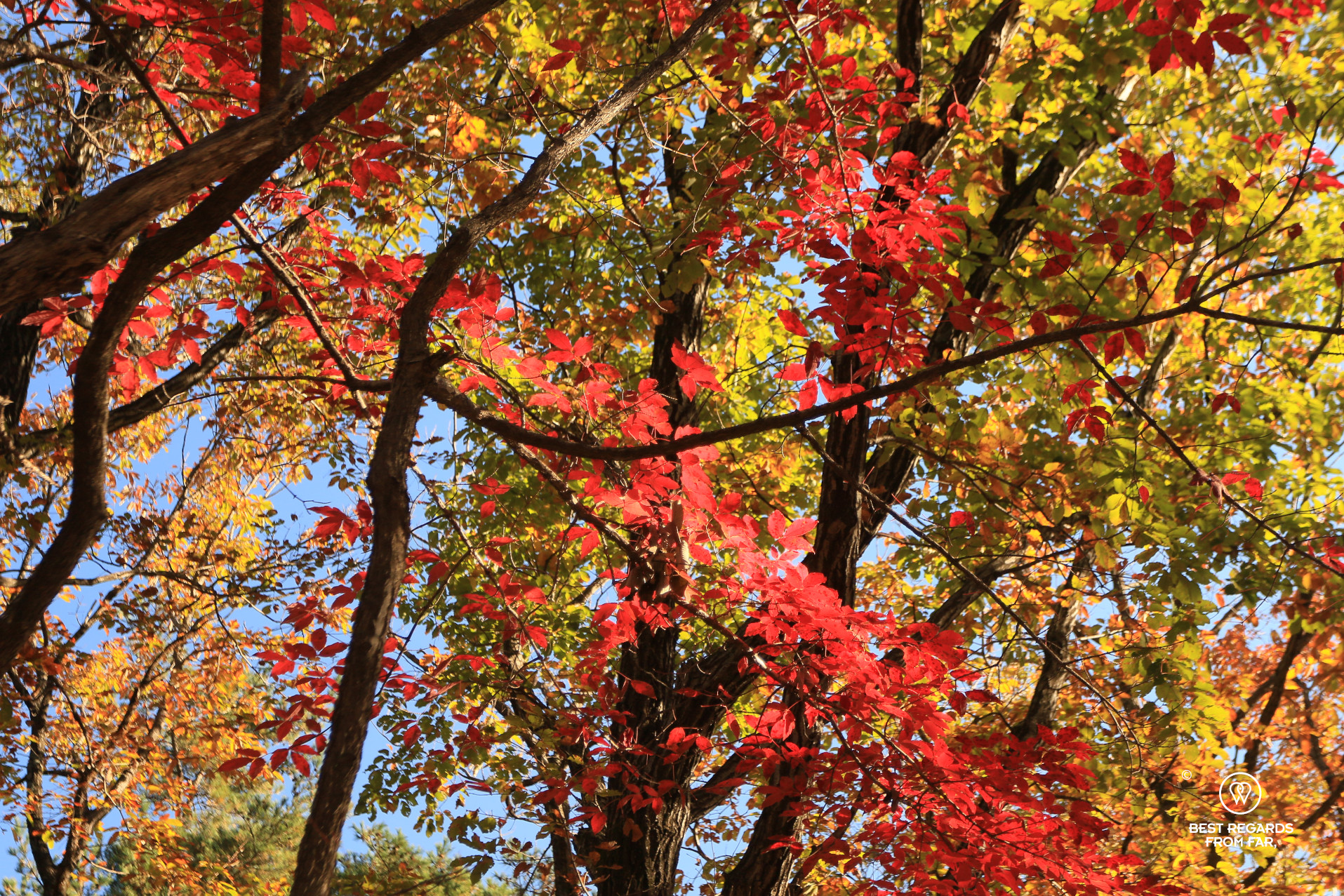
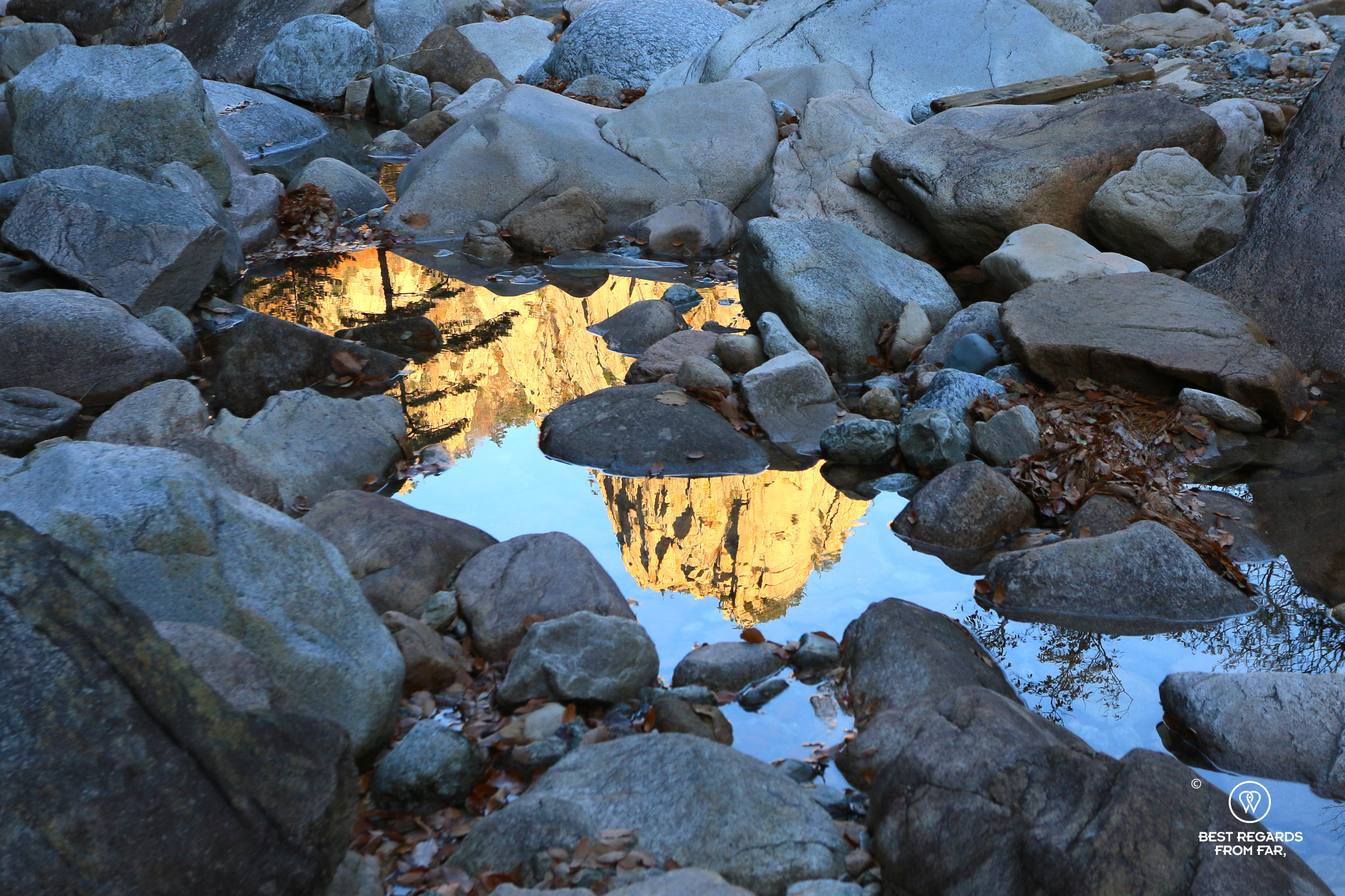
The moonlight reflects in the frozen dew, casting a starry path to lead our footsteps. In this month of November, during which the tree foliage takes warm colors, the temperature at night drops drastically. It is about an hour prior to sunrise, and we are walking to the dining hall to break our fast.
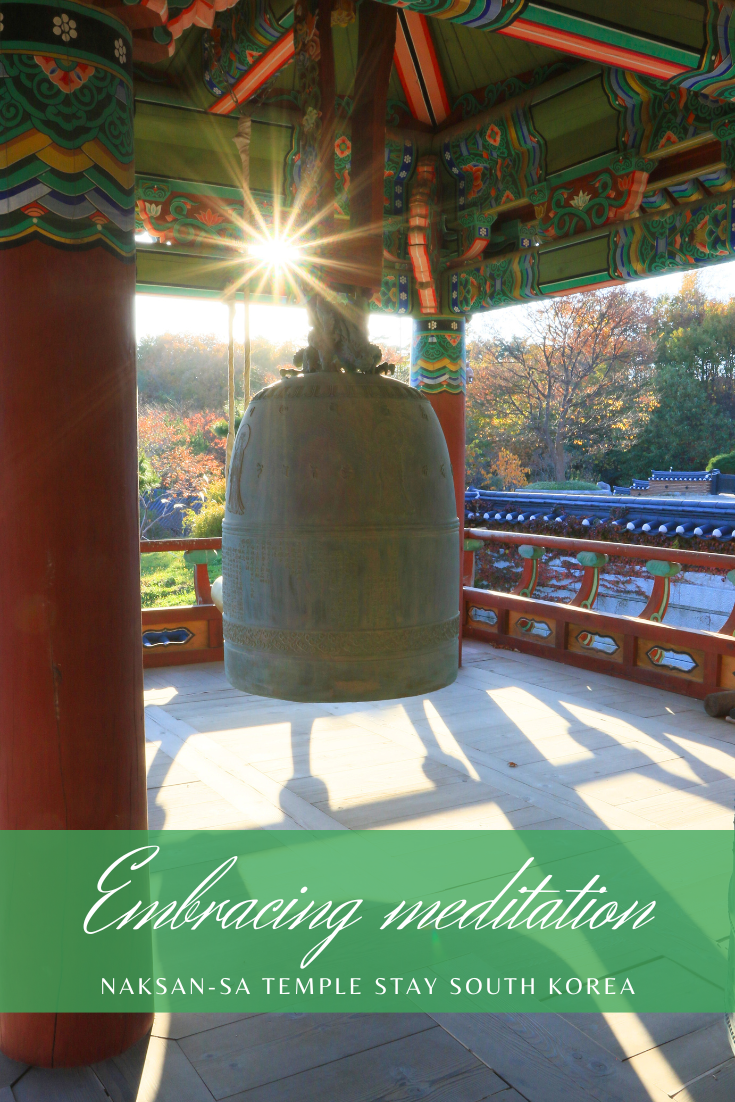
Pin it for later!
Food meditation
Like the other meals, we are not only savoring a colorful and delicious vegetarian buffet prepared on the Buddhist temple grounds, but we are also very mindful of every ingredient and every gesture involved in its preparation. The food meditation we experienced last night with Buddhist Monk Jiwol resonates.


We close our eyes before tasting today’s feast. We picture where the ingredients come from, starting with a grain of rice: how the grass grows, watered by rain and fueled by sunlight; how the rice is harvested on the paddy; how it is transported and cooked. The appreciation for the hard work and devotion of a whole chain of people, thanks to whom we are having this meal, is heartfelt. Everything we take for granted everyday has taken on a different dimension since we started our temple stay at Naksansa, the temple above the waves overlooking the East Sea of South Korea.
The temple above the waves
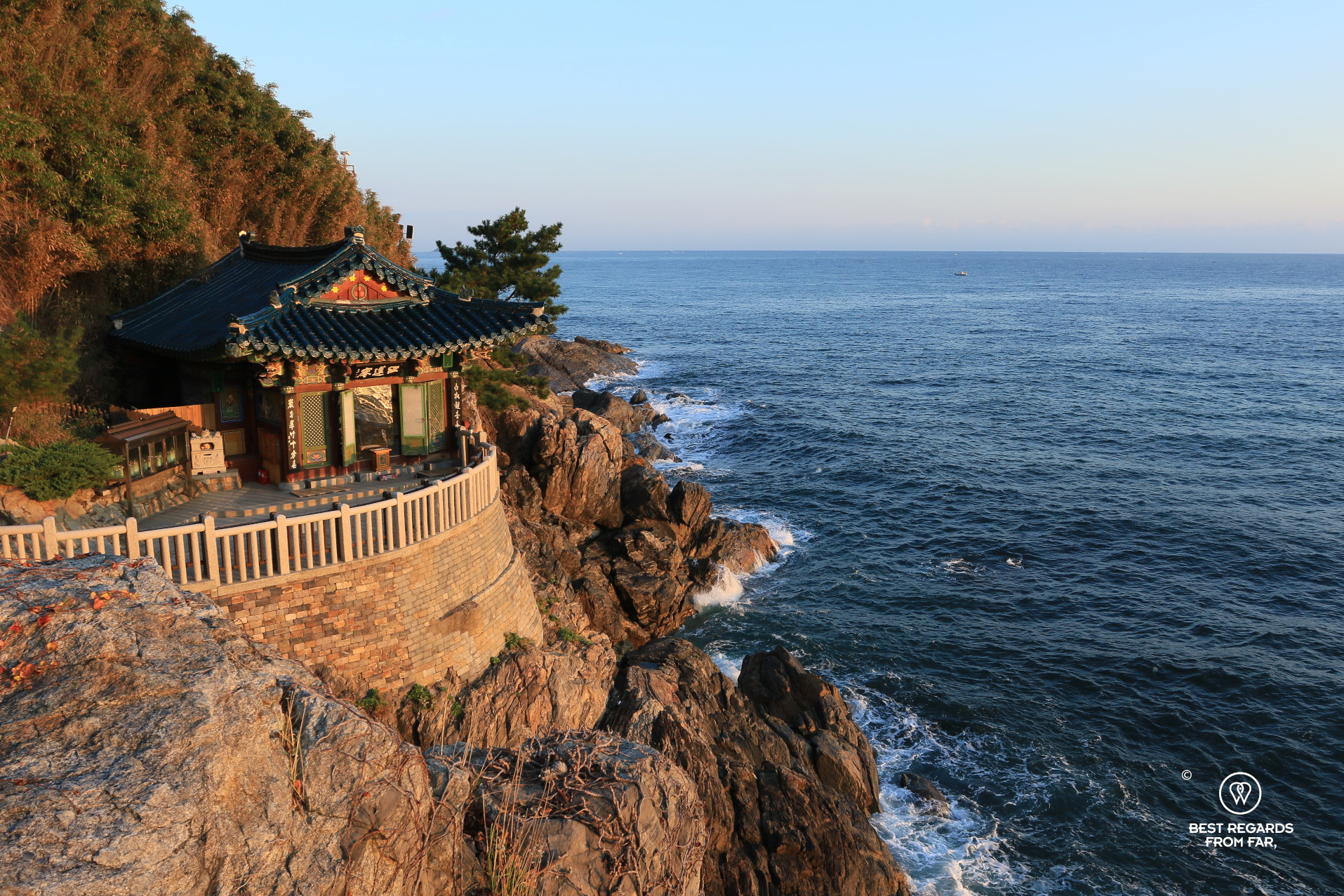
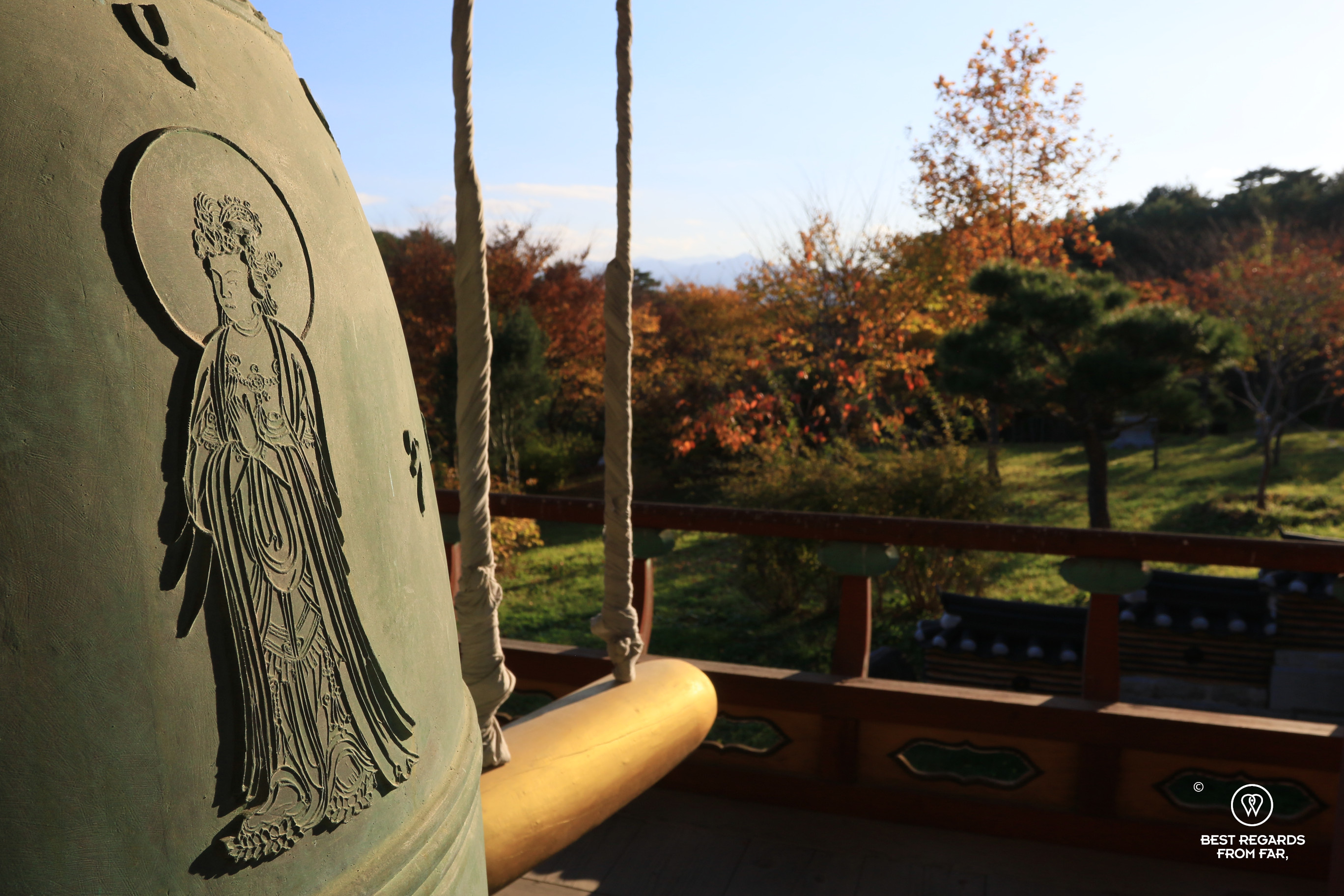
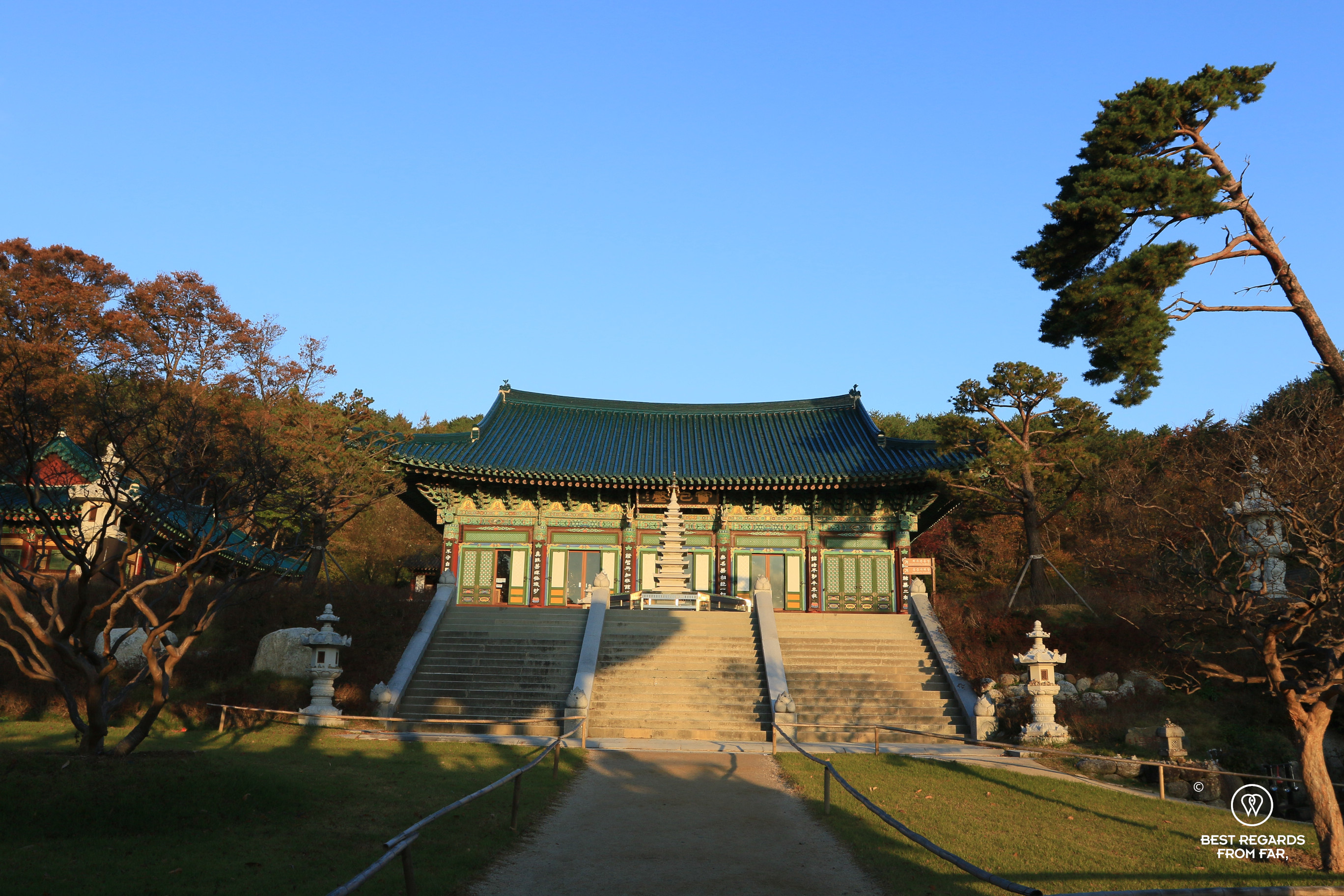
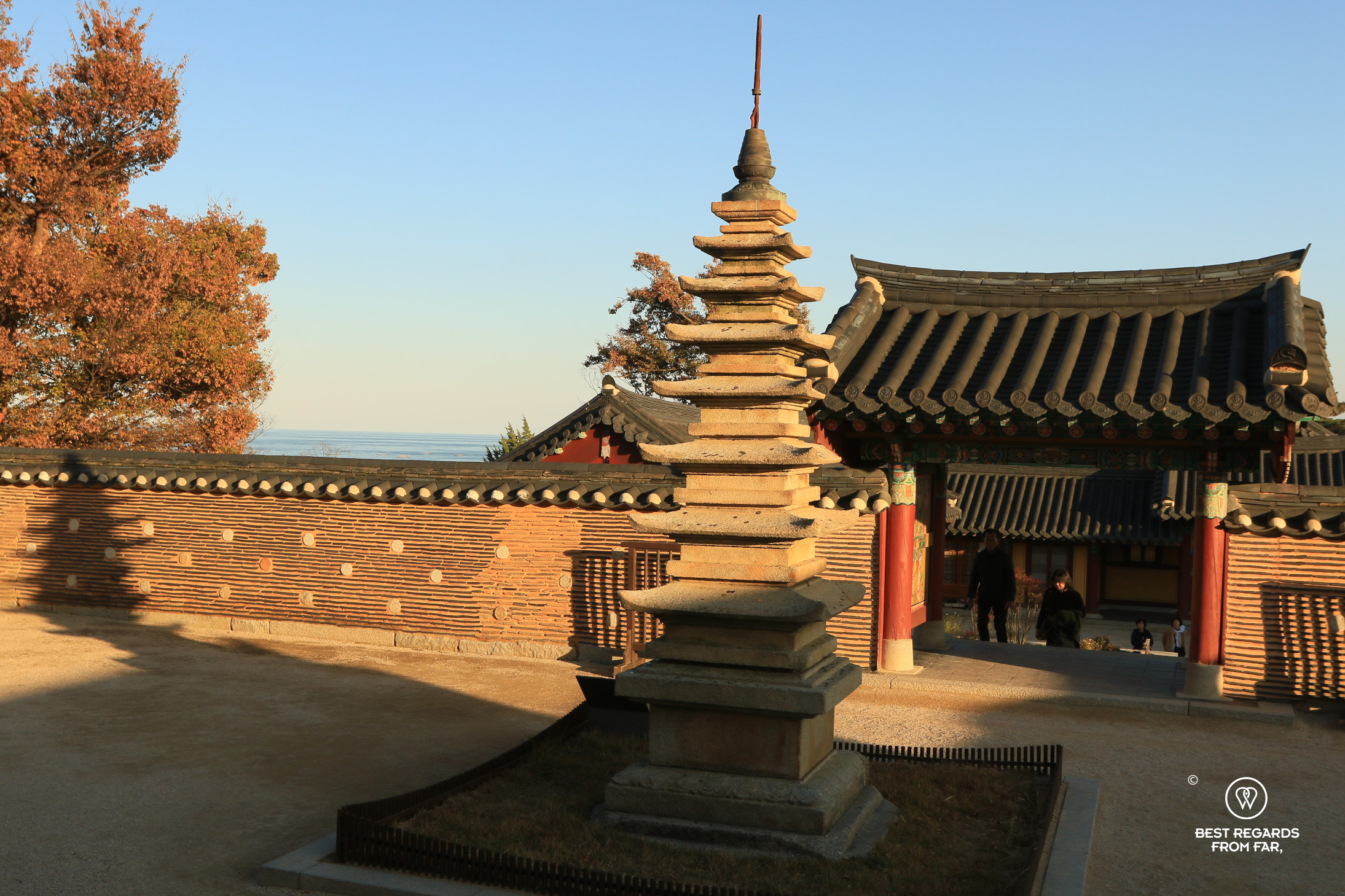
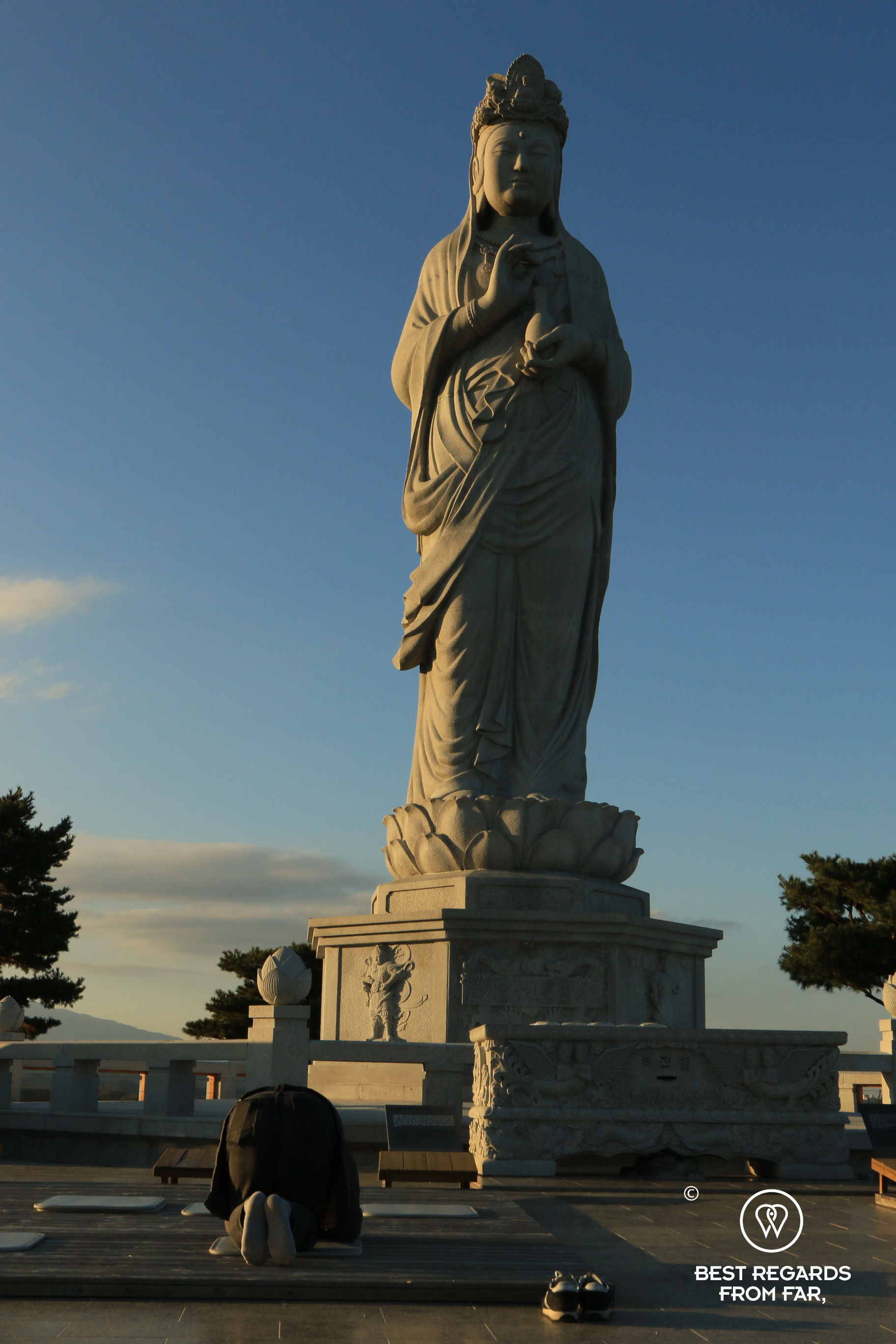
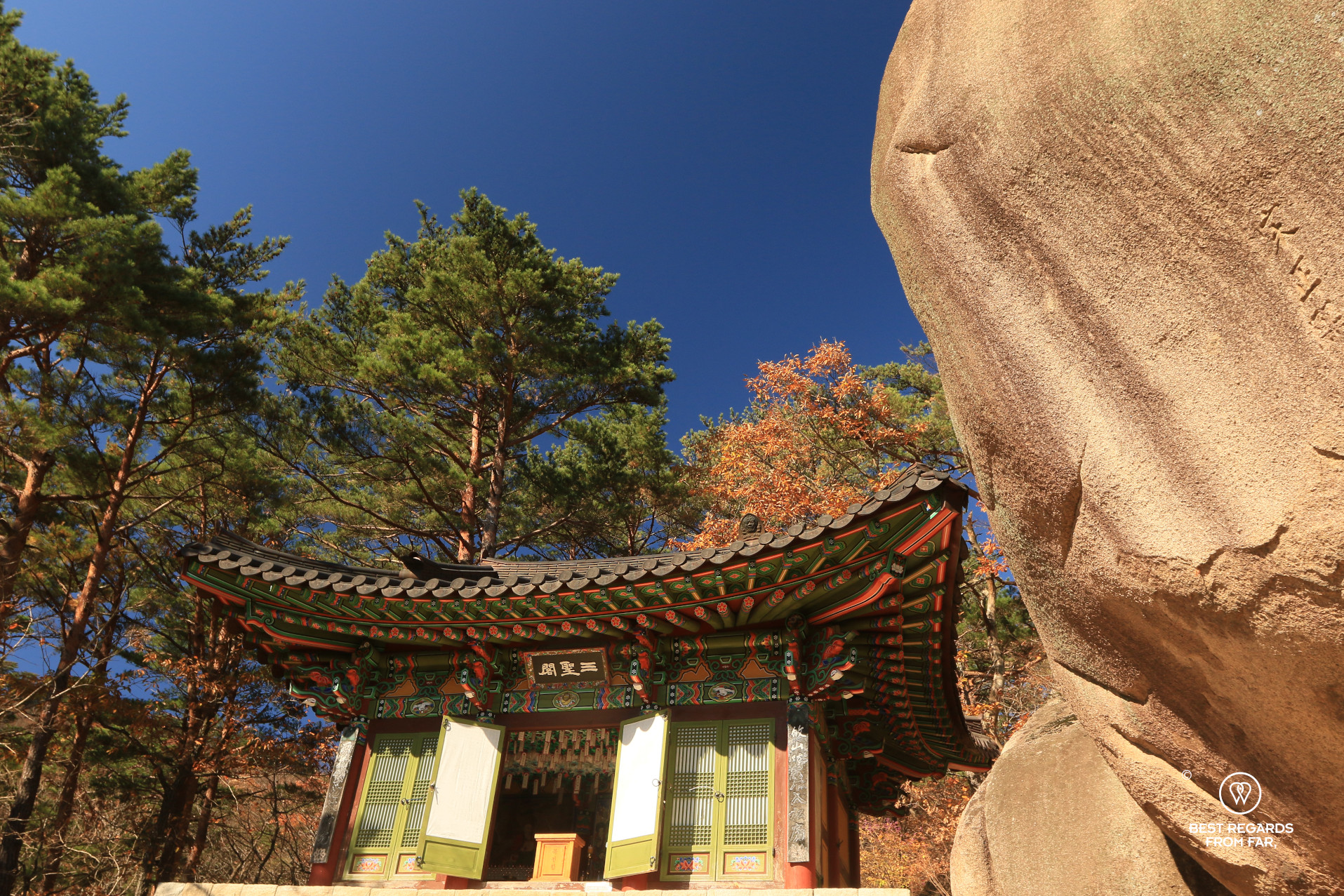
The spectacular location of Naksansa (recognized as one of the great eight scenic areas in the Eastern region of Korea) is even more inspiring at sunrise at Hongnyeongam Hermitage, a small prayer hall just above a sea cave. Not just any sea cave, but the one in which the very revered Bodhisattva of Compassion is believed to have lived.
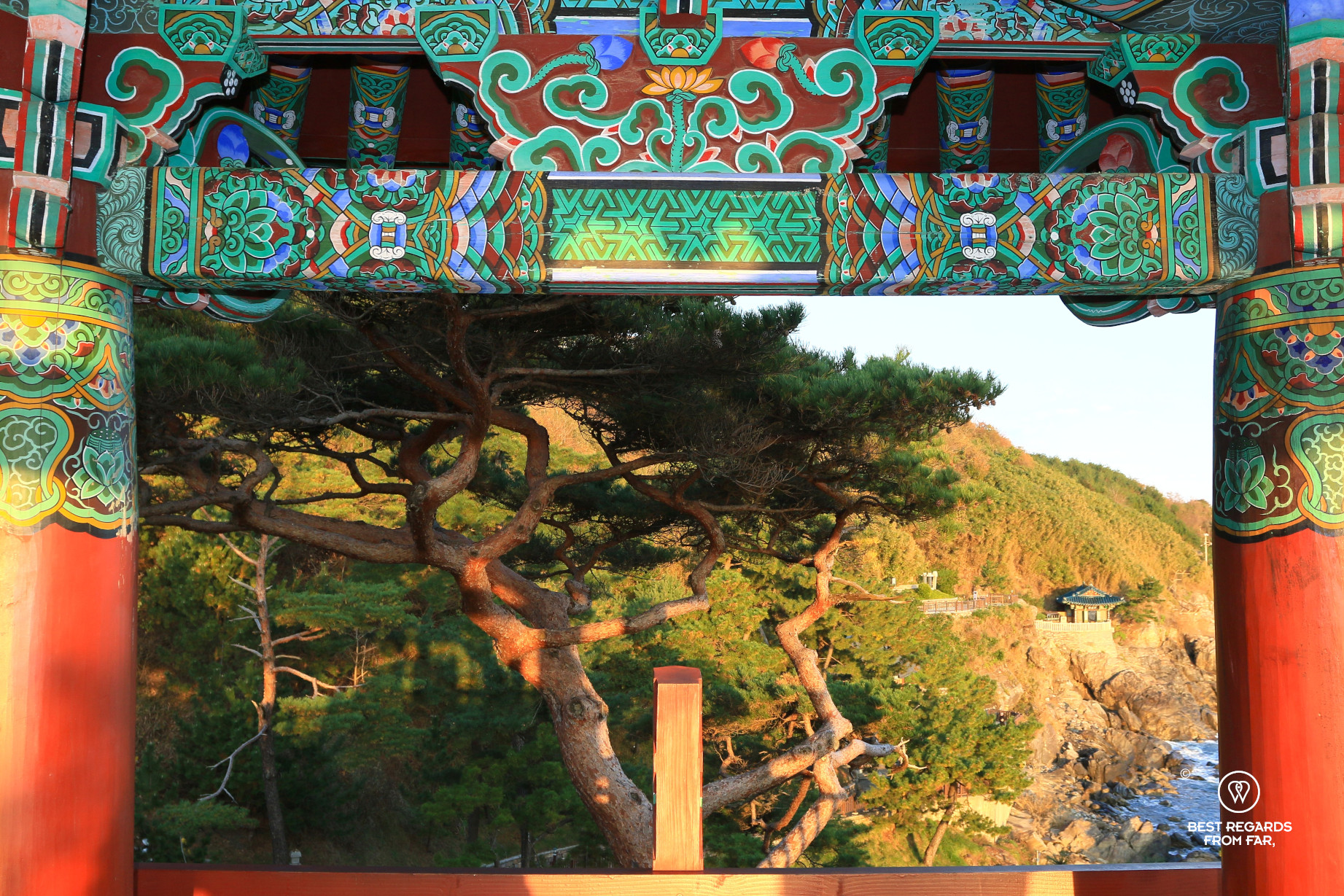
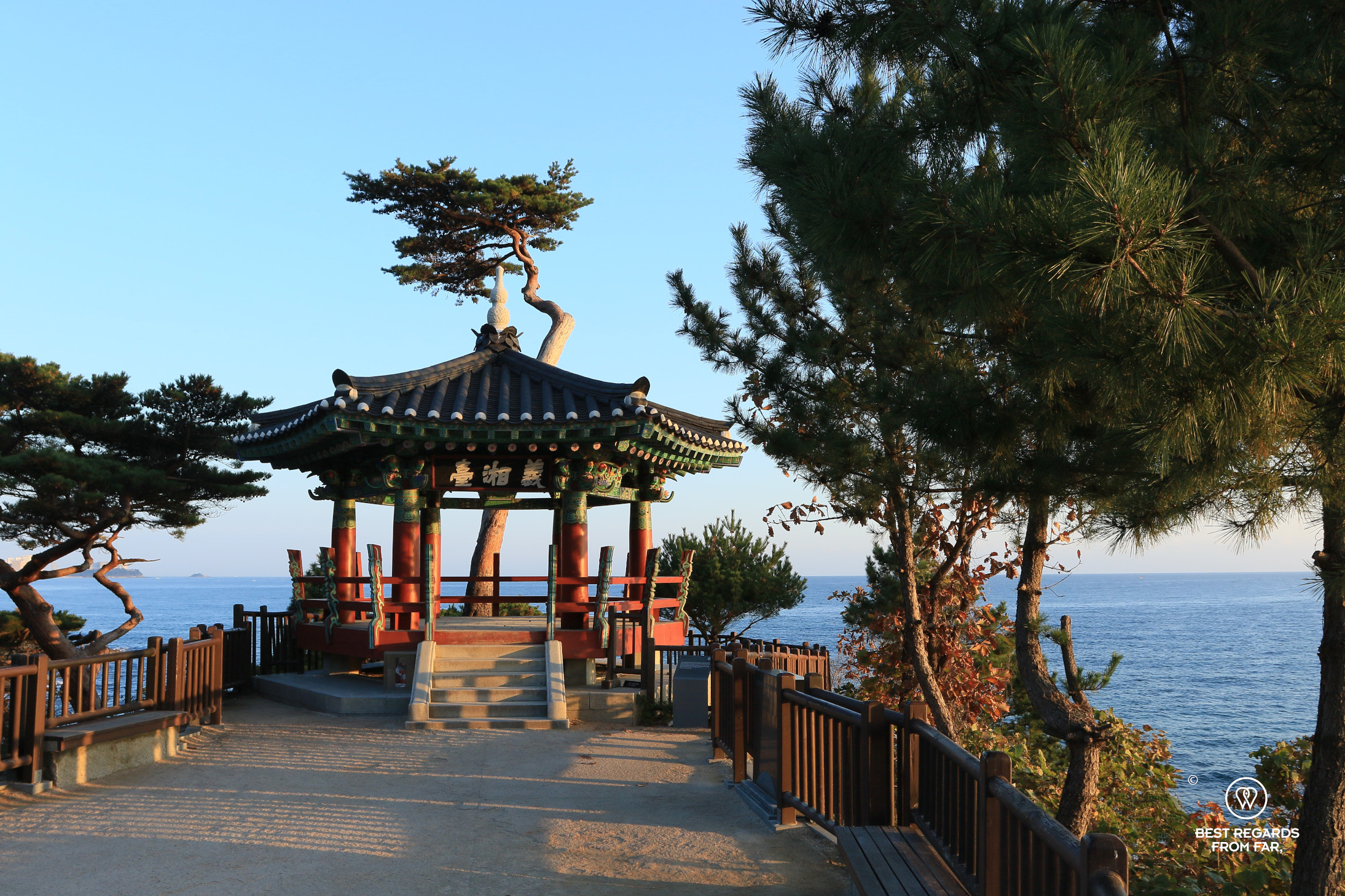

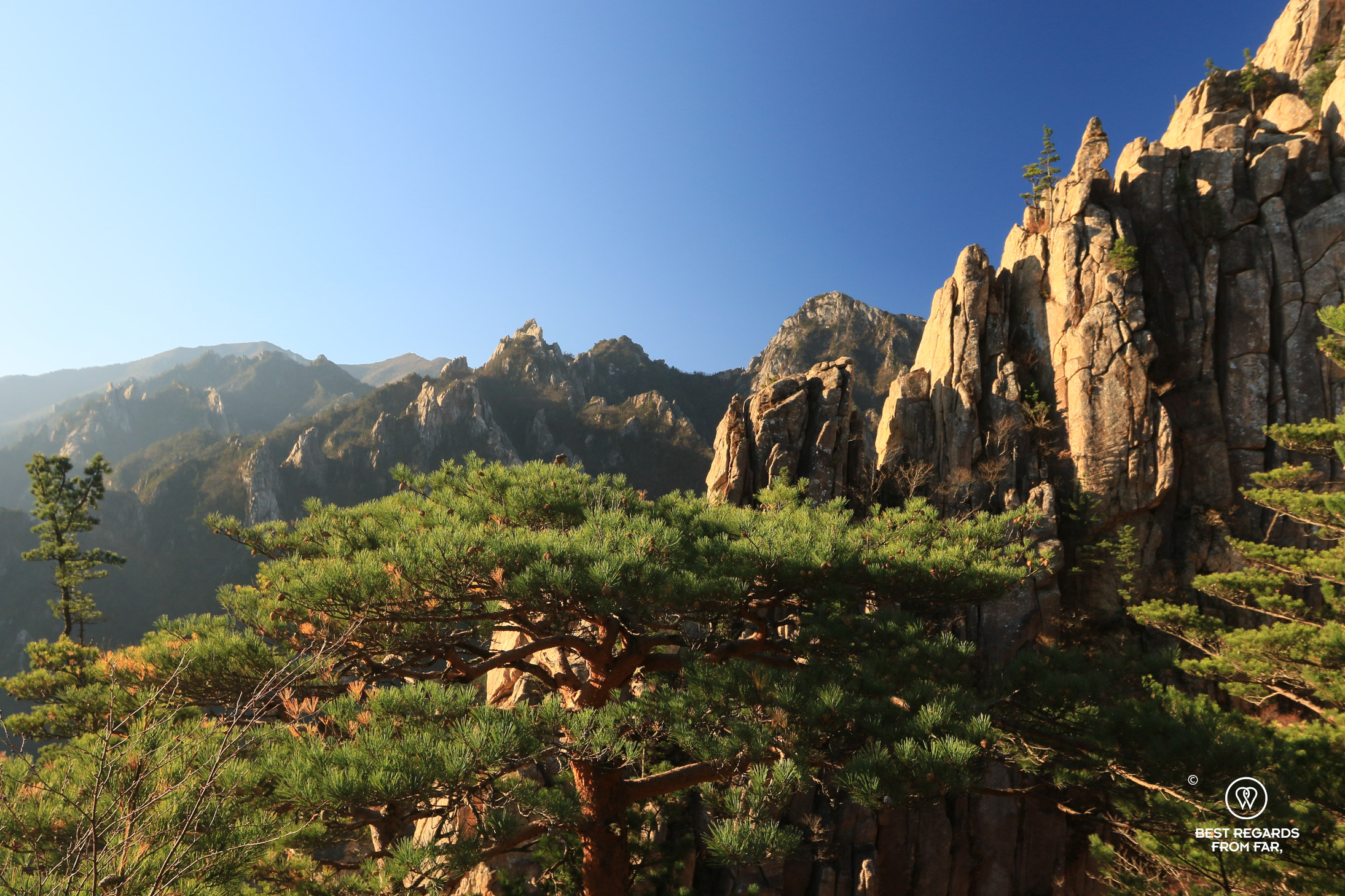
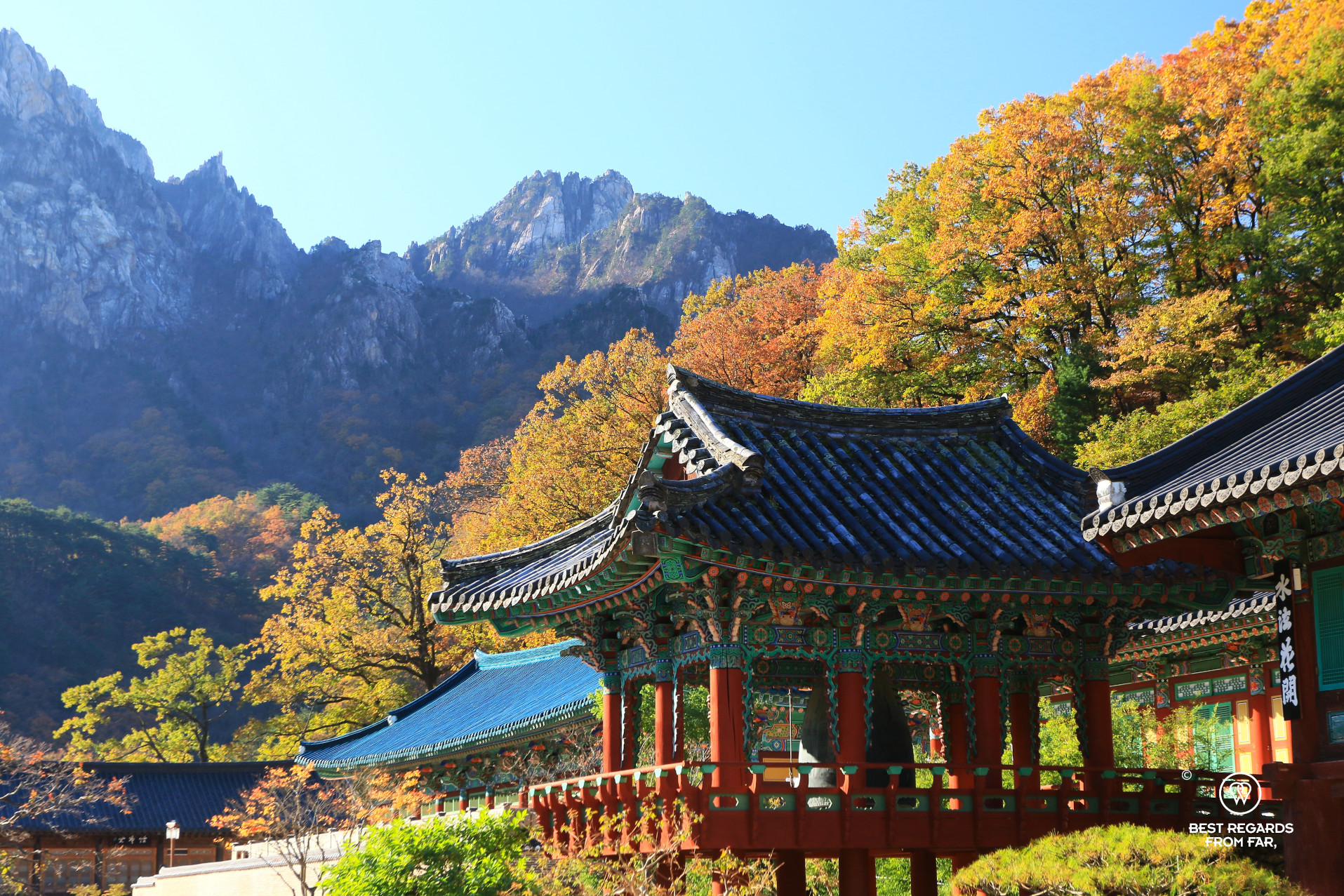
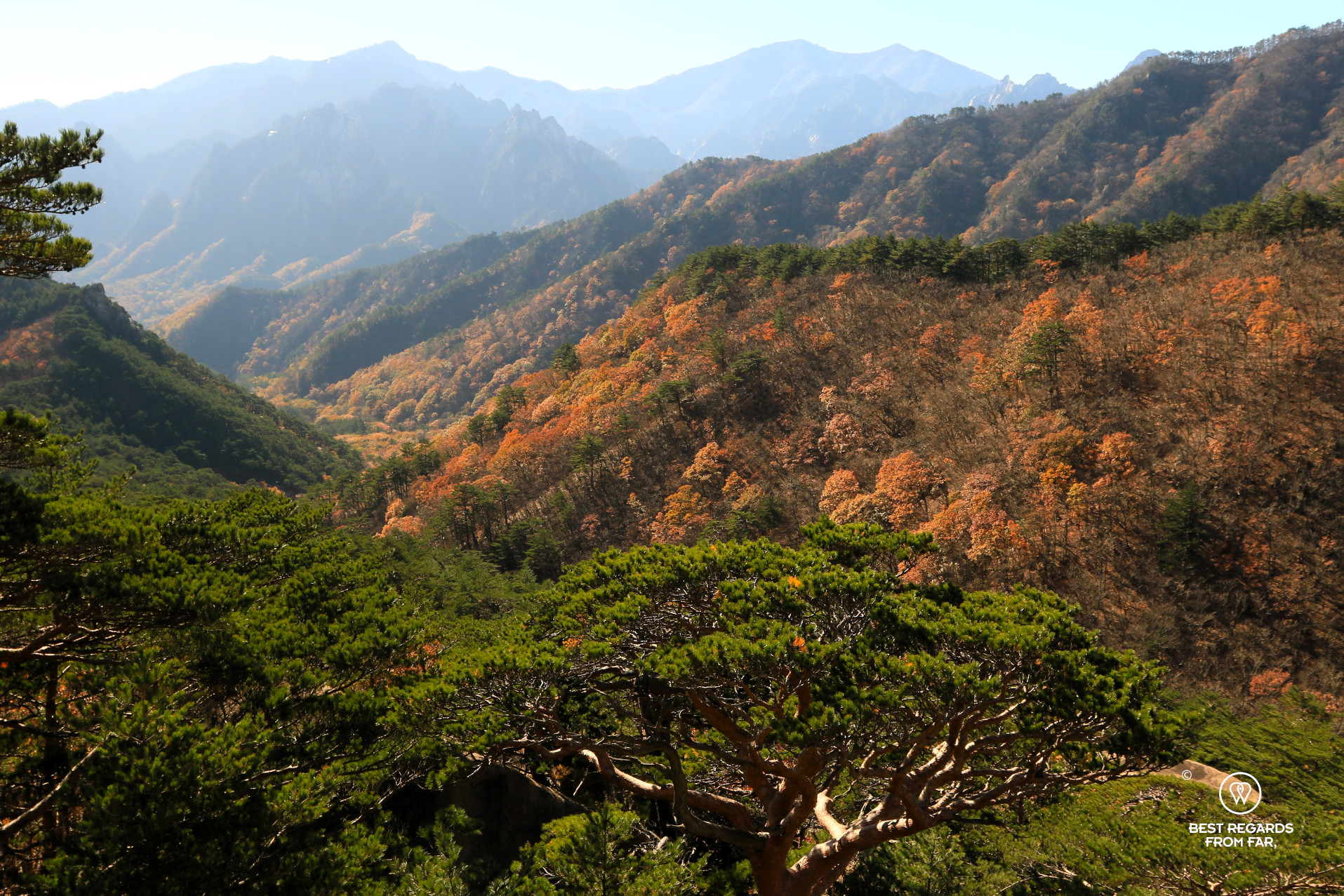
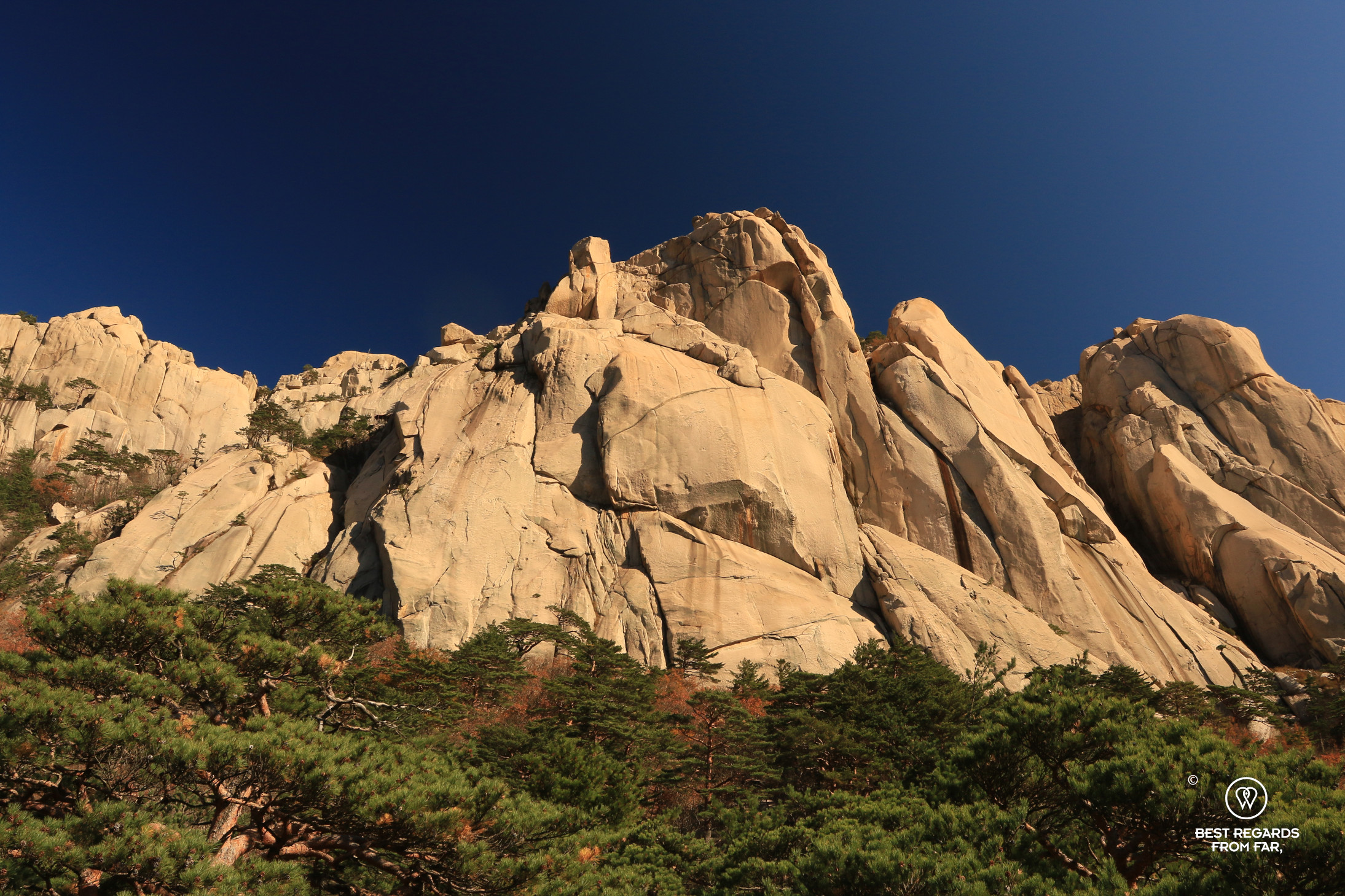
The legend says that Naksan Temple was founded in 671 by the Buddhist monk Uisang, the most famous monk in Korea, as instructed by the Bodhisattva as he was meditating near the cave. The specific location is marked today by the octagonal pavilion on the cliff where Uisang himself used to meditate. On one side, the East Sea, on the other, the jagged ridge-line of the Seoraksan Mountains, home to South Korea’s most acclaimed national park, offers another spectacular scenery.
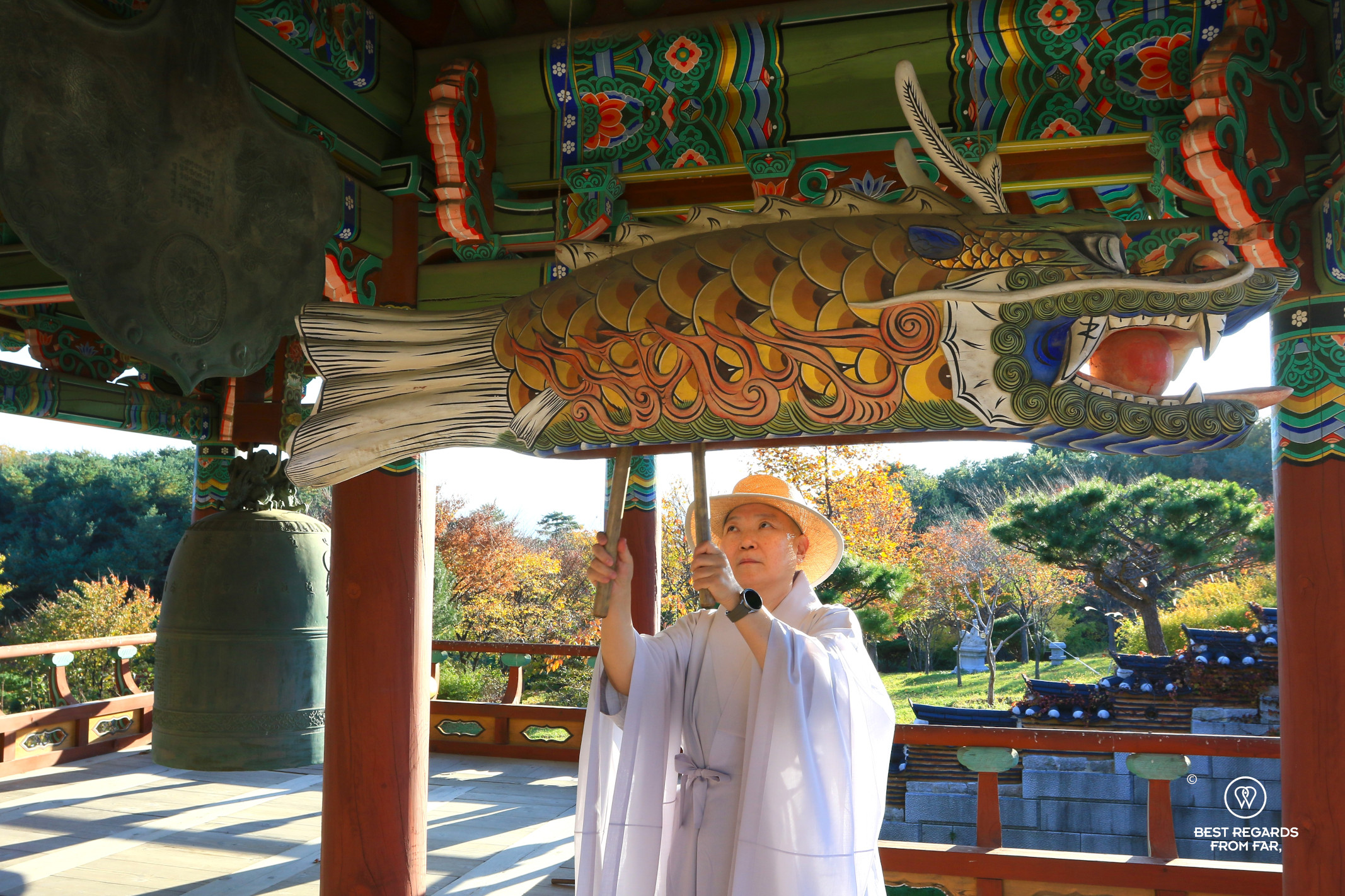
After day visitors leave the sacred grounds, it is the privilege of monks and the temple stay guests to enjoy the quiet temple complex, which invites contemplation and meditation.

Meditation
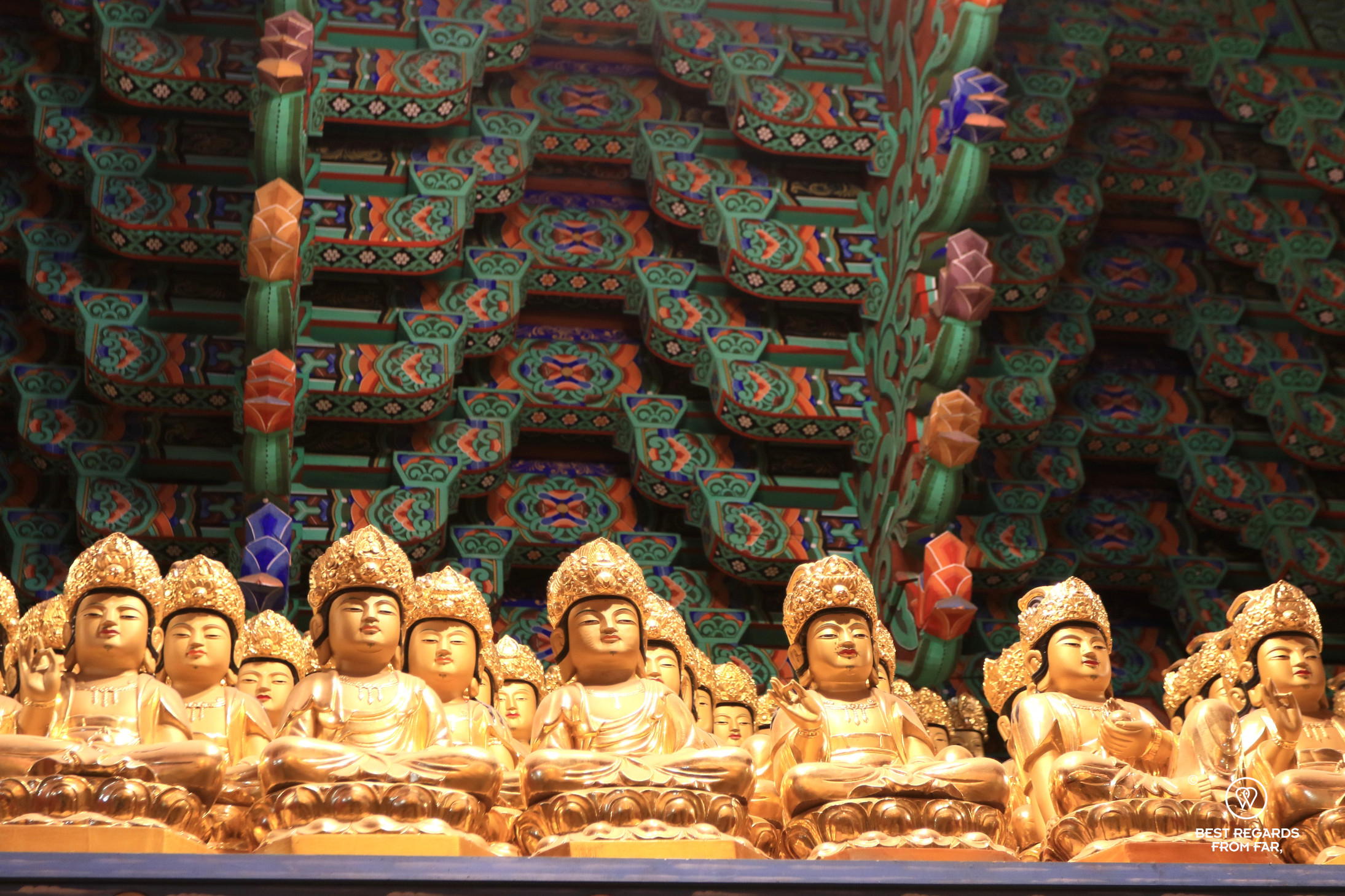
The guidance of monks of the Jogye order—the main Buddhist order in Korea—is paramount to apprehend meditation better. Beyond the food meditation, Monk Jiwol has introduced us to walking meditation, breathing meditation, tea meditation, and meditation to the sound of waves while her interpreter EJ, with her perfect English, has taught us yoga, yet another way of attempting to reach oneness between body and mind while being fully in the present.
As Monk Jiwol explains: “If one can bring the mind where the body is fully, then stress and tiredness are alleviated. When the mind is not in the present but in the past or future that does not exist (anymore or yet), focus is lost and the energy level decreases fast. Meditation can help you expand your mind. Wisdom and power come from the expansion of the mind”.

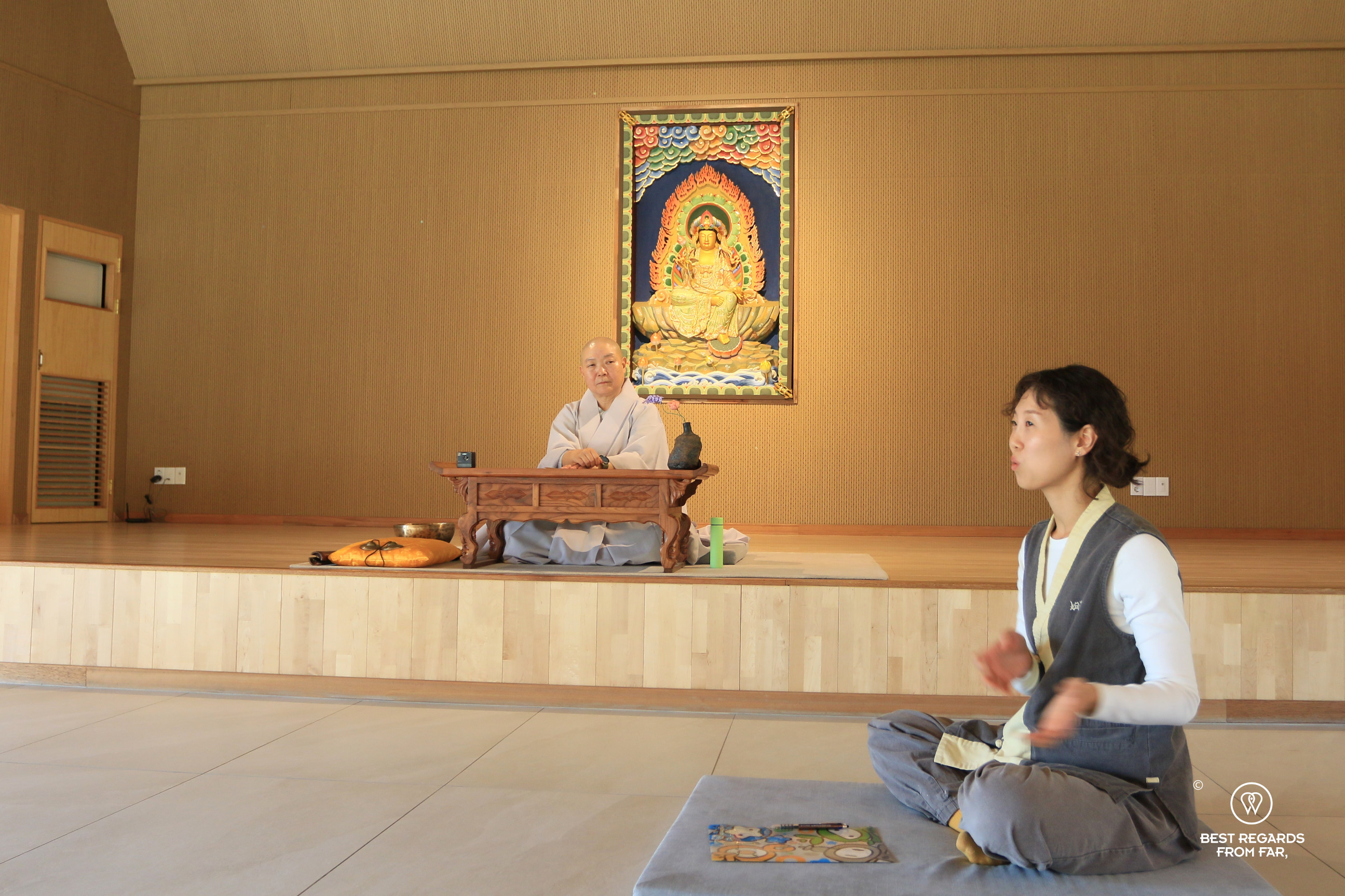
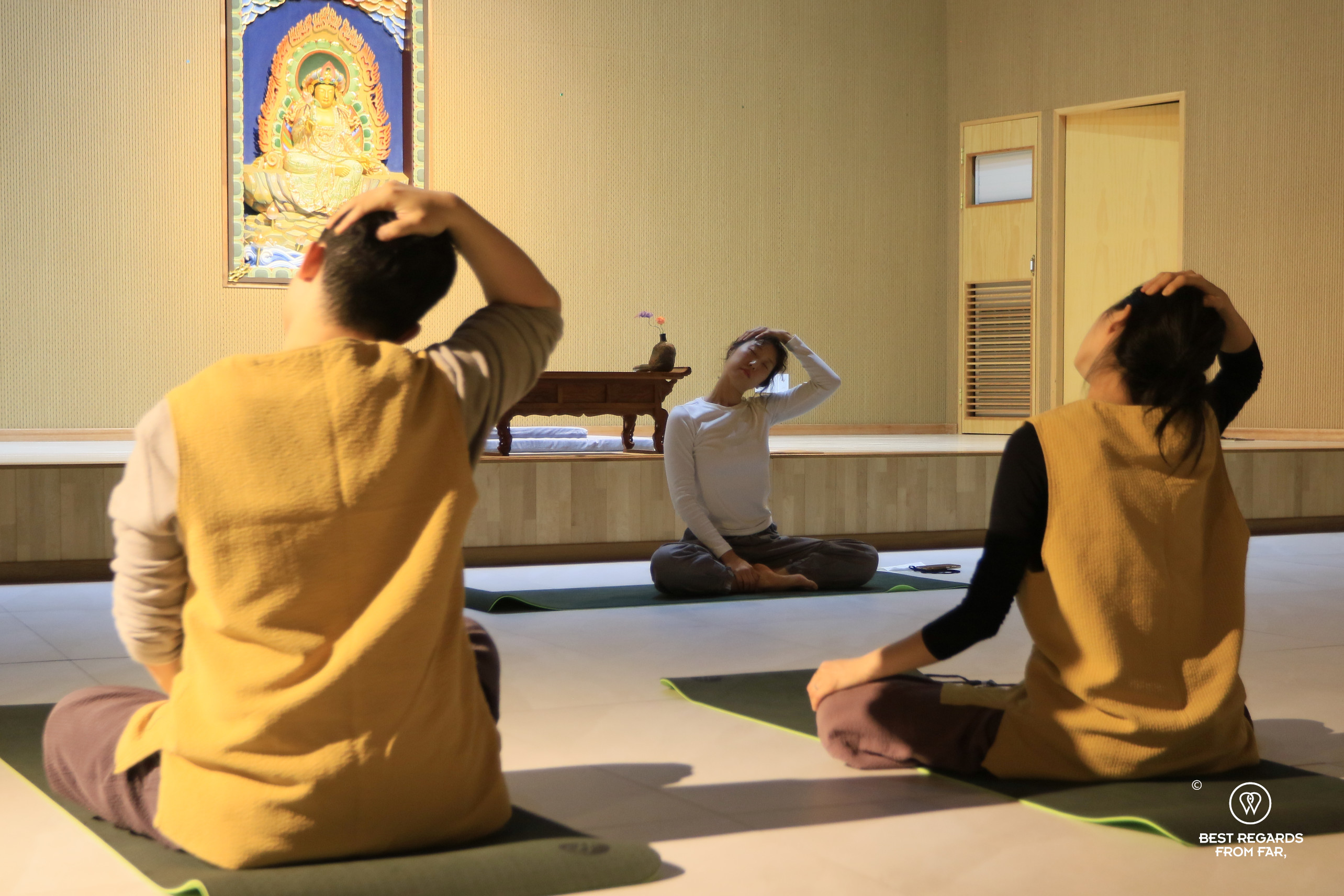
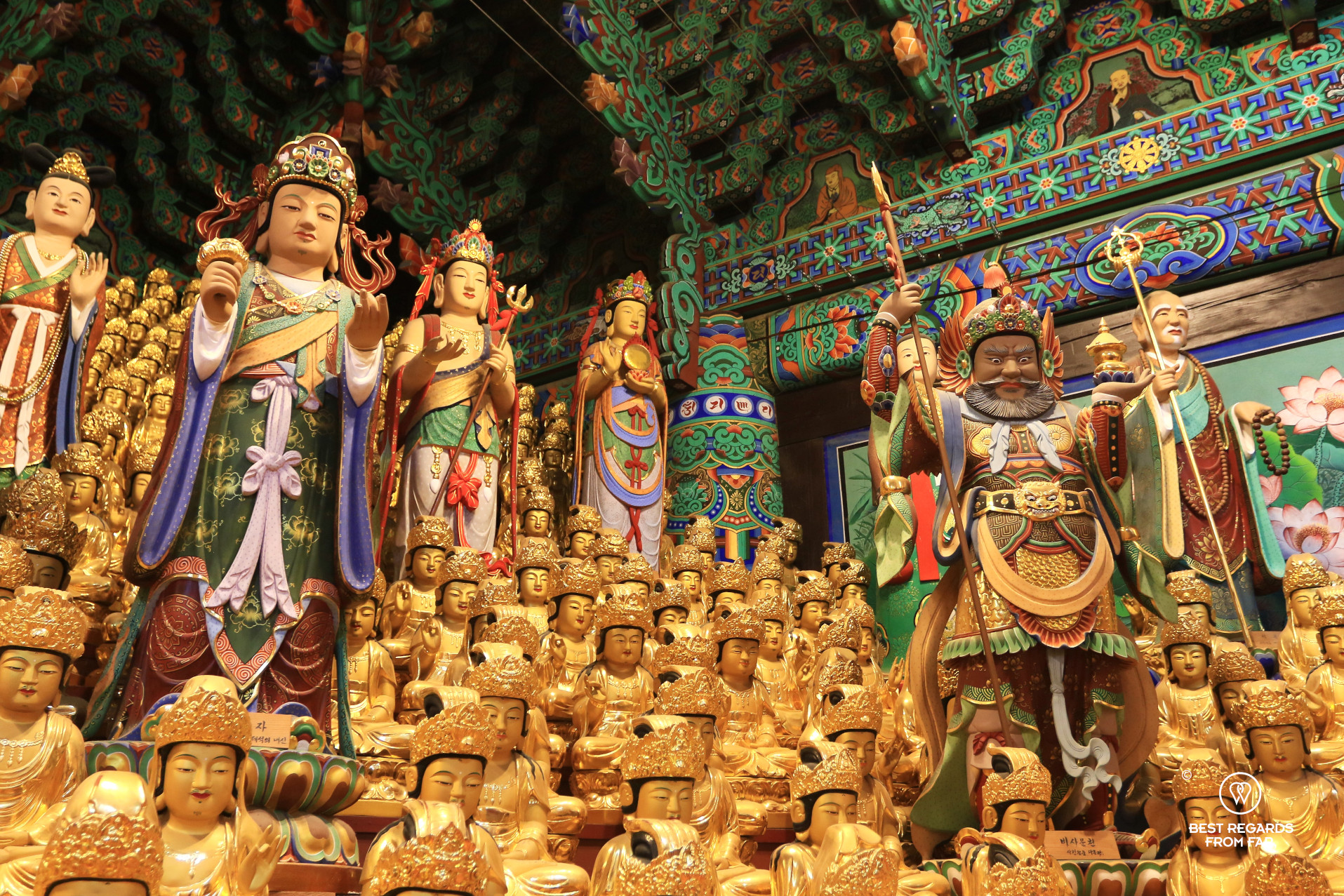
More than wisdom and power, as I recall a eureka moment on the Shikoku Pilgrimage in Japan, shared with three dear friends, it is happiness that is reached when we are fully in the now. These intense small moments can be, for some, a warm embrace from a loved one, the comforting smell of freshly ground coffee beans, a specific song, the warm wind on one’s skin, or contemplating a striking vista.
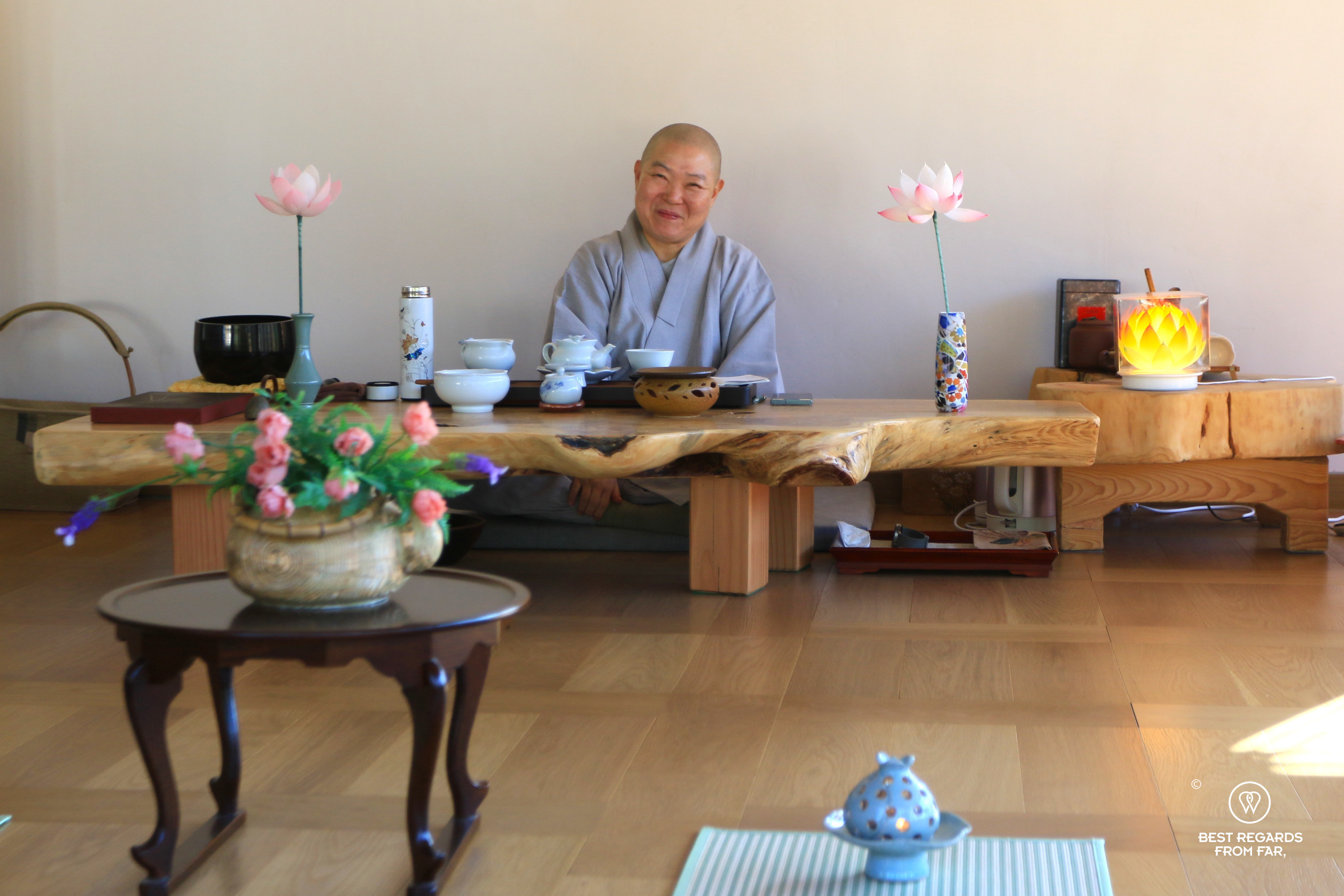
The personal story of Monk Jiwol epitomizes the importance of self-care, inner peace, and meditation. After losing her mother at age 7 and her father at age 8, she was raised by her uncle. Retracting into her own anger and shame for being a burden, she took shelter in books. One day, she stumbled upon a book about Buddhism that led her to becoming a monk at 17. After her training, her master monk shaved her head and gave her the Buddhist name Jiwol, meaning “pointing at the Moon” which represents Buddha’s mind. Today, more than forty years later, her warm and communicative smile reveals her eagerness to share happiness and wisdom with her temple stay guests.
Tea meditation
It is with such a smile that she welcomes us to the tea room, which we enter in a chasu position, with our right hand over our left hand in front of our lower bellies—a monk’s posture that exudes calm and humility.
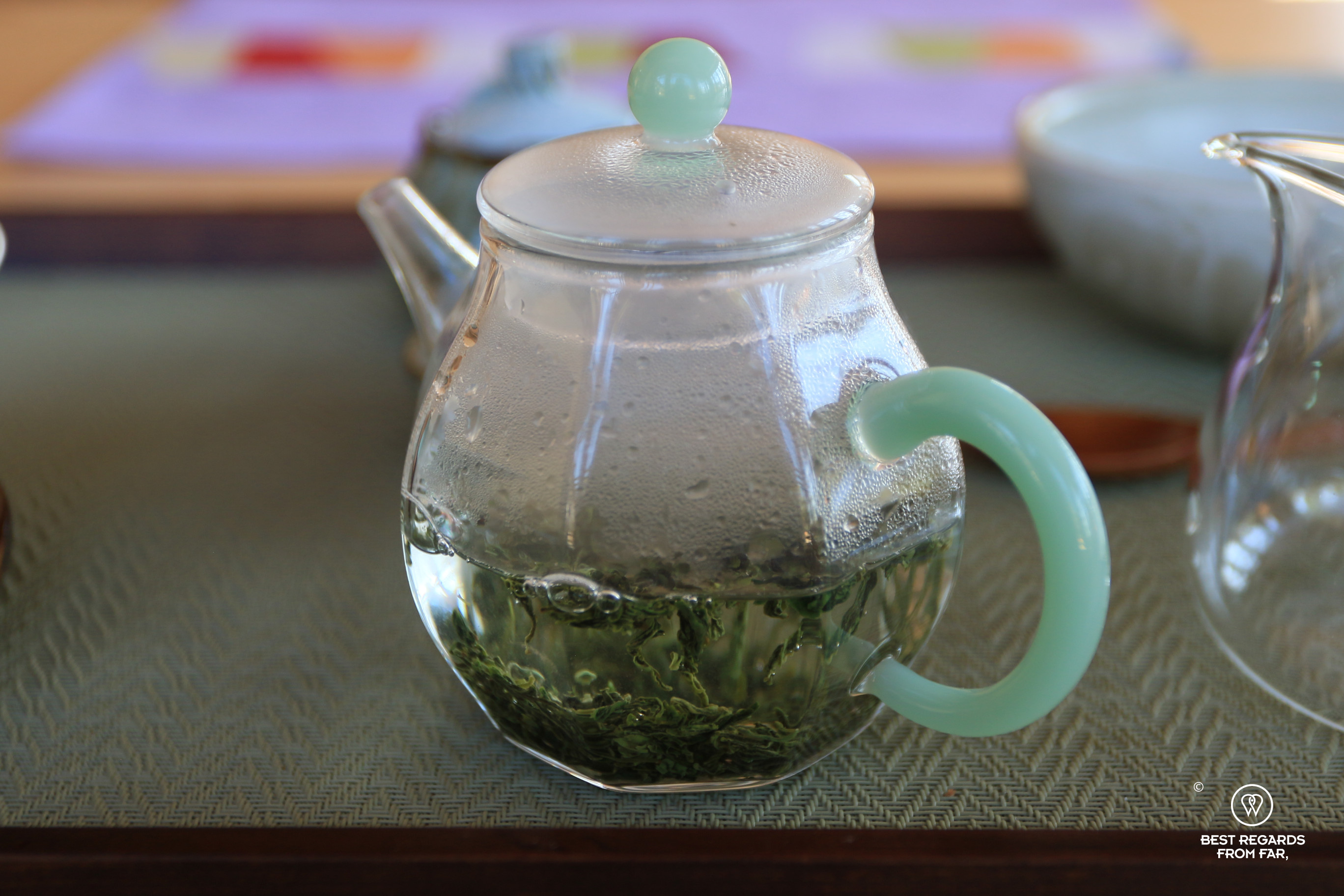
We are seated in front of a low wooden table on which different glass teapots and ceramic cups are set. By mimicking Monk Jiwol, a simple green tea tasting takes on a whole new meaning when focusing on our five senses. These senses do not operate in the past or future, so focusing on them implies being fully in the now. Listening to the tea being poured into the ceramic cup, observing its light green color, feeling the warm sensation of holding the delicate celadon cup, smelling the subtle aromas of this South Korean green tea, and tasting it—paying attention to its flavors before swallowing—becomes a highly enjoyable ritual after a few attempts.
***
A whole emphasis has been placed on mindfulness and meditation in our Western cultures, with many apps, school programs, fitness practices, and more. Yet, this temple stay at Naksansa and the privileged time spent with a Buddhist monk have revealed that, with the right guidance, meditation is a very simple practice. It can be carried out almost anytime and anywhere—even for just a few minutes—to align the mind and body and heighten the present moment. Instant happiness—what else?
Travel tips:
- The temple stay program started in 2002. There are about 150 temple stays available in South Korea including about two dozen in English where guests experience monastic life and learn about Buddhism including meditation.
- Naksansa proposes 7 different temple stay programs based on meditation. Click this link to book your temple stay at Naksansa.
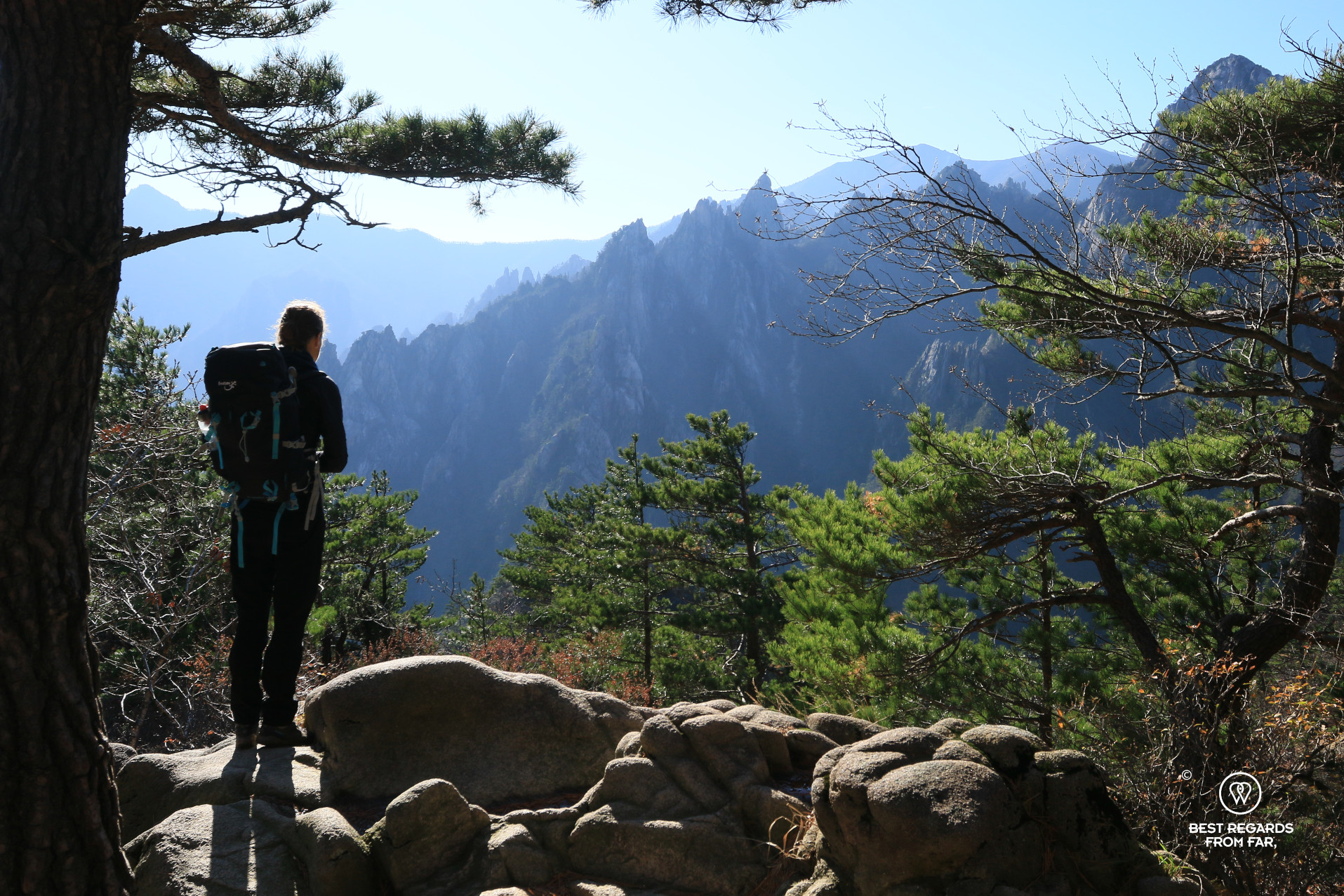
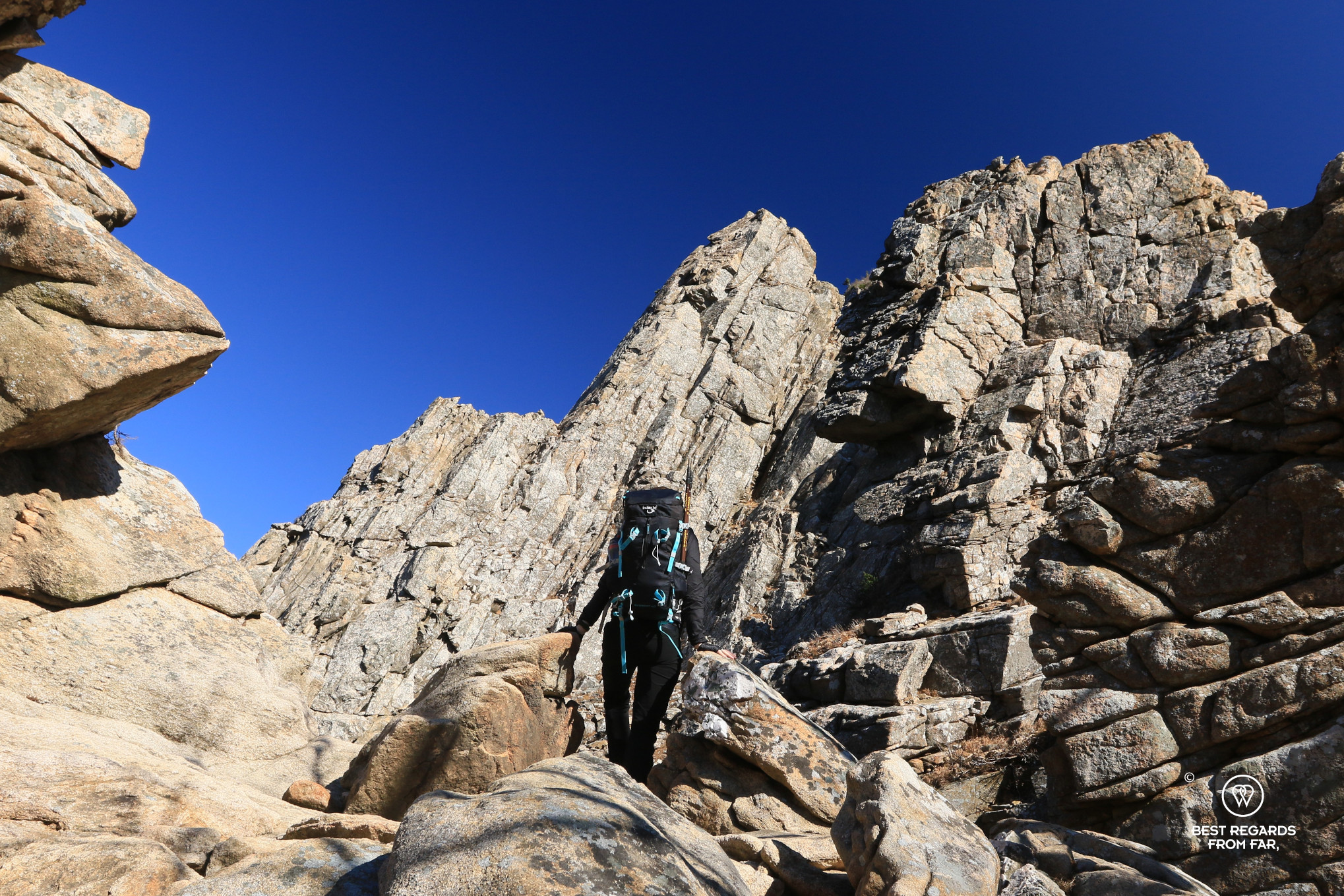
- It is ideal to visit Seoraksan NP when visiting Naksansa. A great playground for hikers with trails taking only a few hours such as the spectacular Ulsandawi Rock trail to multi-day hikes such as the more technical Dinosaur Ridge Trail.
- To book shelters in Seoraksan NP, refer to this link.
- Check out our interactive map for more in the area (black pins lead to an article):
For more in South Korea, click on the images below:


 Best regards from far,