Text: Claire Lessiau
Photographs: Marcella van Alphen & Claire Lessiau
A three-to-four-hour drive from Santa Cruz de la Sierra, the second largest city of the country, the peaceful village of San Xavier lays in the dry tropical lowlands of Bolivia that are completely off the tourist radar. Blessed with a bucolic landscape that is a welcome break from the flat savanna out of Santa Cruz, planted with acres of wheat, corn, and sunflowers, and roamed by thousands of cows, San Xavier is surrounded by rolling hills with the low mountain range of Serranías Chiquitanas as a backdrop. Yet, its most striking feature is its 17th century Jesuit mission perched on a large granite slab atop the hill. Made of wood with its unique architecture and crafts merging Christian themes with botanical Indian motifs, the mission of San Xavier is one of the most beautiful of the very few remaining in all of South America that we are about to discover.
Pin it for later!
San Xavier [& an introduction to the Jesuit missions of the Chiquitos]
Crossing the shady main square planted with torobochi trees and passing the wooden cross that marked the 300-year anniversary of the Society of Jesus in San Xavier that was erected in 1991, the uncommon architecture of the church of San Xavier catches the eye.
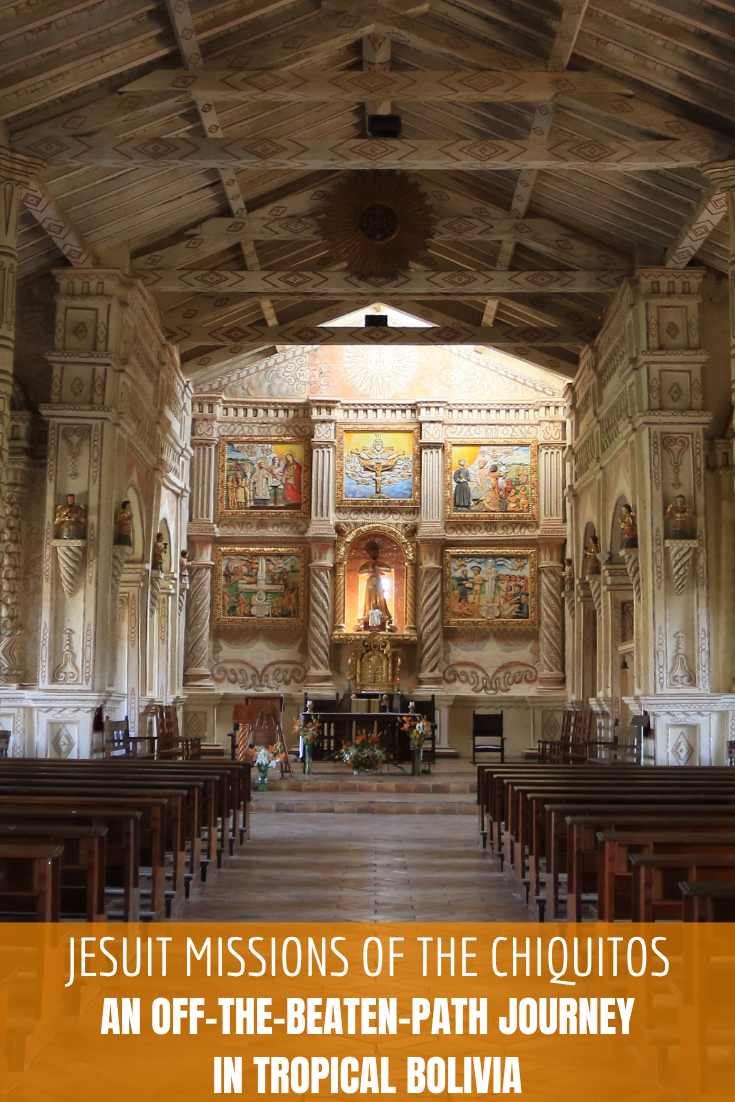
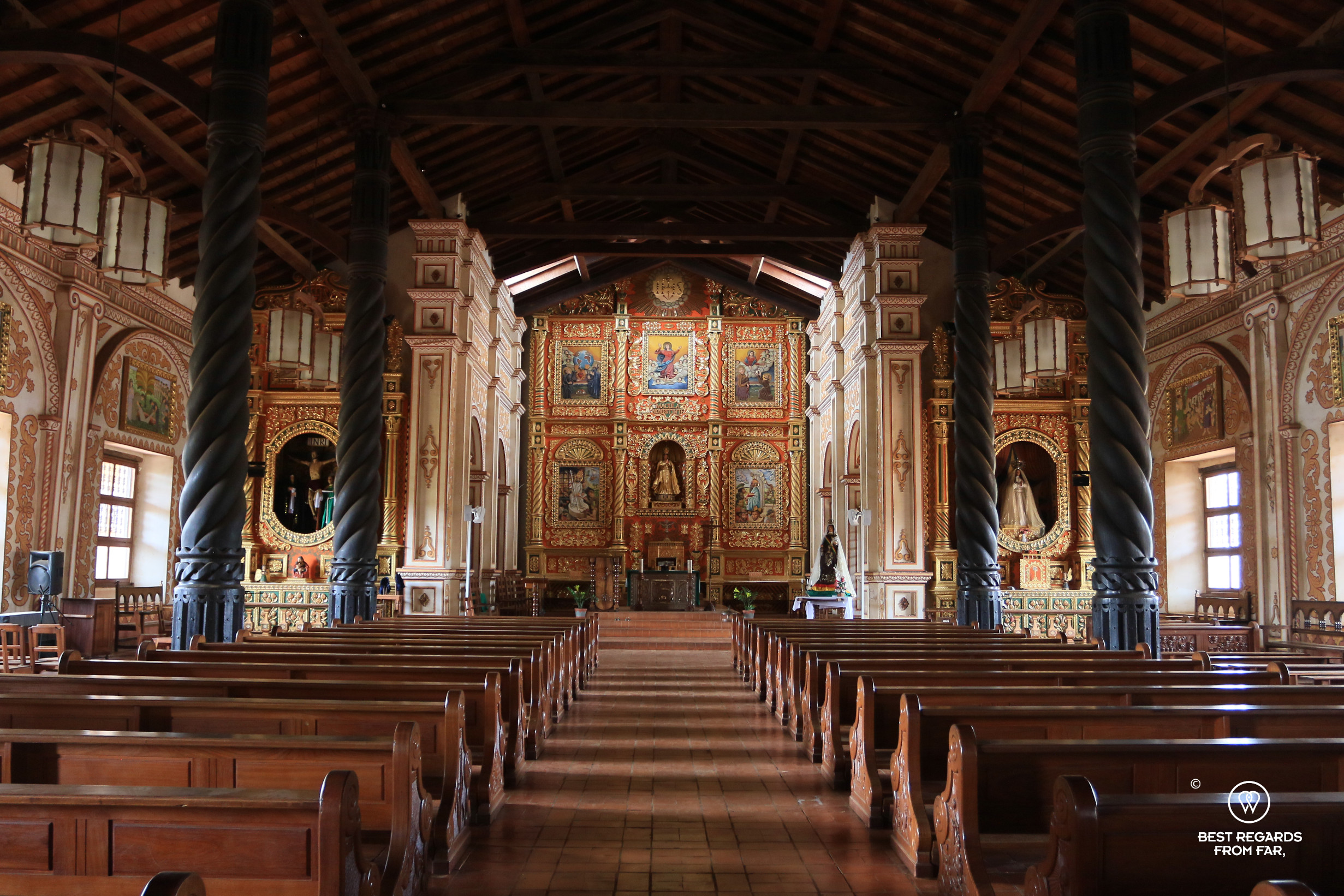
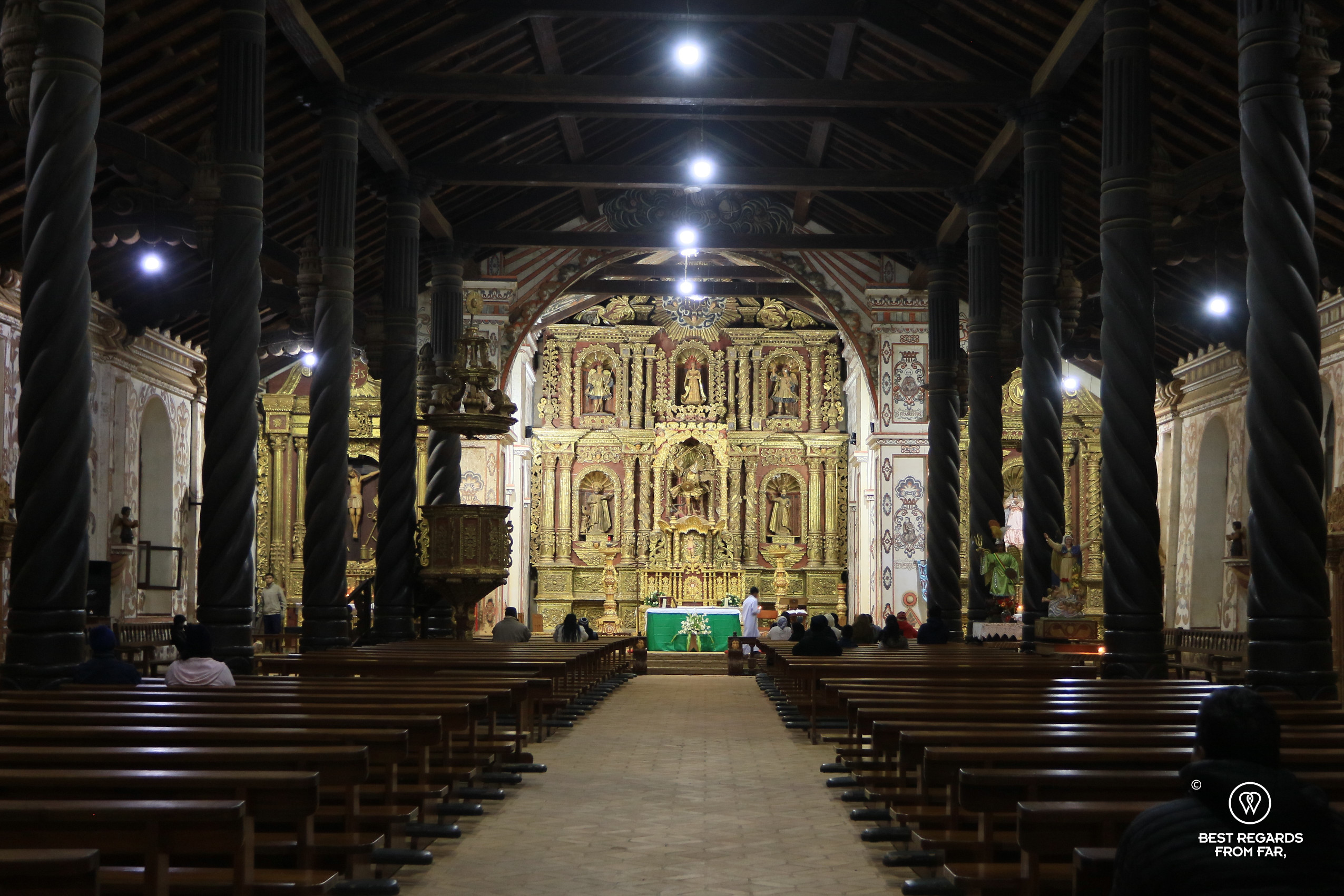
Yet it is entering the almost 300-year old church that is a revelation. The long wooden building painted in white with light floral motives, separated in three naves, gives an impression of space and serenity. The wooden sculptures, paintings, altars, and pulpits either painted with natural pigments or covered in gold leaves describe the surrounding bountiful nature while only friendly-looking angels overlook the visitors.


To this day, 80 percent of the church is original. The structure that comprises the roof and wooden pillars is deposed atop a large granite slab that has prevented putrefaction for centuries. These structural elements are made of the hardest wood the Jesuits could find nearby, the Soto wood, a local slow-growing tree treated with an oil every two years, which is so dense that it took 30 men to move a trunk that would serve as a church column.
Founded in 1691, by Jesuit missionary José de Arce, the mission of San Francis Xavier was the first reduction – or mission settlement of Christianized Indians – to take shape, inspired by the ideal cities of the 16th century humanist philosophers. If the church seems oversized for the village of San Xavier, thousands of Indians from various indigenous tribe used to gather in it since its opening. Their differences diluted with years and the region was named after the most numerous tribe: the Chiquitos Indians.

The church, facing East, and the former workshops and schools completed in 30 years in 1750 open on the rectangular main square that used to be lined with simple thatched-roofed houses for the Indians following a uniform spacing, quite different from today’s cute painted façades dating back to the late 1800s and hosting a museum dedicated to the late Bolivian president German Busch (1900,1940) who grew up there, a restaurant, and housing.
Not only spirituality was dealt with on the church side, but also craft learning, one of the most important one being manufacturing musical instruments as music had been key in Christianizing the locals. The Jesuits also managed to establish themselves amongst the Indians of the Chiquitos region by respecting local traditions. To this day, the Yaritus ritual mixed with Catholicism and celebrated the days of Saint Peter and Saint Paul respectively on June 29 and June 30 in San Xavier is the only Chiquitos ritual that has survived.

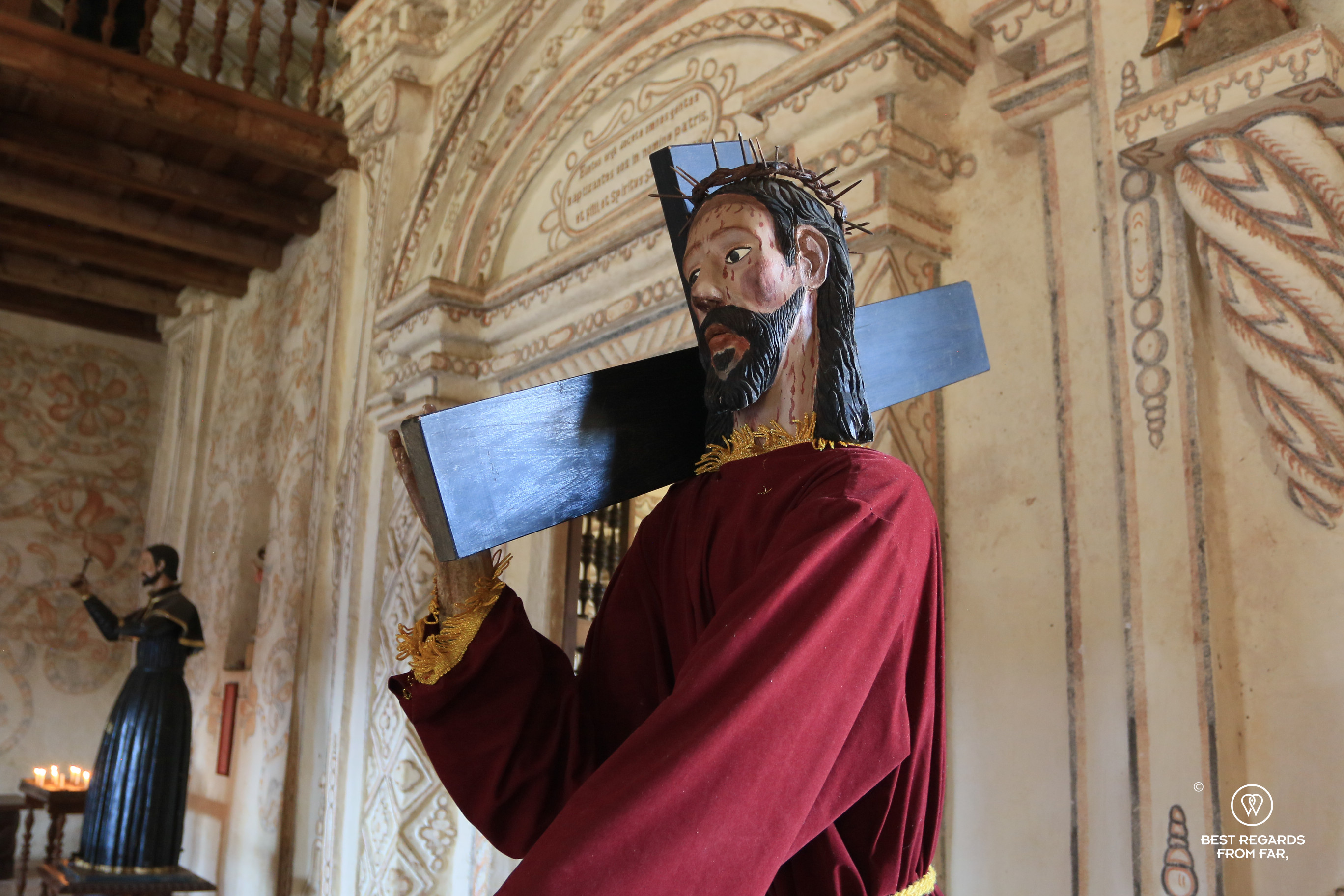
Between the Indians on one side and the Spanish crown on the other, the Jesuits had to be very resourceful. Better than running self-sufficiently, they managed to develop a thriving economy, establishing a powerful trade network and remaining financially independent from the Spanish crown.
Unfortunately, most Jesuit missions all over the continent did not survive the 1767 expulsion of the Society of Jesus from South America.
Worse, the expulsion of the Jesuits from the region left the Indians vulnerable to capitalist exploitation by land owners and by the 1850s, most of them had retracted to the forest and the reduction system of the missions had ended.
These unique Jesuit Missions of the Chiquitos remain the best-preserved examples of Jesuit architecture on the continent today, and as such have been granted the UNESCO World Heritage status. With San Xavier, six such missions still stand on the former territory of the Chiquitos: Concepción, Santa Ana, San Miguel, San Rafael, and San José de Chiquitos.
Aguas Tibias
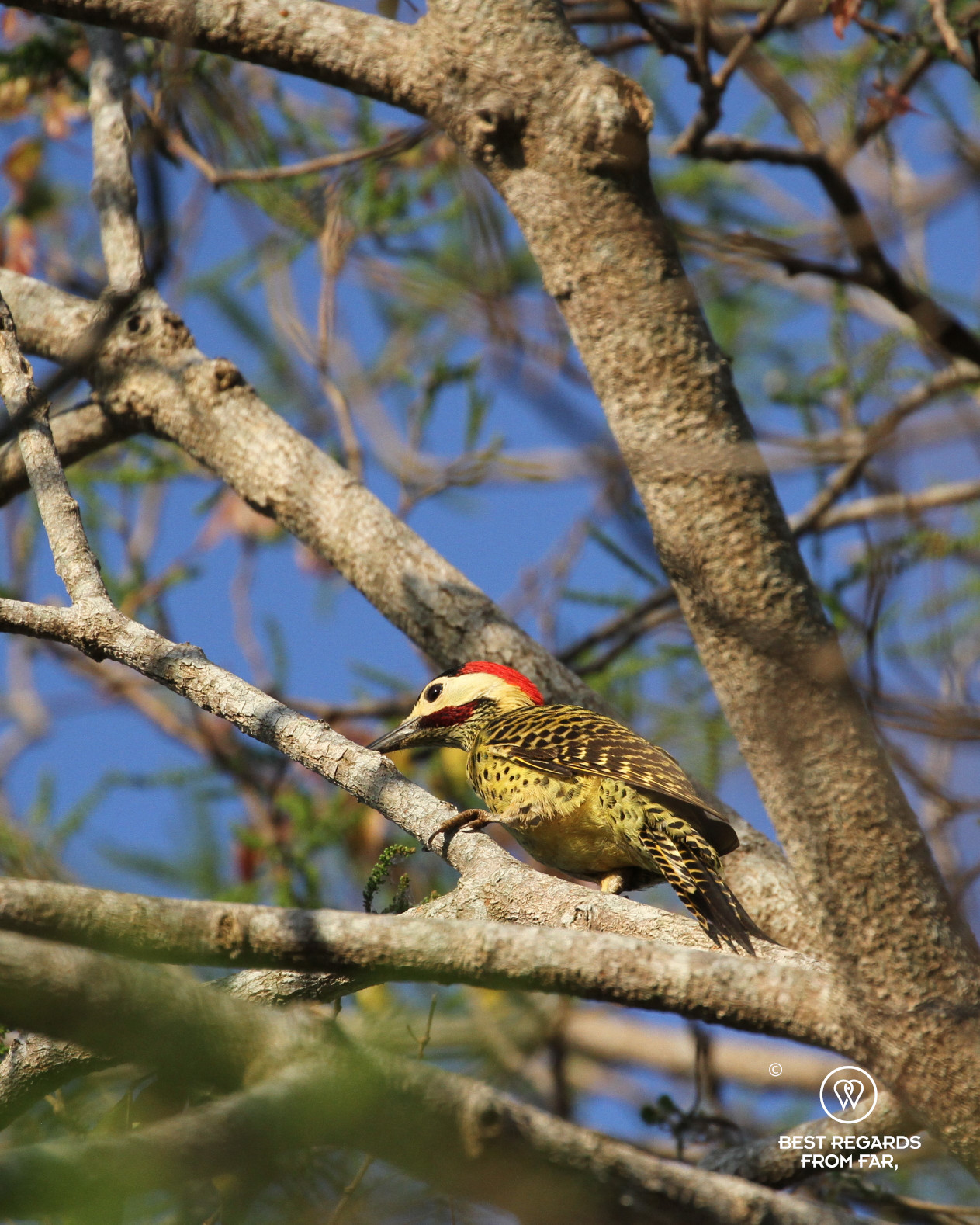
Just north of San Xavier, deeper into the Serranías Chiquitanas Mountains, it is easier to get an idea of the nature the Jesuits faced when they arrived in the region. After an hour and a half by 4×4 on a bumpy dirt track, we arrive in Aguas Tibias, a 700-hectare property of which a quarter composed of mountains covered in a dense dry jungle is protected. If mammals such as tapirs, jaguars, or howler monkeys are fairly elusive, the bird life is bountiful. From sunrise to sunset, bird calls echo each other and the growling sound of the macaws systematically announce their colorful flights.




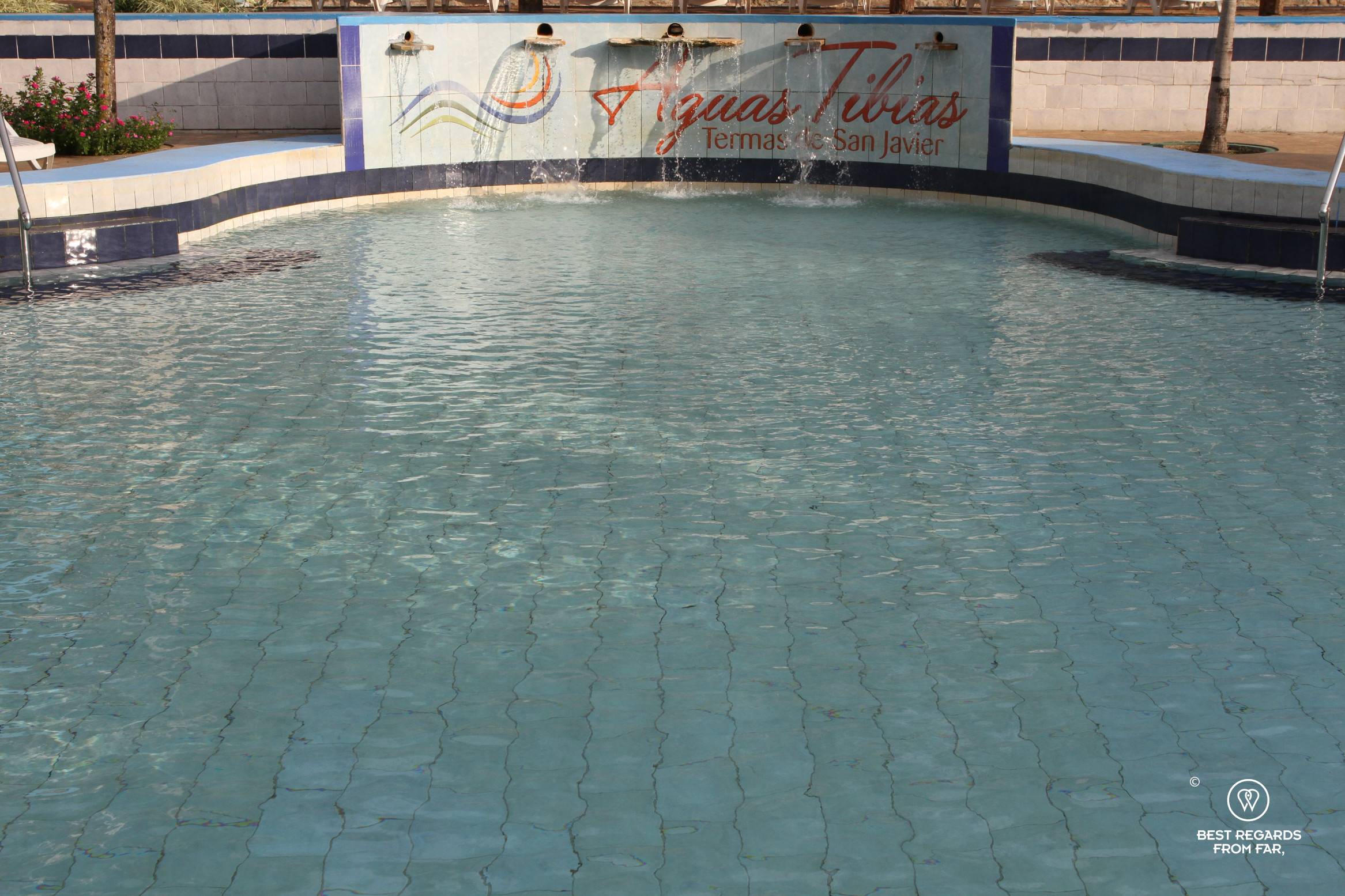
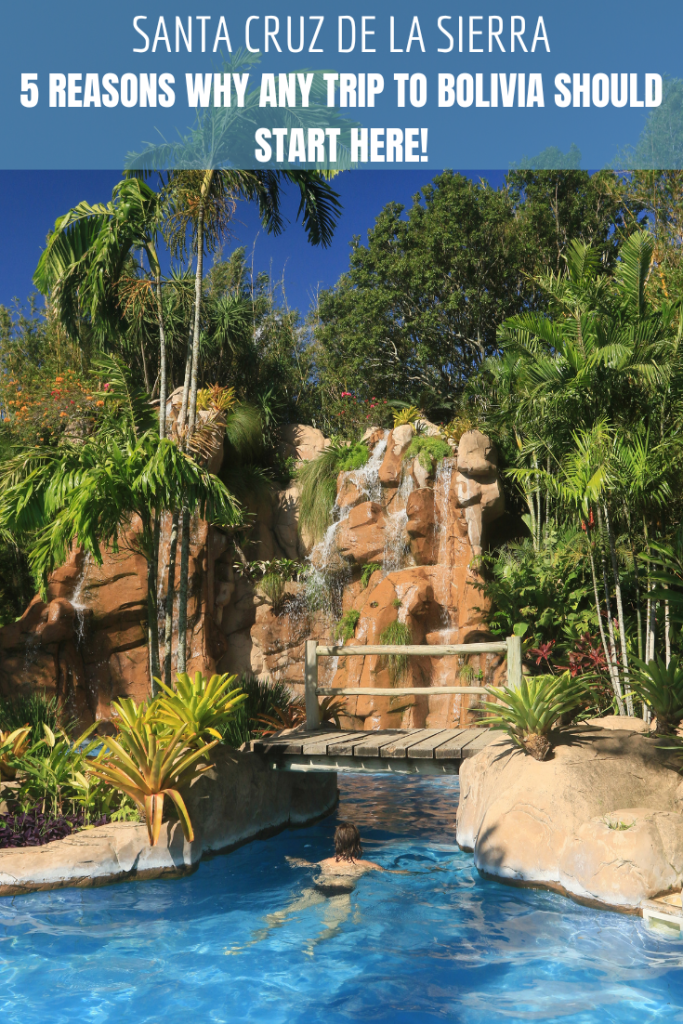
These mountains, despite the dry climate, have been the water source for San Xavier as they retain the humidity and provide an excellent water. In Aguas Tibias, not only the spring water is a gift, but also the thermal waters that are naturally heated up between 70 meters and 140 meters deep into the ground by remnant volcanic activity and resurface on the property at a perfect temperature for a warm 35.5° Celsius bath in one of the four man-made pools. Not only is it relaxing, it is also healthy as Carlos Riulowa, the owner of Aguas Tibias, explains. A pediatric surgeon himself, he found this spring in the late 1980s and immediately saw the potential. When only he and his family used to soak into a small resurgence, today many Bolivians come to stay at this rural hotel immersed in nature to enjoy the healing benefits of these blessed waters, full of magnesium, calcium, potassium, chloride, sulfur, and other minerals. Carlos enumerates the conditions they help with: arthritis, rheumatism, muscle fatigue, respiratory problems, digestive issues, skin conditions… With our body being composed of 70 percent of water, spending two hours in these thermal baths allows an osmosis to happen during which the minerals of the spring are absorbed through the skin.

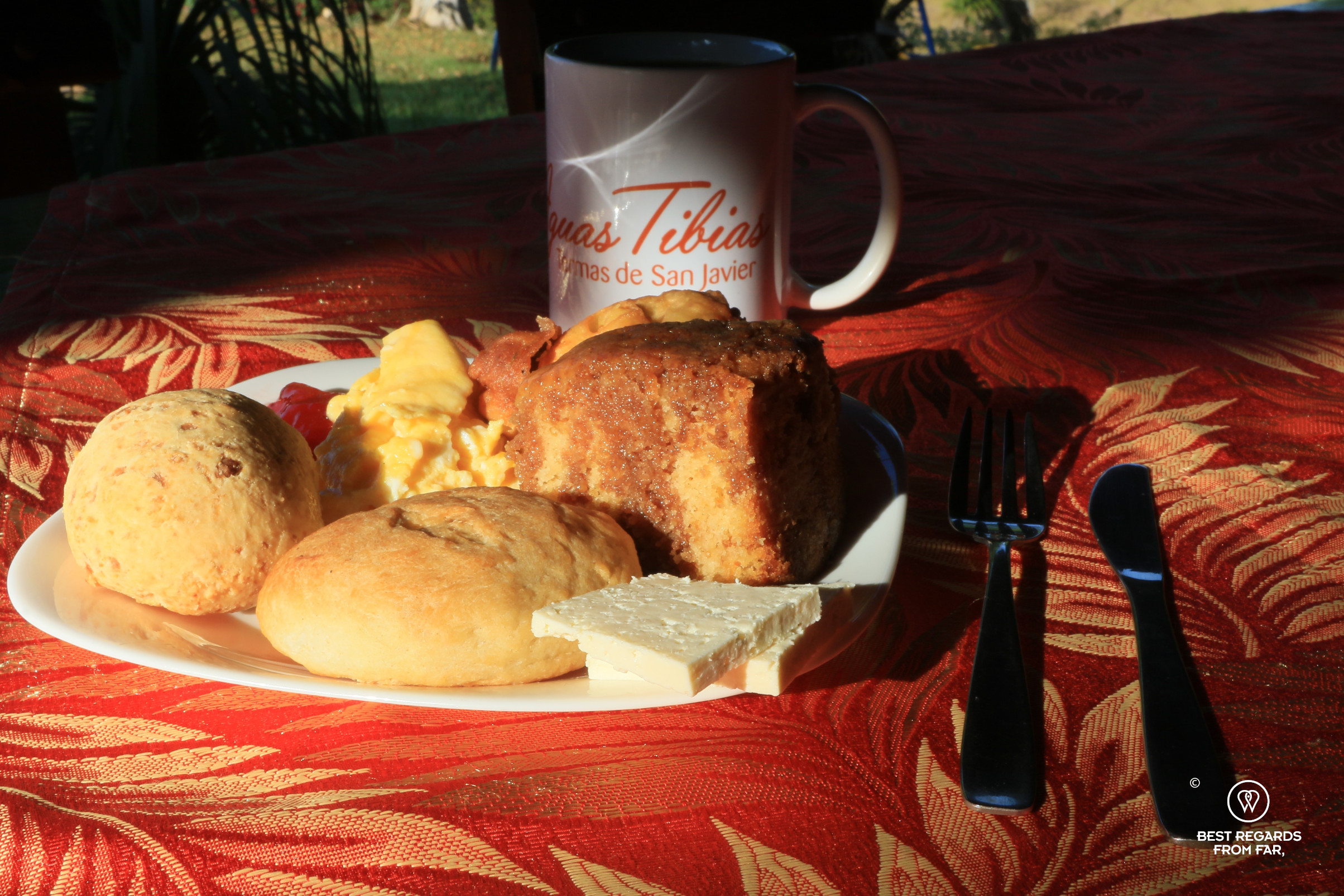
The rest of the property is a working farm with milking cows. Every day at breakfast, their milk can be enjoyed either as such, or as queso criollo, a local cheese that reminds us of a feta cheese, and that is also part of many of the homemade breads baked daily. The local specialty, the cuñape comes in two versions, the cuñape blandito, the soft and fresh version of the popular and very hard cuñape duro, a favorite yucca starch and cheese-based snack of the Santa Cruz area, easy to take away for the rest of the adventure…

Concepción
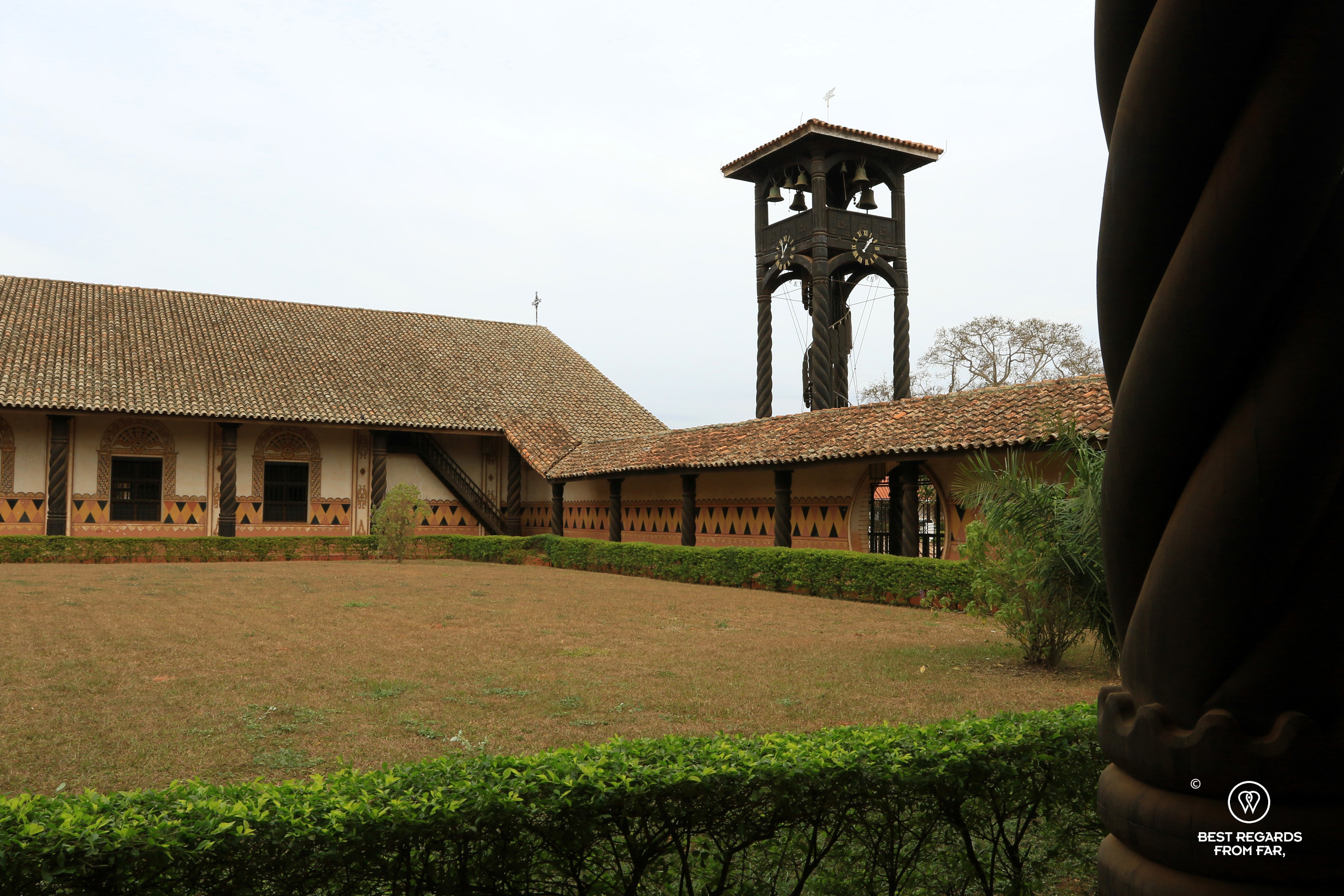
A good hour East of San Xavier, the mission of Concepción stands by the main square of the village. The dark wooden belfry rises proudly next to the church entrance. Founded in 1709 by Father Lucas Caballero, the church was built between 1753 and 1756. A convent, workshops, and houses were added to the church in the 18th century to host tribal chiefs and their followers. To this day, the grid structure has been conserved and the missional architectural style of the surrounding houses served by dirt roads in red earth gives charm to the quiet village.


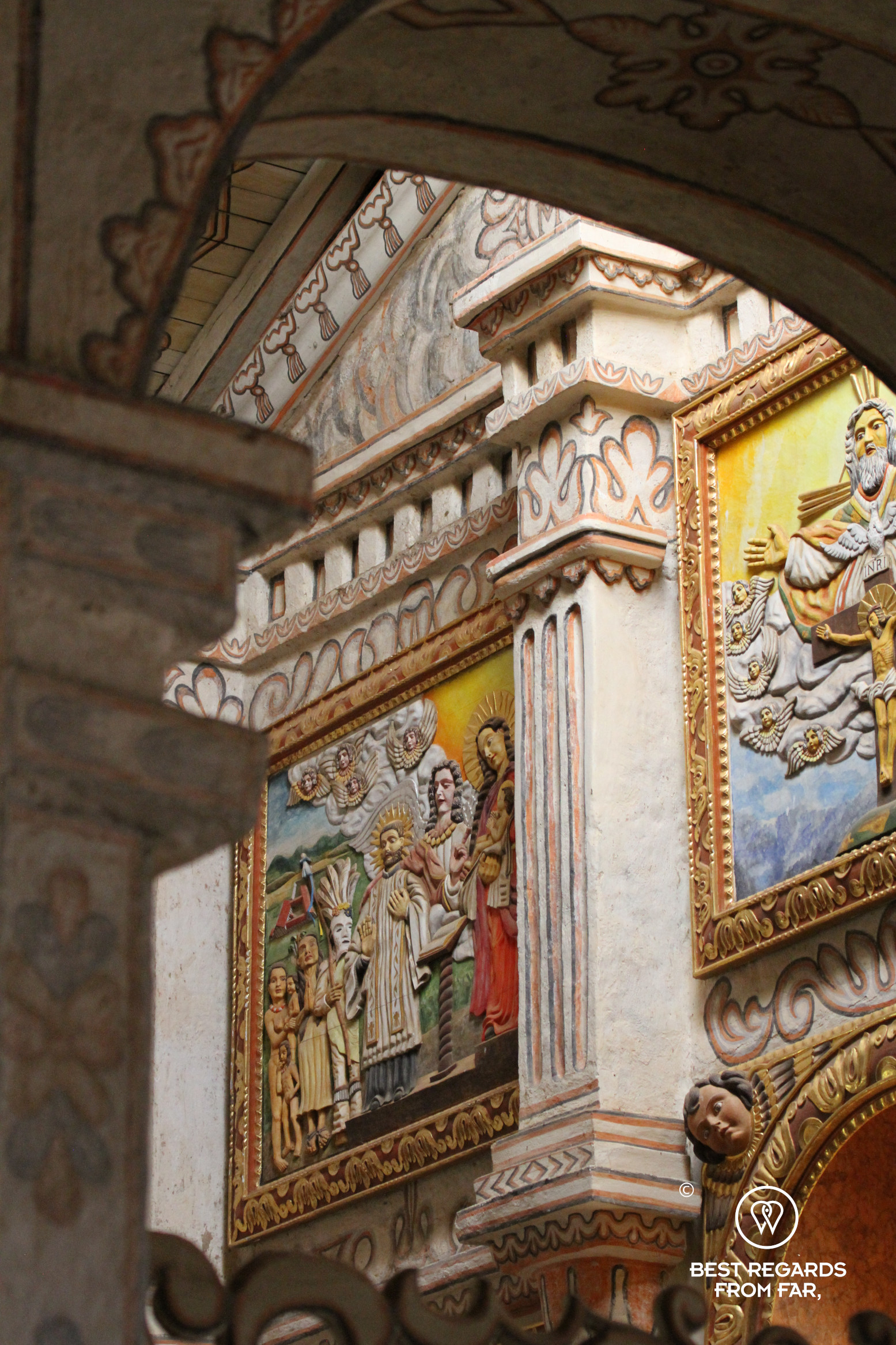
It is only thanks to a tremendous restoration effort in the 1970s that the missional church of Concepción can be admired today. Under the direction of the Swiss architect Hans Roth, locals got trained in carpentry to be able to salvage the Jesuit church. Today, the skills are still passed down thanks to a carpentry school on the main square even if it is tougher to find youngsters who want to take up the challenge. Yet the missional museum pays tribute to the wood work, showcasing original pieces and restored ones. From up close, the angels decorating the Jesuit churches wear shiny clothing revealing the intricate work of the artists who broke down local mica stones into mica leaves to then position them delicately on the wooden sculptures. The gold leaf present in every mission has been applied with the patience of Job.
If the choir of San Xavier can shine internationally, it is also thanks to the recovery of about 5,000 music sheets, some of them written by the natives in the Chiquitana language in the archives of Concepción. While Indians had percussions and wind instruments, the Jesuits introduced cord instruments, and the native and baroque partitions pay tribute to all of the instruments as well as the wonderful voices of the local kids who still take the choir very seriously.
San Miguel & San Rafael
Out of Concepción, the road passes by small settlements all named after saints with traditional indigenous houses with thatched roofs. In-between, many large cattle farms that are currently suffering from the draught dot the hilly tropical landscape. It has not rained for a couple of months and the dry season is only starting now. Some cattle ranchers have already sold some of their heads. Given the dryness and poor nutritional value of the grass, providing bail which price has already quadrupled will be necessary very soon and not all will be able to afford it. The price of meat and milk is bound to rise in the area that is not the wealthiest of Bolivia, but that is home to some of the kindest people, owning hardly anything but literally giving away their jackets when an unexpected cold front from Argentina strikes.
Passing San Ignacio which mission had been completely destroyed and rebuilt and as such has not made it to the UNESCO World Heritage List, the next Jesuit mission is in the tiny and peaceful village of San Miguel.
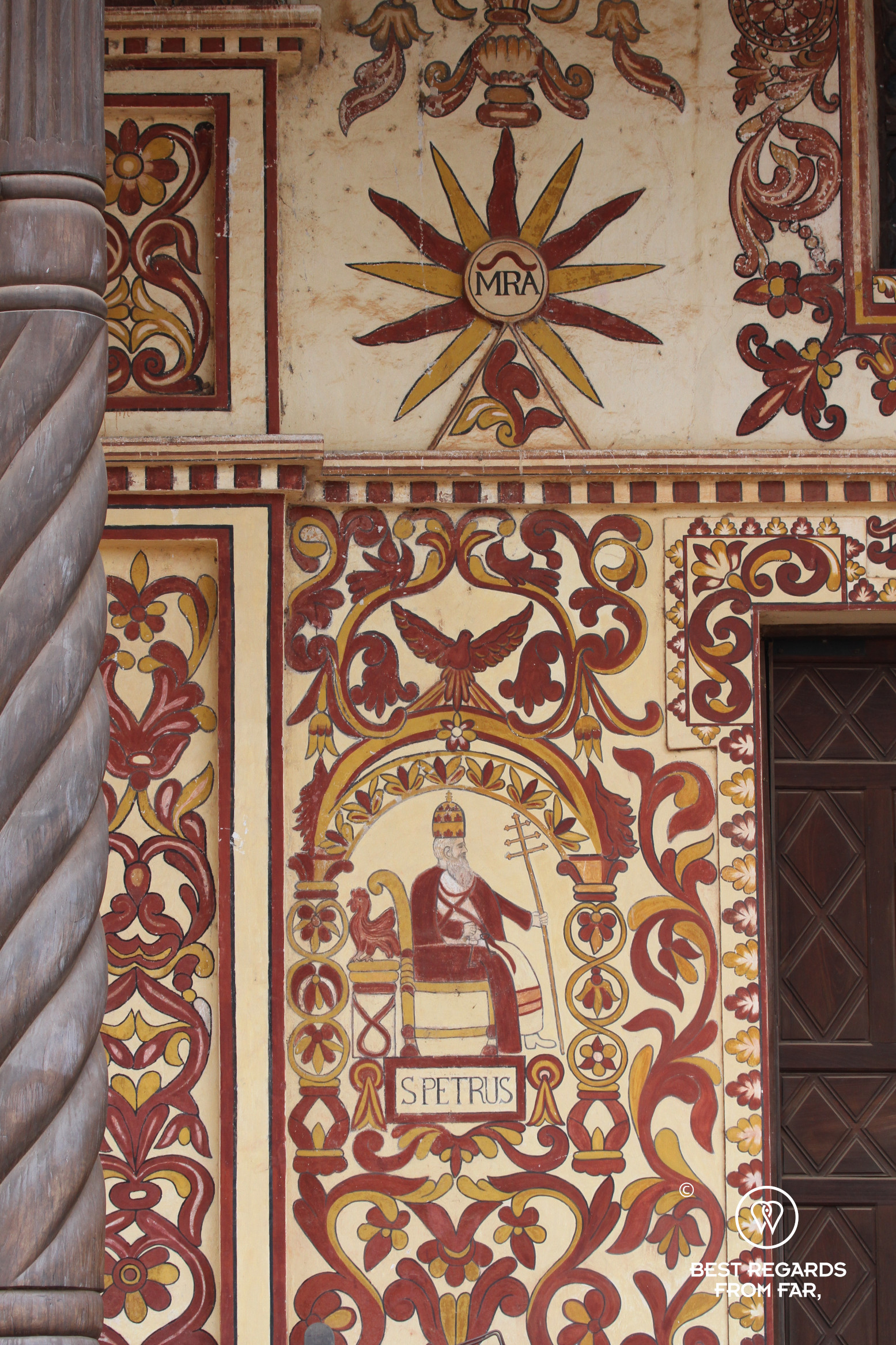
Dating back to 1721, the church was built between 1748 and 1760. It is in the same style as the other missions. Inside, in order for the Indians to feel the nature and the good, nothing scary can be seen in the church populated by statues of kind angels and also decorated with painted floral motifs in natural pigments.


In the village where streets are only dirt roads, but around the main square, and where donkey carts still pass by frequently, the altarpiece entirely covered in gold leafs is striking.
About an hour south of San Miguel, another archangel is honored: San Rafael. The missional church of the tiny eponym village which streets are only dirt roads recalls the one of San Miguel. The altarpiece is also a real eye catcher with the shiny mica that complements and reflects the gold leafs covering the sacred wood carvings.
Like in all missions, every evening, mass attracts locals who pray out loud the Santa Maria and Our Father while waiting for the priest to guide them in their spirituality.


San José de Chiquitos
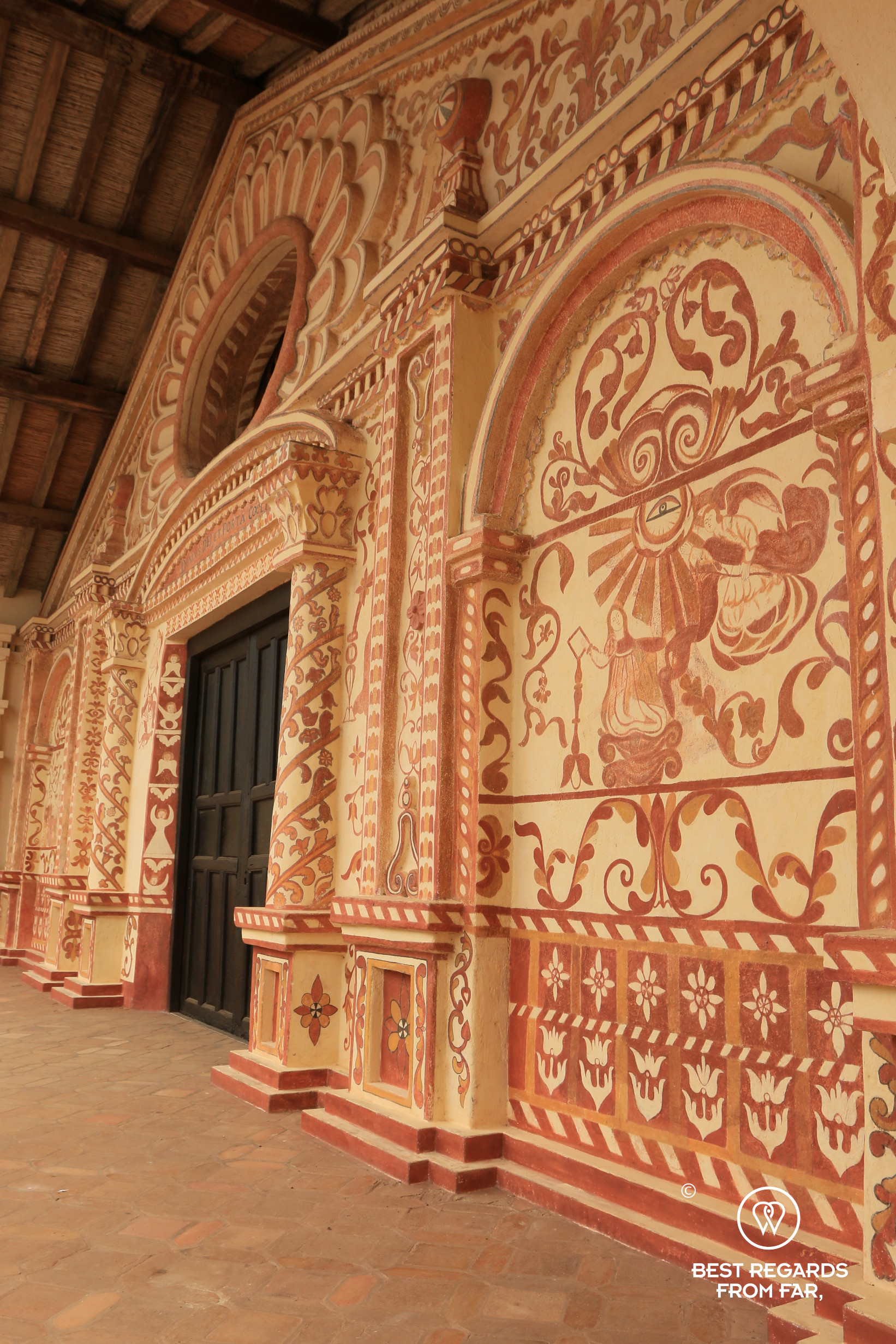
On the main square of San José de Chiquitos, a surprising stone façade rises from the ground. The baroque mission of San José is the only mission of Chiquitos made of stones, and structurally supported by local woods, as the Jesuits would only use easily accessible materials. It took no less than 5,000 Indians of the local jamarós and piñocas tribes to cut the stones and participate in the construction of the unique Jesuit church between 1745 and 1760. Its painted façade recalls the red cliffs of the Serranías Chiquitanas mountains rising in south of the town. If the nearby Kaa-Iya National Park that borders Paraguay is teeming with wildlife including the very elusive jaguar, Toco Toucans regularly fly over the main square planted with tall palms and torobochi trees with their recognizable beautiful pink flowers.


At night, the wooden and carved church doors are open, the bells of the campanile toll to call for mass, and the same prayers resonate over the main square as in the other missional churches, today run by Franciscan priests. The local and Christian traditions are well preserved and alive in the simple yet peaceful and lovely villages of the Chiquitos region.
Travel tips:
- Prefer exploring the missions on week days as some weekend festivals may make finding accommodation around San Xavier tricky.
- Renting a car and preferably a 4×4 is key as public transport is highly inefficient.
- Adding a couple of days to stay in Aguas Tibias allows to really take in the beautiful nature and relax nicely in a warm dry tropical climate unusual in the rest of Bolivia.
- Every day, mass is said is Spanish in missional churches often at around 7:30 p.m. and it is a wonderful way to take in the churches. Except for San Xavier and Concepción, it is also the only way of seeing the inside of the church that are not always open in the smaller villages.
- The Plan Misiones funded by Spain, the Diocese of San Ignacio de Velasco, and local governmental instances has been aiming at improving the living conditions of local people through the conservation of the Chiquitano mission heritage.
- The indigenous inhabitants of the missions were taught playing music, manufacturing instruments such as violins, carving wood, weaving clothes and blankets, making high-quality hammocks… and crafts are still very present and can be purchased from cooperatives close to every mission.
- The choir of San Xavier is world class. The 14-to-18-year-old kids perform locally and are also invited to Europe for representations. In good Christian faith, these performances allow the choir to raise funds to support the local school for physically disabled children.
- Check out our interactive map for more in the area (black pins lead to an article):
For more in Bolivia, click on the images below:



 Best regards from far,