Text: Claire Lessiau
Photographs: Marcella van Alphen & Claire Lessiau
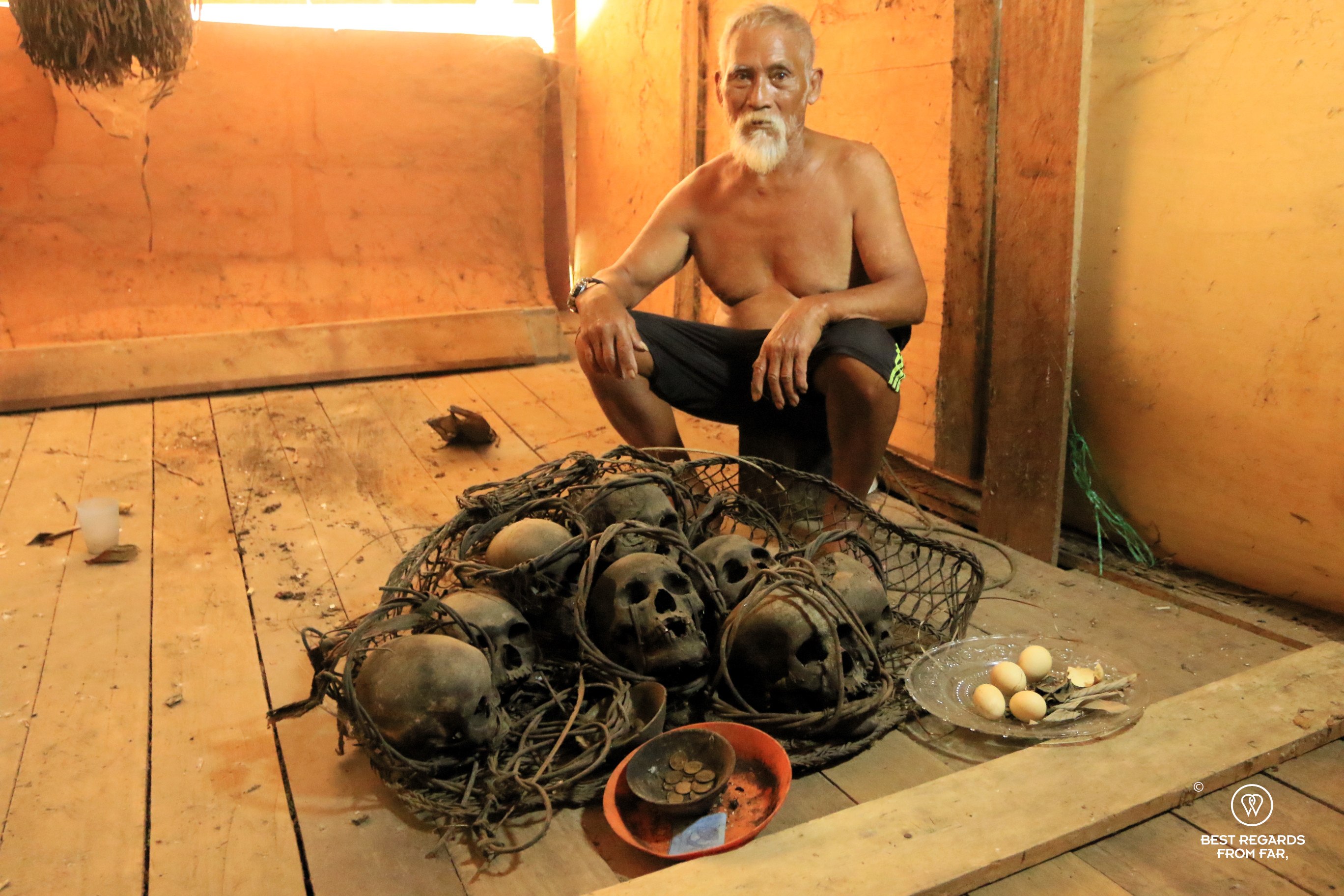
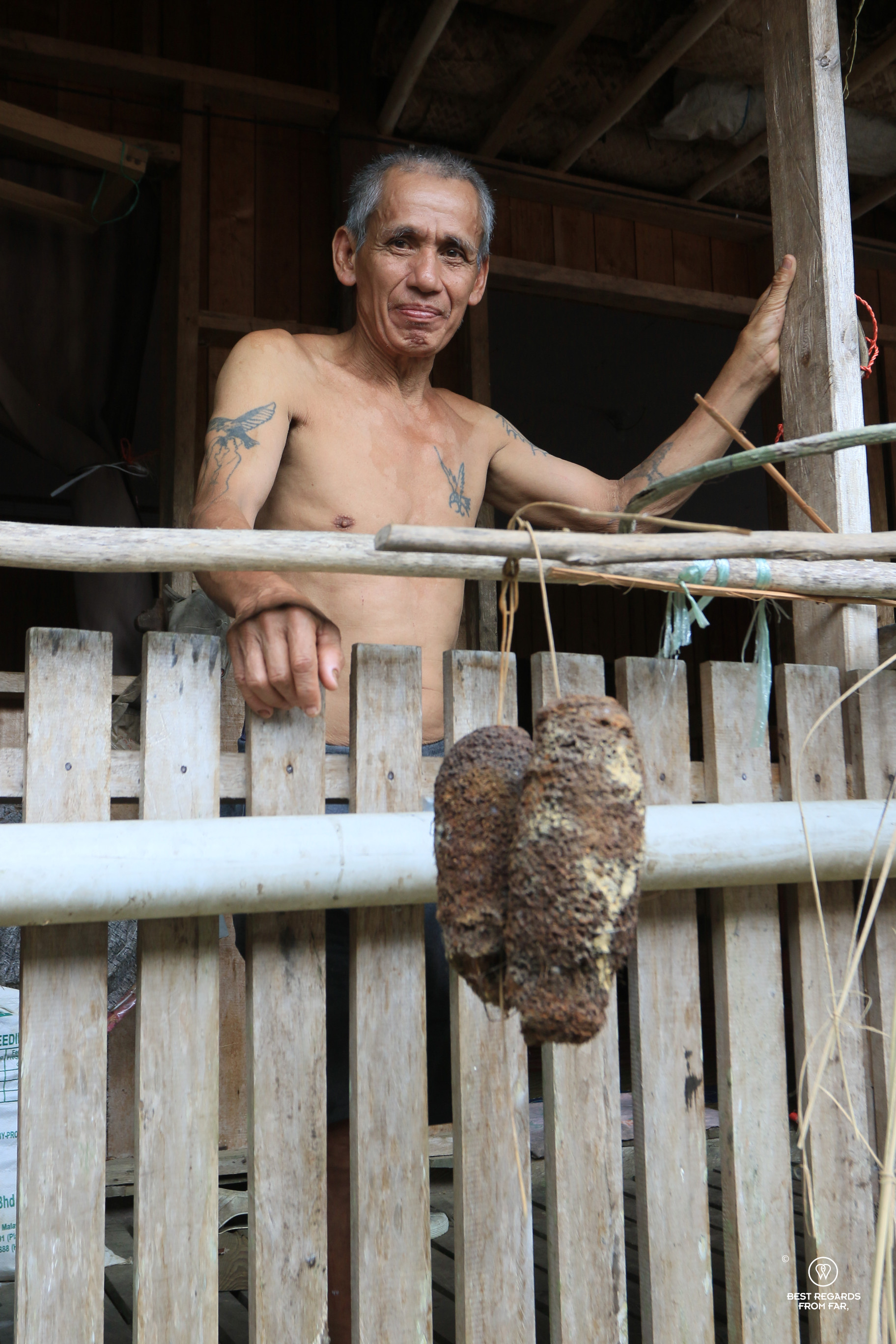
Proud, he poses, bare-chested in the rather warm and uncomfortable attic that has not been de-dusted in a long, long time. The planks crack under our feet and we try to stand on the most solid traverses as the ceiling of the longhouse does not strike us as the most structurally sound. At our feet lays a net keeping half a dozen human skulls together, darkened by time. Out of respect, some offerings were quickly arranged next to them. We are contemplating the prizes of this former head-hunting tribe. If this moment seems surreal, the journey to get here deep in the Bornean jungle home to orangutans amongst others, navigating some of the most pristine river systems we have ever seen is also exceptional…
Pin it for later!
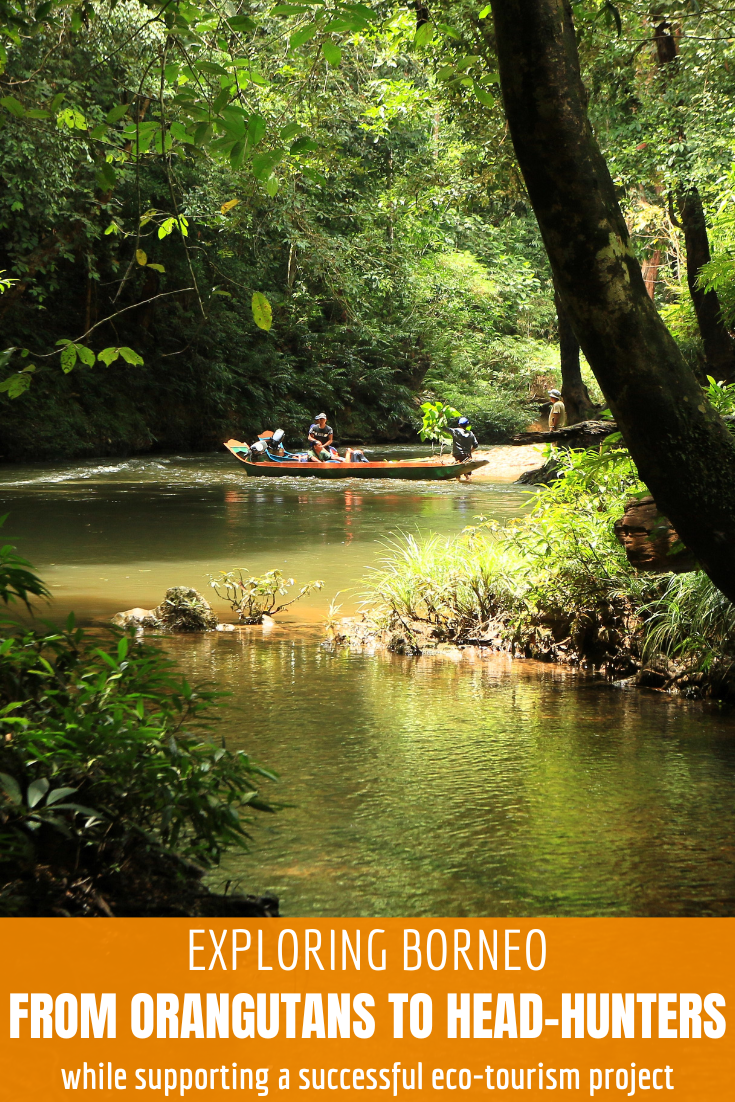
An expedition up river
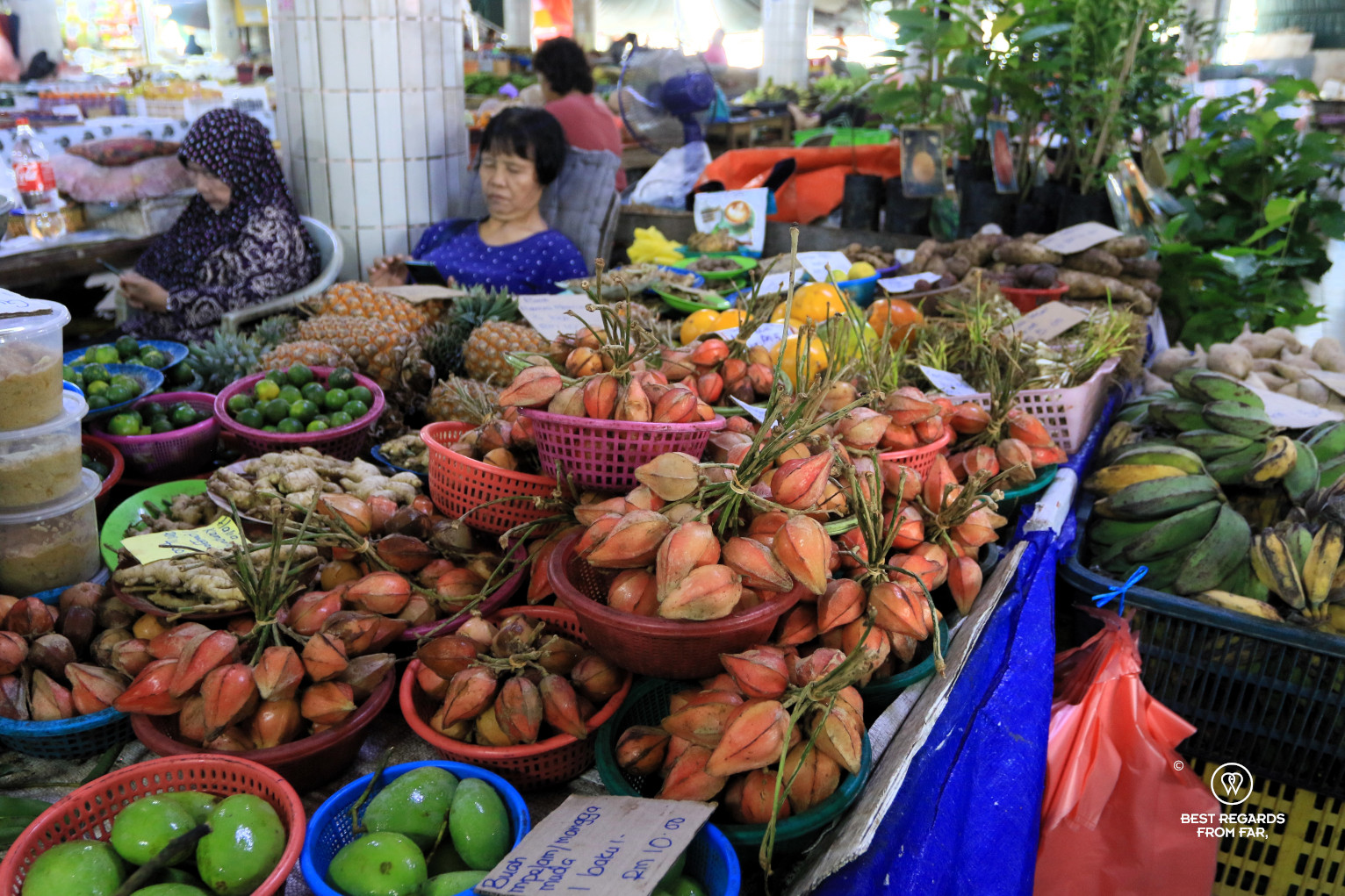
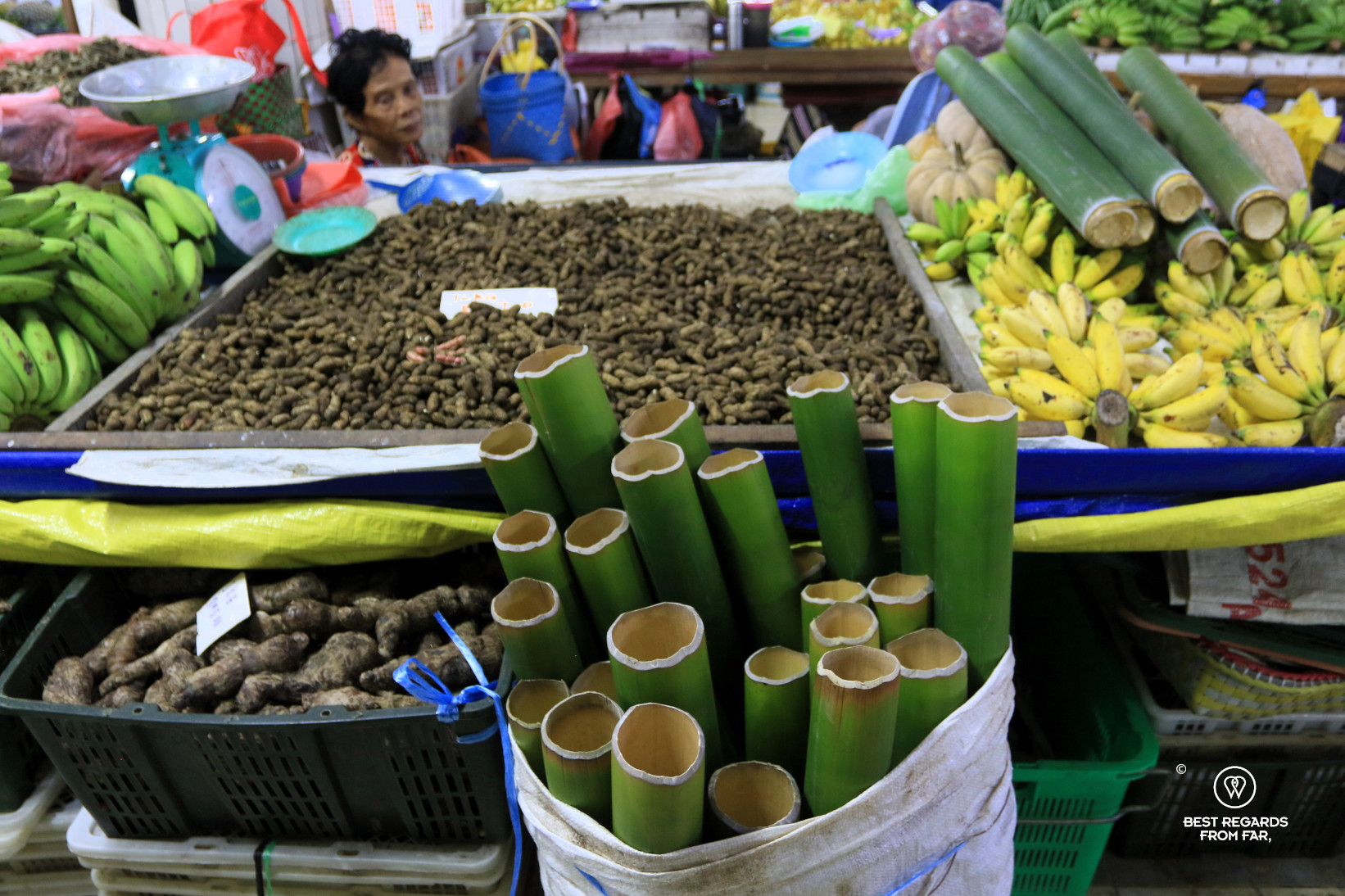
It started early in the morning with a long drive from Kuching, the capital of the Malaysian province of Sarawak, punctuated by a wet market stop to buy some supplies for our 3-day jungle stay. Local fruits and vegetables as well as some crops from neighbouring Indonesia such as ginger and turmeric colour the market stalls. The Indonesian border follows a jungle-covered ridge-line barely a mile away from the new highway we were on, and for Indonesians, selling their goods in Malaysia allows them to take advantage of the strong Malaysian ringgit compared to their devaluated Indonesian rupiah. Some smuggle tobacco or diesel.
Along the road some oil palm plantations dot the dense jungle with a few pepper farms popping here and there. During the 1970s and 1980s, logging went out of control, clearing the land and making room for large palm plantations. Today though, in Sarawak, this seems to be regulated and only small-scale palm plantations on communal land that had been logged in the past are allowed, in an attempt to balance livelihoods of locals with wildlife.

Our van stops above the Batang Ai reservoir lake, a massive body of water resulting from the flooding of this area back in the 1980s to supply hydropower to the local Malaysian cities. About 30 Iban villages got flooded in the process. Around 3,000 people had to be relocated, while others were less affected. Some stayed in their villages and have transitioned to fish farming. Higher up river, life became easier: the new waterways greatly reduced travel time to cities and healthcare from days trekking up and down the jungle or navigating on unpredictably shallow waters to a couple of hours. Later that night, the 76-year old headman of Nanga Sumpa the upriver village we are heading to will tell us how it used to take him three nights to get to the nearest town and four to get back having to portage and camp along the way.
We transfer luggage and supplies and load them into a long-tail boat, and sit aboard for a one hour and a half ride first across the lake and then up river.
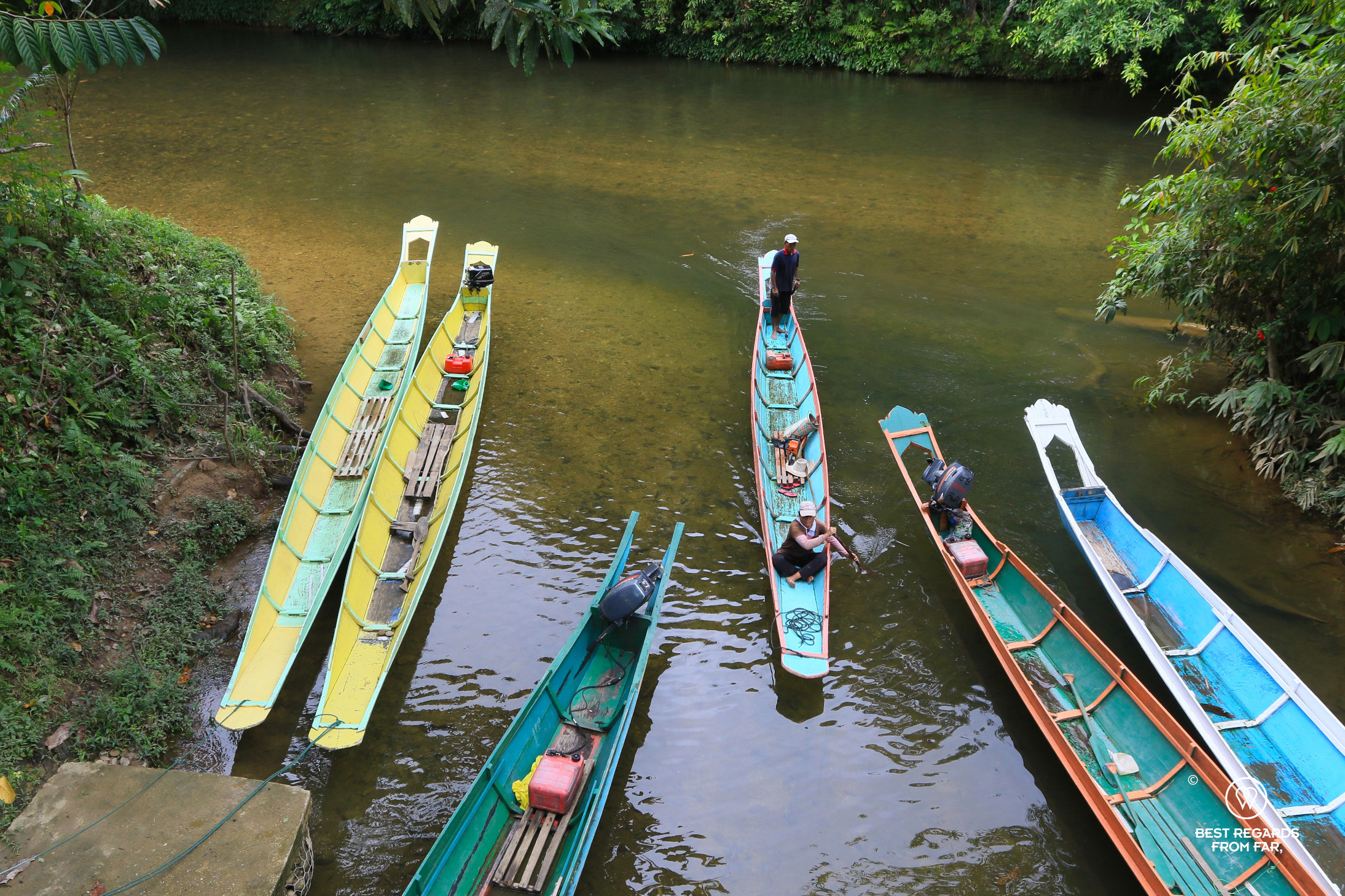
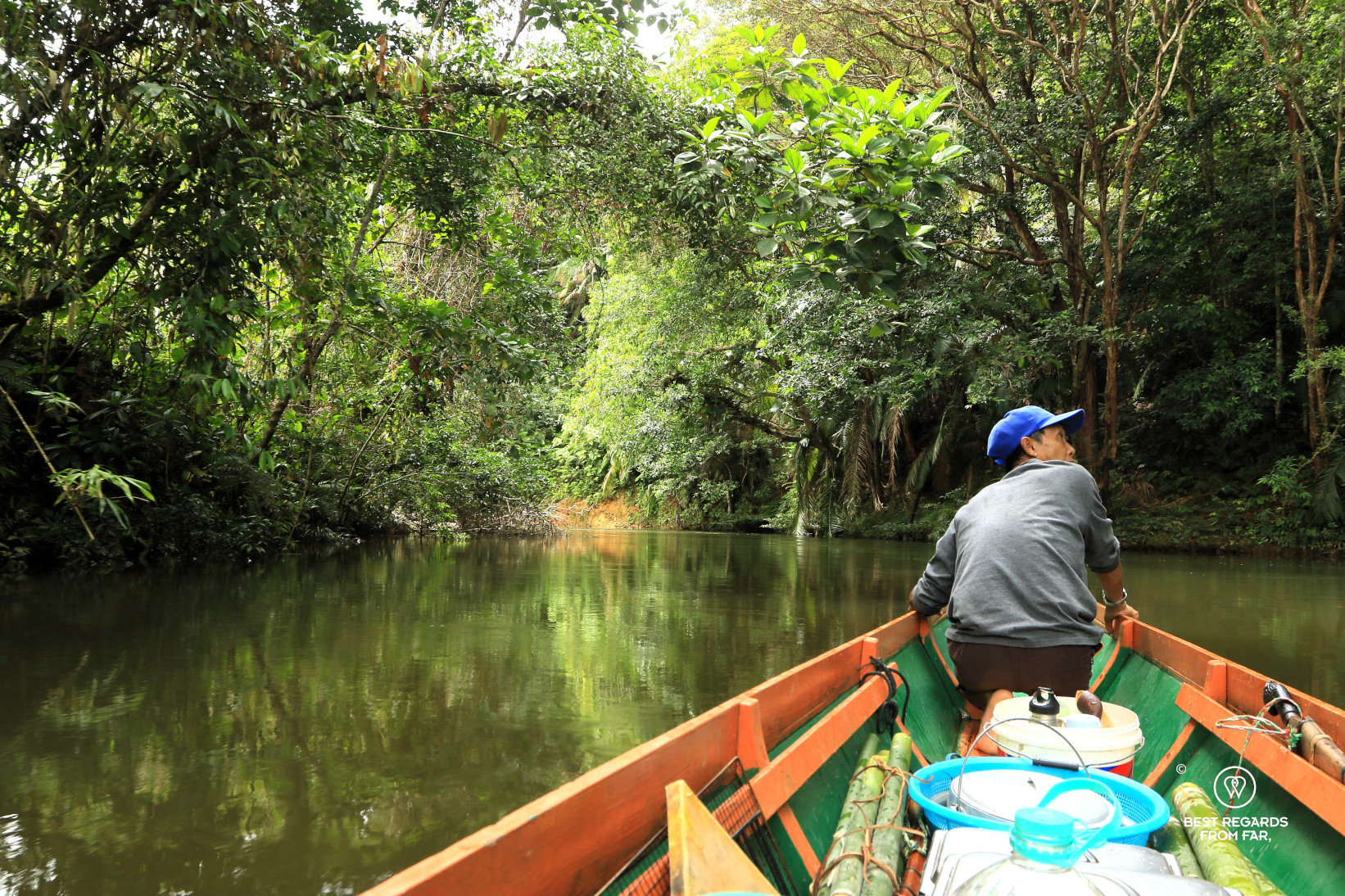
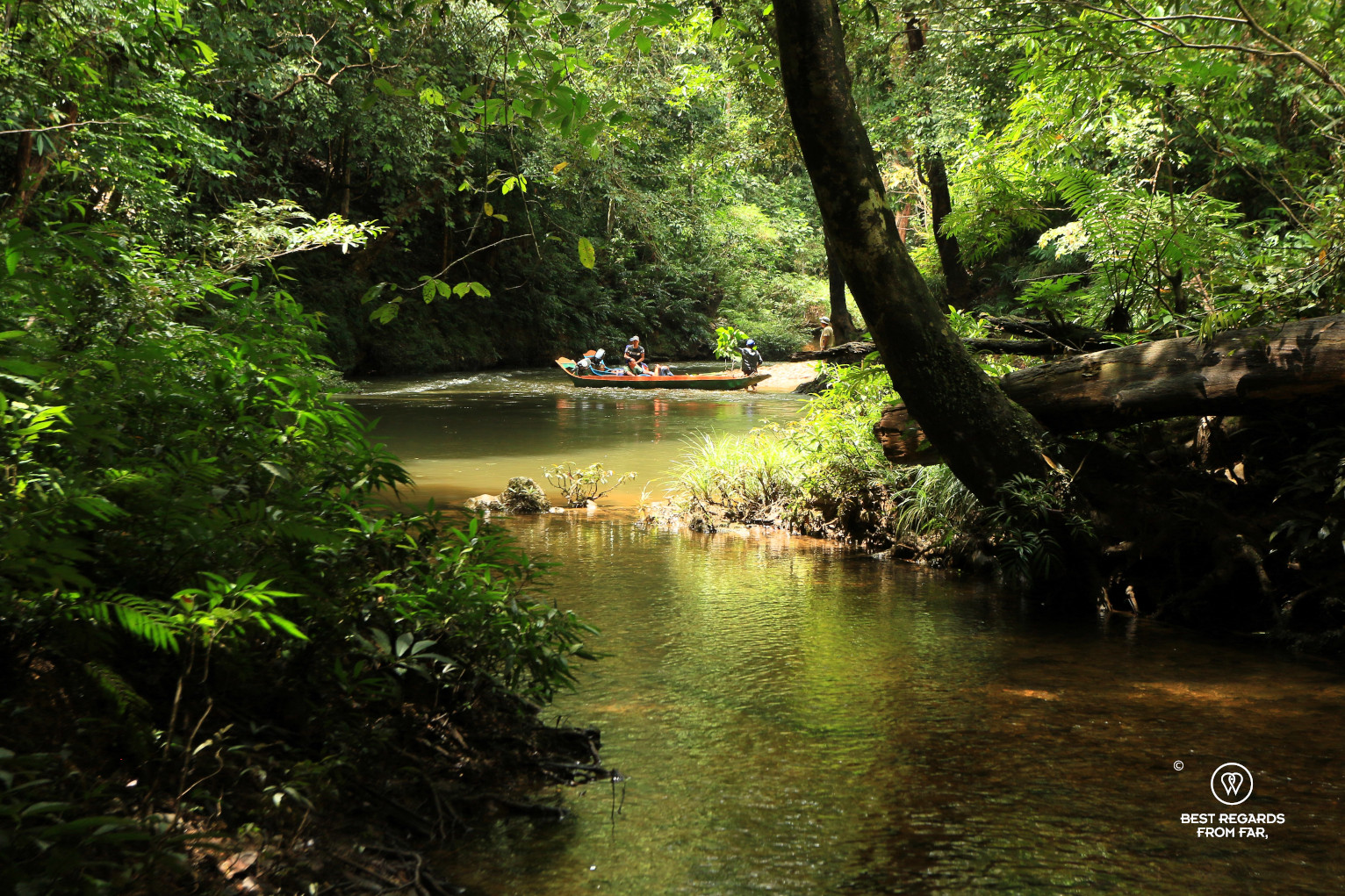
Some dead tree tops stick out of the calm waters as gates of a slalom parkour that our young Iban pilot navigates eyes closed. His helper in the front of the long-tail scans continuously for floating logs. After crossing a big part of the gigantic 24-square kilometre (9.3 square miles) lake, in a maze of waterways, the boatman confidently enters the Delok River, and a pristine environment reveals itself to us. As we go more upstream, the watercourse becomes narrower, towered by a majestic primary rainforest. Enchanting bird calls and stubborn cicadas can be heard over the sound of the 15-horsepower engine. The flat bottom of the boat sometimes scratches the river bed. We pass a few wooden houses on stilts and a couple of small Iban villages. Suddenly, our pilot stops in a river bend to change the propeller of his engine to a worn out one, giving us a hint as to how low the water level is. Off we go again, negotiating rapids with the help of our navigator either paddling or pushing our embarkation with a long stick.
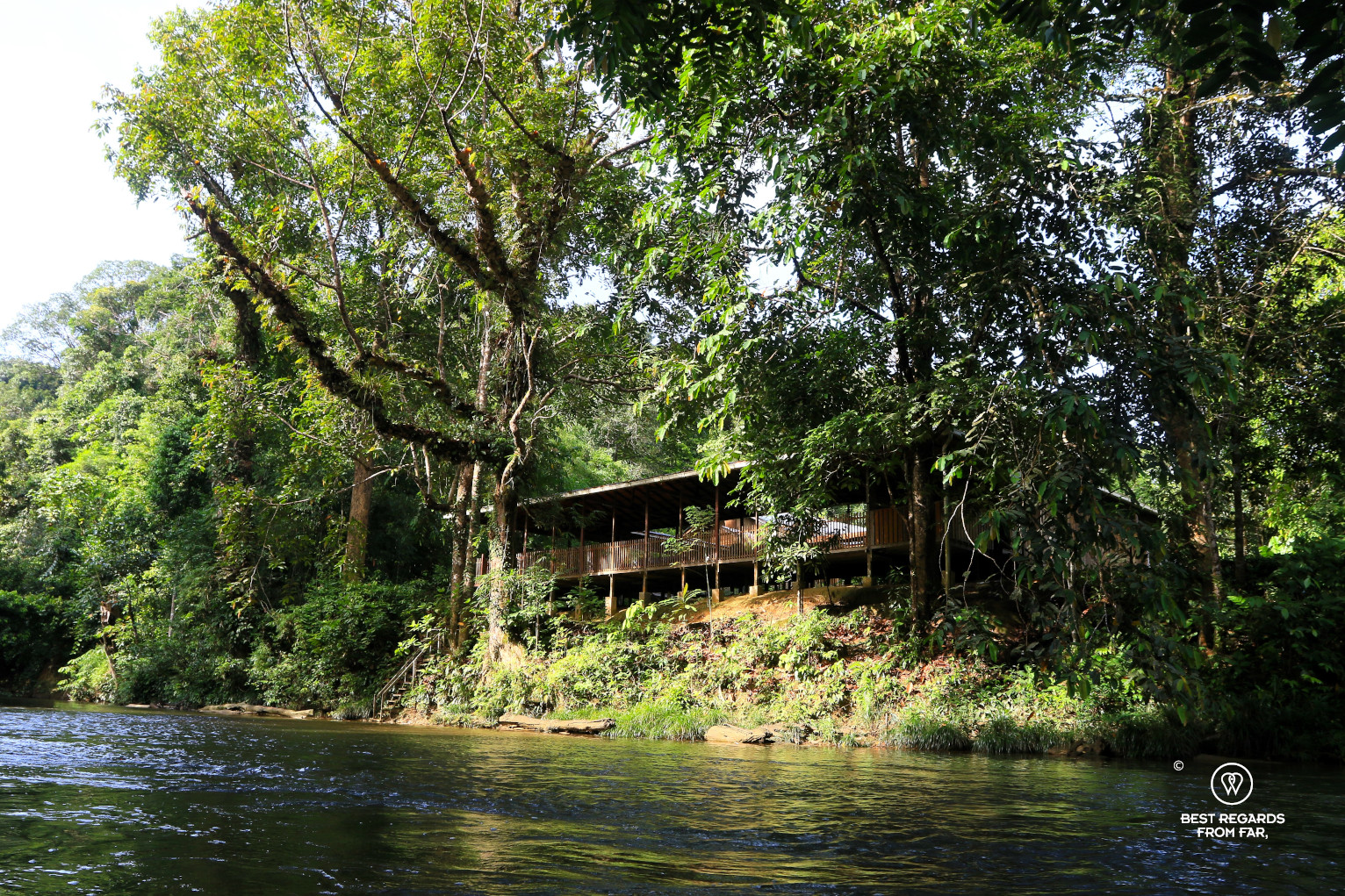
In a stunning river stretch, we make a sharp right at the small confluence of the Delok River with a calm side creek, the Sumpa, which is used to safely store longboats in time of high water in the upriver village of Nanga Sumpa. Across the Sumpa Creek and the village, the Nanga Sumpa Lodge will be our home for the next three days. The lodge is separated from the village by a footbridge, a hyphen between the authentic and traditional way of living of the Iban people of Ulu Ai and the accommodation.
Meet the Iban, former head-hunting tribe
If there are no less than 34 ethnic groups in Sarawak, this region is almost exclusively Iban territory. Iban is also the largest group in the province totalling to about 800,000 people in Sarawak (almost a third of the state population) while others live in Sabah, Brunei, and Indonesia.
They are believed to originate from West Kalimantan in Indonesia, to have migrated up river between the 12th and 15th centuries, and to have settled in Sarawak in the mid-16th century. They were amongst the last to come in contact with the Europeans in the mid-19th century. Their fierce head-hunting reputation sheltered them from the cruel Japanese occupation during the Second World War. Up river communities, also known as Ulu Ai communities, remained untouched and the first schools and clinics were built in the Batang Ai area only in the 1960s with level of literacy and income remaining very low compared to other Iban communities.
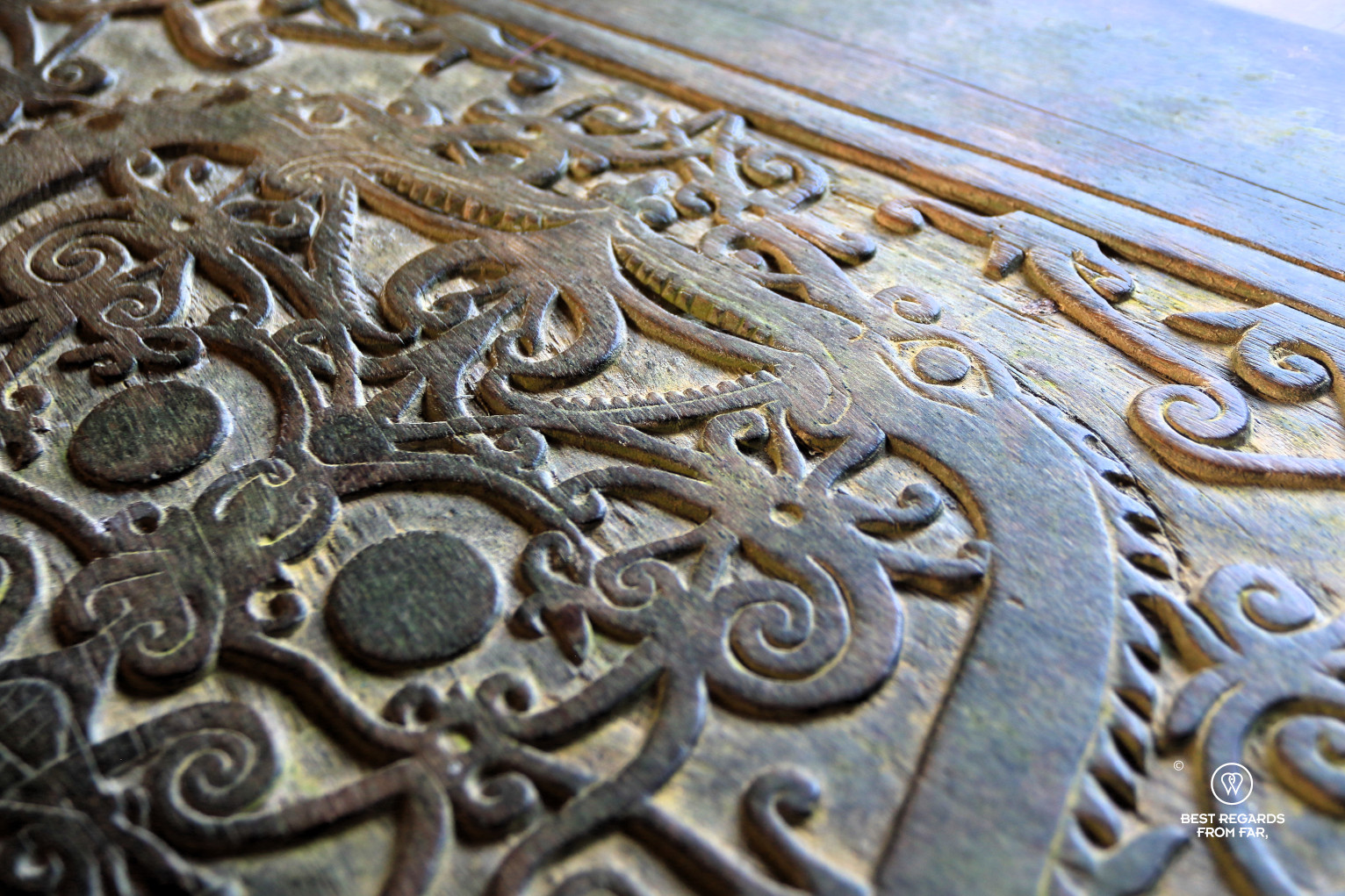
The subsistence of the Iban is directly linked to the forest. They slash and burn patches of the jungle to plant rice and fruit trees. They also harvest wild products from the rainforest: wild honey, edible ferns, mushrooms, wild fruits, fibrous plants for basketry, and hundreds of medicinal plants. Sadly, this knowledge is mostly undocumented and disappearing fast. The most valuable of all forest products though is agarwood, a resinous wood which is produced in response to fungal infestation, resulting in a powerful fragrance that makes it an essential and expensive component of incense and perfumes. Using these forest products, the Iban are skilled woodcarvers and weavers.
Here in Nanga Sumpa, a community-based tourism program has been running successfully for over a generation by Borneo Adventure, in close collaboration and constant consultation with the villagers. If the Iban believe in the transmigration of the soul into specific species such as deer, cobra, or orangutan, that are not hunted, the latter can have a devastating impact on crops… With population growth and more and more human wildlife conflicts, it is only by providing a sound alternative to poaching and farming that the roughly 200 wild orangutans remaining in the area can be protected by local communities. With our visit, villagers generate an income and depend less on their crops: instead of chasing away the orangutans, it is actually one of the villagers who will come to fetch us at dawn the last day of our stay to show us two orangutans up in a tree very close to Nanga Sumpa, clearly up to some fruit harvesting later in the day…
An authentic longhouse experience
After checking in the wooden lodge on the river, we are invited to visit the village of Nanga Sumpa. Home to over 100 Iban people living in one of the largest longhouses in the area, there are also a few individual houses dotting the land.
A longhouse is a series of apartments, each apartment occupied by a nuclear family and opening to the ruai or common covered area of the longhouse where families socialize. This covered gallery opens to a veranda where fishing nets are hung and women weave.
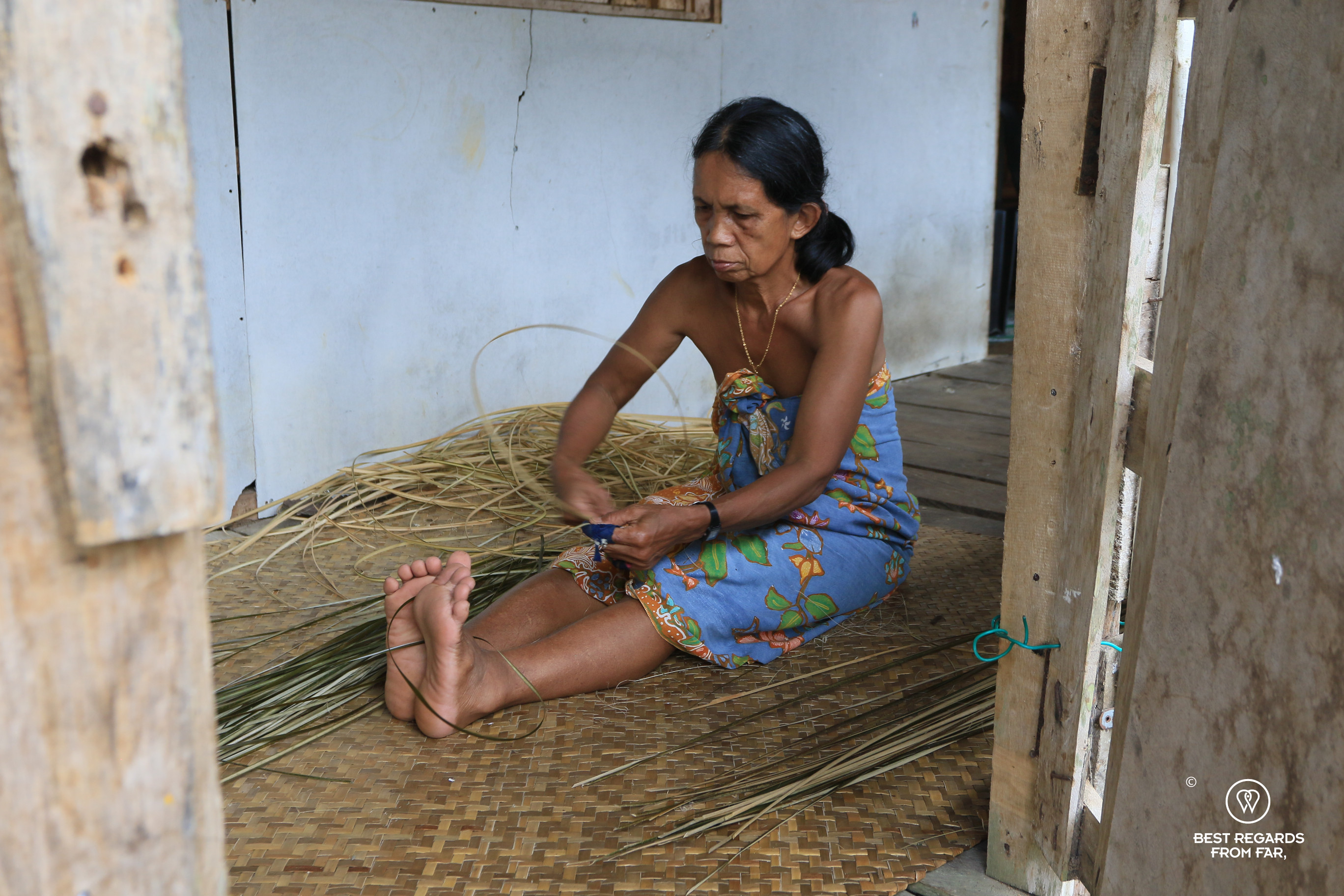
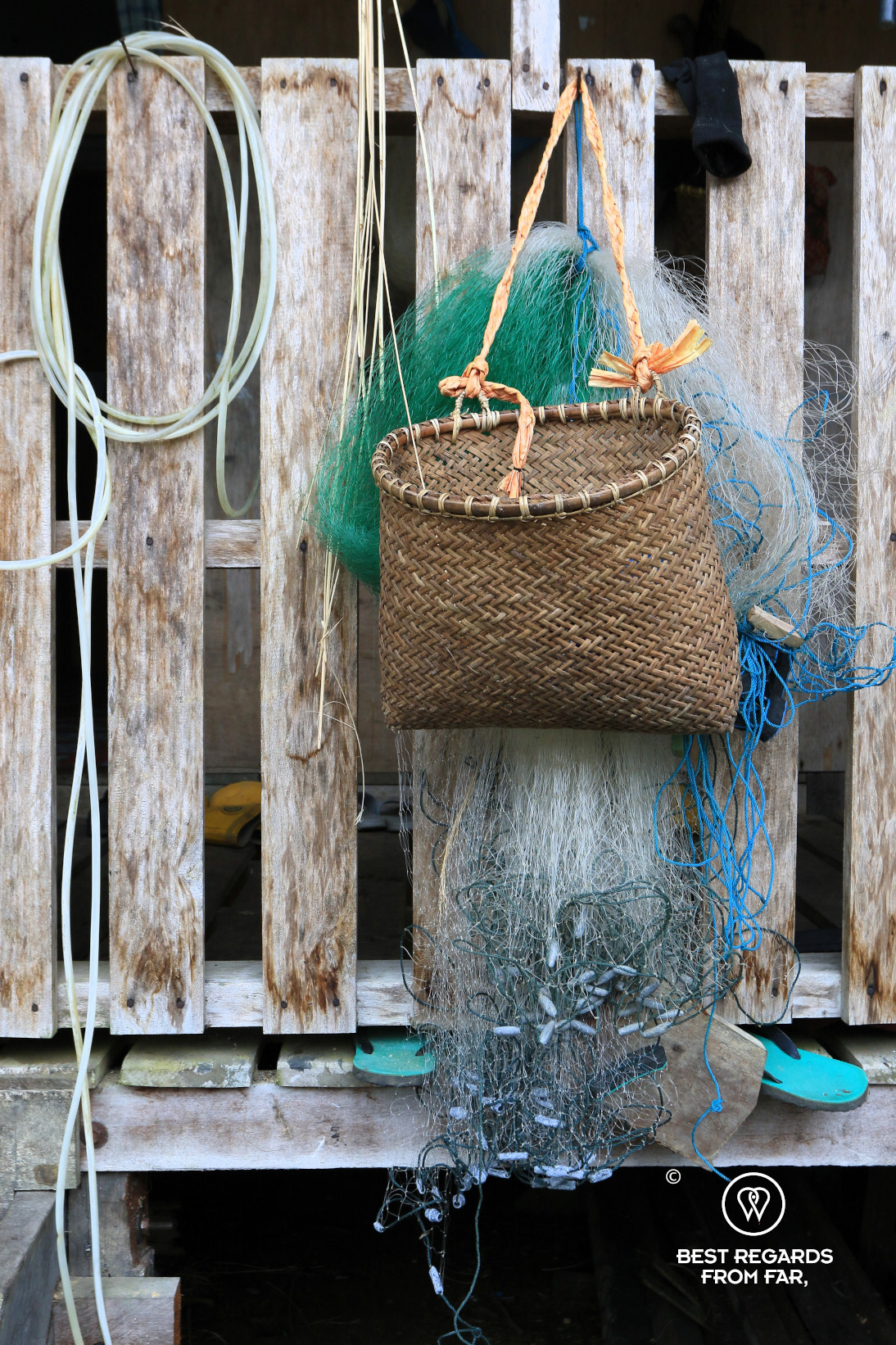
After our healthy and delicious dinner of vegetables, foraged plants, and local chickens at the lodge, the headman greets us on the ruai in front of his central apartment. A couple of bottles of tuak – a sweet rice wine brewed from glutinous rice ranging from 6 to 30 degrees of alcohol – are set on the table, clearly defining the program of the evening.
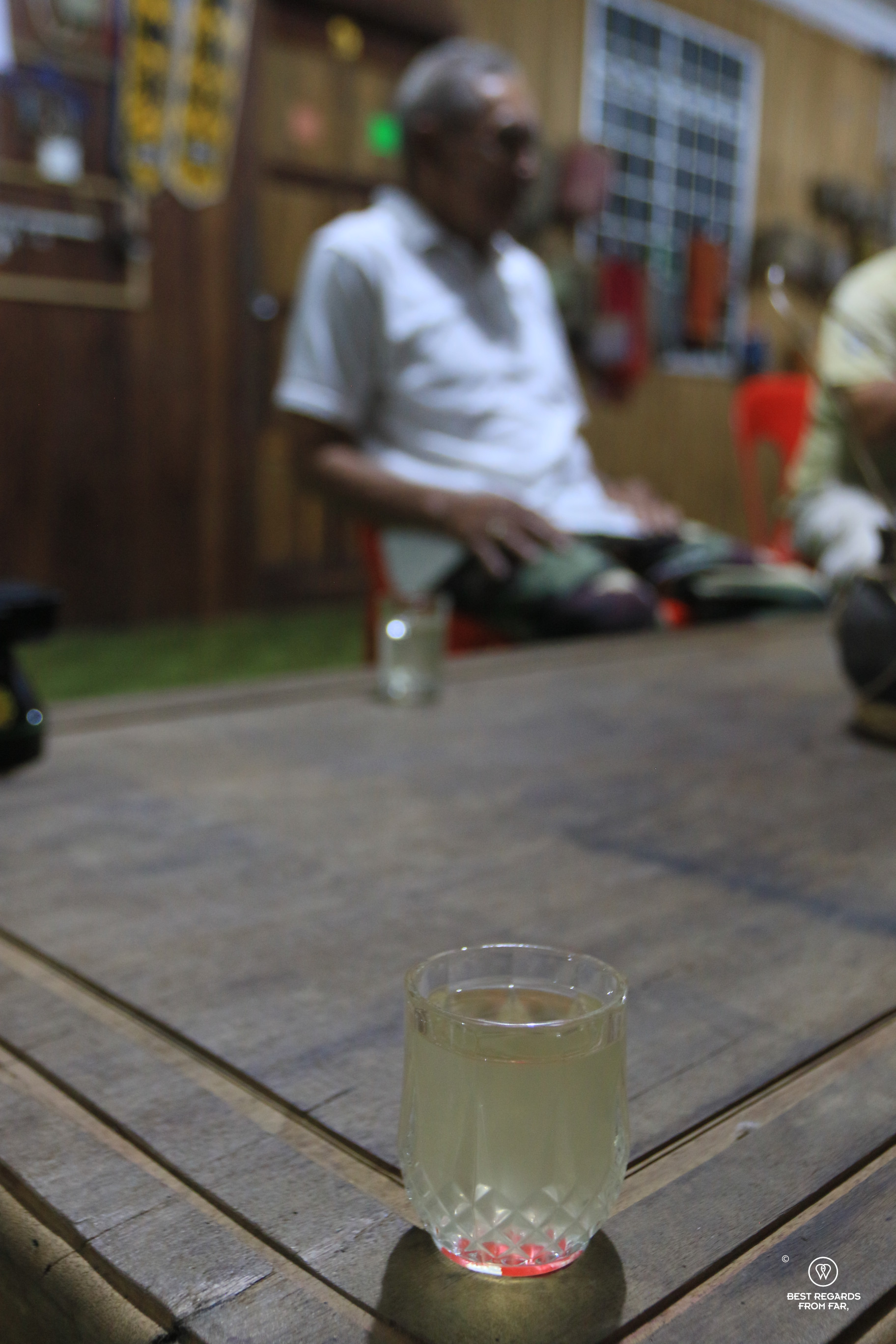
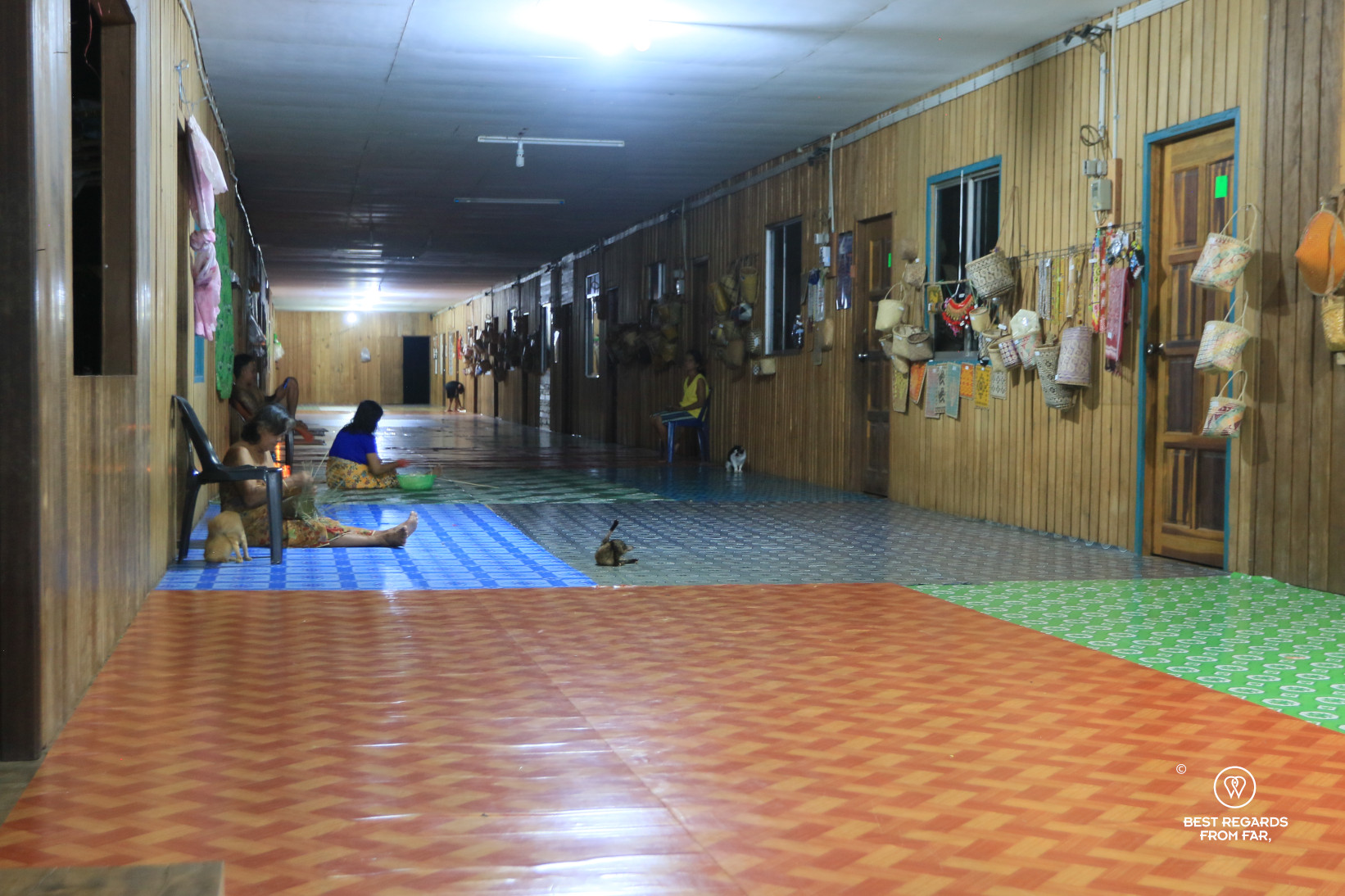
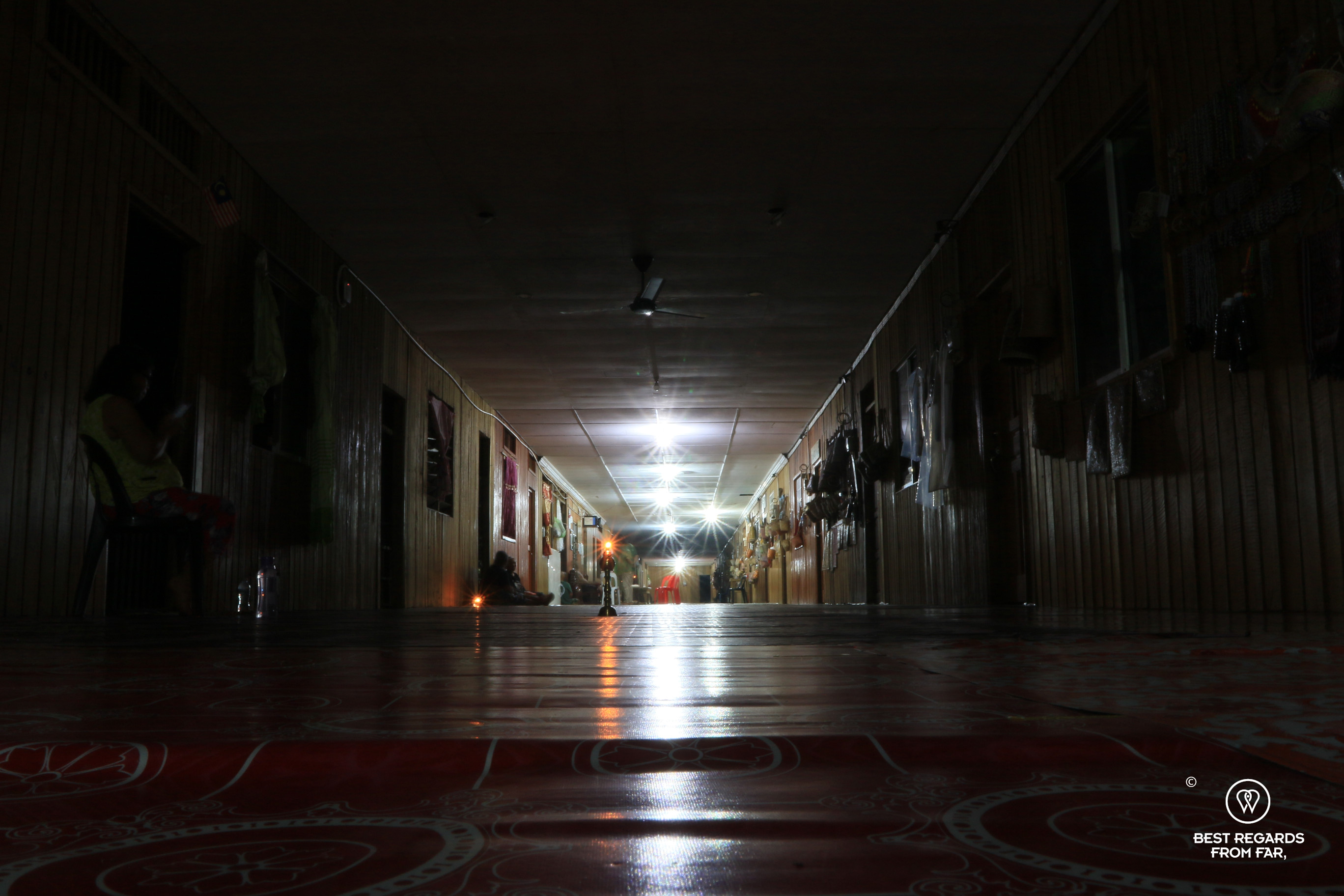
The appointed headman is very much respected, and if he answers our questions tonight and does small talk with the help of our guide Lemon who speaks Iban, he is responsible for enforcing the adat, the customary law that is paramount in the longhouse, and covers everything from good manners to marriage and conflict resolutions. This would be relatively easy if the adat was not completed by the civil law and Islamic law here in Malaysia. Being the headman is an important responsibility that requires a lot of wisdom and diplomacy, and a role that goes beyond the village to represent it at the regional and national levels.
After an interesting and very open exchange with the headman, we leave the Iban people to their longhouse and head back to our close-by lodge for everyone’s best comfort.
Searching for orangutans in the rainforest
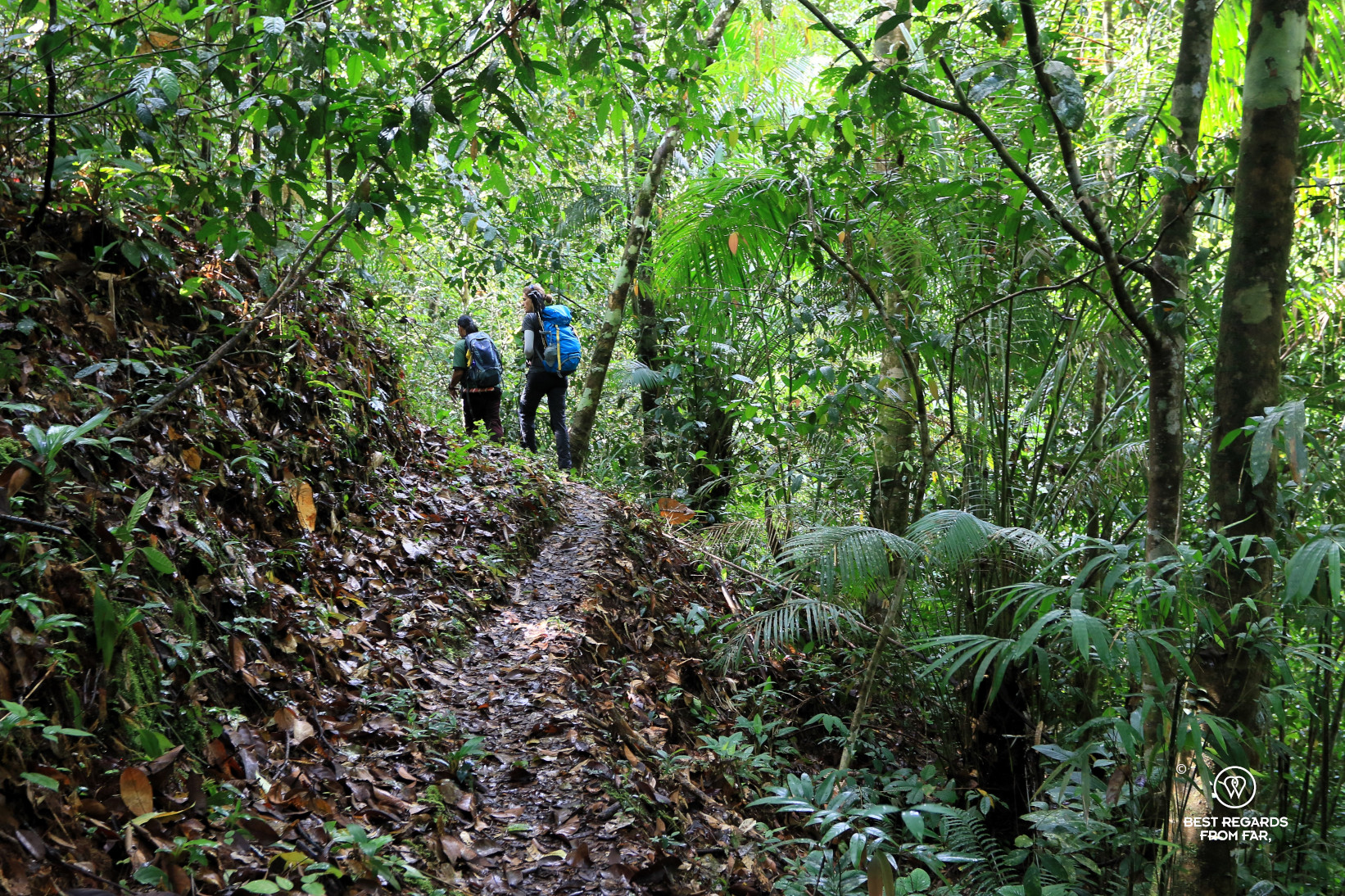
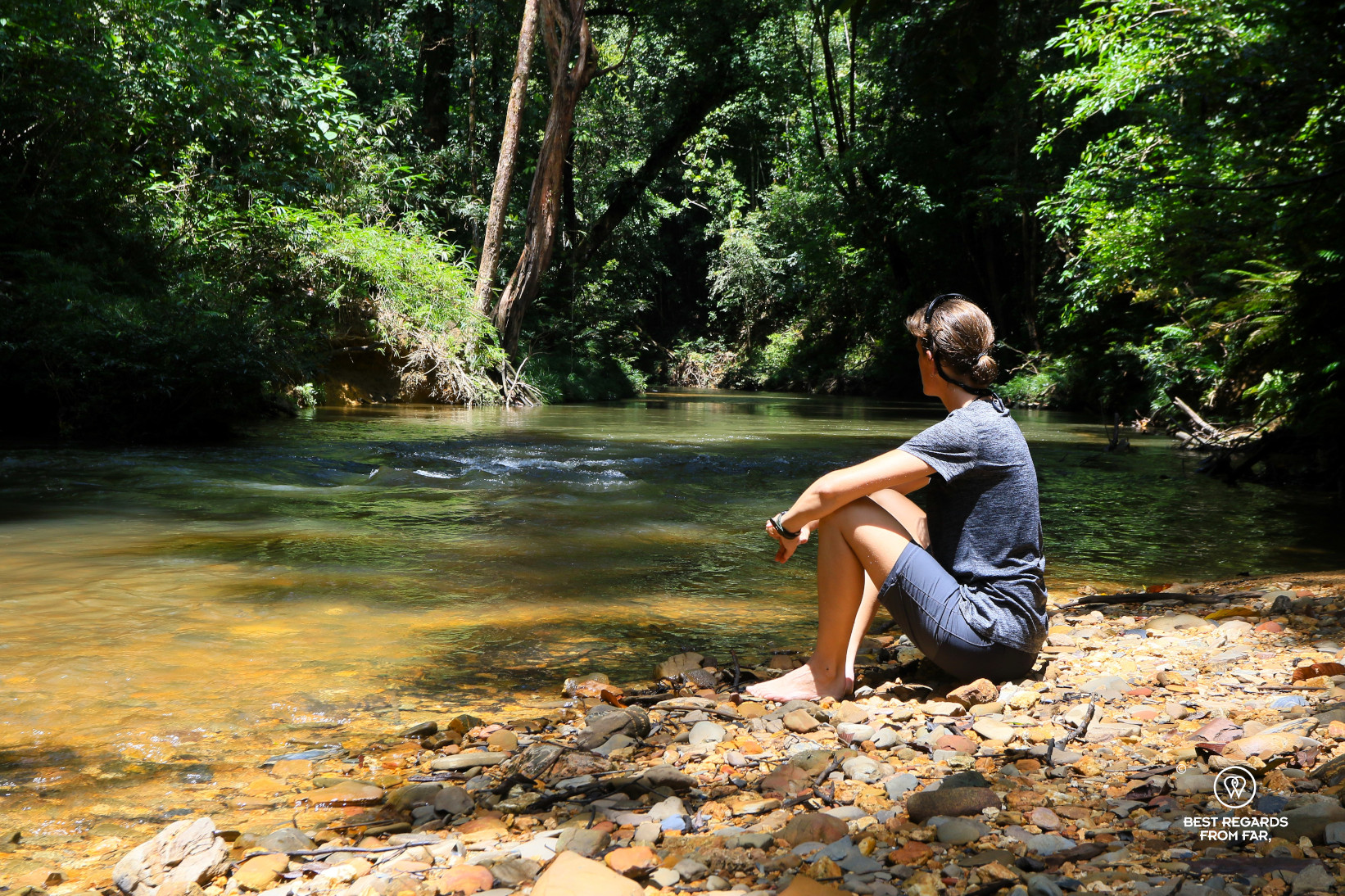
The next morning, after crossing the clear fast flowing water of the Delok River, we follow Lemon on a jungle trail. Initially built by the villagers to connect them to their farming patches, fishing spots, and hunting and foraging grounds, they have been maintained to allow hikers in search of orangutans.
The trail is narrow, going up and down and sometimes crossing a creek. We go from pristine patches of rainforest to areas that were slashed and burnt some 20 years ago and that are already quite green. It will take another 60 years for such patches to be considered primary forest again.
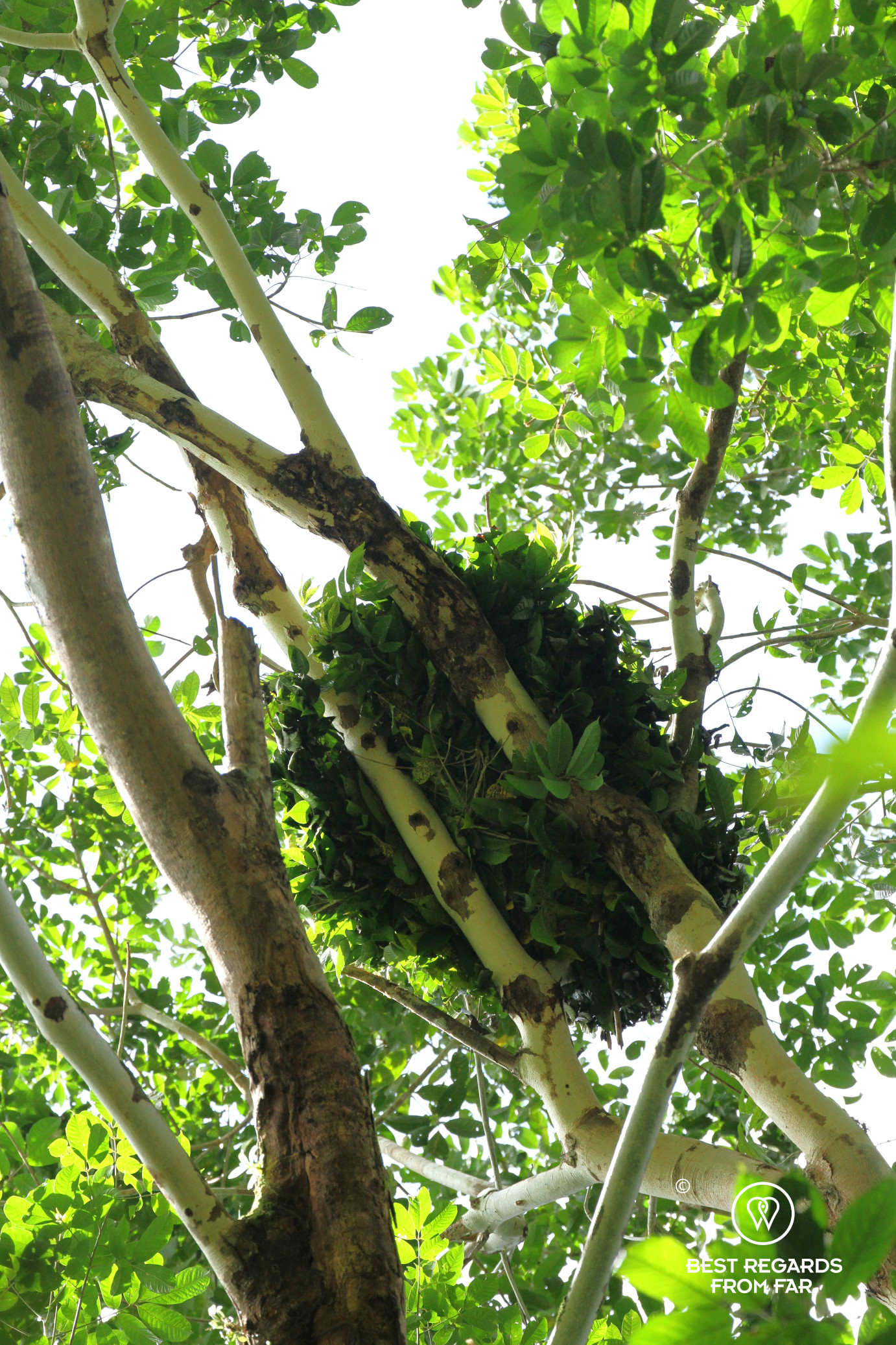
At the edge of a clearing, the heart of a palm has been eaten. Further, we find some half eaten wild guava fruits on the trail. They show no trace of oxidation and have been eaten very recently. We look up: an orangutan is very close by. Indeed, we spot a fresh nest high in the trees. Orangutans sleep in nests made of leaves and branches 12 to 18 metres (40 to 60 feet) above ground in the canopy. They build a new nest every late afternoon for the night, and two to three during the day to rest. Very often, cut branches on the ground reveal the location of a nest.
Despite their large size (an adult male can weigh more than 100 kilograms (220lb) and stands about 1.4-meter-tall (4.6ft), upright), it is hard to believe how silent orangutans can be! Lemon knows they are around, and we keep scanning the top of the trees, but they decide to stay hidden.
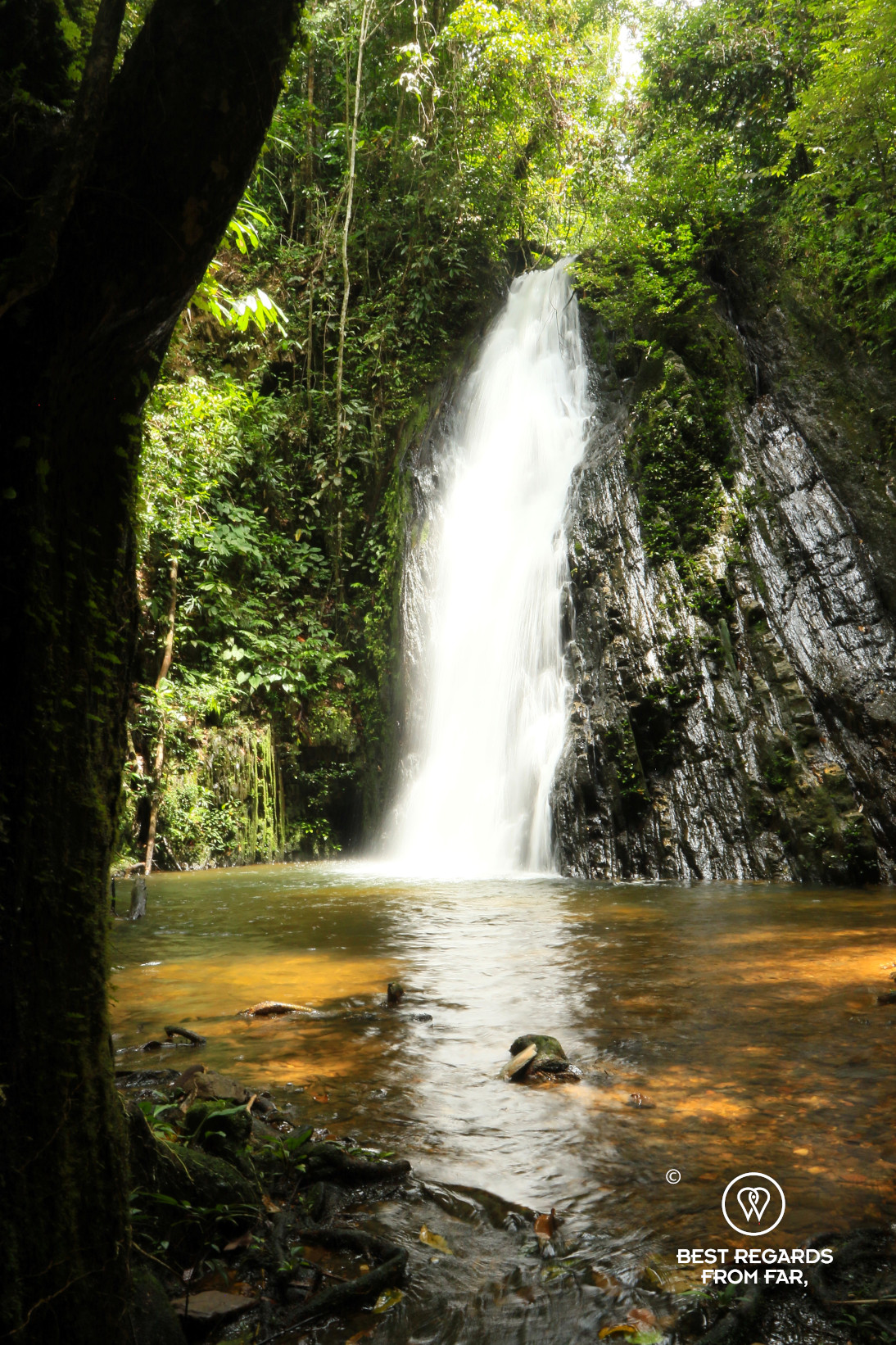
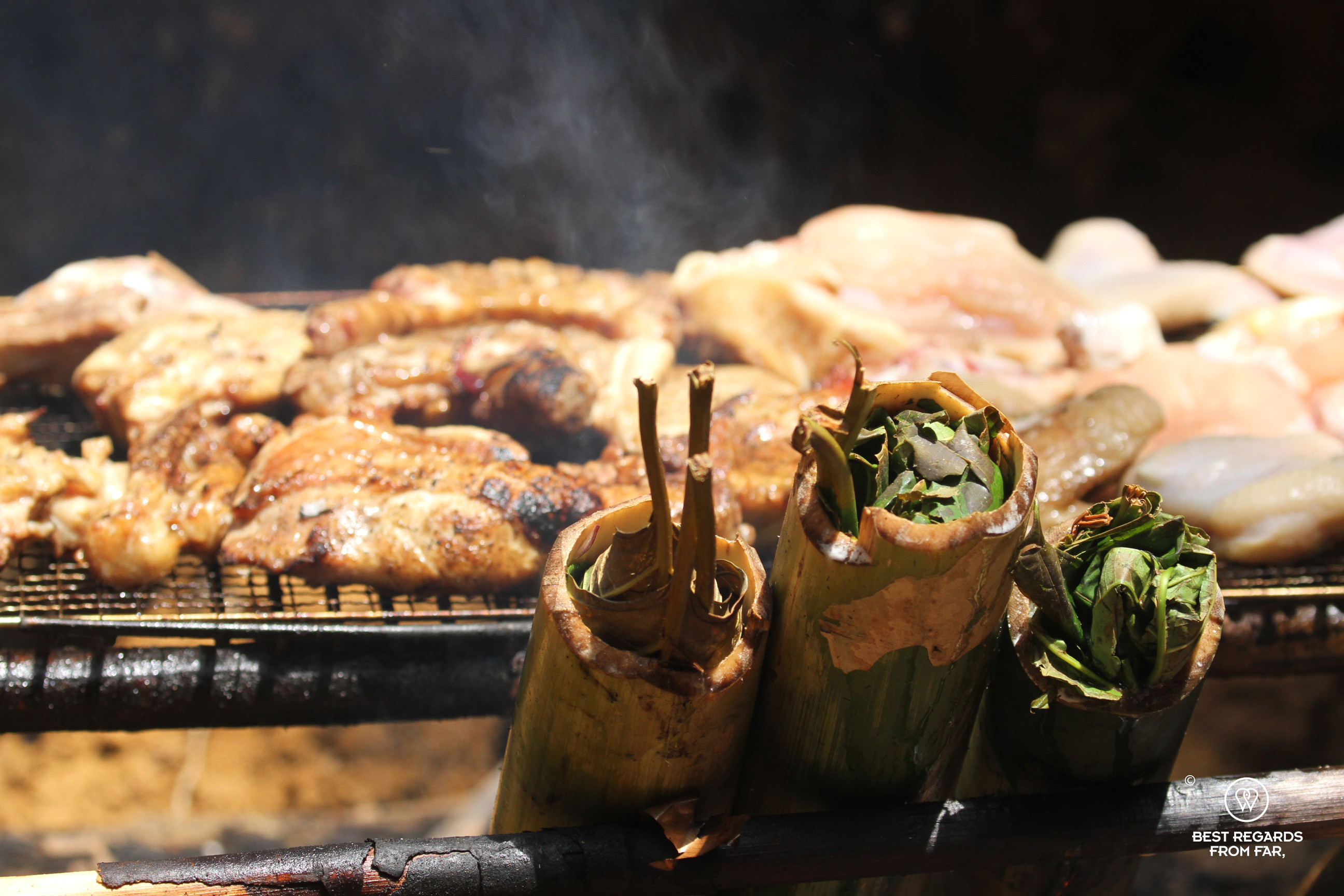
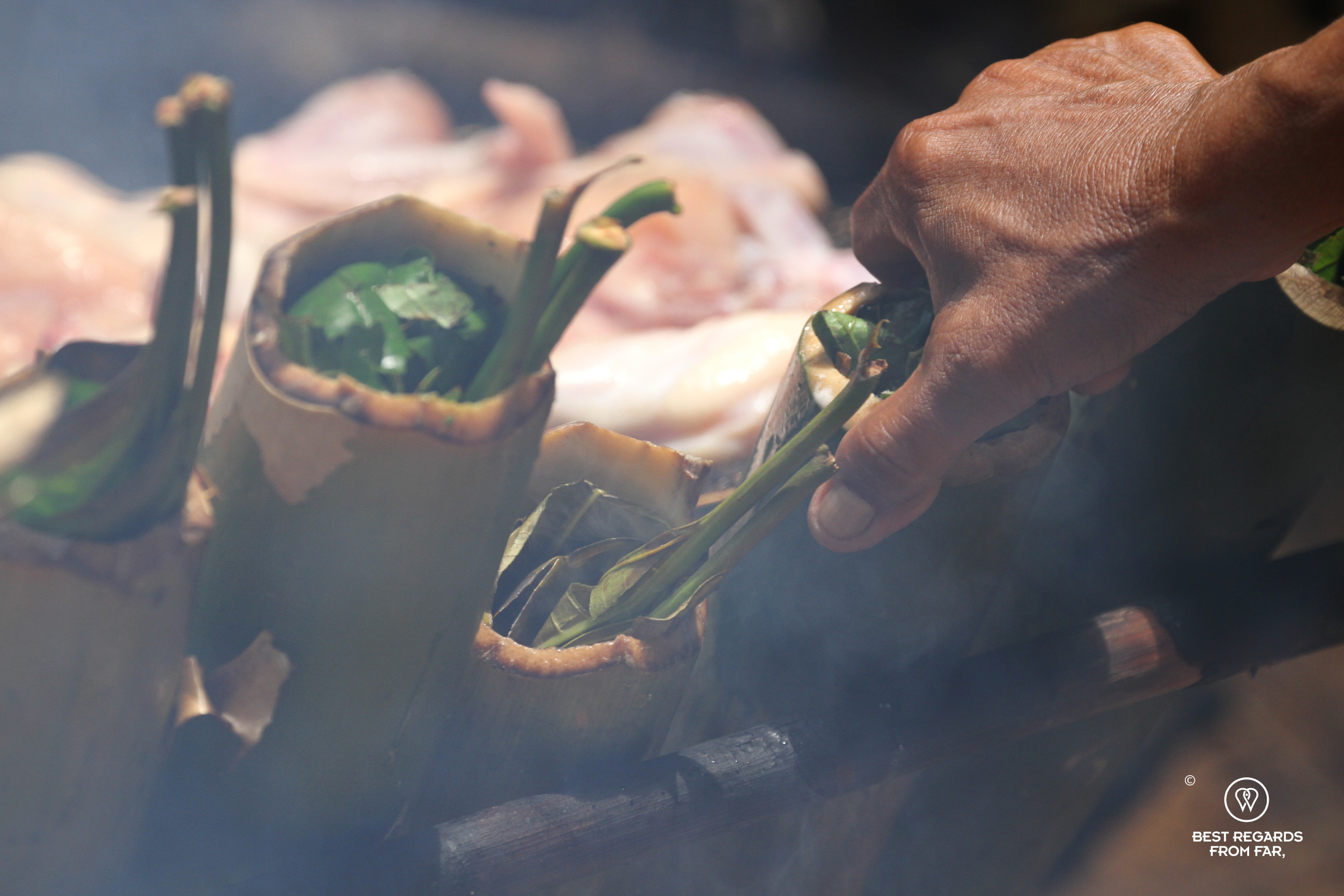
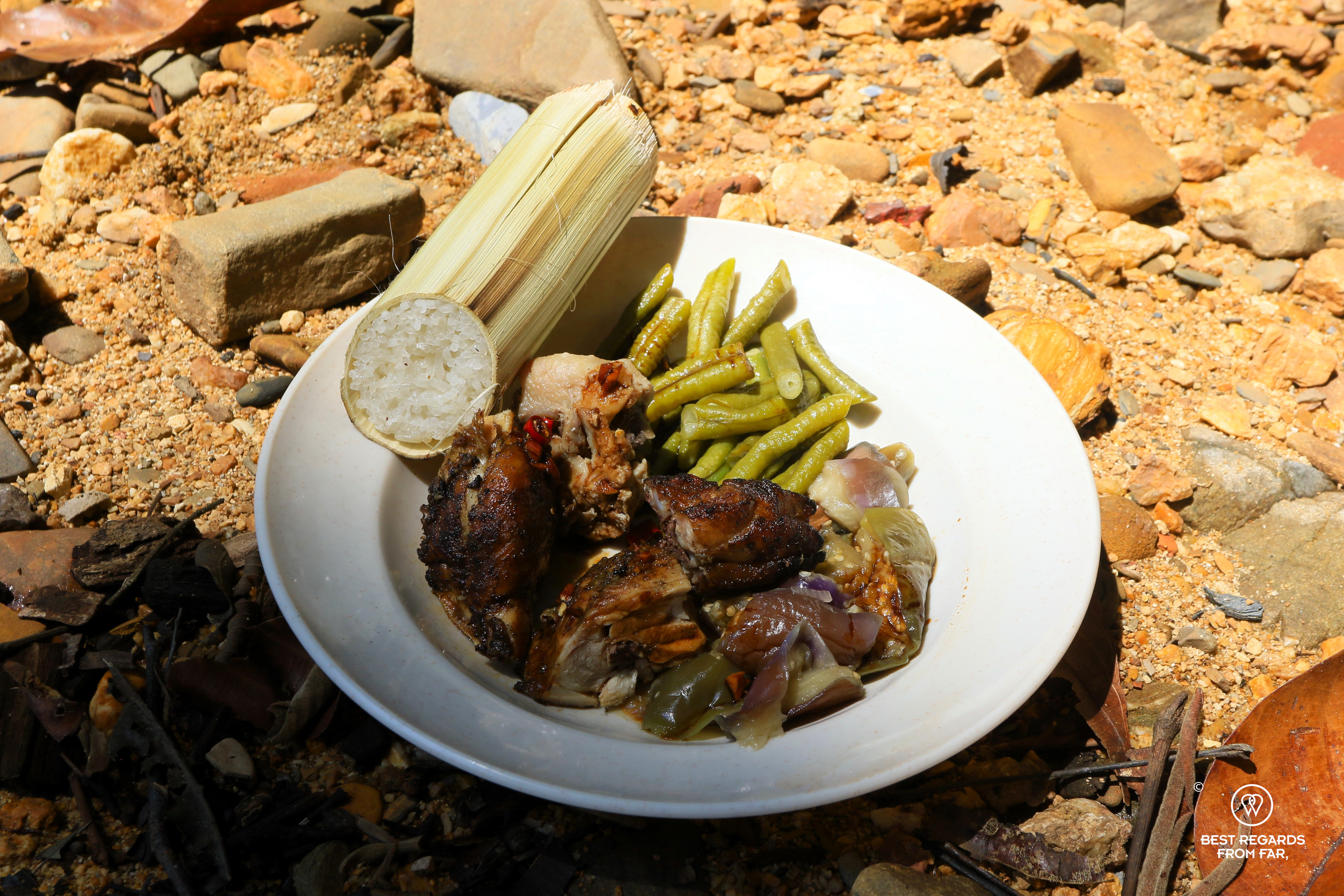
After walking several kilometres through the jungle, we hop on the long-tail boat for a swim by a beautiful waterfall while lunch is being prepared for us by our boatmen. By the side of the pristine river, we are enjoying a wonderful lunch with barbecue chicken, some foraged vegetables and sticky rice cooked in bamboos. Many butterflies and a few representatives of some of the 300 species of dragonflies of Borneo visit us while we enjoy the serenity of the river and the sounds of the forest.
Later, we keep looking for the critically endangered great ape. With the engine off, we are floating down river, to the sound of cicadas and birds, tilting our heads upwards to scan the canopy. Tree dweller, the red ape spends at least 60 percent of its daylight time feeding or searching for food: fruits mostly, but also bark, honey, young shoots, insects, and the occasional bird egg or small vertebrate.
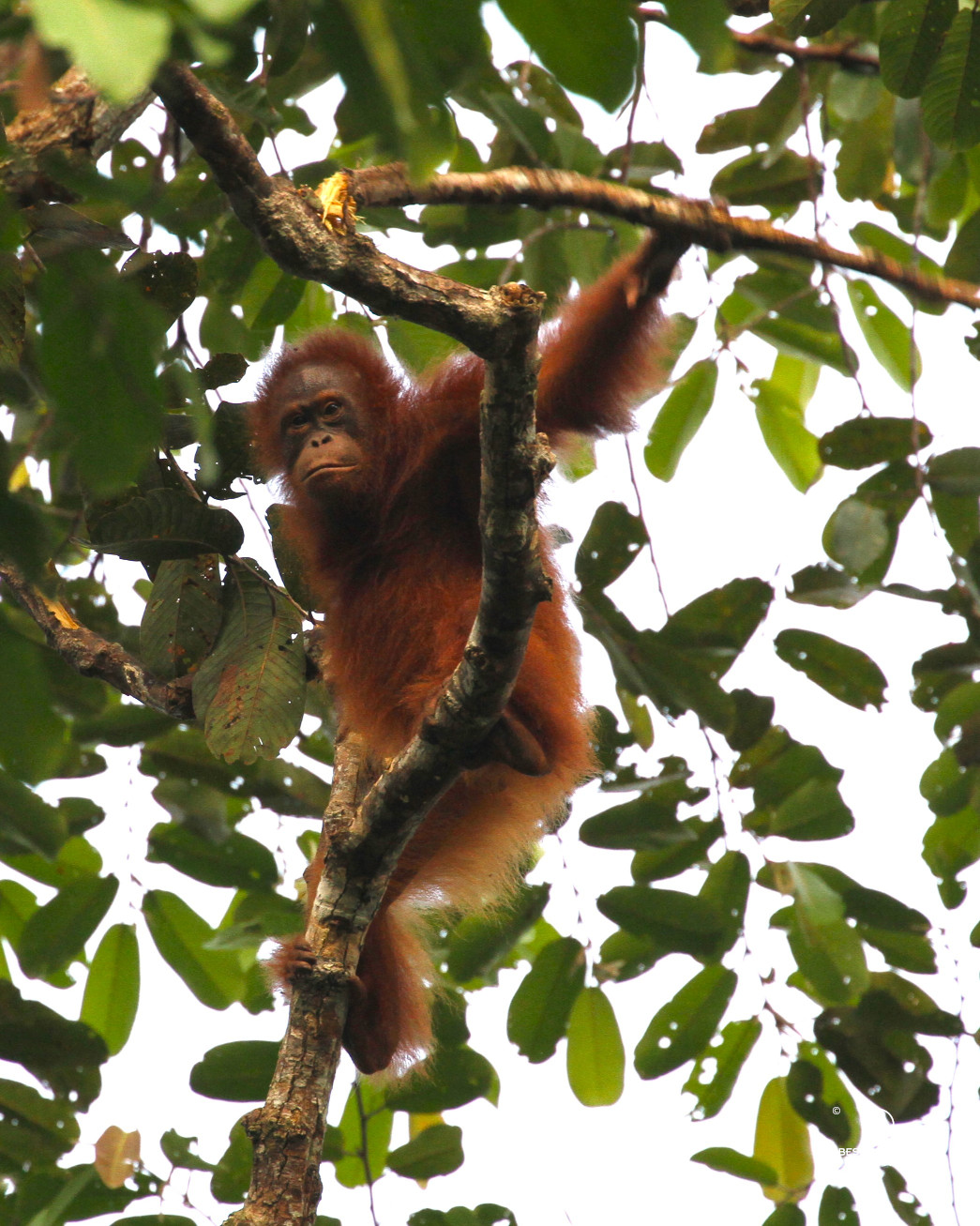
Traces of orangutans have been many during our beautiful hikes and explorations of the river, but the man of the forest as its name literally translates in Malay remained hidden until our last day in Nanga Sumpa. Staying immobile and silent, photographing them and taking in that precious moment, two young males, two brothers are breaking branches in the tree above us moving up and down with agility thanks to their incredibly long limbs. It is their way of letting us know they do not appreciate our presence. They get used to us slowly and these large animals with an enormous strength are now looking at us from the canopy with placid eyes and expressions that seem so human.
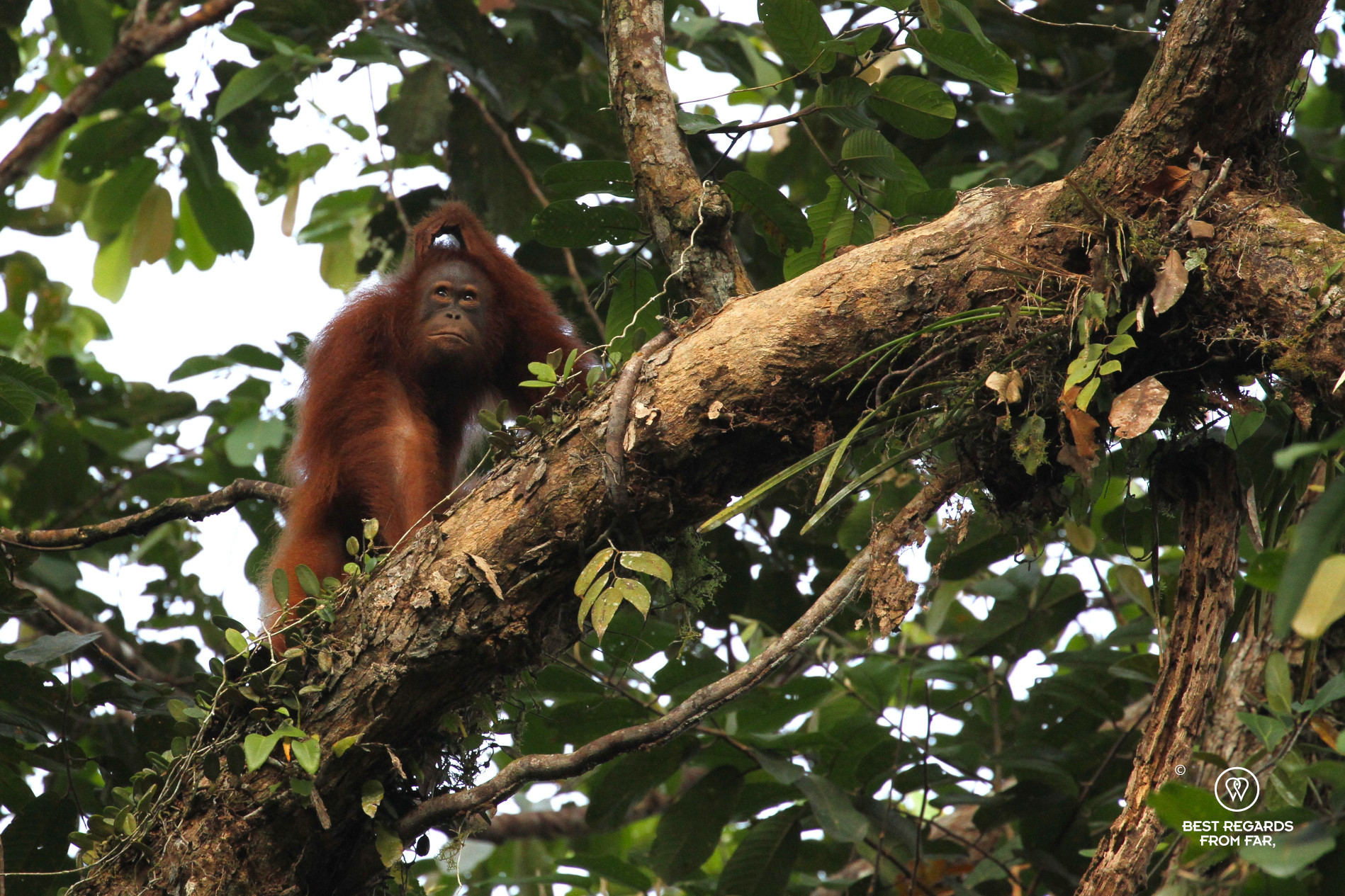
The orangutans have been disappearing fast: they used to roam southern China, Vietnam, Cambodia, Laos, Thailand, peninsular Malaysia, Java, Sumatra and Borneo and today, they can only be found in the wild in Northern Sumatra and Borneo. Thankfully, their numbers and the number of protected areas have increased, even though it is only locally, thanks to initiatives such as the one of Borneo Adventure that has been researching their population and working closely with the local tribes to find long-term solutions for both inhabitants and wildlife to cohabitate. Yet overall, their habitat keeps declining alarmingly.
The head-hunting days
As we are heading back on the Delok River, my mind wonders from this incredible experience with the orangutans in the wild to our encounter with the head-hunting tribes of Sarawak.
Gentle and welcoming as they were with us, the Iban were fierce warriors and one of the most feared tribes of Sarawak, never shying away from a fight, either invading other tribes or combatting with Iban from other river systems. To prevent the souls of their thousands of victims from taking revenge, their skulls, seat of the soul, were honoured by being placed in the victor’s longhouse. Offerings of wine, tobacco, and food were brought. By the mid-18th century, it was believed that a longhouses with many skulls had better rice yields, hence it was believed the hunted heads were a source of fertility and head-hunting became a cult. Back then, Iban women would not marry a man who had not taken part in a head-hunting expedition.
It was the British white rajah of Sarawak, Brooke, who banned head-hunting, seconded by Christianity making it up river in the 1920s. Old habits came back under the Japanese occupation and kept the invader away. It is becoming rare and rarer today, but one can still see some old men with their hands tattooed: an honour reserved to a head-hunter…
***
Thanks to this award-winning ecotourism project that has been running for over a generation, Borneo Adventure and the Iban of Nanga Sumpa have managed to foster an increasing communal conservation area where the Iban way of living that encompasses farming, hunting, and fishing, and conserving wildlife are balanced. A true example that is only too rare.
Travel tips:
- Since 1987, the award winning Kuching-based Borneo Adventure has pioneered community-based tourism in Sarawak, having built the case for conserving the area, and putting together the successful business plan in constant concertation with the local Iban communities that has led them to embark in ecotourism, safeguarding the orangutans. Life of the Iban has been improved as well thanks to solar energy that could be installed with the revenue generated by ecotourism. Be part of the solution, and explore Borneo with Borneo Adventure.
- Take contention stockings to prevent the unpleasant feeling of leeches attaching and sucking your blood.
- Always be prepared for the rain.
- Check out our interactive map for more in the area (black pins lead to an article):
For more in Malaysia, click on the images below:



 Best regards from far,