Article updated on December 13, 2025
Text: Claire Lessiau
Photographs: Marcella van Alphen
Pin it for later!

1. It is a real melting pot [and when it comes to food, a yummy one!].
Discovered by the Portuguese in 1511 and occupied by the Dutch in 1641, it is the British who eventually got the upper hand and took over part of today’s Malaysia in 1824, back then referred to as Malaya. Or at least, this is focusing on the colonial claims. Centuries before, Arabs, Indians, and Chinese had been trading with the indigenous locals. While Indian Muslim merchants had introduced Islam during the 13th century, Chinese immigrants flocked in to exploit the raw materials the locals were not too interested in leveraging, benefiting from an abundant nature.

This is how Kuala Lumpur initially developed: its tin was in high demand at a time when food in tin boxes was greatly needed to support the armies during the Crimean War (1853-1856), the American Civil War (1861-1865), and the Franco-Prussian War (1870-1871). From small scale panning along the river surrounded by dense jungle, in 1857, the Chinese started to open up tin mines, and today’s Chinatown came out of the ground. Despite the difficulties in the malaria and dengue infested jungle, the hard work paid off and the city boomed, and soon, Indians were brought in by the British to build infrastructures and tap rubber.
In a fairly short amount of time from its establishment in 1857, Kuala Lumpur has become one of the fastest growing metropolises in Southeast Asia!
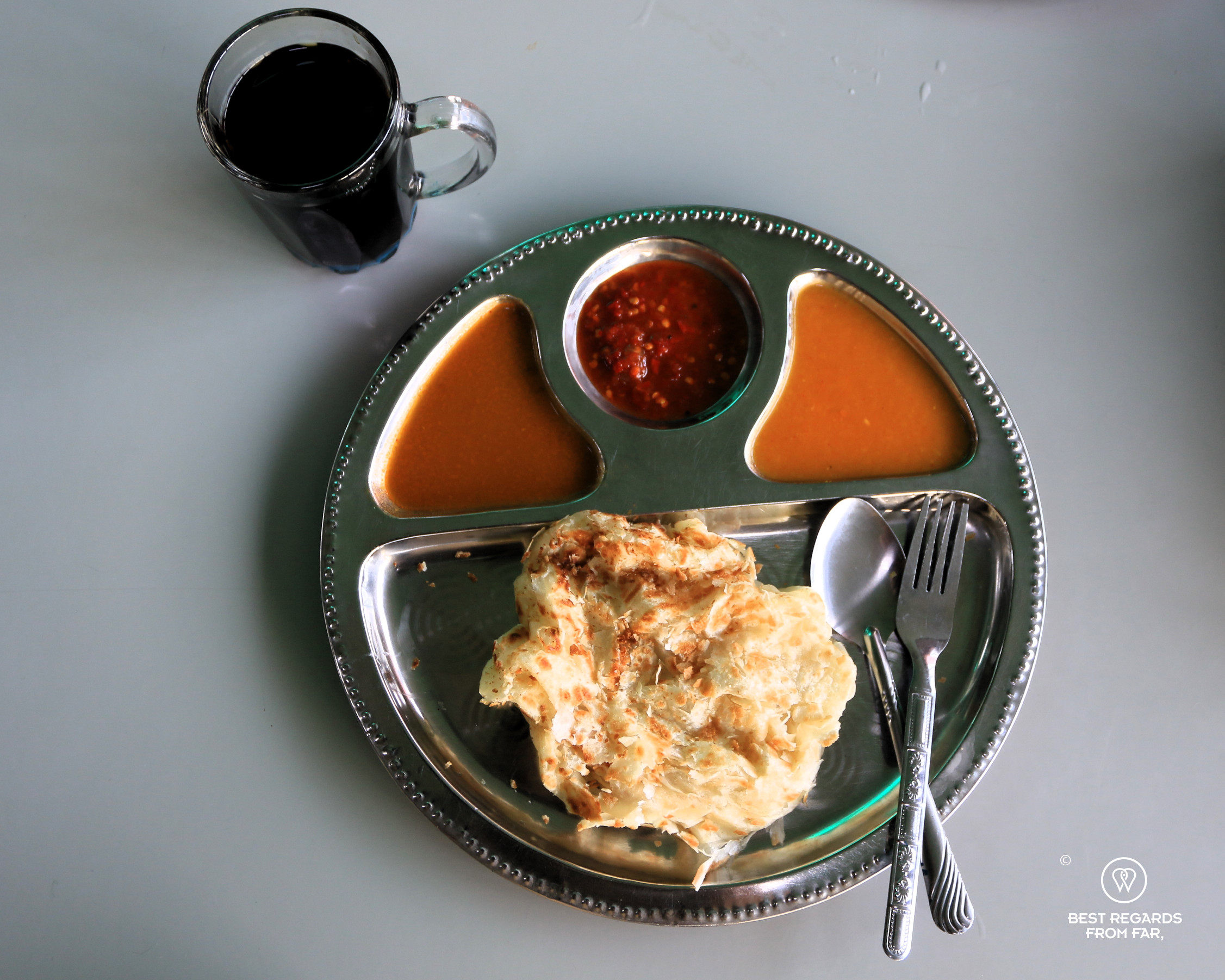
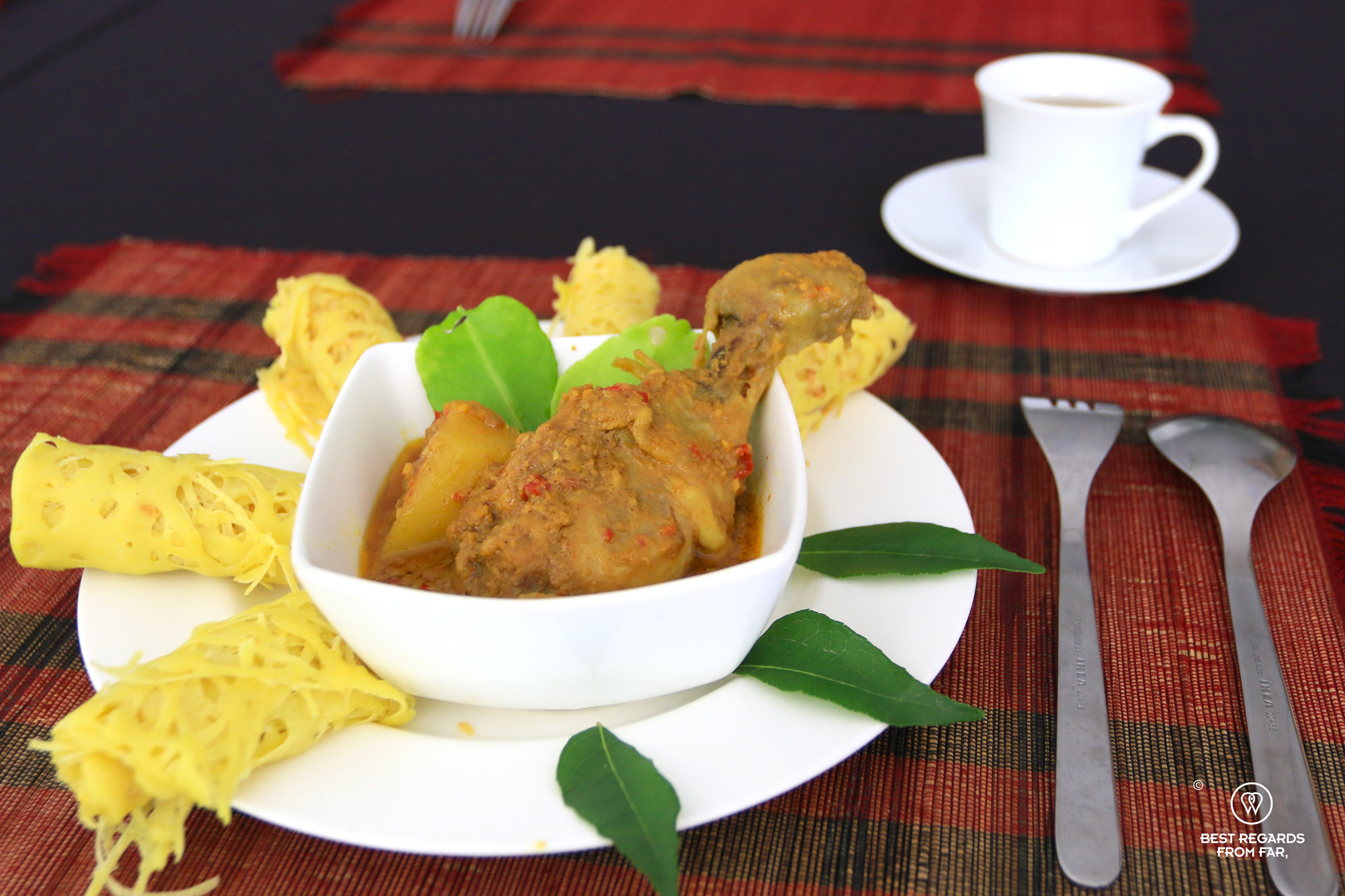
Today, the Malaysian population is multicultural made of 70% Malays, about 23% Chinese and roughly 6% Indians, as it is reflected in its delicious food (article to be published soon).


2. The “muddy confluence” [from obscure mining settlement to city].
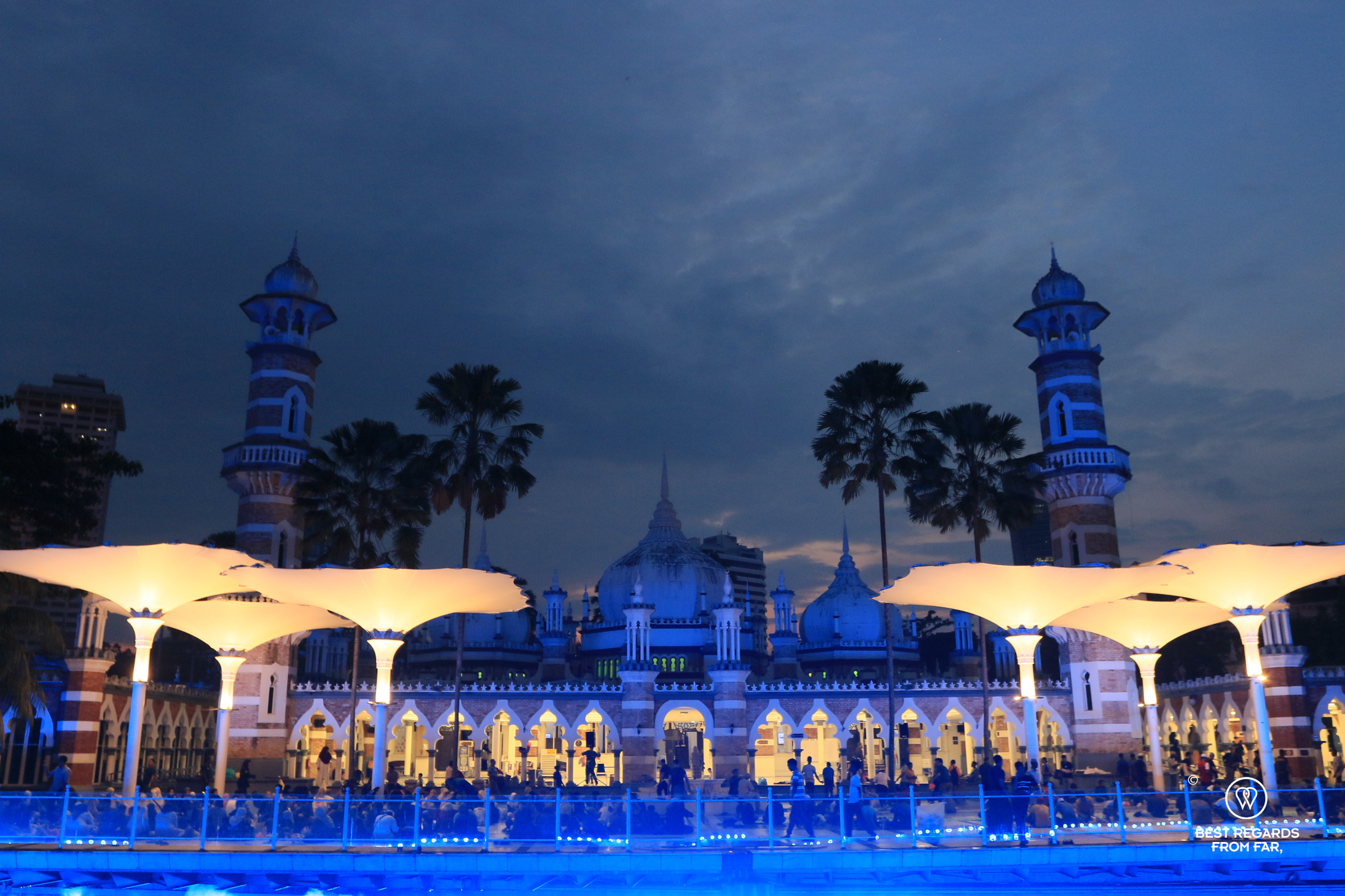
Kuala Lumpur, the “muddy confluence” in Malay is named after the murky confluence where the city started from. Today, Masjid Jamek, the oldest mosque of Kuala Lumpur is located where the Klang and Gombak Rivers merge, and where the first explorers set foot. The city is still well-named, the murkiness of the rivers not having changed much in the vibrant historical heart of the bustling megalopolis.
The Chinese miners formed a community located where today’s Chinatown stands, but fought over the best mines. To keep people in check, the Malay chief appointed a Chinese leader, referred to as a Kapitan Cina. Appointed in 1868, the third Kapitan Cina, Yap Ah Loy, turned the obscure settlement into a booming mining town despite the many floods and fires, and civil war opposing different factions for tin-mining revenue and political power. He rebuilt the city no less than three times after it got burnt to the ground repeatedly. Kapitan Yap set up a brick factory to replace the burnt-down wooden constructions in today’s Brickfields District, also known as Little India as Indians came to work as brick-makers. The beloved Yap Ah Loy also created the first school and shelter for the homeless. Enshrined by the Chinese community, he is still revered in Sin Sze Si Ya Temple and became one of the most opulent real estate magnates of Kuala Lumpur setting the stage for its expansion.
In 1874, the British could lock in their influence as advisors of the sultans, basically taking the power and leaving the sultan a representative and local role limited to Malay customs and Islam. They appointed a British Resident in cities to manage all aspects of the administration, and had an important impact on the urbanization, also in Kuala Lumpur.
3. Race-based urban planning still defines the city today.
The head under the British colonial rule was referred to as the Resident. As in many other British colonies such as Hong Kong, the Resident divided the city based on race: the ruling British class settled on the West Bank of the Klang River around today’s Merdeka Square (Independence Square, unmistakable with its 100-meter-tall flag mast), while the Malays, Chinese and Indians had already settled on its eastern bank.
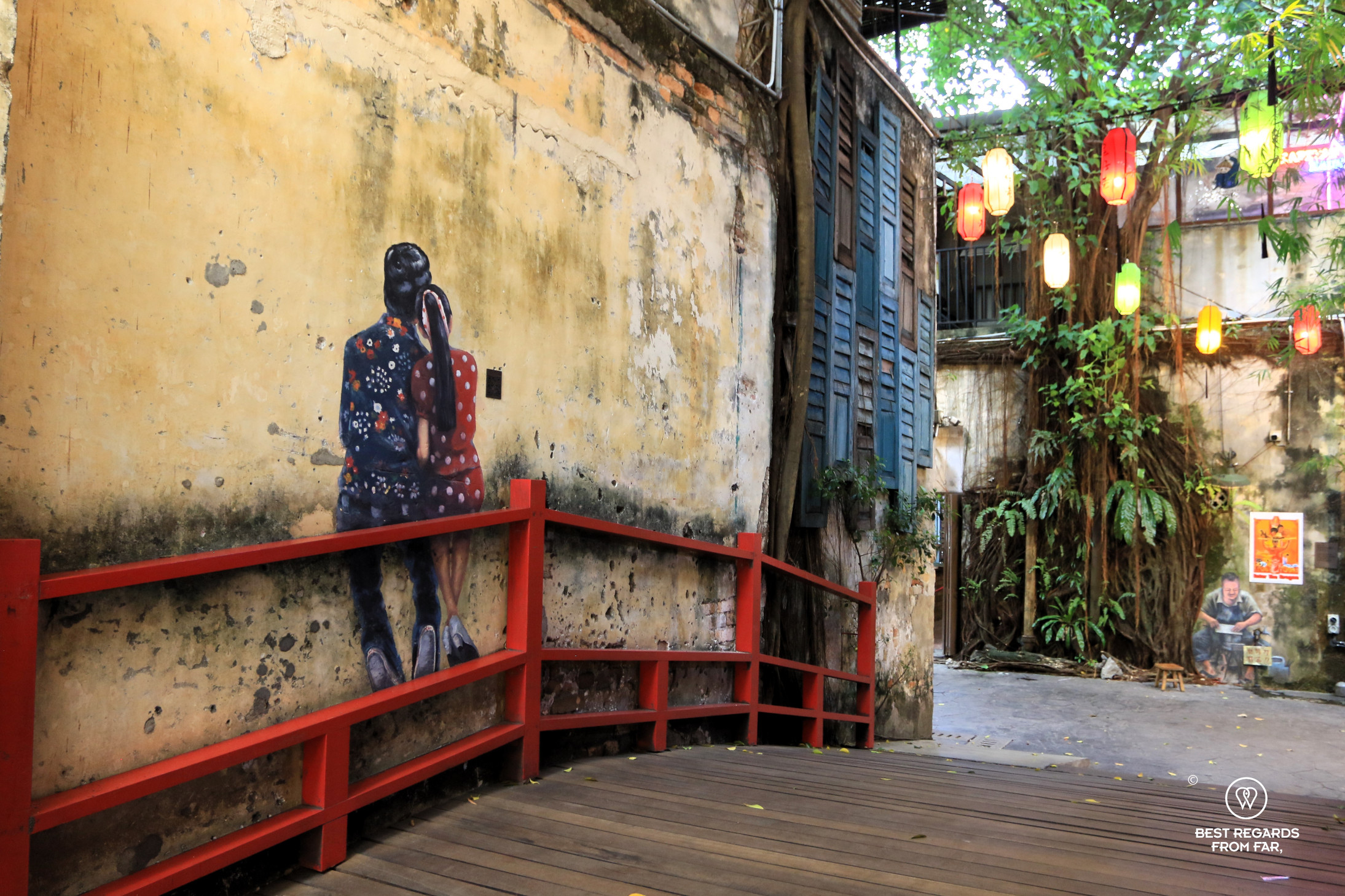
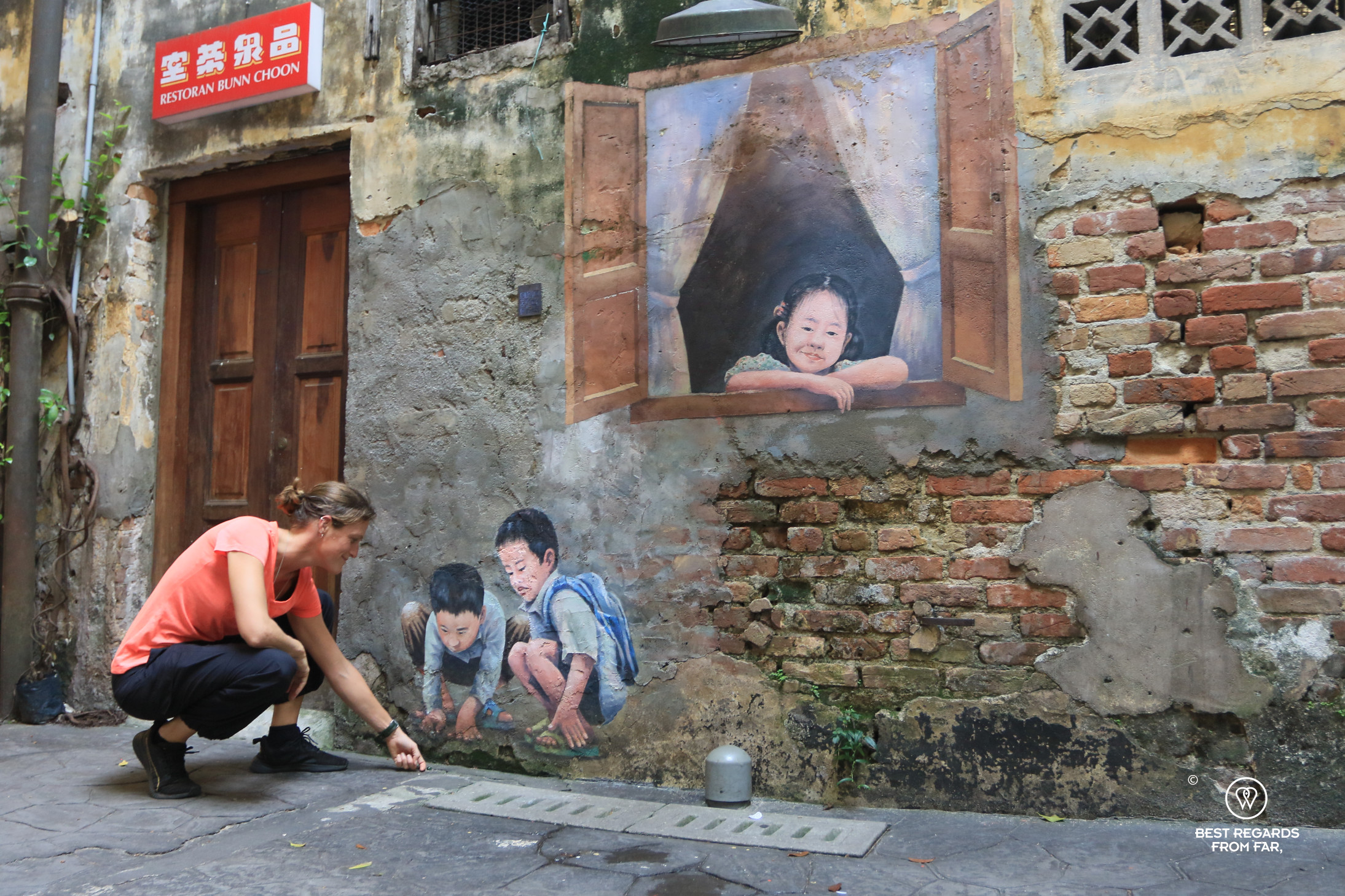
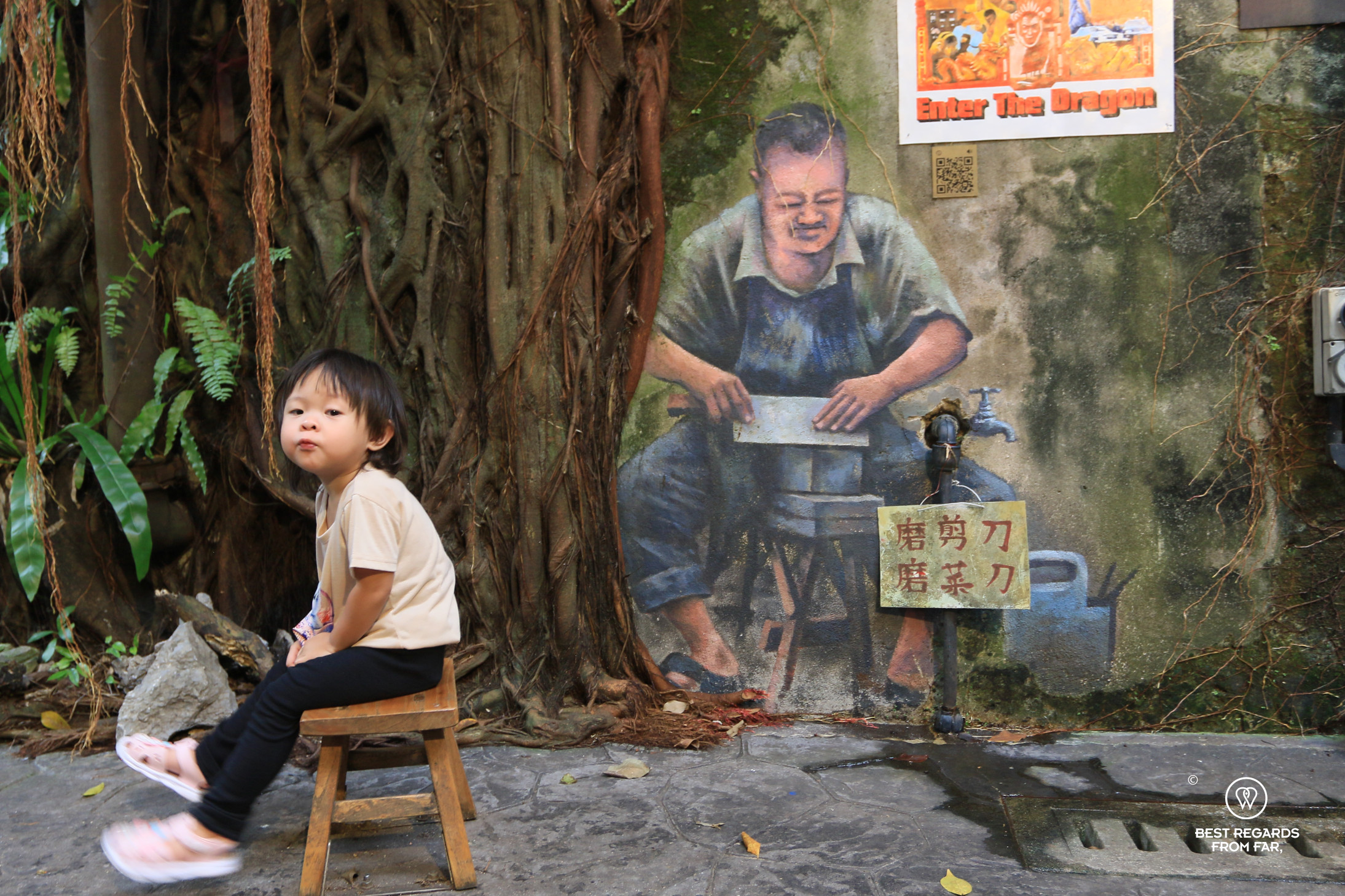
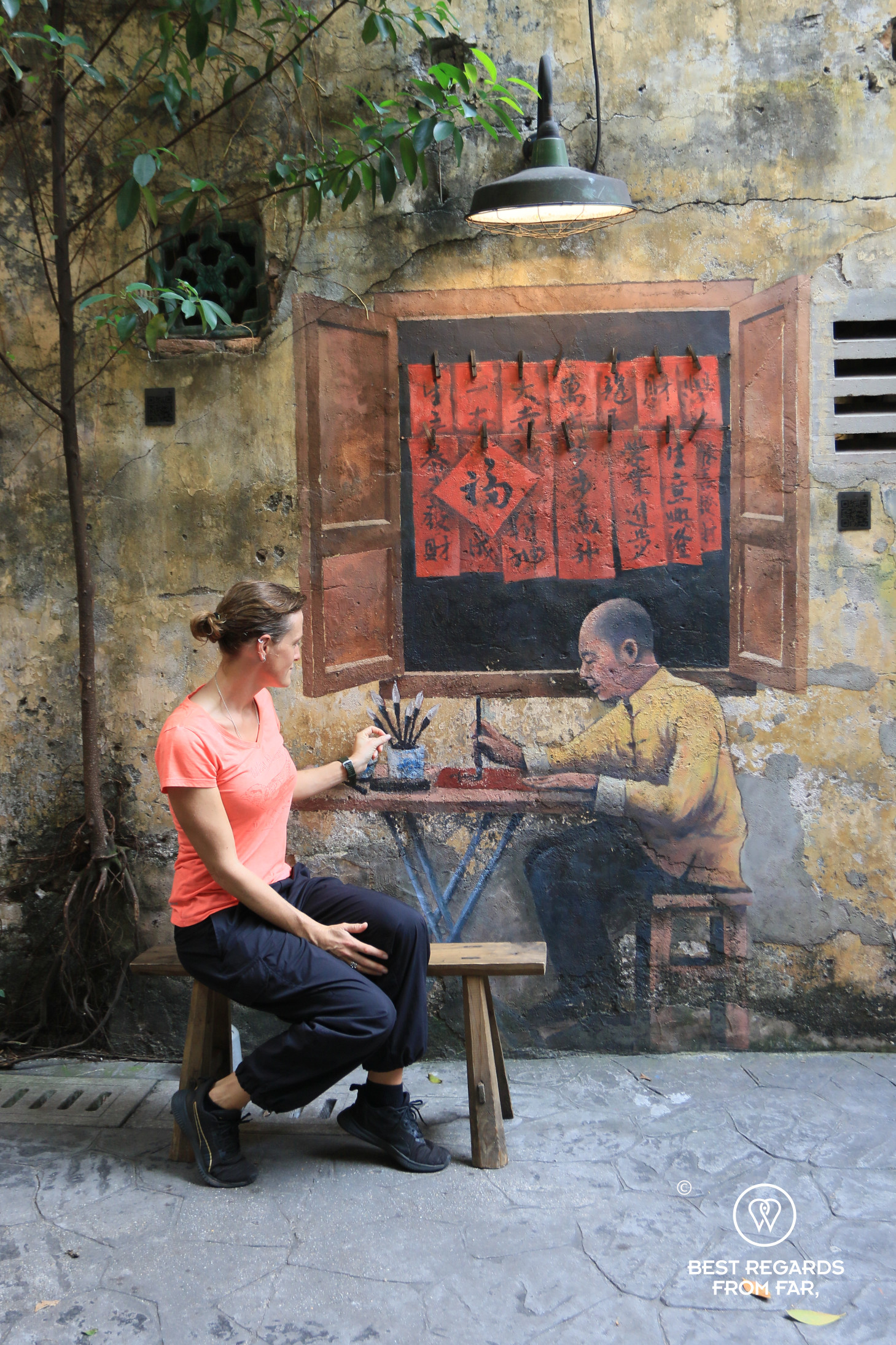
There, communities were fairly separated: Chinatown, the oldest part of the city that is today booming with trendy cafés, vintage street art (amidst hundreds of street stalls selling everything counterfeit one can imagine!), and hawker centres was home to the Chinese miners.
The Malays settled more north of the confluence in what is called Kampung Baru where they grew crops they traded via the river. The traditional wooden houses on stilts remain, protected on this prime real estate location towered by the iconic Petronas twin towers.
Indian immigrants who were brought in by the British to build roads, railways, and more infrastructures were south by the brick factory in today’s Little India.
4. KL has to share capital status.
If Kuala Lumpur is the largest city of Malaysia, home to slightly over 2 million inhabitants (8 counting its metro area), including the king of Malaysia, it is not where the government sits.
To answer the overcrowded issues of KL, in 1999, the government was moved to Putrajaya, a city 26 kilometres (16 miles) south of Kuala Lumpur. Hence, Putrajaya is the judicial and administrative capital of Malaysia where the Prime Minister lives, while Kuala Lumpur remains the official capital.
5. Wake up early if you want to score the best deal in Chinatown!
You’d better polish up on your bargaining etiquette as there is no room for beginners in Chinatown, and whether you like it or not, bargaining is a must! Here are some of the local basic principles:
- It is not done to discuss the price with a vendor when other customers are around. You will be shown out fast. Instead, softly mention your price. The vendor will punch his in a calculator. Look at it, shake your head and take the calculator to write down your price, and so on and so forth until a deal is struck.
- To start negotiating, half the initial price and work your way up.
- If you want to strike the best possible deal, wake up early as vendors consider it important to honour their first customer and believe it will bring them a fruitful day! You can hope for 70% off.
- Never be disrespectful towards the vendor, nor his job, nor his goods, as otherwise you’d be considered very rude.
- If it is quiet, a vendor may follow you if you walk away and if they want to make the deal. When busy, they will try to sell to someone else instead.

6. Surprisingly, the oldest Hindu temple of Kuala Lumpur is in Chinatown.
Hinduism is only the fourth religion in Malaysia, behind Islam, Buddhism, and Christianity yet the Sri Maha Mariamman temple is one of Kuala Lumpur’s most visited landmarks.
The oldest and main Hindu temple in Kuala Lumpur started as the family shrine of the early Tamil trader and community leader K. Thamboosamy Pillai in 1873. From one room, it has kept growing providing an important place for early Hindu Indian immigrants to worship Sri Maha Mariamman, a depiction of Goddess Parvati (an incarnation representing Mother Earth known for power, harmony, love, beauty, motherhood, and protection) in South Indian Hindu mythology.
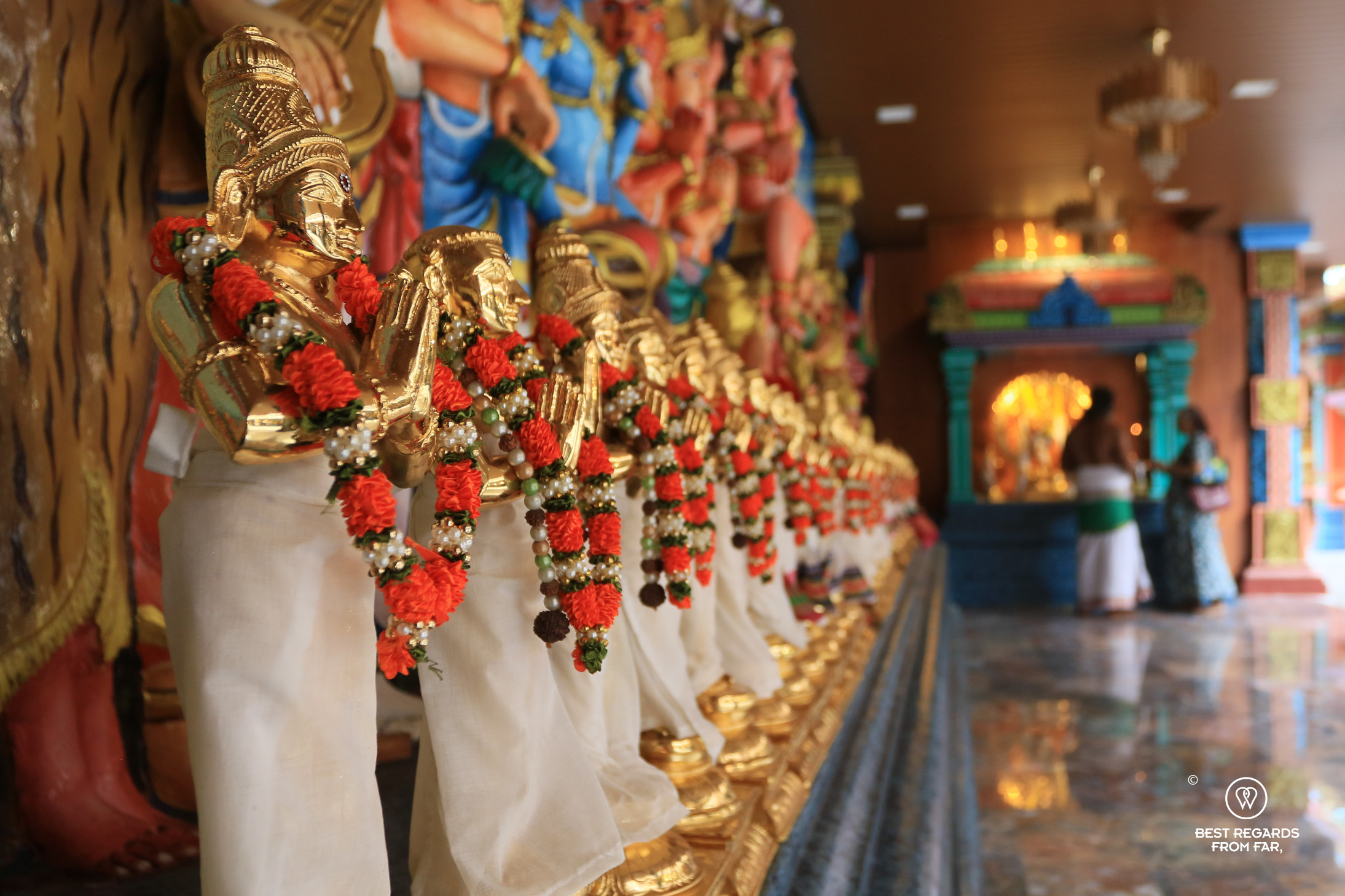
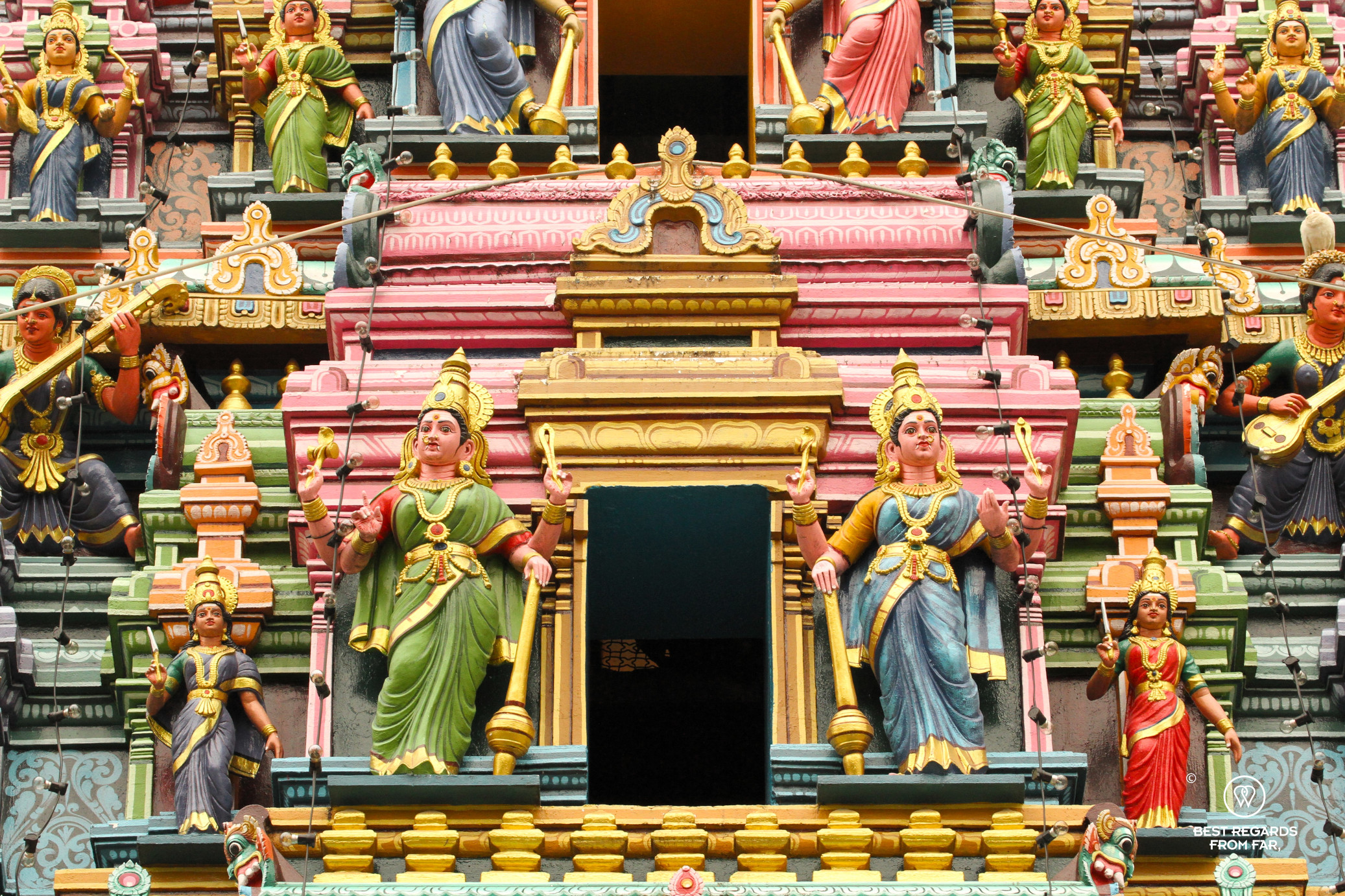
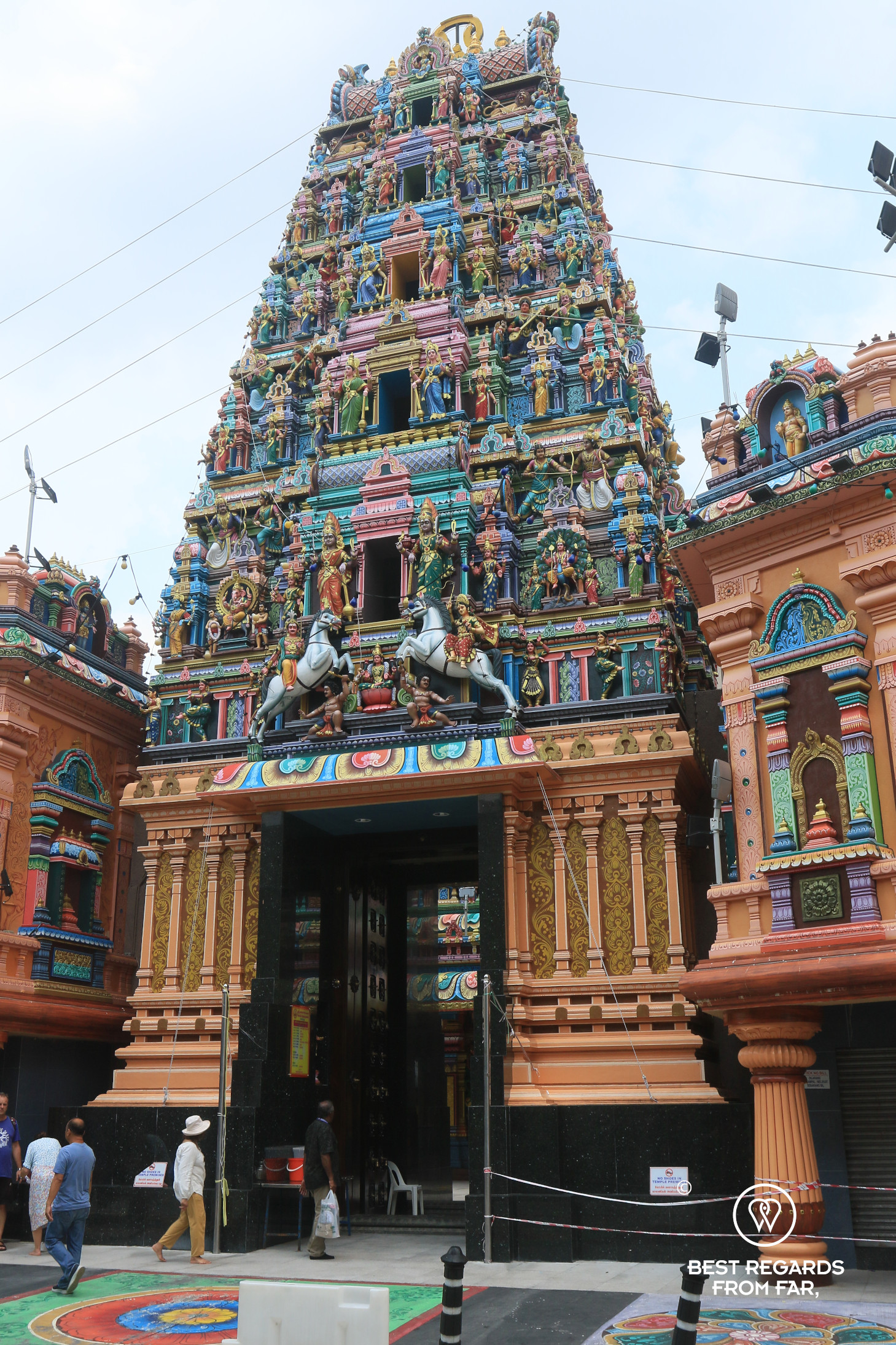
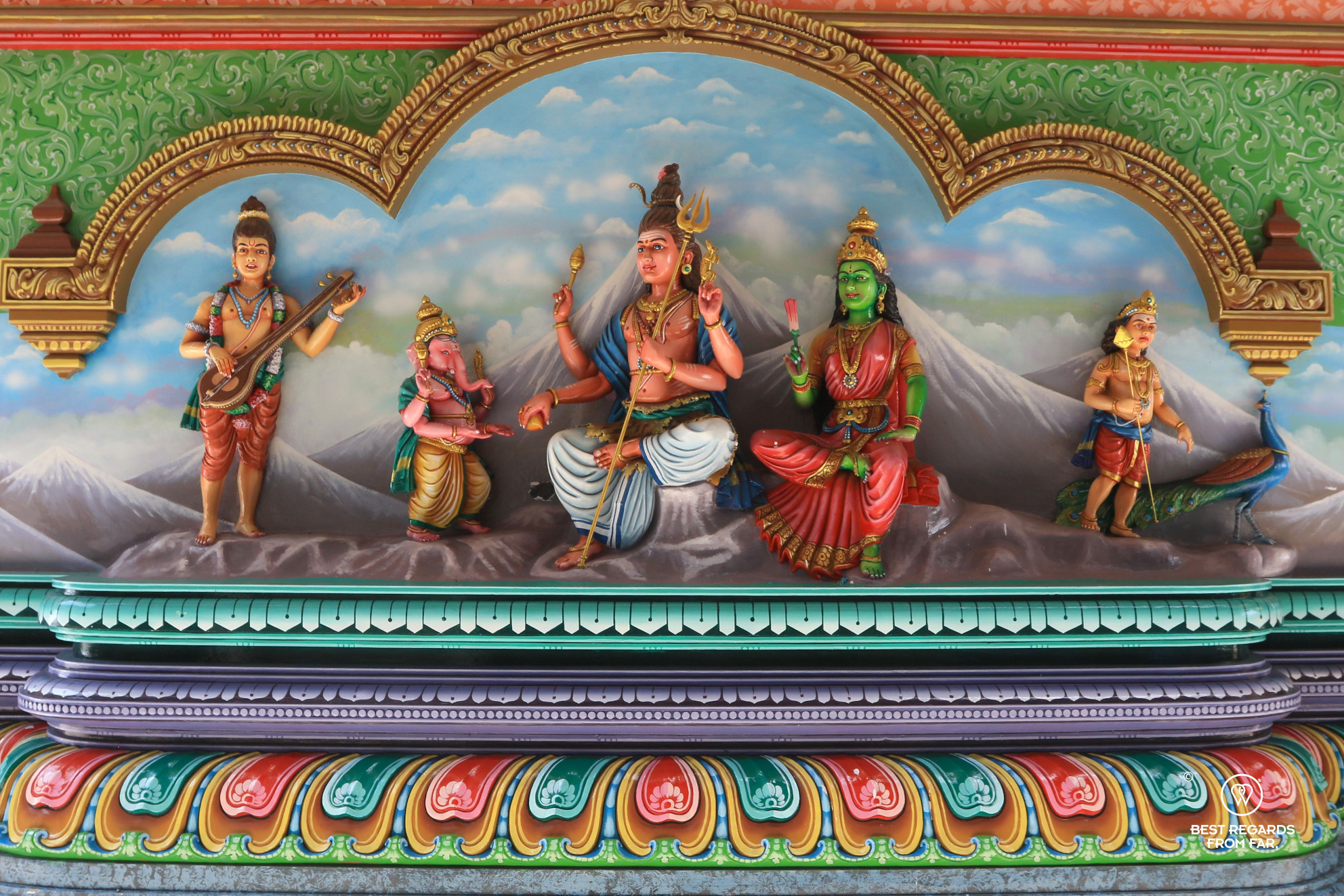
The 1972 ornate gateway tower to the temple (known as Gopuram, built in the style of South Indian temple architecture) is richly adorned with 228 colourful sculptures representing different gods and goddesses as well as some historical scenes of the epic Ramayana. The temple floor plan mimics a human body lying on its back with the Gopuram, the threshold between the material and spiritual world, standing where the feet are. The head is positioned towards the west where the garbagraham stands. It is where the chief deity Sri Maha Mariamman is located and where the priest performs the prayers.
Sometimes, a banana tree for fertility, with its edible flowers for prosperity can stand by the entrance of the temple. A mango leaf can be found to help cut away the bad vibes.
Once a year in January or February, about a million people follow a silver chariot carrying a statue of Lord Murugan from the Sri Maha Mariamman Temple to the Batu Caves for the Hindu festival of Thaipusam. This 15-kilometre-(10-mile)-procession celebrates the victory of Lord Murugan, son of Shiva, god of war, over evil and is a way for devotees to show intense sacrifice, endurance, and suffering in search for repentance or gratitude.

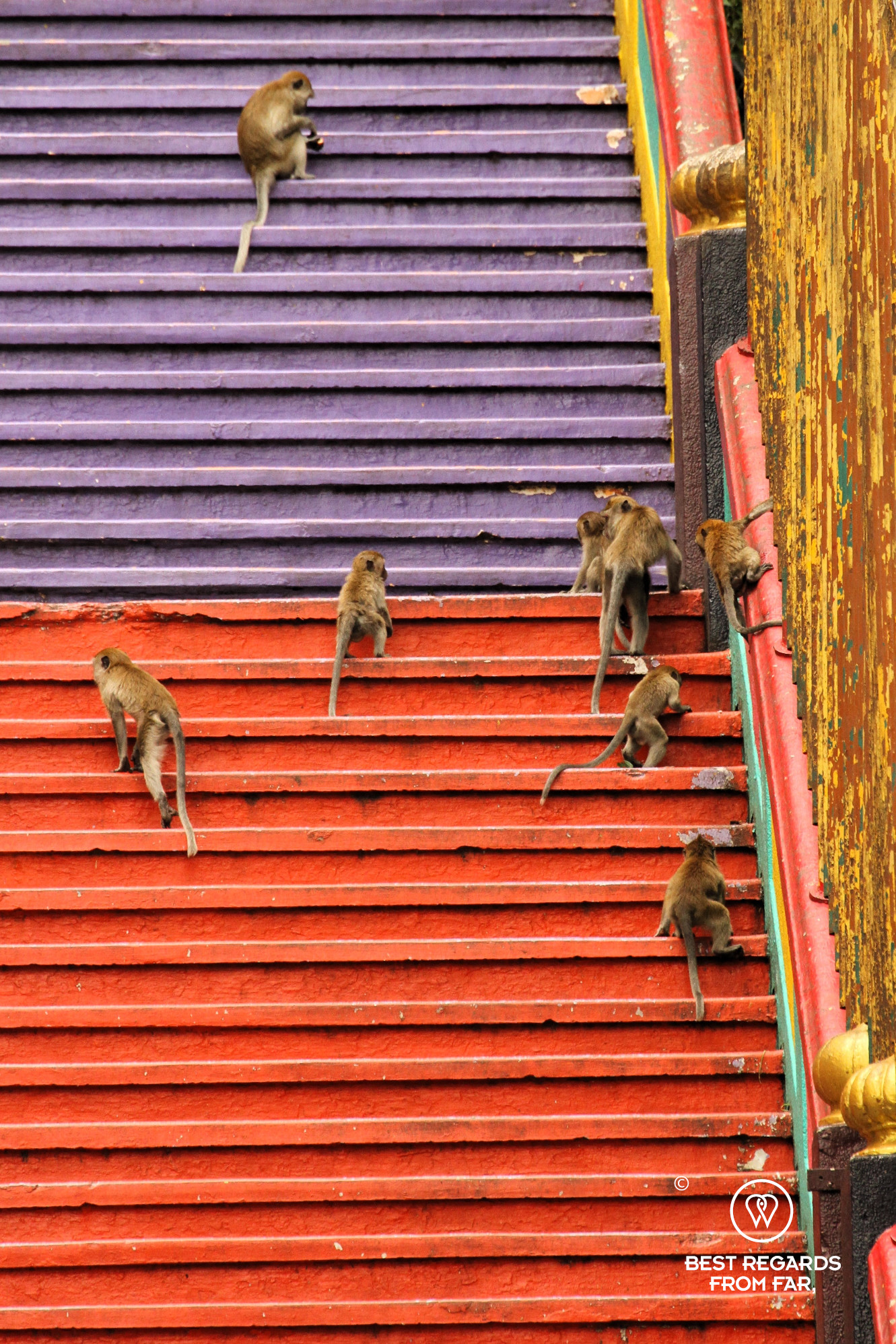

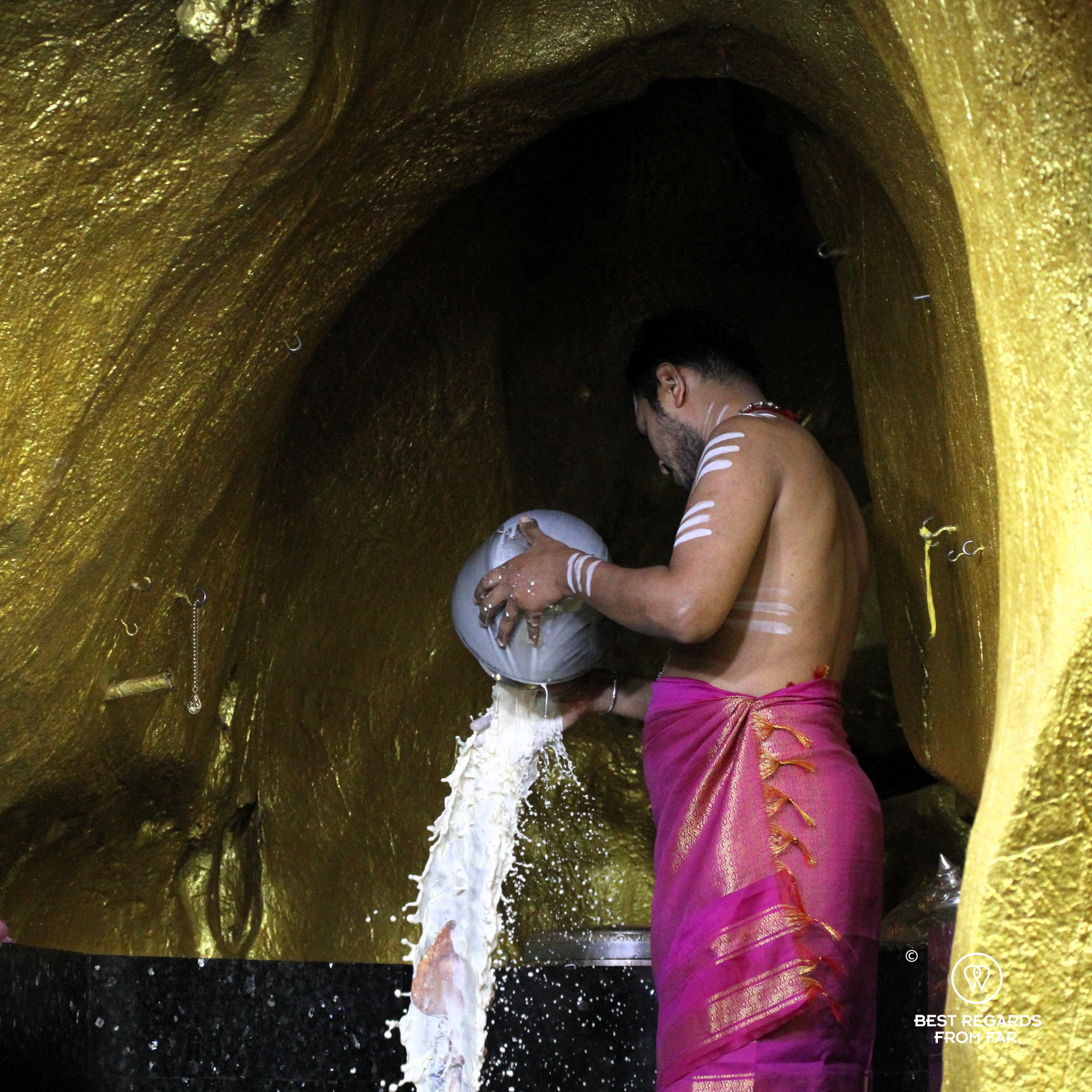
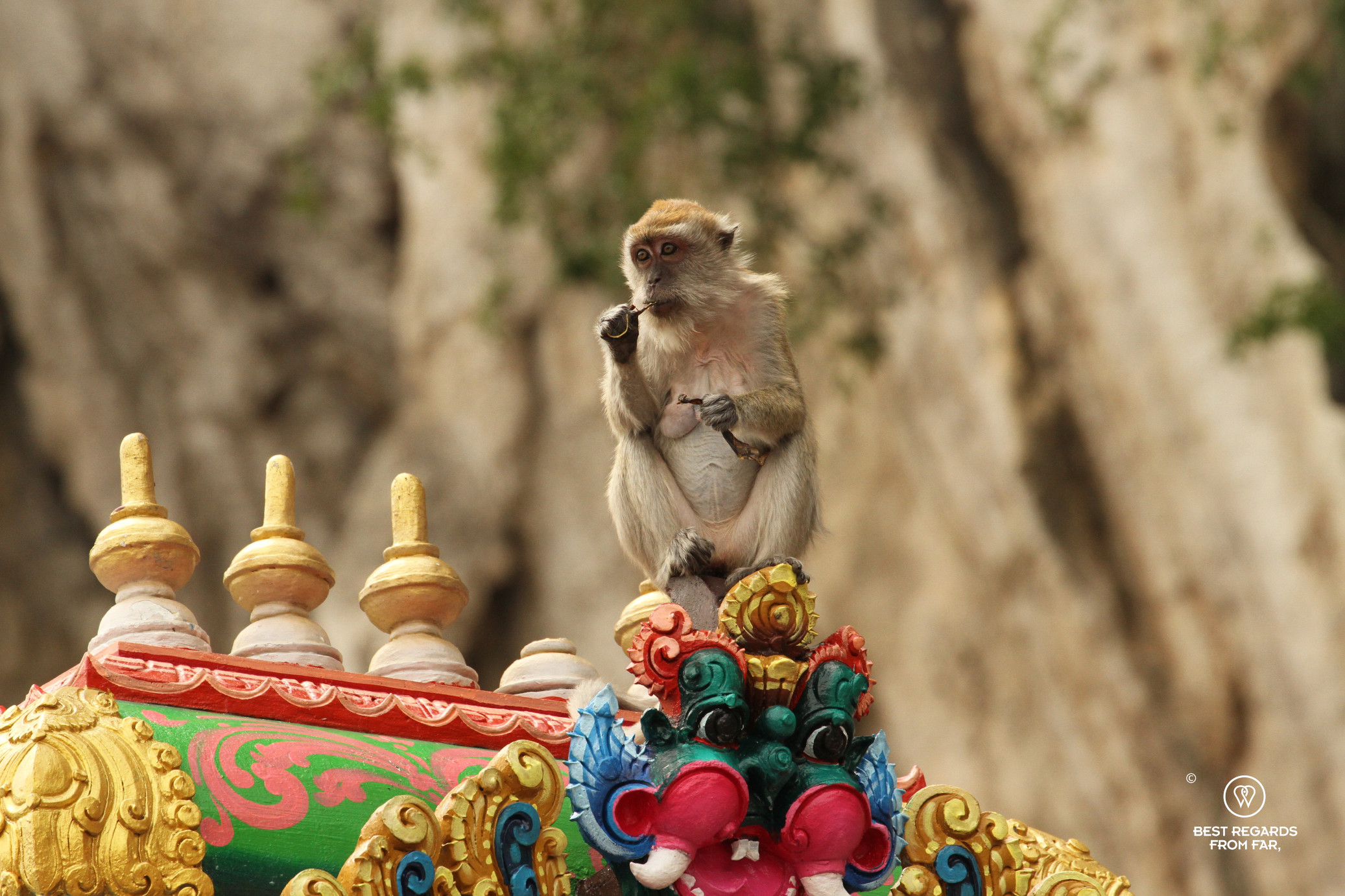
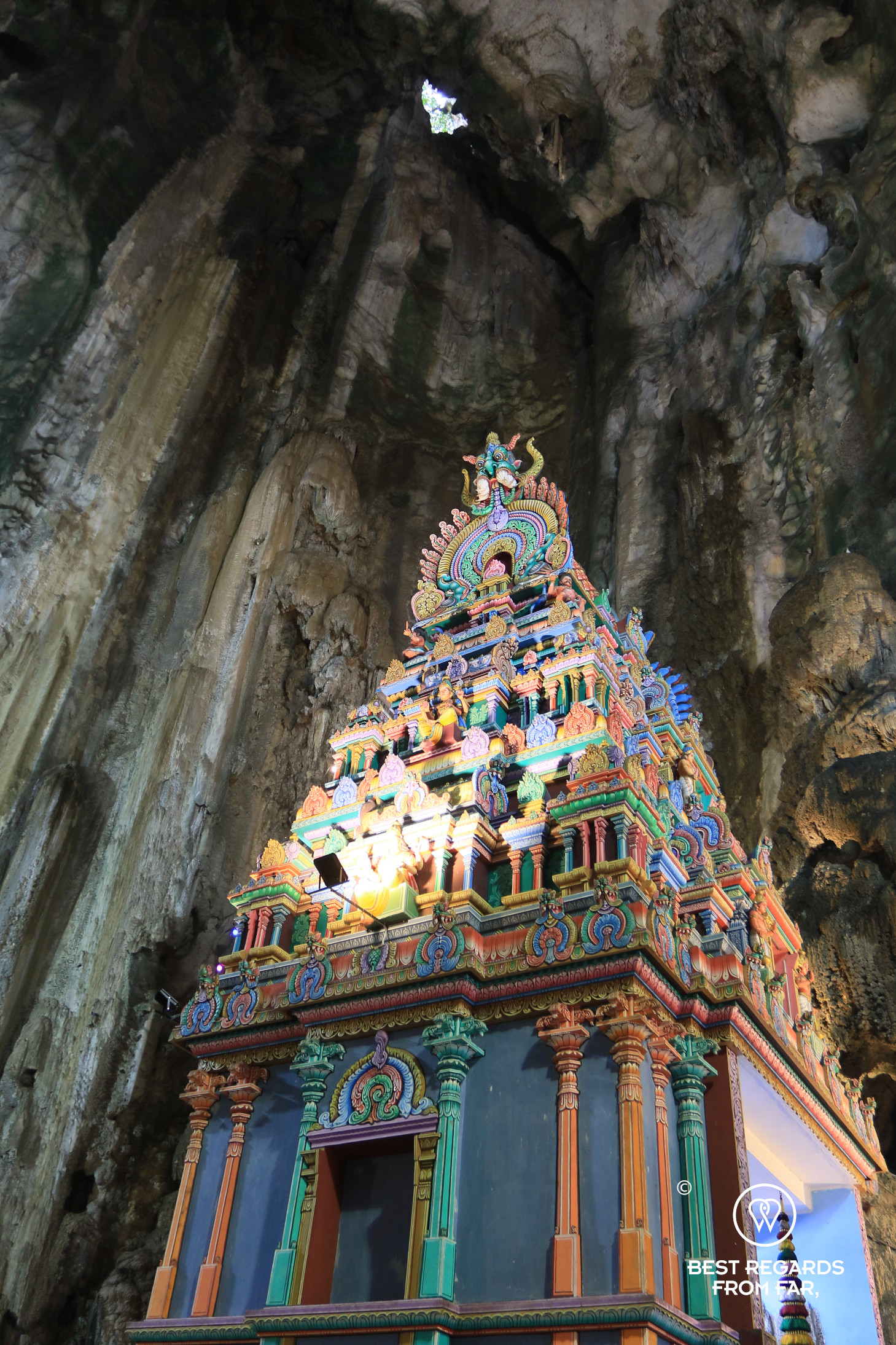
On ordinary days, the Batu Caves are already an impressive site with the 42.7-metre-(140-foot)-tall-gold-painted statue of Lord Murugan showing the way up 272 steps to the Cathedral Cave: this limestone cave is so large that it hosts a Hindu temple. In this 400-million-year-old cave system, many other caves of lesser volume house other smaller Hindu objects of worship.
7. The Sin Sze Si Ya Temple is misaligned.
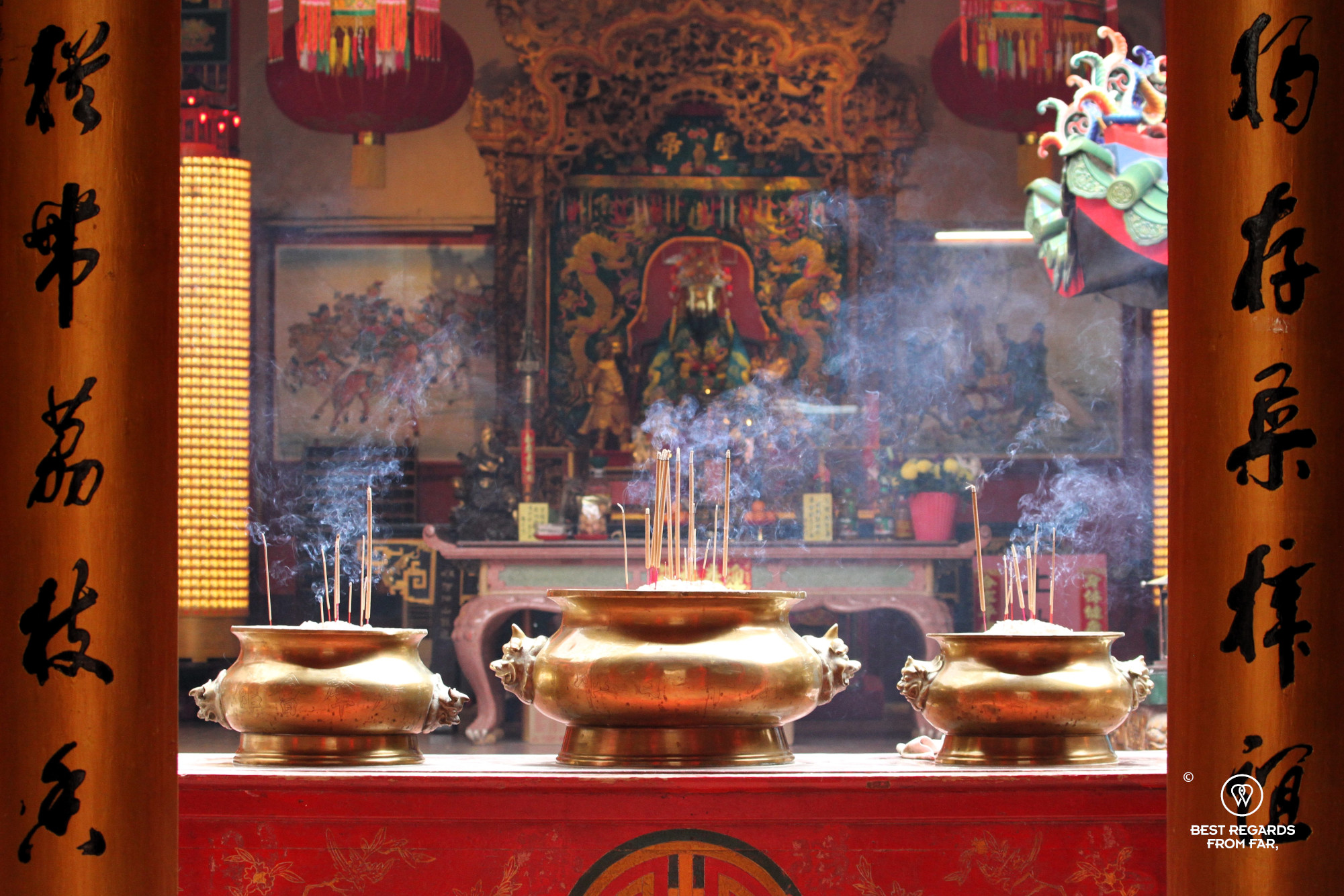
The beloved third Kapitan Cina, Yap Ah Loy, is enshrined in this temple that he had built in 1864.
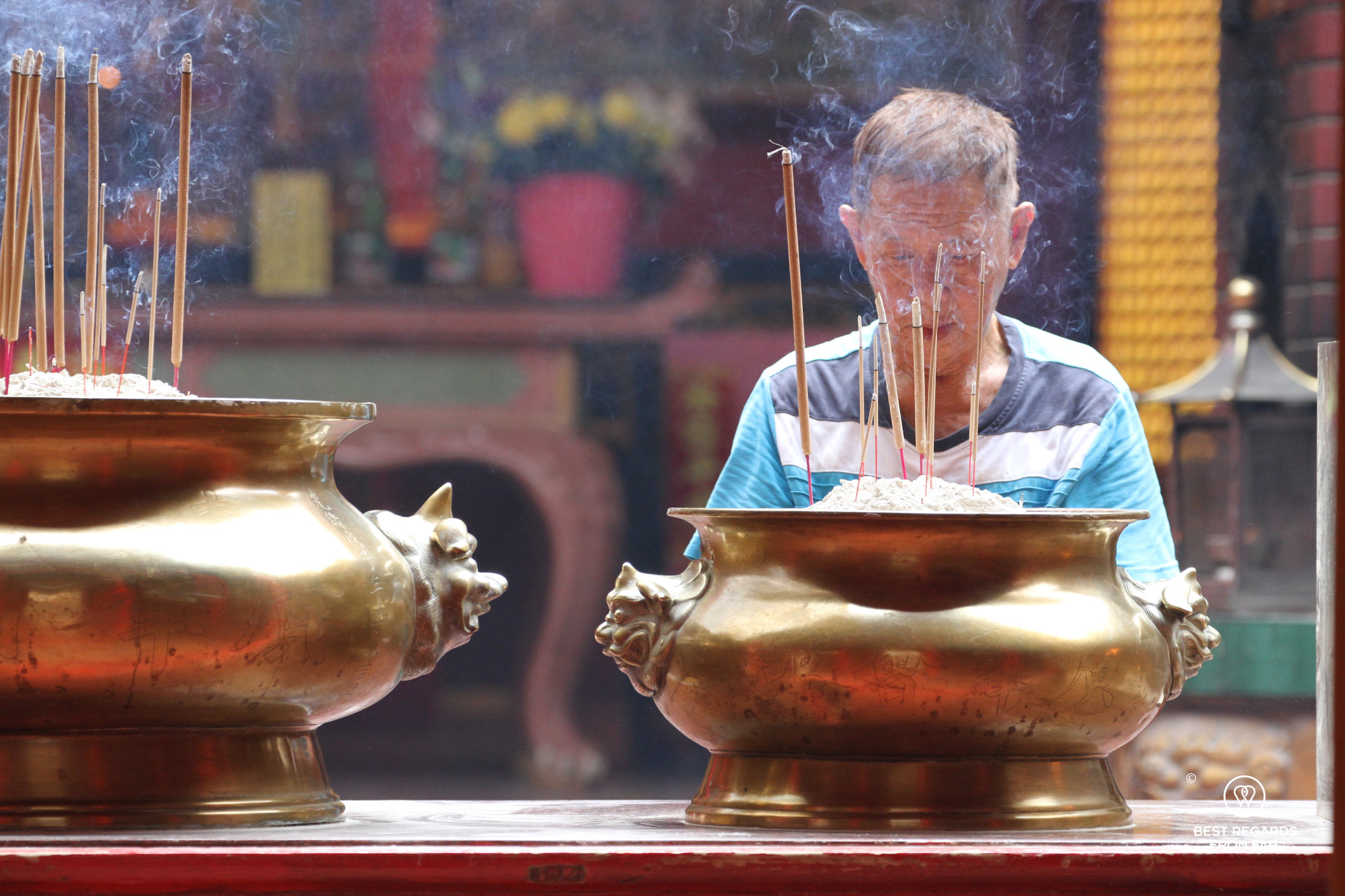
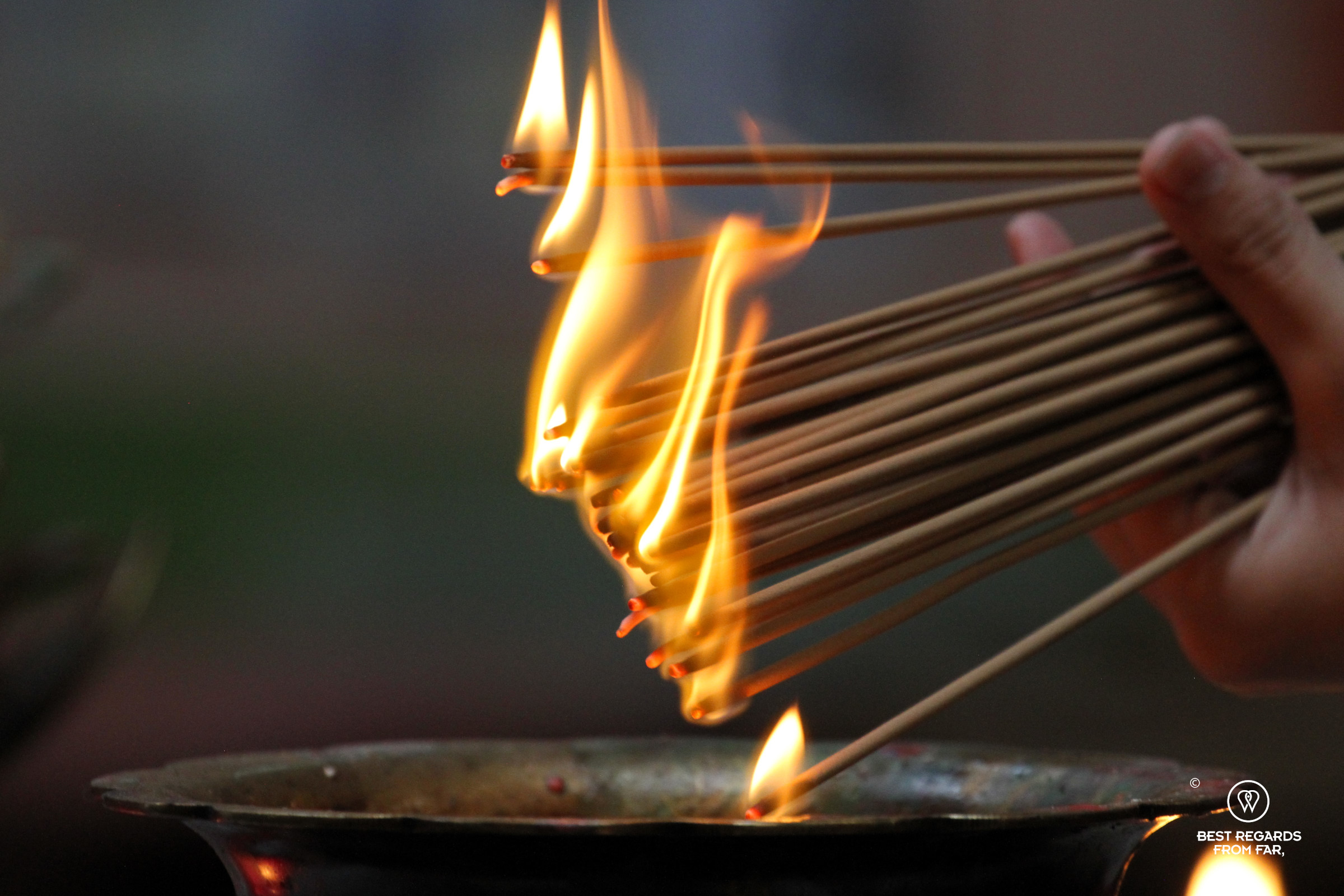
The oldest Taoist and Buddhist temple in Kuala Lumpur presents an odd orientation. Like most Chinese buildings, this temple was built on the principles of Feng Shui, explaining the lack of alignment with surrounding buildings and roads. This misalignment results in the important temple having only a small archway as an entrance which is easy to miss for passers-by. Many Chinese come to this richly decorated temple to burn incense and pray for good fortune.
8. A rotating monarchy that is unique in the world!
Since the independence of Malaysia in 1957, every 5 years, 9 state sultans, each head of each of one of the 9 Malay royal families, elect the monarch. Women are evicted from the throne and if a family member is to marry a non-Malay, he or she will be evicted from the throne as well.
The monarch is the symbolic Head of the State of Malaysia while the prime minister is ruling the country.
9. The “New Village” of Kampung Baru is one of the oldest.
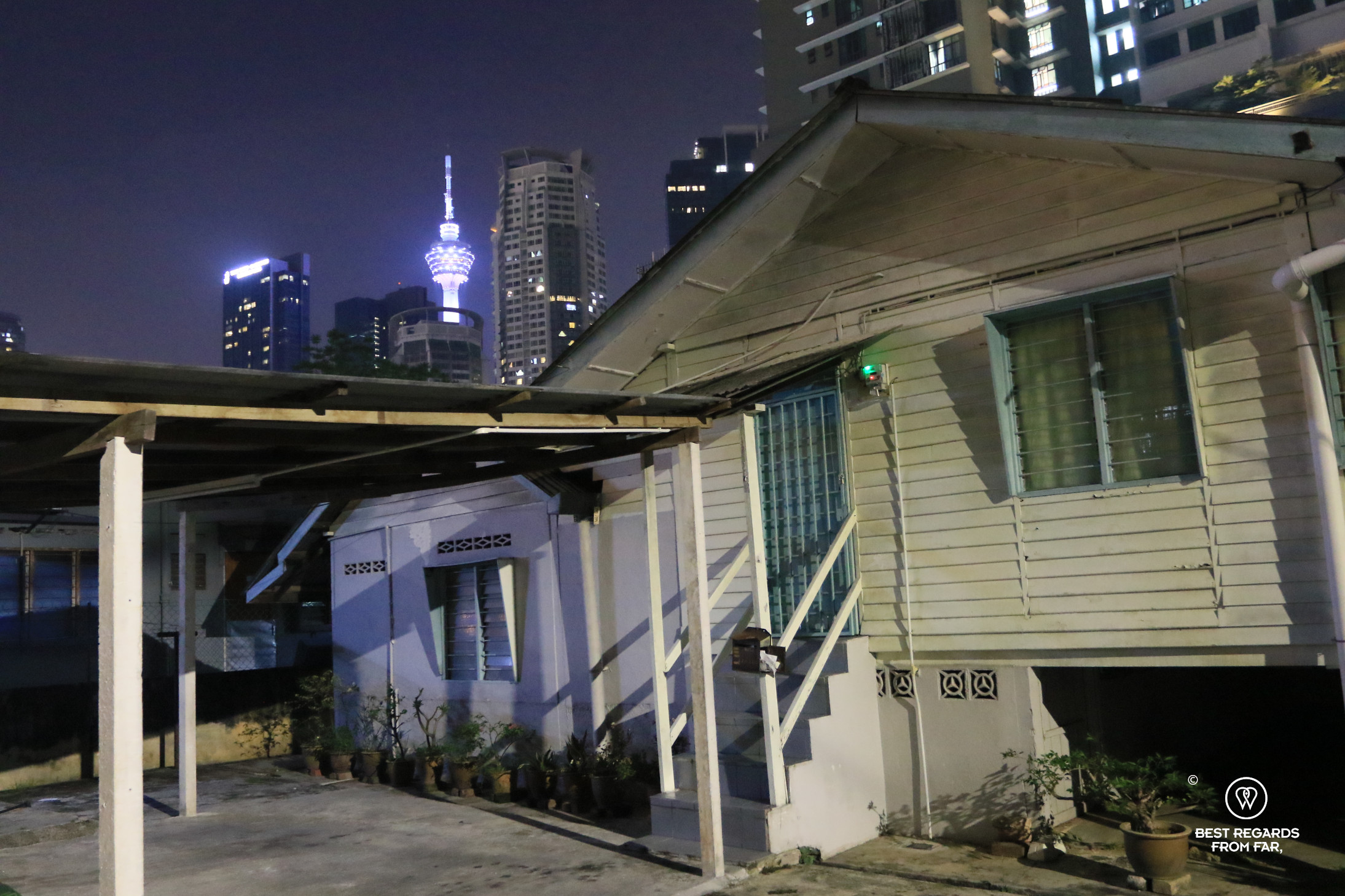
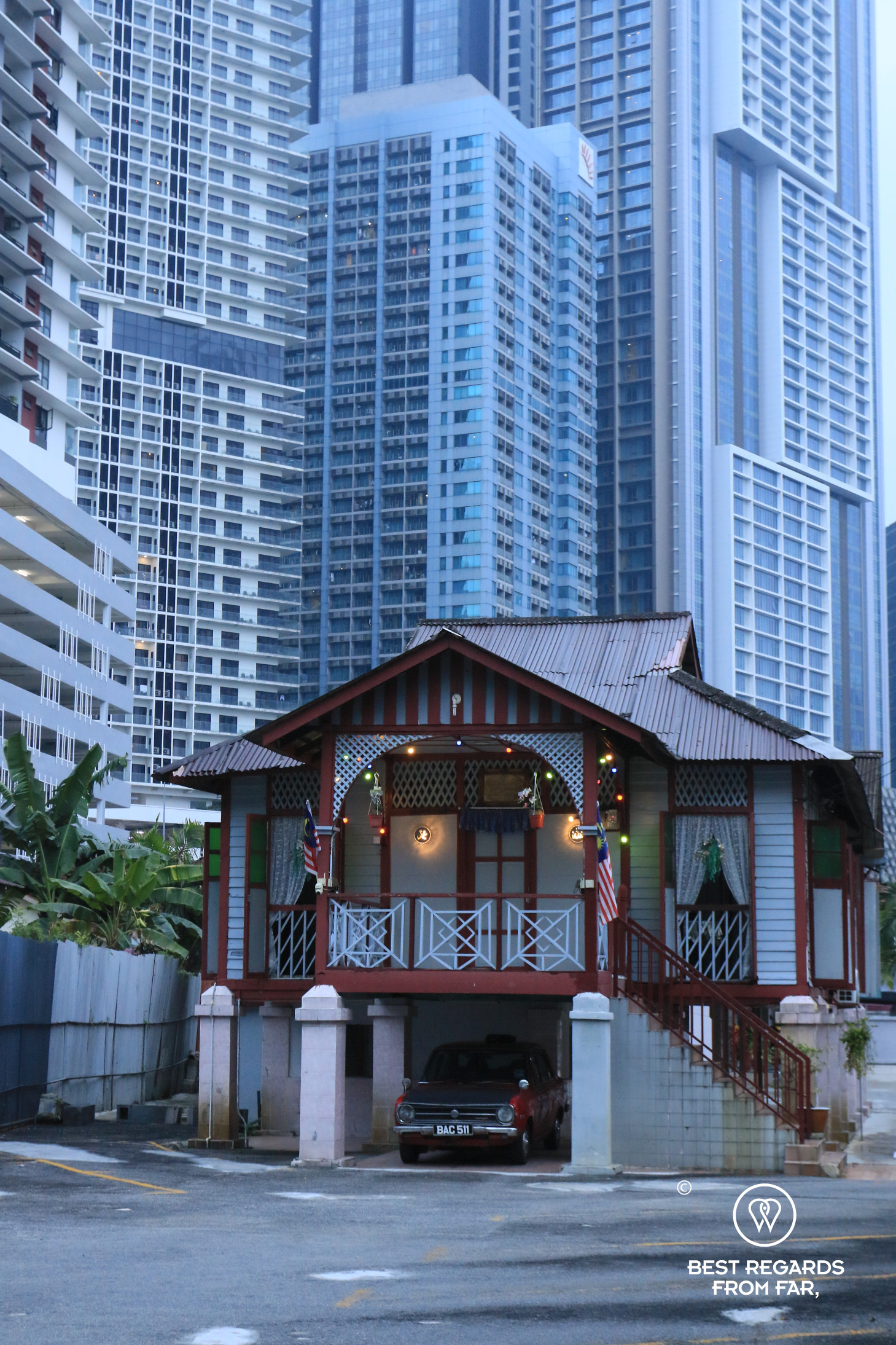
The “new village” as it is translated in Malay has a bit of an old look with the modern skyscrapers of Kuala Lumpur in the background. Kampung Baru was given to the Malays by the British, and today 270 families still live in these houses on stilts.
When they were built, these wooden houses were surrounded by jungle and reached by river. Today, they are planted with palm, banana, mango, and papaya trees while chickens often run under the stilts in the heart of the modern city. The houses are far from being well maintained, and this has created some frictions as the government has been wanting to leverage this piece of prime real estate in the heart of Kuala Lumpur. But Kampong Baru has strict rules and cannot be given to a non-Muslim community: houses are passed down within families, even if many have moved out to get a renting income from them.
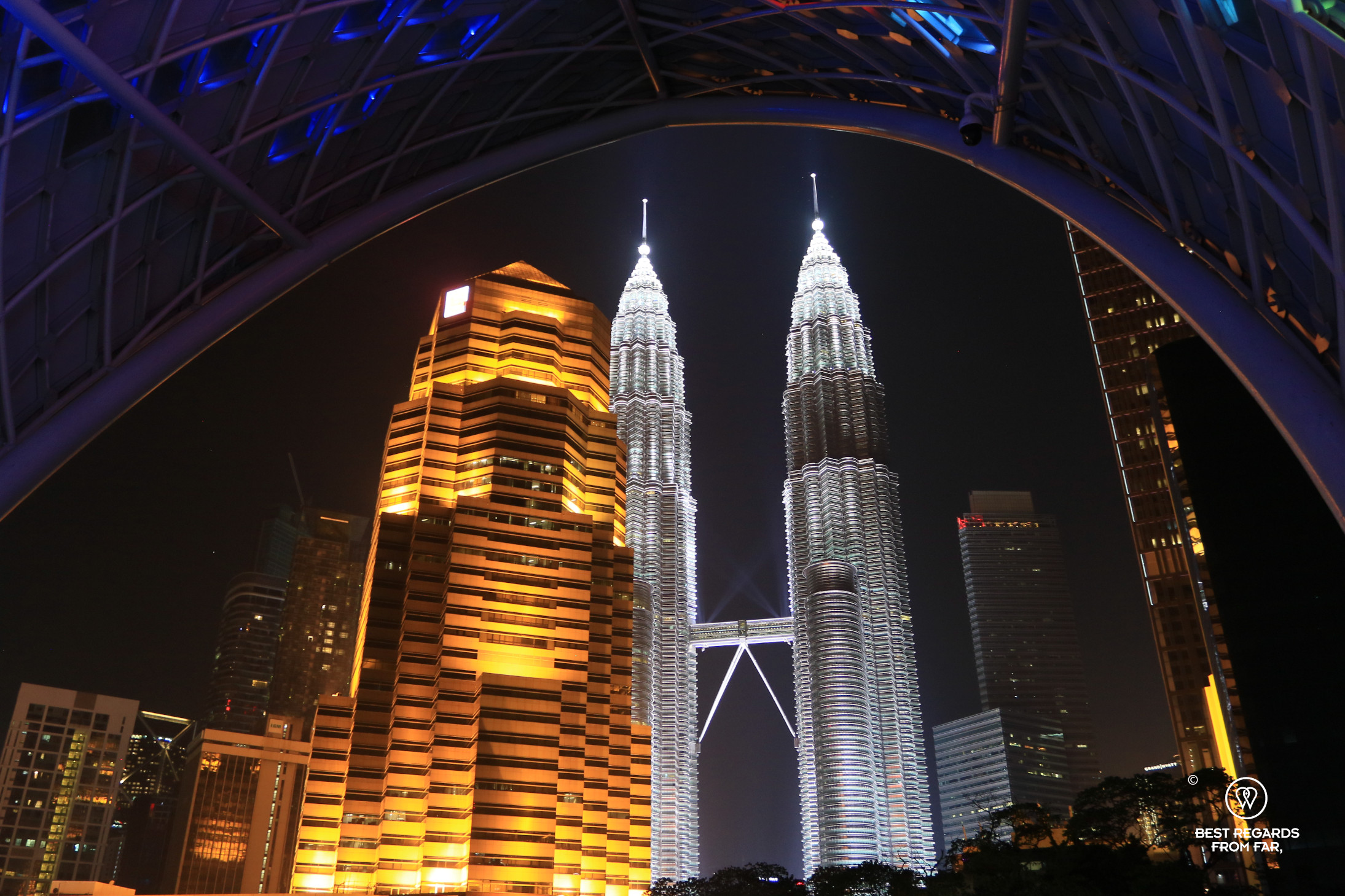
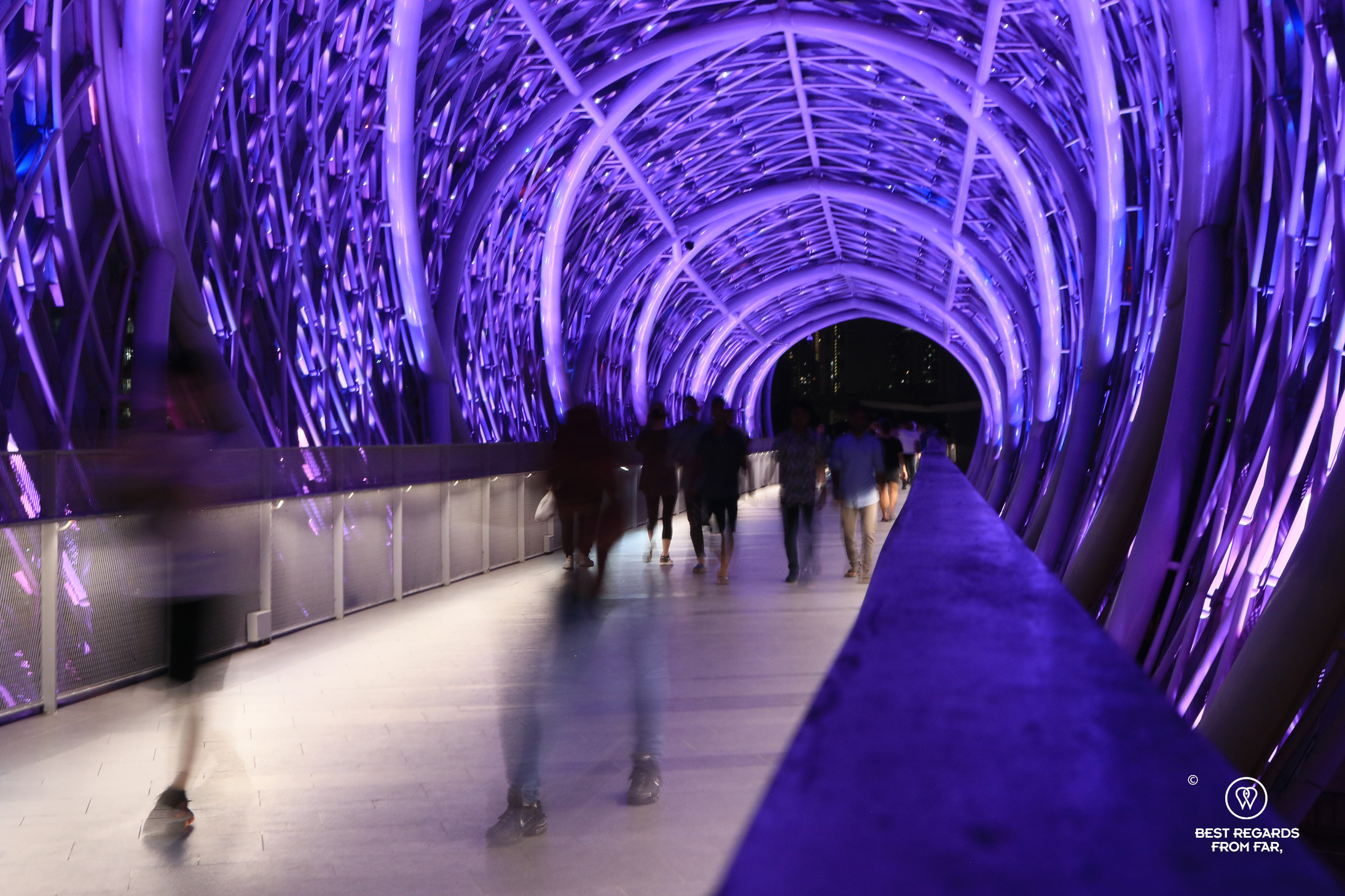
While this area is in the heart of town, it used to be cut off by the highway. The Saloma Link is a modern pedestrian bridge that connects Kampung Baru to the centre of KL very stylishly, especially at night when it is lit in various hues with the Petronas Towers in the background.
10. Protected from foreigners.
To limit speculation while ensuring that affordable housing remains available to locals, the government has defined a threshold for foreign-owned properties: at the time of writing, foreigners can only buy real-estate that is worth more than 1 million MYR (roughly USD 200,000) for the state of Kuala Lumpur.
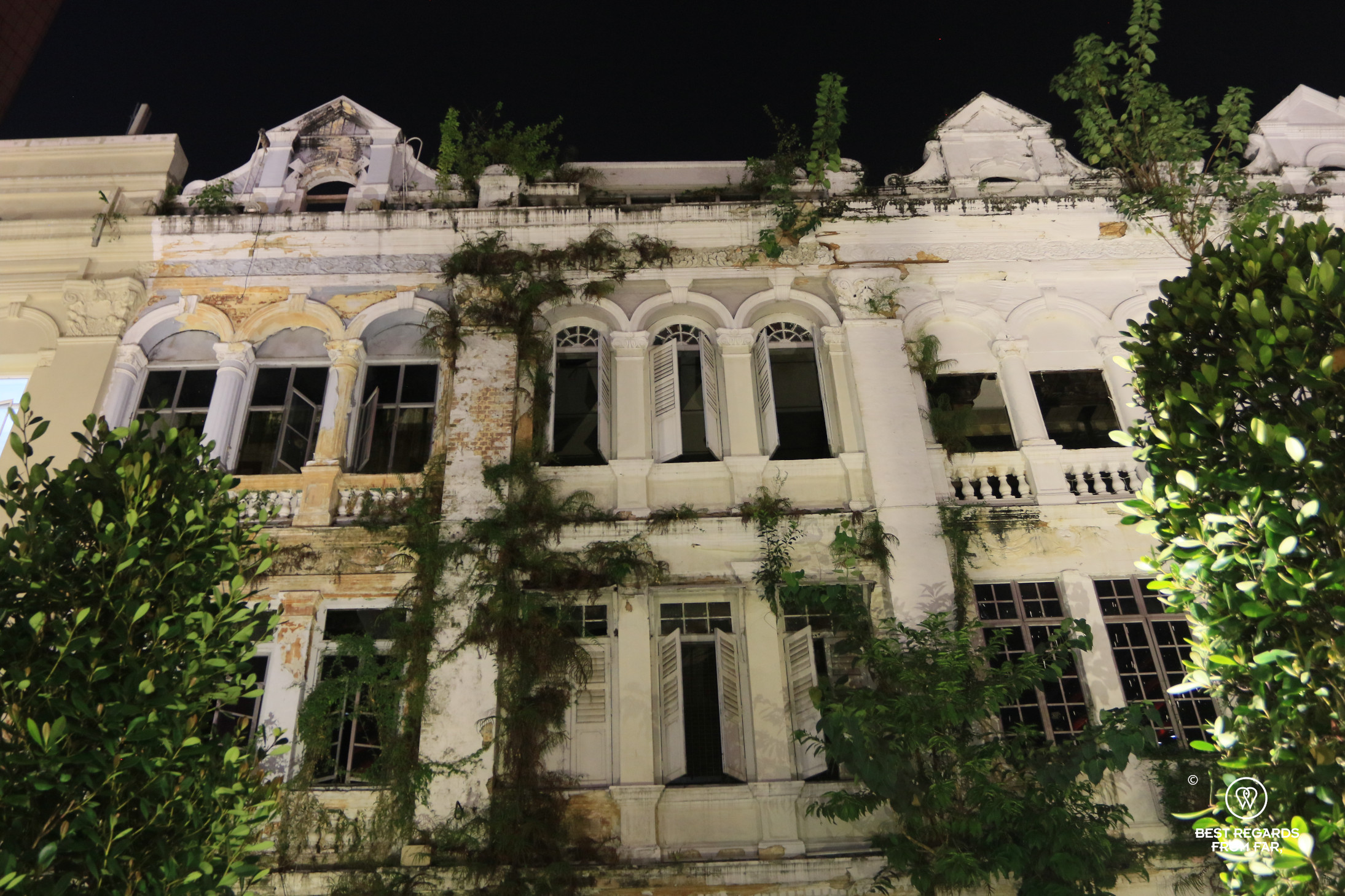
Most colonial buildings rot away even in the centre of KL as maintenance is not a forte in the country, plus it is often difficult to find the rightful owner (sometimes playing hot potato between different governmental agencies). Some local architecture buffs and history enthusiasts are lobbying to request the UNESCO World Heritage status for Kuala Lumpur in order to preserve its beautiful colonial buildings. Beyond the heritage, it would be a way to keep the connection between the past, present, and future, a fundamental notion for the Malays.
11. Kuala Lumpur was home to world’s tallest structure for 6 years only.
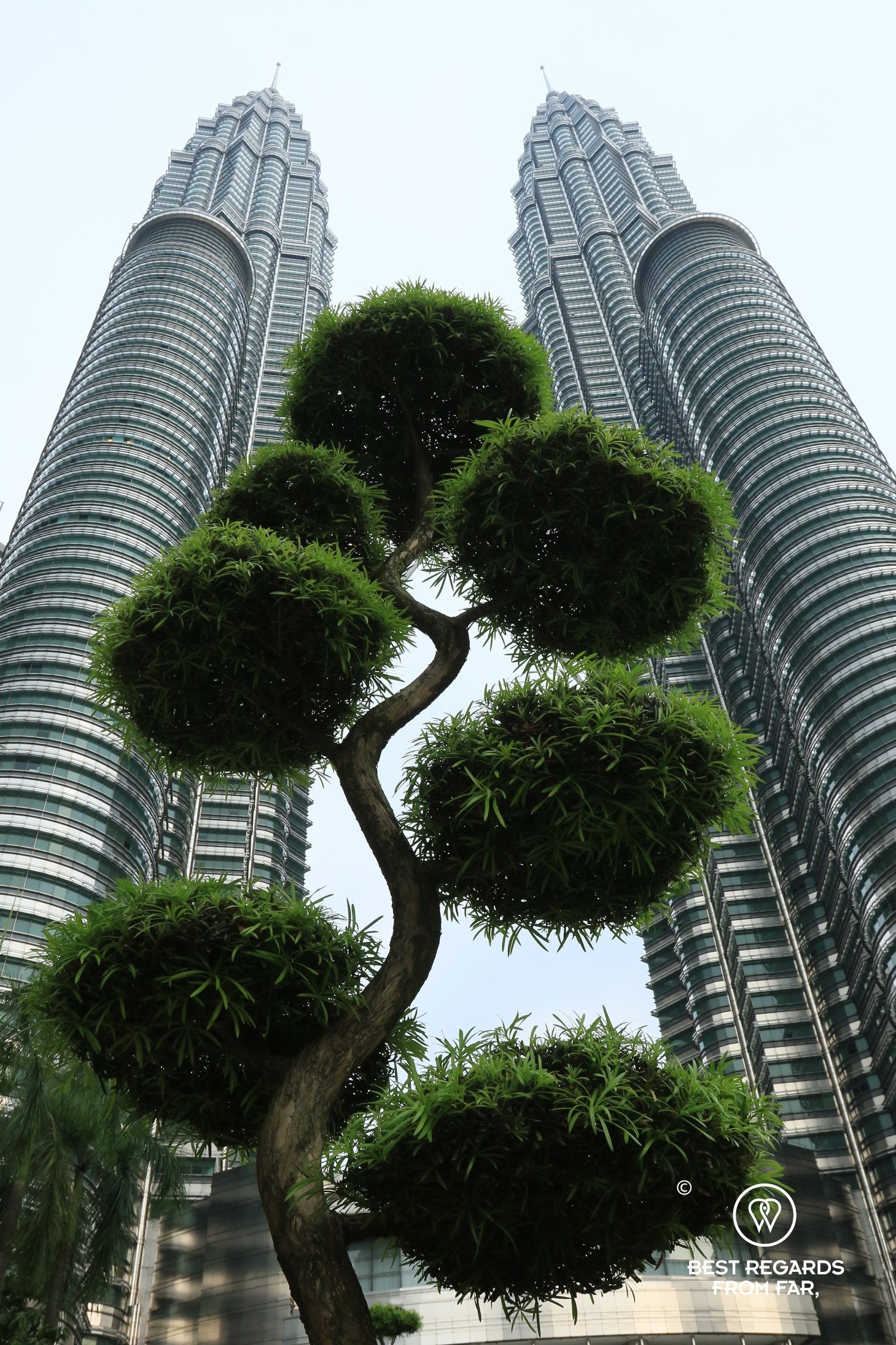
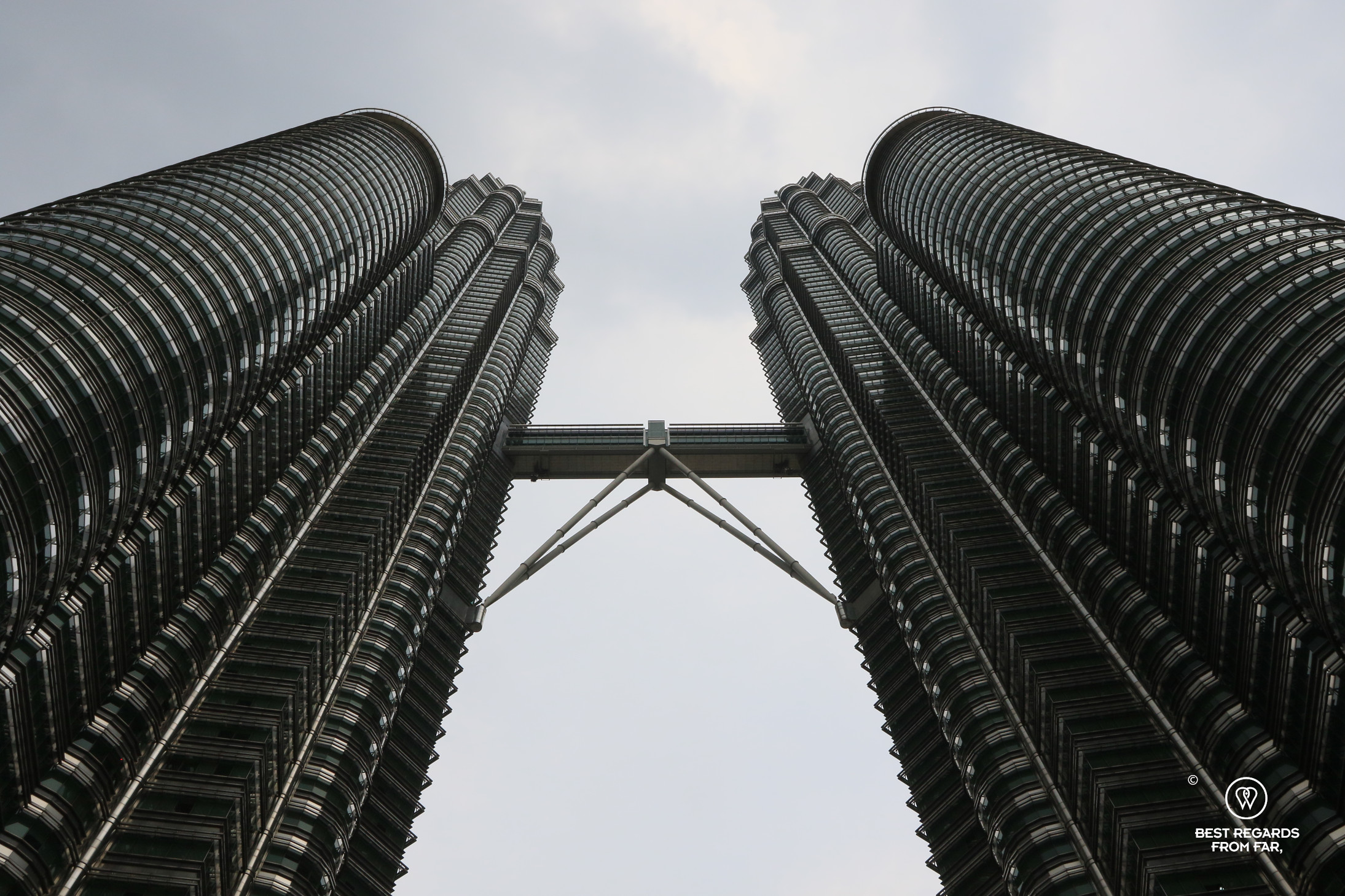
Between 1998 and 2004, the Petronas Twin Towers in Kuala Lumpur City Centre were world’s tallest structures culminating at 452 metres (1,482 feet). As a reference, today’s highest man-made structure is Burj Khalifa in Dubai, culminating at 828 metres (2,716 feet). With Dubai being built with oil money and KL’s twin towers housing the office of Petronas, Malaysia’s national petroleum company (and one of the most revenue-inducing export of the country), is there anything oil can’t buy?
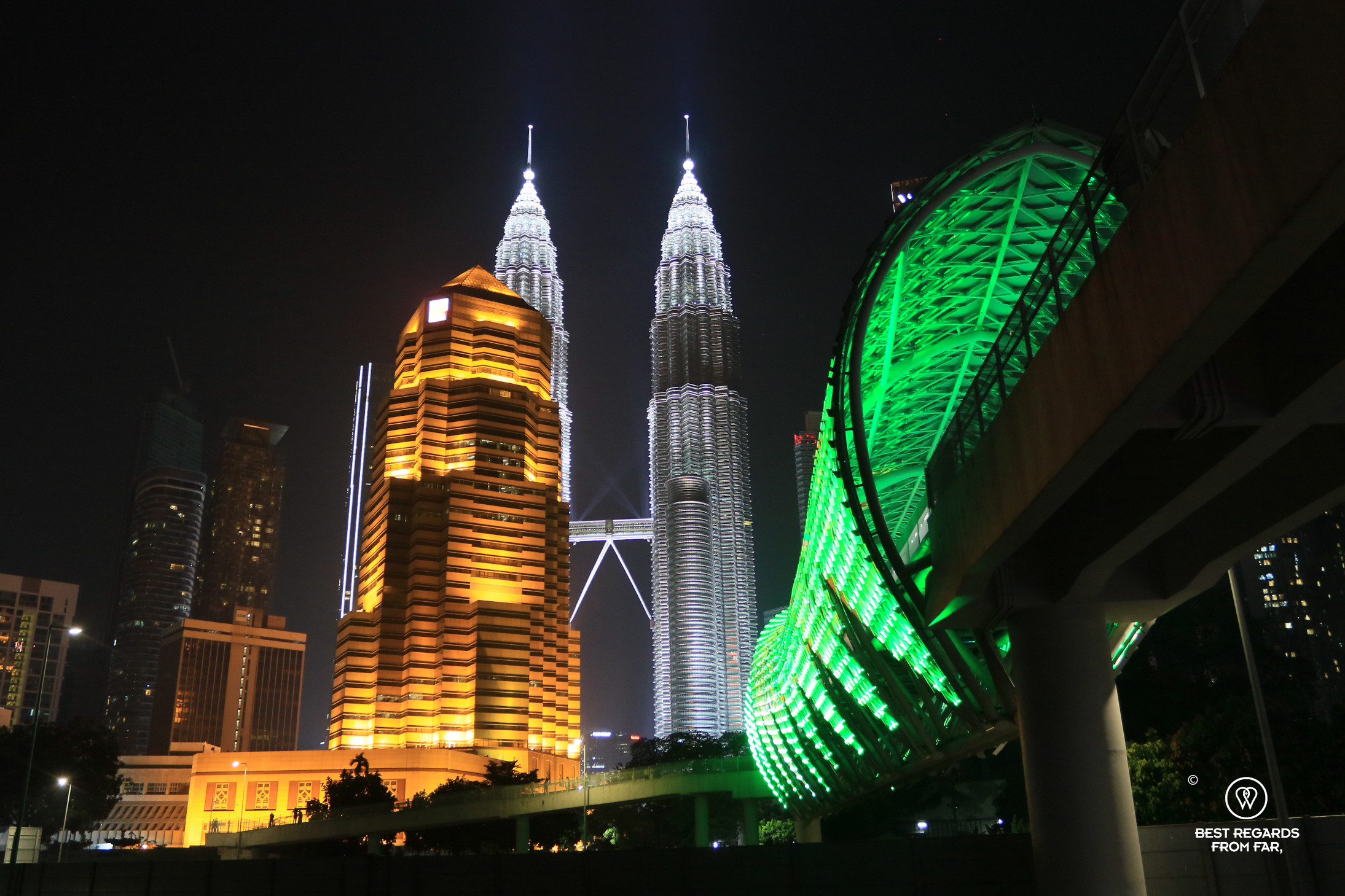
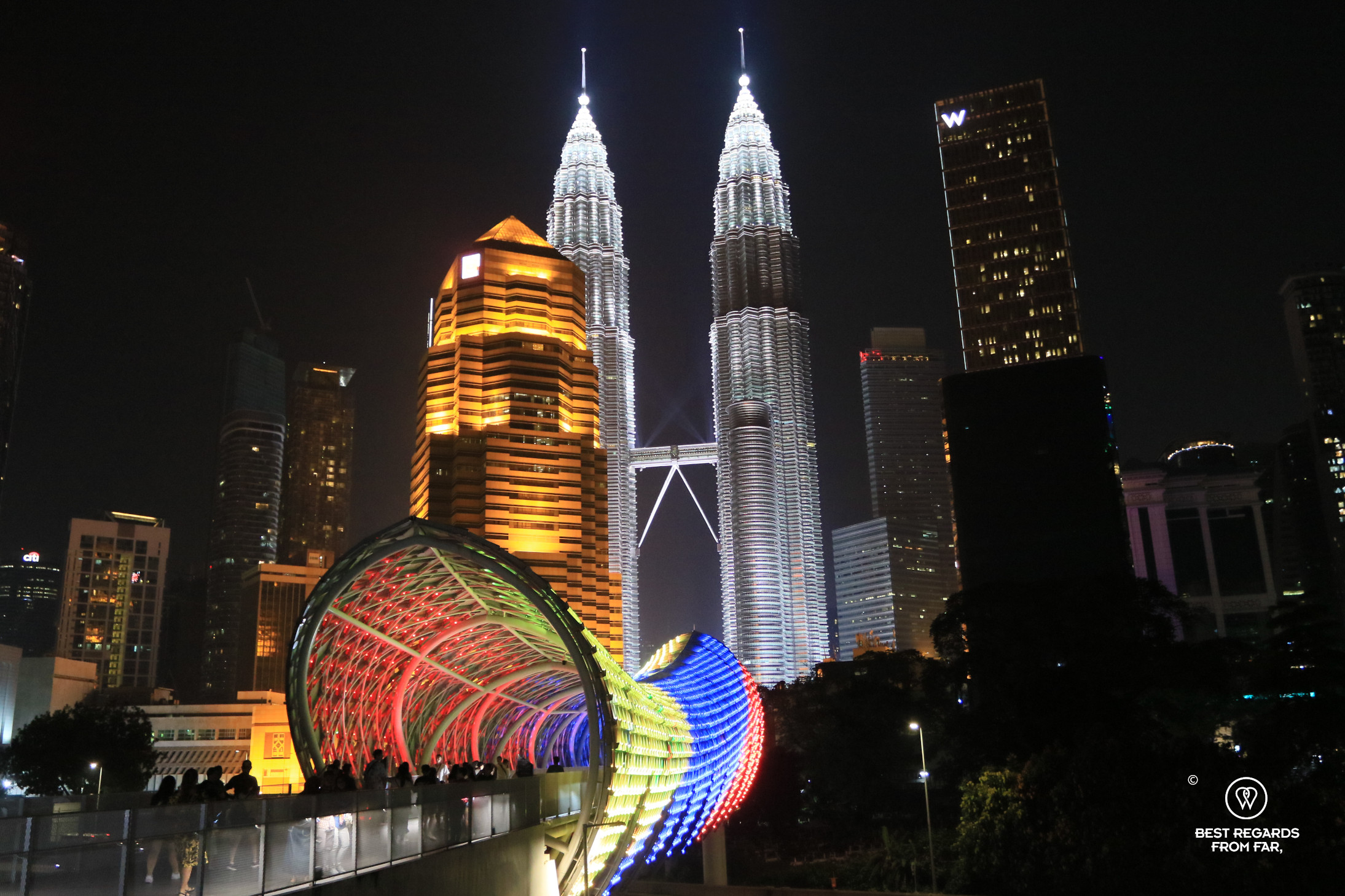
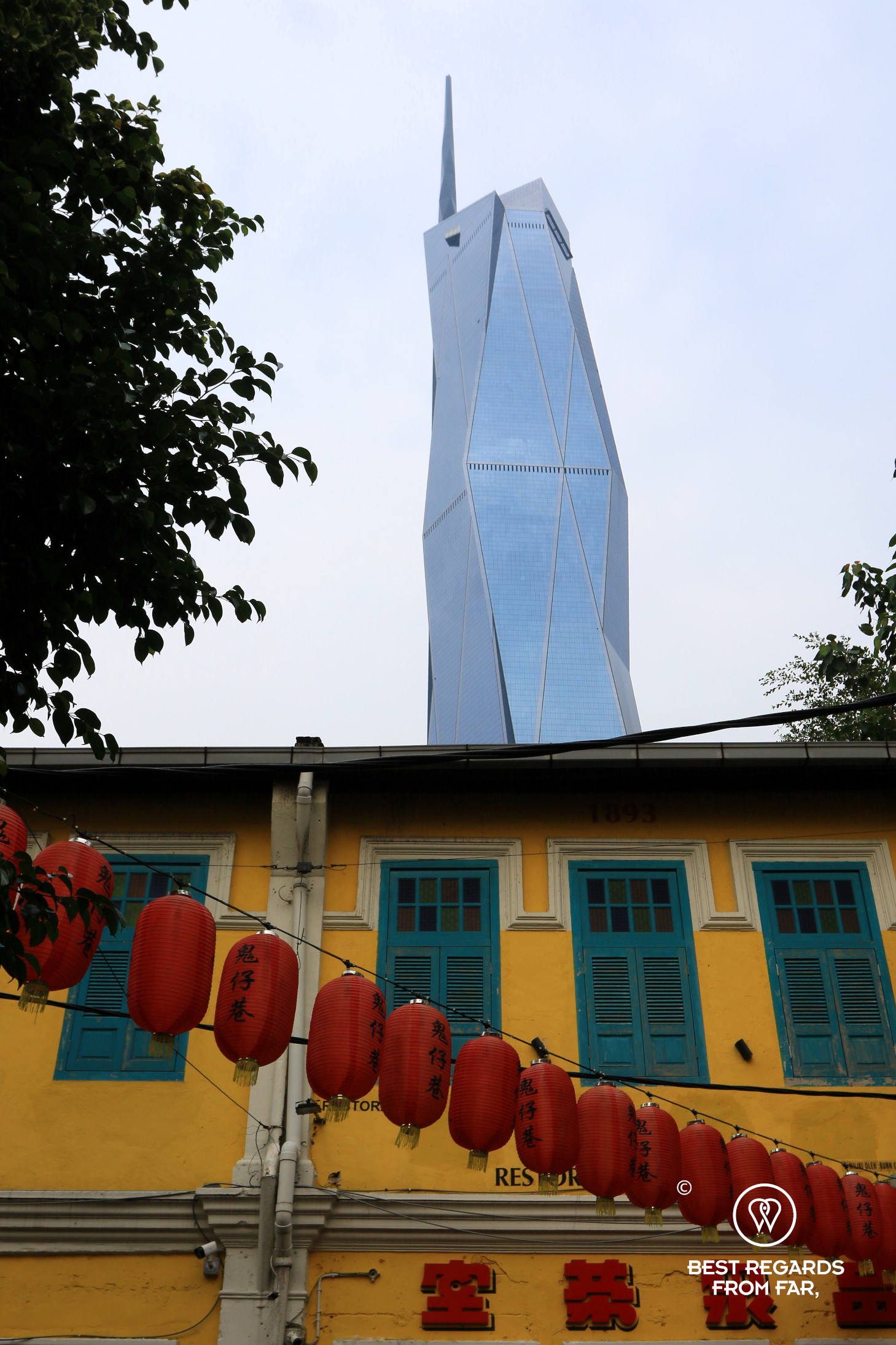
If the Petronas Towers remain the tallest twin towers in the world, Kuala Lumpur now hosts world’s second highest building, Merdeka 118 with its 679 metres (2,227 feet). The Islamic style of the twin towers by the US architect Cesar Pelli now compete with the Australian design of the Fender Katsalidis architecture firm 118-stories-tall independence tower. Its design is meant to echo the multicultural and multi-ethnic Malaysia with no large straight façades, and to represent the arm of Malaysia’s first prime minister Tunku Abdul Rahman that he raised up in the sky on august 31st, 1957 screaming “Merdeka” (for independence) 7 times, for each day of the week until eternity. In the melting pot that is Malaysia, even the number of stories and name of the tower was decided to appeal to the Chinese community for whom numbers are highly symbolic: in Feng Shui 1 represents new beginnings, independence and wisdom, and 8 infinity. The 118 means for Malaysia to move forward and lead independently until infinity, also echoing Tunku Abdul Rahman’s chanting.
Travel tips:
- To learn more about Kuala Lumpur, hop on the Kuala Lumpur heritage tour by Malai Adventure.
- For a delicious food tour in Kuala Lumpur, check out Simply Enak.
- The Batu Caves are easily reached by cab or public transport. There, beware of the long-tailed macaques that can be aggressive in search for food, and please, do not feed them! Keep wildlife wild!
- This article is now featured on https://www.gpsmycity.com. To download this article for offline reading or travel directions to the attractions highlighted in this article, go to Walking Tours and Articles in (Kuala Lumpur) on GPSmyCity.
- Check out our interactive map for more in the area (black pins lead to an article):
For more in Malaysia, click on the images below:


 Best regards from far,